Saturday Oct 03, 2026
Saturday Oct 03, 2026
Wednesday, 17 December 2025 00:20 - - {{hitsCtrl.values.hits}}
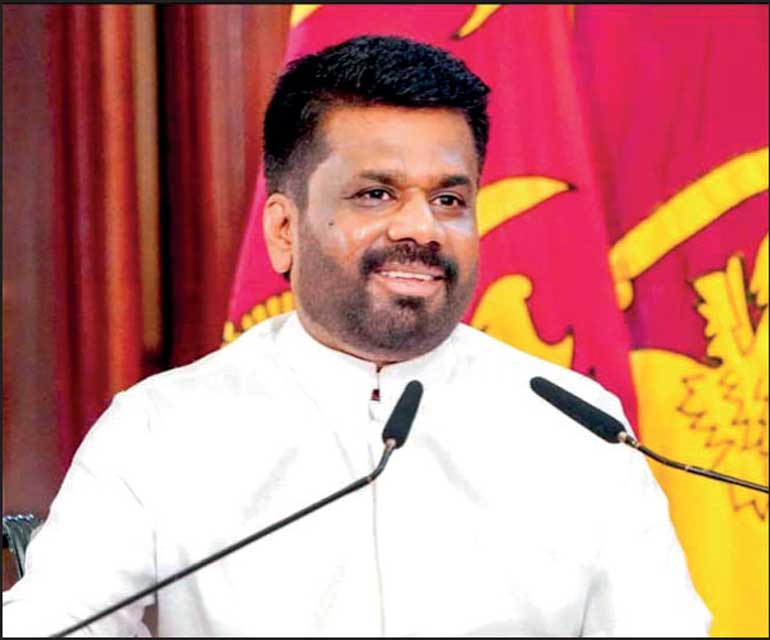
President Anura Kumara Dissanayake
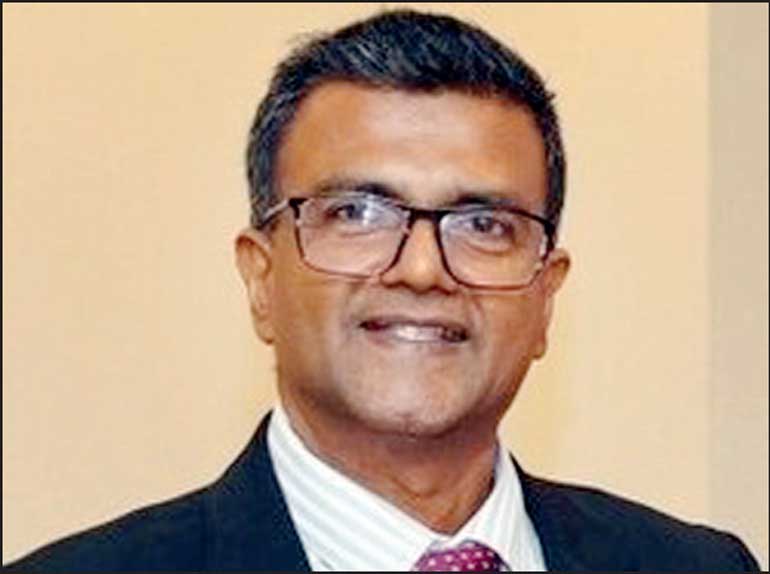
Treasury Secretary
Dr. Harshana Suriyapperuma
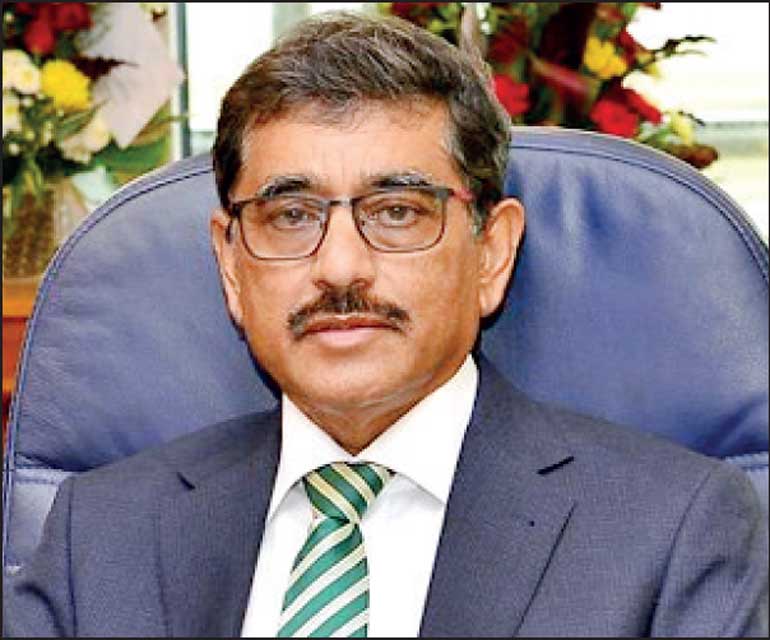
Central Bank Governor
Dr. Nandalal Weerasinghe
 Sri Lanka is confronting a moment of profound national crisis. The devastation caused by Cyclone Ditwah, marked by widespread flooding, landslides, and the displacement of more than a million people, has collided with the pressures of a sovereign debt crisis and a fragile post-default recovery. As in many countries facing climate-induced disasters, the scale of the emergency has reignited debate about what a Government can afford to do, how it should pay for it, and whether existing economic rules should constrain the national response. These questions are not merely technical but cut to the heart of what it means for a State to protect its people.
From a Global South perspective, this moment is painfully familiar. Climate disasters are increasingly colliding with externally imposed fiscal constraints, debt conditionalities, and orthodox policy doctrines that treat public spending as a risk rather than a responsibility. The result is a dangerous policy paralysis at precisely the moment when decisive State action is most needed. Sri Lanka’s crisis is therefore not only national but reflects a broader structural failure in the international economic order that systematically constrains climate-vulnerable, import-dependent countries when they most need policy space.
Sri Lanka can finance emergency spending
A central truth is often forgotten in public debates. A Government that issues its own currency, as Sri Lanka does with the rupee, is never financially constrained in the same way that a household, firm, or local Government is. It can always make payments in its own currency. The real limits are not monetary, but physical such as the country’s labour force, construction materials, transport networks, agricultural capacity, energy system, and critically for Sri Lanka, its access to foreign exchange for essential imports.
This distinction between financial constraints and real resource constraints is foundational to transformational macroeconomic policy, yet it is routinely obscured in public discourse. Treating the State as if it were financially constrained like a household leads to chronic under-investment, delayed emergency response, and avoidable human suffering.
This distinction matters because in disasters, underspending can be far more damaging than spending too much. As the United Nations Office for Disaster Risk Reduction has long emphasised, delays in mobilising resources increase human and economic losses exponentially (UNDRR, 2015).
At the core of Sri Lanka’s challenge is the relationship between domestic economic capability and external constraints. The State is fully capable of financing emergency spending in Sri Lankan rupees by paying first responders, restoring basic services, repairing public infrastructure, and supporting communities.
These expenditures are not discretionary “stimulus”; they are the minimum conditions for preserving social cohesion, productive capacity, and democratic legitimacy in the aftermath of catastrophe.
These payments are executed electronically through the country’s banking system, with the Central Bank ensuring settlement. The question is not whether the Government has the “money,” but whether the country has the domestic capacity and the external flexibility in terms of foreign exchange and import availability to absorb and utilise vital emergency spending effectively.
The external economy needs a coordinated strategy
Where Sri Lanka faces acute difficulty is in the external economy. The country is heavily dependent on imports for fuel, medicine, food items, industrial inputs, and reconstruction materials.
This is the classic external constraint faced by many post-colonial economies whose development trajectories were shaped around import dependence, export monoculture, and external borrowing rather than domestic industrialisation and food-energy sovereignty. Ignoring this structural reality and instead blaming inflation or instability on domestic public spending, misdiagnoses the problem and leads to self-defeating policy responses.
International experience shows that inflation in post-disaster environments often stems not from “too much money” but from damaged supply networks, import dependence, and speculative pressures in key markets (World Bank, 2022). In this sense, restoring supply capacity is not merely a recovery objective; it is the most effective and durable inflation-control strategy available to the State.
Managing this external constraint requires a coordinated strategy. Essential imports must be prioritised, while non-essential outflows may need temporary administrative controls. Such measures should not be caricatured as heterodox or exceptional. They are pragmatic tools of macroeconomic management that have been deployed repeatedly, even in advanced economies, when market allocation fails to protect the public purpose.
Inflation can be controlled
 Understanding the role of taxation is vital for effective policy. Taxes do not provision Government in a financial sense; they provision it in a real sense. This point is often misunderstood, yet it is essential. In a monetary sovereign State, taxation does not “fund” spending. Rather, it helps regulate aggregate demand, shape income distribution, and create policy space by freeing real resources for public use, especially during periods of supply disruption and reconstruction.
By imposing tax obligations denominated in the national unit of account, backed by penalties for non-payment, the State creates an imperative to seek paid work —unemployment—which generates continuous demand for the national currency. This is why unemployment and idle capacity represent policy failures, not natural outcomes of scarcity. With this understanding, the design of tax policy in Sri Lanka becomes central to economic equality and political legitimacy during recovery.
Equally important, targeted taxes on luxury imports and speculative activities can directly relieve pressure on the balance of payments, stabilise the exchange rate, and protect access to essential imports.
Democratic coordination, not technocratic separation
Economic policy is not merely a question of accounting, it is a matter of governance. In many Global South countries, Central Bank “independence” has too often meant insulation from democratic priorities while remaining highly responsive to creditor interests and external policy norms. In crisis conditions, this institutional fragmentation can delay action and diffuse responsibility precisely when coordination is most needed.
A balanced approach is possible. Democratic institutions should set clear national objectives for full employment, financial stability, climate preparedness, and sustainable recovery while the Central Bank retains operational autonomy to carry out those goals. What must be rejected is the fiction that monetary authorities are neutral arbiters standing outside the State. In reality, they are public institutions whose legitimacy derives from their capacity to serve the public purpose.
Challenge doctrinal fears about public spending
This brings the discussion back to the broader global context. Sri Lanka is one of many climate-vulnerable, import-dependent countries experiencing the collision between natural disasters and external debt (IPCC, 2022).
When countries are forced to prioritise debt service over climate adaptation, disaster response, and basic development, the problem is not fiscal irresponsibility, it is a deeply misaligned international financial architecture. No country can adapt to climate breakdowns while trapped in permanent austerity.
All of this requires strong Government institutions, planning, and political support. A State cannot allow doctrinal fears about public spending to prevent it from deploying every domestic resource available in a moment of crisis. The moral failure is not “spending too much,” but failing to act when lives, livelihoods, and ecosystems are at stake.
Considerations for a recovery strategy
A forward-looking recovery strategy must integrate domestic monetary capacity with external-sector management, progressive taxation, and democratic coordination between the Treasury and the Central Bank.
Sri Lanka’s challenge is not insolvency in its own currency, but structural vulnerability inherited from a development model that privileged external discipline over internal resilience. That model is no longer viable in an age of climate disruption. Rebuilding must therefore do more than repair damage. It must expand productive capacity, reduce import dependence, and restore economic and monetary sovereignty. The ultimate test of economic policy is not whether it conforms to abstract financial rules, but whether it protects people and secures a livable future.
(The authors Charith Gunawardena, a Co-Founder of the Institute of Political Economy (ipe-sl.org) and a former Local Councillor in London. He can be reached at [email protected]; Fadhel Kaboub, an Associate Professor of Economics at Denison University, USA and author of Global South Perspectives on Substack and Richard Tye, a Co-Author of “The self-financing state: An institutional analysis”, published by University College London-IIPP, 2022, and an Independent Researcher)
References
Bank of England. (2020). Asset Purchase Facility: Gilt Purchases in Response to COVID-19. Bank of England Monetary Policy Summary and Minutes, March 2020.
Germanwatch. (2021). Global Climate Risk Index 2021. Germanwatch e.V. Bonn, Germany.
InterGovernmental Panel on Climate Change (IPCC). (2022). Sixth Assessment Report: Impacts, Adaptation and Vulnerability. Cambridge University Press.
OECD. (2021). OECD Economic Outlook 2021: Special Focus on Price Controls and Market Interventions during COVID-19. Organisation for Economic Co-operation and Development.
United Nations Office for Disaster Risk Reduction (UNDRR). (2015). Global Assessment Report on Disaster Risk Reduction: Making Development Sustainable. United Nations.
World Bank. (2022). Post-Disaster Public Finance: International Experience and Lessons for Developing Countries. Washington, DC: World Bank Group.



