Wednesday Aug 05, 2026
Wednesday Aug 05, 2026
Wednesday, 5 August 2026 04:34 - - {{hitsCtrl.values.hits}}
 In a country with an annual per capita income of Rs. 1.6 million, one-fifth of the population earn just Rs. 205,000 a year. This is not one country but two countries, with diametrically opposite interests and aspirations
“This disposition to admire, and almost worship, the rich and the powerful, and to despise, or at least, to neglect, persons of poor and mean condition….is the great and most universal cause of corruption of our moral sentiments”.
- Adam Smith (The Theory of Moral Sentiments)
By Tisaranee Gunasekara
In July 2026, the World Bank re-classified Sri Lanka as an upper-middle income country with a per capita income of Rs. 1.6 million.
Again, according to the World Bank, Sri Lanka had a poverty rate of 22.1% in 2025. Its poverty line was set at Rs. 16,690 in March 2026. This means over one-fifth of Lankans earn just Rs. 205,000 per year.
In a country with an annual per capita income of Rs. 1.6 million, one-fifth of the population earn just Rs. 205,000 a year. This is not one country but two countries, with diametrically opposite interests and aspirations.
The Government understandably celebrated Sri Lanka’s elevation to upper-middle income status, yet had no concrete measures to offer the 22% of Lankans earning just Rs. 205,000 per year - other than more growth of the same unequal and un-equalising nature plus some handouts.
Sri Lanka reached the upper-middle income level for the first time in 2019. The country’s per capita income then was Rs. 688,719. Poverty rate was 14.3% and poverty line set at Rs. 6,966.
Compare middle-income Sri Lanka of 2019 with middle-income Sri Lanka of 2026 and the conclusion is inescapable. The recovery from the Rajapaksa-induced economic collapse of 2022 is real – and highly unequal. The recovery had made poor and the not-so-poor poorer and the rich richer.
The findings of the latest survey by the Centre for Policy Analysis (CPA) confirm this: 51% of respondents say that their household economic situation has worsened compared to a year ago; only 18% say it has improved while 30% say it remains unchanged. This is despite an increase in Aswesuma grants. Without that vital support, poverty and inequality are likely to break through the ceiling.
According to the World Bank, “The economic recovery has been unable to reverse crisis-induced welfare losses” (https://documents1.worldbank.org/curated/en/099213205052641407/pdf/IDU-df6d36cb-59f0-4e01-af7b-4893b4d08e24.pdf). This inability is no accident but an inevitable outcome of the very nature of the recovery and the policy choices that shaped it.
In trying to fix the country’s broken finances, the Ranil Wickremesinghe administration decided not to reduce military expenditure significantly or to get rid of money-guzzlers like the SriLankan airline. Since new borrowing was impossible, this meant a near-exclusive reliance on taxes. And in late 2023, the Wickremesinghe administration made the fateful decision of placing a disproportionate share of the tax burden on indirect taxes.
On 1 January 2024, the Government increased VAT from 15% to 18% and removed VAT exemptions from 97 items including books and other educational materials. The impact on living costs was immediate and devastating. The VAT burden went up by 50% due to the removal of exemptions. And the poorest 40% of households experienced a massive increase of around 60% in VAT payments (https://www.ips.lk/talkingeconomics/2024/10/14/vat-hike-in-sri-lanka-who-really-pays-the-price/).
Today the poorest 10% of the population spend 10% of their income on VAT.
Sri Lanka’s economic recovery is real. But its sustainability is in question not least because it is built on the shifting sands of widening socio-economic disparities.
Compare middle-income Sri Lanka of 2019 with middle-income Sri Lanka of 2026 and the conclusion is inescapable. The recovery from the Rajapaksa-induced economic collapse of 2022 is real – and highly unequal. The recovery had made poor and the not-so-poor poorer and the rich richer
Wrong sort of growth
Thirty years ago, the UNDP cast a light on the inadequacy of growth (and per capita income) as the sole measure of a country’s socio-economic development. The 1996 Human Development Report identified five types of growth which would lead not to the betterment of a society but its opposite.
1. Jobless growth: economic growth that fails to create new and better employment opportunities.
2. Ruthless growth: economic growth that fails to reduce poverty and/or income inequality.
3.Voiceless growth: economic growth that fails to strengthen democracy and empowerment.
4. Rootless growth: economic growth which discriminates against ethno-religious minorities and promotes uniformity instead of diversity.
5. Futureless growth – economic growth based on overexploitation of resources and environmental destruction. (https://hdr.undp.org/system/files/documents/hdr1996encompletenostats.pdf).
Growth is necessary, but it should be the type of growth that fosters rather than undermines human development. The NPP Government’s blasé attitude to the cost of living crisis indicates its total unfamiliarity with this three-decade-old lesson.
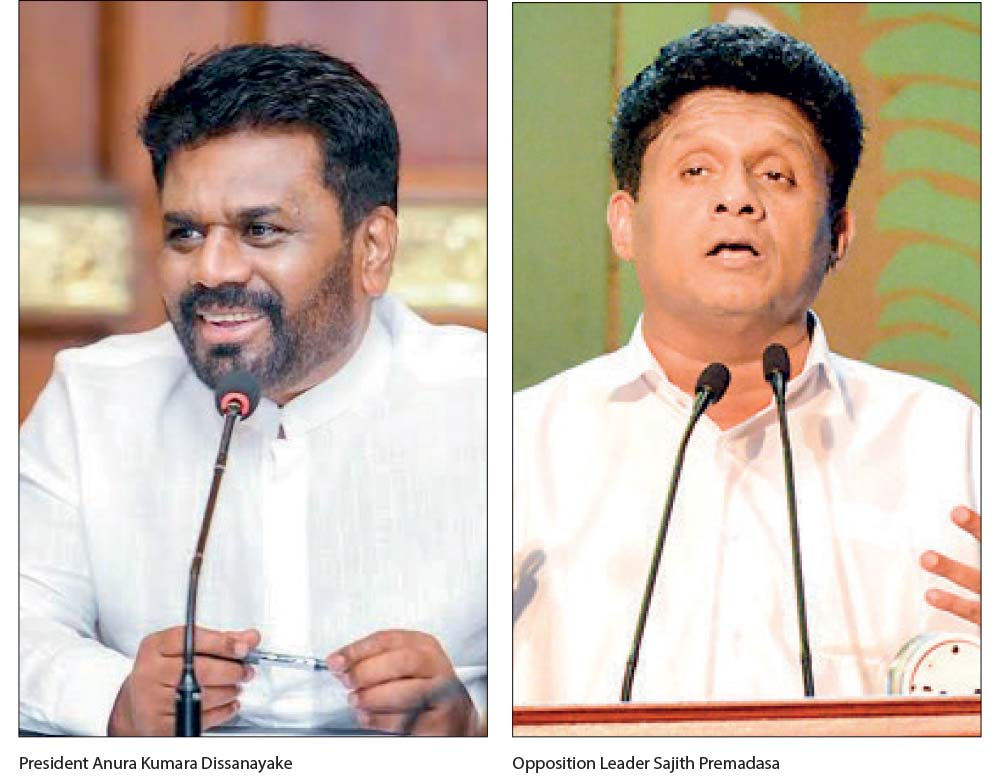
The findings of the latest CPA survey caused a stir because it indicated a high level of public support for President Anura Kumara Dissanayake. But it also revealed that this satisfaction is based on politics rather than economics. According to the findings, 75% of the respondents are satisfied with President Dissanayake. And 63% are satisfied with NPP’s capacity to deliver efficient government. In sharp contrast, only 45% of respondents are satisfied with the Government’s handling of cost of living.
Can the Dissanayake administration improve its handling of cost of living crisis? The answer seems no, given the Government’s cluelessness about the nexus between overreliance on indirect taxes and increase in living costs.
According to The Sunday Times of 26 July, the Government is resisting pressure by the IMF to introduce a secondary property tax (a tax targeting second, third or more residential properties; in other words a progressive tax on rental income, a stable in countries ranging from Australia to the UK - https://www.globalpropertyguide.com/taxes-on-rents). The Government’s counter argument is that such a direct tax is not necessary because it has other revenue sources. These revenue sources are mostly indirect taxes which are pulverising the poor, rendering the middle class vulnerable, and making essentials like education unaffordable for more and more Lankans.
In the last budget, the President proposed a reduction in VAT threshold from Rs. 60 million to Rs. 36 million. In June 2026, the Government was compelled to shelve the plan. But its very inclusion demonstrates the Government’s ignorance of/indifference to the devastating impact such a measure would have on (already struggling) small and medium businesses and their (mostly small and medium) customers.
In 2025, the proportion of direct to indirect taxes in Sri Lanka stagnated at a highly disproportionate 23:77. As Rifka Ziyard points out, “…Sri Lanka relies on VAT, excise, and trade taxes roughly 20 percentage points more than the Asia-Pacific average, while collecting proportionally less than every regional benchmark, including Africa and Latin America, from personal and corporate taxes… This highlights Sri Lanka’s divergence from regional norms and underscores the continued need to broaden and strengthen direct tax mobilisation to achieve a more balanced and equitable tax mix” (https://www.ft.lk/columns/Sri-Lanka-s-directindirect-tax-imbalance-Is-revenue-success-coming-at-expense-of-tax-equity/4-795339). Unfortunately, the Government seems to have no plan to reduce this imbalance because it doesn’t see it as a problem, and doesn’t understand its political and economic unsustainability.
In his first apostolic exhortation, Pope Leo XIV wrote, “In a world where the poor are increasingly numerous, we paradoxically see the growth of a wealthy elite, living in a bubble of comfort and luxury, almost in another world compared to ordinary people…” While Sri Lanka’s re-elevation into upper-middle income level is commendable, the NPP’s inability to say a word about those who bear the greatest burden of that recovery on their indirect tax- burdened shoulders indicates that, rhetoric and sloganeering apart, this is not a government for ordinary people.
Growth is necessary, but it should be the type of growth that fosters rather than undermines human development. The NPP Government’s blasé attitude to the cost of living crisis indicates its total unfamiliarity with this three-decade-old lesson
Opposition, playing with fire
The opening of the economy in 1977 led to an explosion of growth and an explosion of inequality. The SLFP and the JVP (after 1982) tried to paint these economic disparities in Sinhala vs Tamil colours, arguing that the open economy beggared the Sinhalese while enriching the Tamils (and the Muslims). Opposition to the UNP Government and to the Open economy became enmeshed with Sinhala extremism.
During his two tenures, President Mahinda Rajapaksa relied almost entirely on indirect taxation to raise revenue, causing an explosion in living costs. According to CPA surveys, in 2011, 70% of Sinhalese thought the general economic situation will improve in the next two years. By 2013, only 38.5% of Sinhalese thought the general economic situation will improve in the coming two years (http://www.scribd.com/doc/182597529/Top-line-survey-results-Democracy-in-post-war-Sri-Lanka). Fortunately, the Government had monopolised the racist/extremist space, leaving the opposition with no choice but to occupy a more progressive position.
For all its faults, the NPP/JVP Government has not debased itself by playing with minority phobia, so far. Consequently, the President seems even more popular among the minorities than he is among the Sinhalese.
Since its inability to handle the cost of living crisis is the Government’s Achilles Heel, the Opposition should be focusing on that – and its main cause, the disproportionate reliance on indirect taxes - like a laser beam. In reality, the Opposition is doing anything but.
For instance, almost all Opposition leaders either participated or backed the two recent conclaves by a group of extremist Buddhist monks (including the likes of the notorious Galagoda-Atte Gnanasara). The monks’ attempts to use minority-phobia to whip up Sinhala anger against the Government has failed, so far. But the Opposition’s participation in these dog-whistling enterprises points to a disturbing willingness to channel economic discontent along ethno-religious (anti-Tamil/Muslim/Christian) lines.
The myth of the poor Sinhala Buddhists being exploited by rich Tamils/Muslims/Christians has been a seminal part of the Sinhala supremacist worldview and narrative. Many of the anti-minority measures of the post-independence period were justified as necessary attempts to correct this ‘injudicious imbalance,’ created by the British. This myth played a role in ruinous policies such as Sinhala Only and violent explosions like Black July. The prospect of today’s opposition playing with the same fire does not bode well for anybody’s future.
According to the 2026 World Happiness Report, Sri Lanka has dropped one ranking, descending into 134th position out of 147 countries. This ranking is based on ‘life evaluation’ (respondents are asked to evaluate their lives using the image of a ladder from 0 to 10). The Lankan score is a disturbingly low 4, indicating a high level of dissatisfaction with life-conditions. According to the most recent Gallup poll on the state of the global workplace, 62% of Lankan employed experience workplace stress compared to a South Asian average of 30% and a global average of 40% (https://www.gallup.com/workplace/707210/state-global-workplace-sri-lanka-country-level-data.aspx).
Historically inequality was the great societal-de-stabiliser. Radical Enlightenment thinkers warned about the political dangers inherent in socio-economic inequality: “The man discriminated against is aggrieved. The man who possesses nothing lacks any stake in society,” cautioned d’Holbach (The Social Systems). 239 years later, the ‘Riots, Communities and Victims Panel’, appointed by the British Government to study the August 2011 riots, concluded that societal violence is inevitable when people do not have a ‘stake in society’ (http://www.guardian.co.uk/uk/2012/mar/28/verdict-uk-riots-stake-society).
Sri Lanka is caught between the vapidity of a Government and the machinations of an Opposition, both of which are at one in their indifference to the plight of ordinary people. If neither side changes for the better, the hard-earned recovery can evaporate into political fires bred by ignorant economics
Stable societies are cohesive societies. Cohesion is impossible when a society is racked by inequality. Socio-economic equality is not an automatic outcome of growth. Like political equality it must be aimed for and worked at, by governments and by societies. When governments fail to make and implement policy decisions to promote equality, inequality flourishes. Like in today’s Sri Lanka.
When a segment of the populace feels that development is something that happens to other people, disenchantment flourishes. If the beneficiaries of development are depicted as identical to an ethno-religious ‘Other’, the resulting discontent can lead to a fusillade of violence against this or that minority. By not understanding the politics of taxation and by glossing over the economic pains of the people, the Government is playing into the hands of those who dream of cruising back to power on an anti-minority tsunami.
Sri Lanka is caught between the vapidity of a Government and the machinations of an Opposition, both of which are at one in their indifference to the plight of ordinary people. If neither side changes for the better, the hard-earned recovery can evaporate into political fires bred by ignorant economics.




