Thursday Oct 22, 2026
Thursday Oct 22, 2026
Saturday, 24 January 2026 00:34 - - {{hitsCtrl.values.hits}}
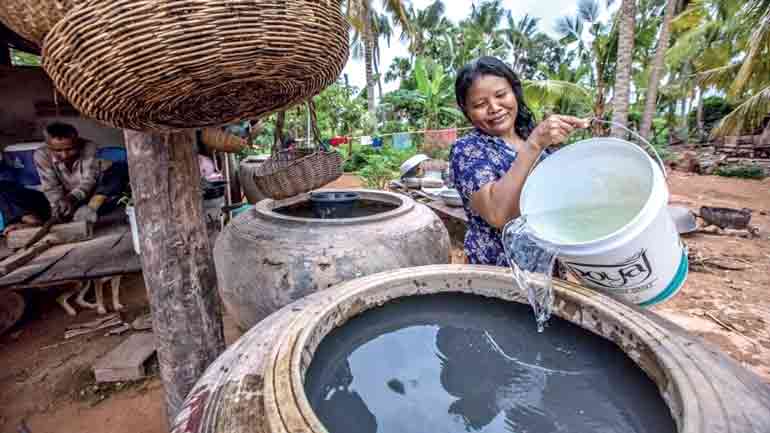
Sustainable, nature-driven infrastructure can help the region protect its people and preserve precious water resources. Photo: ADB
By Fatima Yasmin
The Asia-Pacific has made remarkable progress in water and sanitation over the past decade. Hundreds of millions more people now have access to clean and reliable water and sanitation, improving public health, productivity and dignity across the region.
But beneath the progress lies a growing vulnerability. The natural systems that are the basis for water security—wetlands, rivers, and aquifers—are deteriorating rapidly. This is evident in the more than 80% slump in the global populations of freshwater species since 1970. If the decline in water systems continues, it could unravel decades of hard-won gains and expose economies and communities to escalating risks.
The Asia-Pacific is home to 60% of the world’s population and some of its most fragile ecosystems. Rapid urbanisation and industrialisation, groundwater depletion, river pollution, deforestation, and the loss of coral reefs and mangroves are straining water systems to breaking point. The changing climate is intensifying these pressures, bringing longer droughts, heavier rainfall and more destructive floods.
Just over a decade ago, the region’s most urgent water challenge was basic access to water and sanitation, particularly in rural areas. Massive investments into supply systems, sewers and wastewater treatment, as well as better access to toilets and improved hygiene, have transformed that picture. In Nepal, for example, the near-total elimination of open defecation has delivered major benefits in public-health and reduced waterborne diseases.
Since 2007, the Asian Development Bank (ADB) has been tracking water security in the Asia-Pacific. Across 50 economies surveyed by the latest Asian Water Development Outlook, our analysis shows that since 2013 most countries have improved in rural, urban and economic water security. To put that into perspective, around 2.7 billion people, equivalent to about 60% of the region’s population, have been lifted from the most extreme forms of water insecurity.
But one indicator stands out for the wrong reason: environmental water security—how well countries protect the ecosystems that supply and regulate clean water. In 30 economies, performance either stagnated or declined. Even among the 10 strongest overall improvers, the average gain on environmental protection was negligible.
Nature has become the weakest link in the region’s water chain.
Environmental water security is a core concern—it is a foundation on which all other water investments depend. Healthy catchments filter and store water, regulate flow and buffer communities against floods and droughts. Once these systems are degraded, even the most sophisticated pipes, pumps and treatment plants cannot fully compensate.
The costs of neglect are rising fast. Despite better access to water and sanitation, around 4 billion people still face risks including poor water quality, degraded ecosystems and disasters.
The data is stark. Between 2013 and 2023, the Asia-Pacific experienced 244 major floods—41% of the global total-alongside 104 droughts and over 100 severe storms. Deforested hillsides turn rainfall into flash floods and landslides. Polluted rivers spread disease. Drained wetlands remove natural storm buffers.
Small island nations in the Pacific, urban areas and coastal megacities are especially vulnerable. Rising seas, saltwater intrusion, urban land subsidence and storm surges threaten freshwater supplies and infrastructure. While many island ecosystems remain relatively intact, weak governance—including urban planning, land management and poor enforcement of environmental safeguards—puts these natural defenses at risk.
Disasters force governments to spend billions on repairs and reconstruction. Yet prevention and risk reduction—especially through nature-based solutions—remain underfunded.
The path forward is clear. Gray infrastructure and green systems must work together. Pipes, pumps and concrete drains are essential, but they are not enough on their own to manage more frequent and extreme storm events. Landscapes such as marshes, mangroves and floodplains, as well as nature-based infrastructure such as green roofs, parks, and retention ponds can retain stormwater and absorb shocks, ideally when systemically integrated with engineered gray drainage systems.
In Viet Nam, ADB helped cities become more resilient by combining green with conventional gray infrastructure and strengthening urban planning for flood impacts. This approach effectively demonstrated how a shift from concrete to nature-based solutions can deliver sustainable urban growth and enhanced water security.
Water decisions must also be inclusive, especially at a local level, to benefit groups that are most exposed. A community-led project in Mongolia shows what can be done: through training in forest planning, including practices to protect riparian zones, local people were able to improve forest health, protect river flows and boost environmental water security.
The Asia-Pacific will need an estimated $4 trillion in water, sanitation and hygiene investment by 2040. Current public spending covers only about 40%. Closing this investment gap is essential. But how money is spent is just as important as how much is spent. Funding new infrastructure matters; so too do budgets for maintenance and improvements.
Nepal’s experience illustrates the point. While 94% of rural households have access to basic water supplies, only 55% have a piped connection and just 14% receive water free from contamination. Infrastructure without adequate maintenance, governance and ecosystem protection delivers diminishing returns.
Innovative financing-blending public, private and concessional funds such as loans at preferential rates, grants and development aid-can ease pressure while scaling up nature-based solutions.
Our data shows that trust, participation, and the effectiveness of governments and other public institutions determine whether investments succeed. Multilateral banks and development partners have a critical role to play, developing solutions in partnership with governments, communities and the private sector.
Healthy ecosystems are the first line of defence against water stresses and shocks. If we invest in them wisely, they will deliver water security, resilience and sustainable growth for decades to come.
(The author is ADB Vice-President for Sectors and Themes. This article was first published as an opinion article in Nikkei Asia)




