Wednesday Oct 21, 2026
Wednesday Oct 21, 2026
Friday, 4 September 2026 00:46 - - {{hitsCtrl.values.hits}}
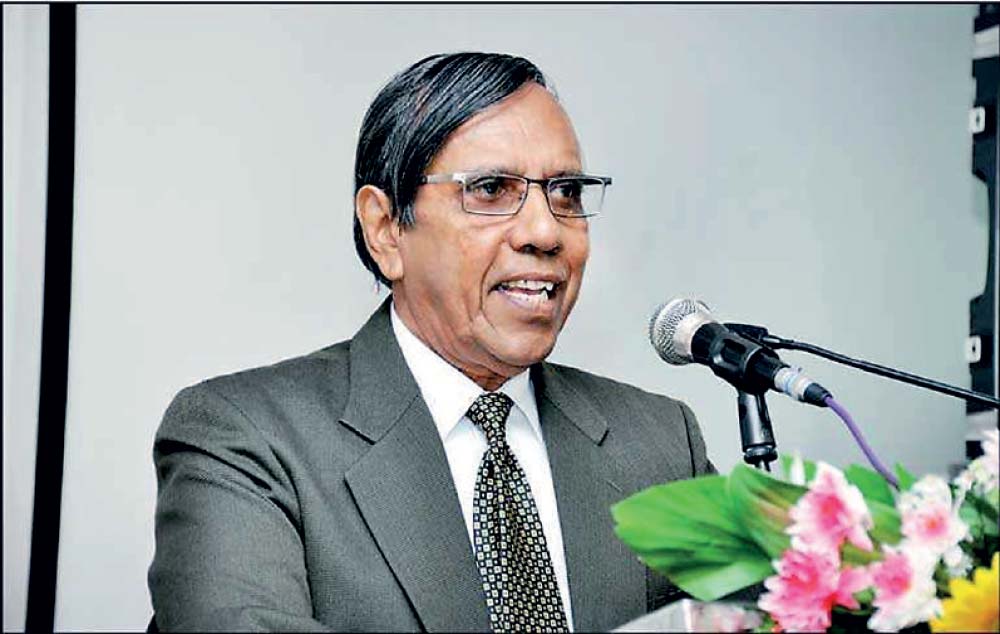
Late Franklyn Amerasinghe highlighted the need for remuneration schemes tied to value addition
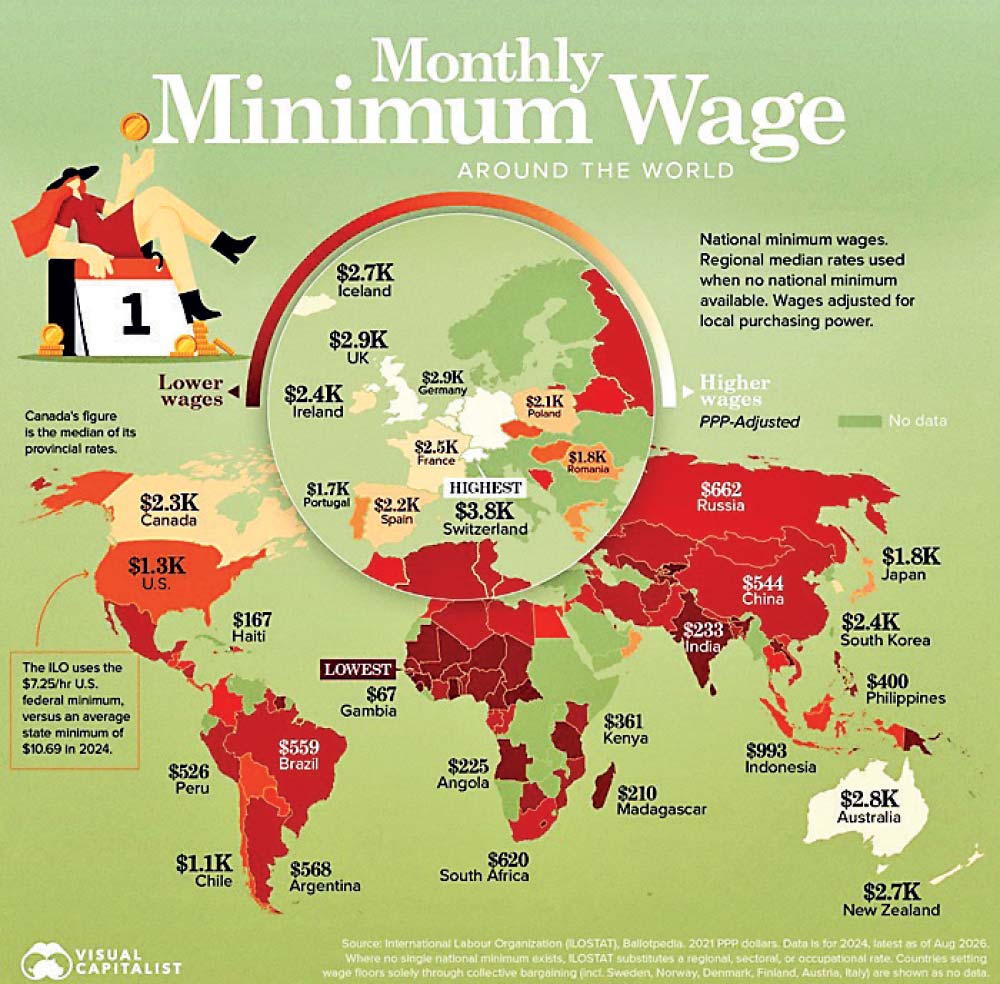
 The headline that "Sri Lanka ranks 120th among 130 countries" in an international wage study surprised me. It is the kind of statistic that can quickly shape the opinions of investors and lenders, creating the impression that Sri Lankan workers are among the worst paid in the world—and that this reflects poorly on their quality of life. International comparisons of minimum wages can be useful, but they need to be interpreted carefully. A ranking may provide a broad indication of where a country stands, but it does not necessarily tell us whether workers are adequately compensated—directly and indirectly, through non-cash benefits—relative to the cost of living, productivity, household needs, or the structure of the economy. The first question we should ask, therefore, is whether we are actually comparing like with like.
Countries differ considerably in how minimum wages are determined. Some have a single national minimum wage, while others have different rates by sector, occupation, region, or age group. In Sri Lanka, wage-setting has historically involved a combination of national provisions and sector-specific Wages Boards—we have 44 of them. This makes a simple international ranking less straightforward. There is also the issue of coverage. A statutory minimum wage may apply only to particular categories of workers, while large sections of the economy operate outside the formal wage-setting framework. Sri Lanka, like many developing economies, has a significant informal sector. The statutory minimum wage, therefore, cannot necessarily be treated as a reliable measure of what all workers actually earn, whether in cash or benefits.
Exchange rates
Exchange rates create another complication. When wages are converted into US dollars or another common currency, exchange-rate movements can significantly alter a country's ranking without any corresponding change in workers' purchasing power. A depreciation of the rupee, for example, could make Sri Lankan wages appear substantially lower in dollar terms even if domestic wages have not changed proportionally.
The cost of living also matters. A worker's standard of living cannot be assessed simply by converting wages into dollars. What matters is what that income can actually purchase. Housing, food, transport, healthcare, education, and utilities vary substantially between countries. Purchasing-power comparisons may therefore provide a different picture from nominal wage comparisons.
This does not mean Sri Lanka should dismiss international wage comparisons. On the contrary, the ranking should prompt a deeper examination of whether minimum wages + overtime + other benefits are keeping pace with the economic realities workers face. The real issue is whether the statutory wage provides a reasonable foundation for a decent standard of living while remaining consistent with productivity and the capacity of employers—particularly small and medium-sized businesses—to sustain employment and livelihood of their workers .
Actual wages paid
There is also an important distinction between the minimum wage and the wages actually paid in the economy. Many workers earn considerably more than the statutory minimum due to skills shortages, collective bargaining, overtime, allowances, incentives, or market conditions. Conversely, some earn close to or even below the statutory threshold, particularly where enforcement is weak. This suggests that simply increasing the minimum wage may not, by itself, solve the broader problem of low household incomes.
Sri Lanka may need to look at the issue more holistically. Improving productivity, expanding formal employment, strengthening labour-law enforcement, increasing female labour-force participation, and investing in skills could arguably have a more sustainable impact on workers' incomes over time.
The thinking of labour-law experts such as the late Franklyn Amerasinghe is also relevant here. He highlighted the need to improve the quality of life of all citizens through decent work strategies. Sri Lanka's wage-setting framework has evolved over many decades, and any reform should recognise the institutional and legal realities of the country's labour market rather than relying solely on an international league table. There may, therefore, be a case for reviewing the country's minimum-wage framework, including whether the present arrangements remain appropriate for a modern economy. But such a review should be based on evidence covering inflation, household expenditure, productivity, regional differences, business capacity, tax efficiency and other employment benefits .
Minimum wage
A higher minimum wage can improve incomes and purchasing power. At the same time, if increases are not aligned with productivity and business capacity—particularly in labour-intensive sectors—they could place pressure on employment, prices, or business viability. The objective should be to find the right balance rather than pursue a particular ranking.
Ultimately, the question Sri Lanka should be asking is not simply, "Where do we rank?" The more important questions are: Are our workers earning enough to live with dignity? Are wages keeping pace with the cost of living? Are workers sharing fairly in productivity gains? And is our wage-setting system capable of adapting to a changing economy? International rankings can help start that conversation. They should not, however, be allowed to end it. Sri Lanka would be better served by looking beyond the headline number and undertaking a comprehensive, evidence-based assessment of wages, productivity, living standards, and employment. The goal should not merely be to move higher up an international ranking, but to build a competitive labour market in which rising wages are supported by rising productivity, talent retention, building talent pools, stronger businesses, and better opportunities for workers.
References
https://www.dailymirror.lk/breaking-news/sl-ranks-120th-among-130-countries-in-ilo-wage-study/108-348938
u.s. department of labour – minimum wage
https://www.ft.lk/front-page/despite-all-our-pleading-for-change-in-labour-laws-nothing-has-changed-for-the-better/44-673731?




