Monday Oct 12, 2026
Monday Oct 12, 2026
Monday, 24 August 2026 03:55 - - {{hitsCtrl.values.hits}}
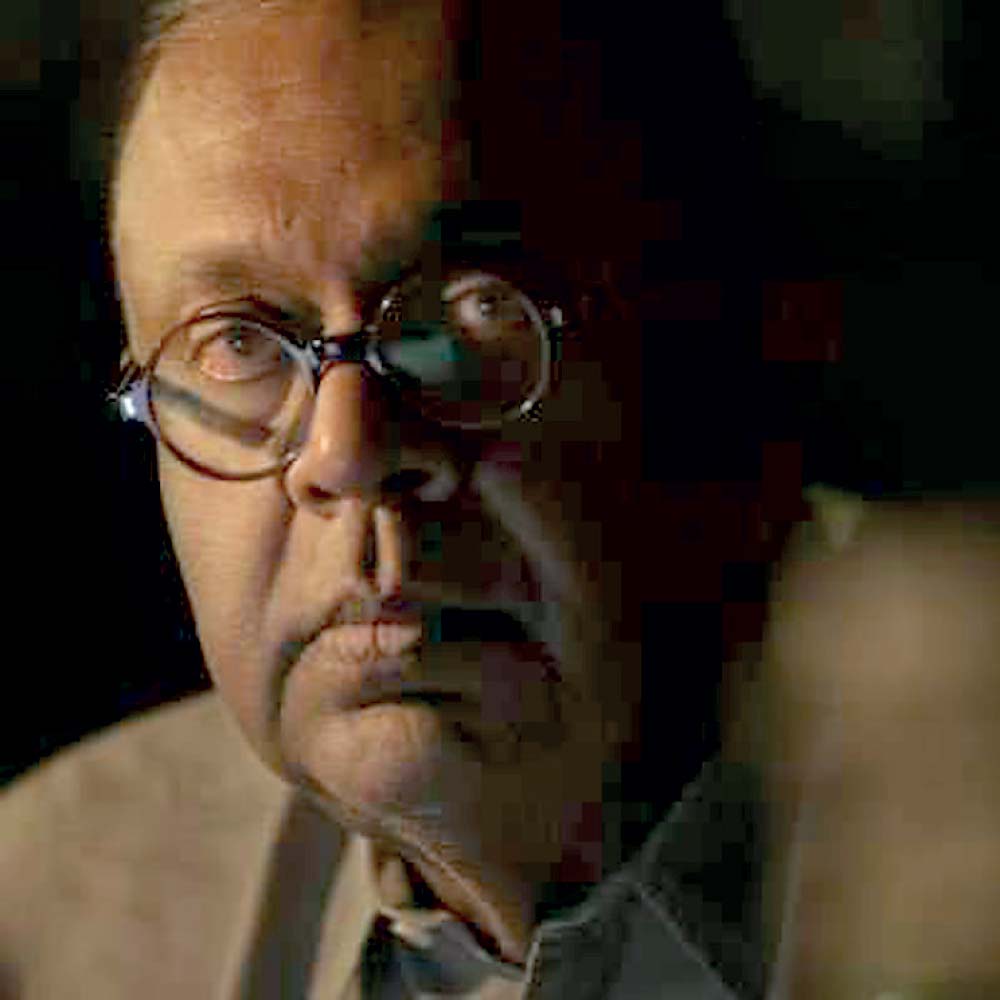
 Sri Lanka remembers Mangala as a minister, reformer, diplomat and courageous political leader. He understood that public office was temporary, but that the good one accomplished through it could endure. No position or title ever defined the entirety of Mangala Samaraweera. Whether in foreign affairs, telecommunications, finance, reconciliation or public communication, Mangala was always interested in the Sri Lanka of tomorrow. He identified talent without feeling threatened by it. He encouraged younger people to think independently, challenge convention and find their own voices
 Inserting ‘Mister’ before a name is typically a formal way of addressing someone. With Mangala Samaraweera, it was different. He called me ‘Mister Cooray’ only when he wanted to say something in a lighter vein or was about to make one of his mischievous remarks.
The exaggerated formality was a signature of his friendship, generosity and, of course, his sense of humour – more pronounced in his private life than in his public or political engagements. Today (24th of August), five years after he passed away, strangely, it is that inimitable warmth that I remember most.
Five years is long enough to forget anyone, including those near and dear to us. As the song goes, ‘However famous you may be, you will be remembered for but a week.’ Politicians, in particular, are forgotten almost immediately after losing an election.
Death makes forgetting even quicker. Mangala’s case, as far as I am concerned, is perhaps the proverbial exception that proves the rule. Simply put, time has as yet failed to alleviate my grief and immense sense of loss.
The passage of time wasn’t necessary for me to realise that I had lost a dear friend. I knew it from the first painful moment. What time has done is show me the many ways in which he inscribed himself upon my life.
Sri Lanka remembers Mangala as a minister, reformer, diplomat and courageous political leader. He understood that public office was temporary, but that the good one accomplished through it could endure. No position or title ever defined the entirety of Mangala Samaraweera. Whether in foreign affairs, telecommunications, finance, reconciliation or public communication, Mangala was always interested in the Sri Lanka of tomorrow. He identified talent without feeling threatened by it. He encouraged younger people to think independently, challenge convention and find their own voices.
|
Mangala Samaraweera
|
I remember all of that, but, more importantly, I remember the man behind those public roles. I remember his laughter, his sharp observations, his unique sense of humour and the warmth that was often hidden behind his public confidence.
Perhaps what I miss most is the certainty that Mangala would understand. He often understood not only what I said but also what I did not say. Not only what I did but also what I did not do or refused to do. This deep sensitivity was clearly apparent in the way he treated people, regardless of who they were, where they came from, where they were heading, and whether or not they shared his political convictions or his vision for the country.
He accepted people as they were. In his company, one did not have to pretend, conceal one’s identity or apologise for being different. This was probably because he himself never pretended, concealed anything or apologised for being who he was.
Maybe this is why Mangala was never wary of difference. He saw diversity not as something to be reluctantly accommodated but as part of the beauty and character of Sri Lanka. His love for Sri Lanka was generous and inclusive. He believed that every Sri Lankan, irrespective of ethnicity, religion, background or personal identity, should feel equally at home in this country. Maybe this is why courage and tenderness were both second nature to him: the country witnessed the former, while his friends were showered with the latter.
There are, unfortunately, people who formed a poor opinion of Mangala without ever really knowing him. I have always felt that, had they spent time with him personally, many would have seen him very differently. They did not know – and, indeed, could not have known – that one could disagree with him, sometimes strongly, and still take enormous pleasure in his company.
His friends, though, knew that behind the colourful public personality was a very loyal friend who remembered small details, noticed when someone was troubled and knew when humour was more comforting than advice. They could argue, challenge one another and then laugh together because disagreement was never allowed to threaten the friendship. It is difficult to explain this to anyone who did not experience it. It was simply one of Mangala’s rarest gifts, and I consider myself fortunate to have witnessed it.
During the Yahapalana years, going to Mangala’s home after work became almost a ritual. We would pour ourselves a good drink, talk late into the evening, laugh freely and – I must confess – occasionally be thoroughly uncharitable about friends and enemies alike. It was all in good spirit and only for fun. Those evenings brought us immense joy, yet they were never only about drinking and laughter. Mangala’s home was also a place of ideas, knowledge and strategy. Conversations around his table improved our thinking, sharpened our creativity and, on most occasions, inspired something new.
When Minister Ranil Wickremesinghe asked me to head the troubled Lake House, the country’s largest publishing house, founded by his maternal grandfather, D. R. Wijewardene, I thought I had an ironclad excuse for refusing. I made it clear I could not work with any minister other than Mangala, and Mangala could not handle the media portfolio while also holding the Foreign Affairs portfolio, which required frequent overseas travel. The Prime Minister then dropped a bombshell: he asked me to try and persuade Mangala to take on the Finance portfolio while also serving as Minister of Media, with responsibility for Lake House.
I remember all of that, but, more importantly, I remember the man behind those public roles. I remember his laughter, his sharp observations, his unique sense of humour and the warmth that was often hidden behind his public confidence
Mangala’s first reaction was an outright rejection. Another Cabinet Minister, who was also a mutual friend, together with me, urged Mangala to take up the Finance portfolio in addition to the Media portfolio. Mangala was asked to sleep on it and make a decision the next day. He insisted that even his mother had told him he was no good at managing his own money, and that there was no way he could be entrusted with running the Treasury. After much persuasion, Mangala agreed to the switch, but wanted us to discuss it with two of his close relatives, both of whom thought it was a mistake for him to move to Finance. Many senior officials at the Treasury would later say that Mangala was one of the best Finance Ministers they had had the pleasure of working with.
With Mangala’s reluctant agreement, my fate at Lake House was sealed. It was an institution burdened with excess staff. When I mentioned this daunting challenge, Mangala readily admitted that it was largely his fault. ‘I am also largely responsible for where Lake House is today,’ Mangala said. During Chandrika Bandaranaike Kumaratunga’s presidency in the 1990s, he had sent ‘busloads’ of people to take up jobs at Lake House. Mangala not only accepted the blame but was also willing to give his full support to moves to reduce the staff, turn Lake House around and make it viable again.
He was my Minister not only at Lake House but also at Hotel Developers, where I was Chairman. The State-owned Hotel Developers, which owns the Hilton Colombo property, came under the Finance Ministry.
Mangala was not without faults. He could be stubborn, impatient and sometimes too opinionated. We disagreed a lot, even to the point of angry exchanges, but neither of us treated differences of opinion or angry words as disloyalty. Our friendship was never made conditional upon agreement. This is why I could argue with him throughout the night, laugh at the end of it all and go home with the assurance that the solid rock of friendship was intact and would remain so until death took him, leaving an enduring emptiness in his place. He stood by me when it truly mattered. I miss that strength, the come-what-may assurance and the humour that rearranged the world to its true dimensions. I miss his laughter, his counsel, our fights and the comfort of knowing that he would understand.
Mangala stopped tossing ‘Mister Cooray’ at me five years ago. The pain of losing him remains, but so does the profound gratitude that, for part of my life’s journey, Mangala and I walked together.