 As you read this, Sri Lankans are living through a historic redistribution of wealth. Evidence shows that since 2019 Sri Lanka has witnessed a redistribution of income away from the bottom and towards the top. An Institute of Policy Studies (IPS) analysis of Department of Census and Statistics data found that between 2019 and early 2025, the real household income of the poorest 20% fell by 19.6%, while that of the richest 20% increased by 6.8%. The difference is visible across the income distribution. Real median household income fell by 11.1%, compared with a decline of only 1.7% in the average household income.
As a consequence, the distance between the top and bottom widened sharply: in 2019, the average household in the richest 20% earned around 11.2 times as much as the average household in the poorest 20%; by early 2025, that ratio had risen to 14.8 times. Budget 2027 seems likely to accelerate this upward redistribution of wealth, there is little relief for working people, other than raising the income tax-free threshold from 150,000 to 162,500. Sri Lanka’s long-suffering middle class received little or no attention.
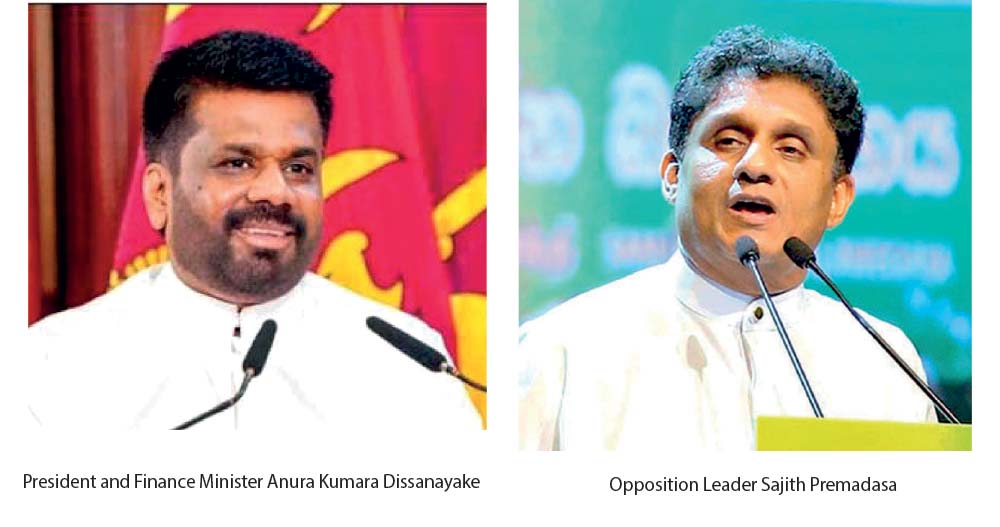
An SJB alternative Budget should demonstrate what would change under its administration, restoring purchasing power to working and middle-income households would be a central objective. The SJB and Sajith Premadasa more specifically, has criticised the current program’s over-emphasis on fiscal consolidation, its failure to distinguish GDP growth from external-sector resilience, and the trajectory towards rebuilding a significant International Sovereign Bond (ISB) portfolio.
The Middle Class is the aspirational class: the salaried executive that wants to move closer to the city, into a home big enough to care for their parents in; the veteran electrician that saved up for decades to start his own business; parents saving up for a downpayment on a mortgage so they can finally own their own home, the high-earning senior manager with a 20-year career that dreams of buying a European sedan, a small-business owner trying to expand, a young couple that want to get married and start a family, but cannot afford to move our of their parent’s homes.
The data is clear: the Sri Lankan middle class is significantly diminished since the 2019 economic crisis saw 70% inflation and interest rates as high as 32% alongside a rapidly depreciating currency. Today, a salaried executive will struggle to afford rent in an urban enclave close to the main city, many skilled workers have already moved abroad, SMEs struggle under a pile of debt that has kept accumulating under moratoriums that came and went. Dynamic entrepreneurs have largely retreated into what’s left of the corporate sector. Beyond the economic indictors of stability lies the real cost of the economic crisis: the loss of aspiration, the surrendering of dreams.
Affordable family vehicle category
A basic family car should not be treated fiscally in the same way as a Land Cruiser or Mercedes Benz. Sri Lanka already differentiates vehicle excise according to engine capacity. A 1,301-1,500cc petrol hybrid currently attracts Rs. 3,450 per cc, compared with Rs. 9,650 per cc for a 2,751-3,000cc hybrid. Vehicles also face customs duty, customs surcharge, VAT and, where applicable, luxury tax. The alternative Budget would create a tightly defined Affordable Family Vehicle category:
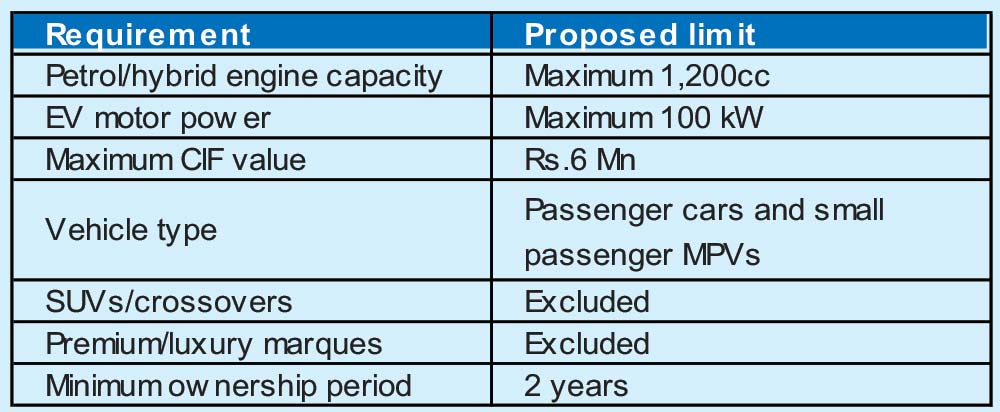
This is a deliberately narrow category, aimed primarily at the lower-middle and middle-income family-car market rather than providing a concession across the entire vehicle market. Examples of vehicles in the Sri Lankan small-car market likely to fall within the category, subject to individual CIF values, include:
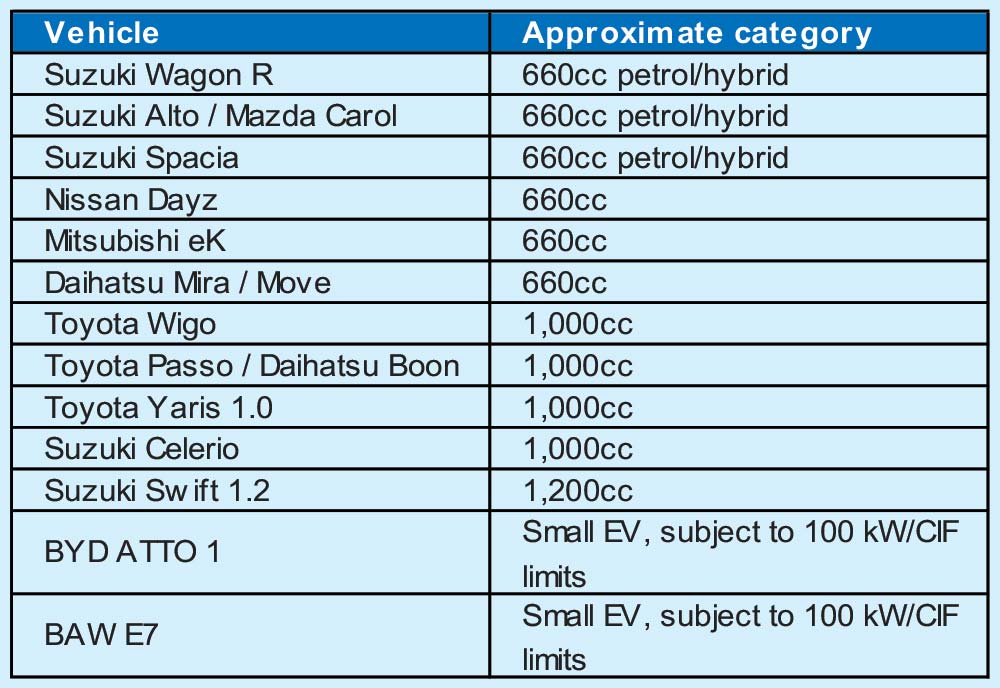
This also corresponds reasonably closely with current demand. In August 2026, around 96% of new car registrations were in the below 1,000cc/100kW small-car category. In September, 770 Wagon Rs were registered, while BYD registered 316 ATTO 1s. Phasing in the tax reduction over three years is necessary to maintain vehicle price stability. The concession would be implemented through scheduled reductions in excise and import taxation rather than an immediate removal of taxes. The objective should be a material reduction in the landed and retail price of qualifying vehicles over three years.
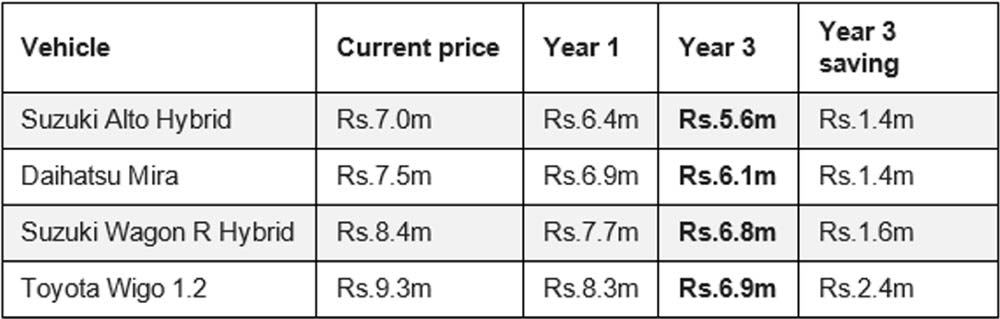
Prices would be reduced gradually over three years by lowering excise duties and customs duty and removing the 50% customs duty surcharge on qualifying affordable family vehicles. VAT and SSCL would remain unchanged, preserving a significant tax contribution while reducing the exceptionally high upfront cost of basic vehicle ownership.
Vehicle taxes remain a major revenue source, generating Rs. 387 billion in the first half of 2026, including Rs. 138 billion from sub 1,000cc petrol cars. As pent-up import demand subsides, the phased concession is estimated to cost Rs. 50-60 billion annually, partly offset by higher import volumes as affordable vehicle prices fall.
Part of the revenue loss would be recovered from the opposite end of the vehicle market. Existing import taxation should become progressively heavier for vehicles above 2,000cc, high-powered EVs, luxury SUVs. An Annual Luxury Vehicle Levy might also be considered or a narrow band of high-end vehicles where demand is likely to be inelastic.
National first home fund
Property has traditionally been one of the main ways Sri Lankan families build wealth but increasingly, middle-class Sri Lankans are being priced out of the neighbourhoods in which they grew up. Colombo’s price-to-income ratio is estimated at 55.3 in 2026, according to Numbeo’s Property Price Index; while this measure is distorted due to the urban/rural divide in property prices, it still indicates a lack of affordability. Official and market data show that since 2019, Colombo asking prices have risen approximately 73% for land, 93% for houses and 119% for condominiums while construction costs have also risen by approximately 91%.
Household purchasing power has moved in the opposite direction: Institute of Policy Studies analysis of Department of Census and Statistics data finds that real median household income fell 11.1% between 2019 and early 2025. The result is a widening divide between households that already own appreciating land and property, and younger and middle-class households trying to acquire their first home through salaries and savings. For many middle-class households, the problem is no longer simply the price of a home but also high interest rates, large down-payments and a concentration of new housing supply at the upper end of the market, all making ownership increasingly beyond the reach of even households with stable middle-class incomes.
The alternative Budget would establish a First Home programme through Bank of Ceylon, People’s Bank, National Savings Bank and the Housing Development Finance Corporation. The treasury would explicitly fund an interest rate subsidy for first time home buyers through the State banks to cover mortgages on concessional rates, subsidising the first 3% or 4% of the mortgage interest rate for say, the first 5 to 7 years. Support would decline as household income rises.
A first-home mortgage could apply to properties valued at up to Rs. 30-35 million and the subsidised mortgage would cover up to 80% of the purchase price, subject to a maximum subsidised loan of Rs. 20 million. Buyers purchasing properties above Rs. 25 million would therefore need to finance the additional amount through their own funds or borrowing at normal commercial rates. Repayment periods could extend up to 25 years. Eligibility would be restricted to the purchase of a first residential property, with an indicative household income ceiling of Rs. 600,000-750,000 per month. Similar policies have been in place in many countries including India, Malaysia and Indonesia.
A Rent-to-Own Housing Program would allow part of a household’s monthly housing payment to accumulate as equity, for example, on a monthly payment of Rs. 80,000, Rs. 50,000 could cover rent and financing costs while Rs. 30,000 is credited to a Home Equity Account. After five years, the household would have accumulated Rs. 1.8 million towards purchasing the property. After ten years, this would rise to Rs. 3.6 million, before any Government matching contribution, and for lower-middle-income first-home buyers, the State could match part of these accumulated savings.
The Government’s principal contribution need not be a large cash subsidy. Well-located State land around railway stations and major transport corridors could be leased for medium-density housing, with private developers selected through competitive tenders; keeping land under public ownership would remove a major component of development costs and reduce apartment prices.
Mortgage and rent-to-own programs must also increase housing supply, subsidising demand without expanding supply risks simply pushing up property prices. Subsidised units should therefore be developed alongside new housing and carry temporary resale restrictions to prevent speculation. The objective is to expand affordable middle-class housing and create a realistic path from renting to home ownership.
Middle-class relief within the fiscal anchor
Budget 2027 projects that direct taxes would contribute only 24% to total tax revenue while indirect taxes would account for 76%; a ratio that has consistently hovered between 80:20 and 70:30, always in favour of indirect taxes like VAT and import duties. Indirect taxes are regressive by nature, ie, they impact low income groups disproportionately.
For the middle class, the damage is not captured by poverty statistics but households have experienced a profound deterioration in their standard of living. A family can remain employed and technically middle-income while losing the ability to save, purchase a home, finance a vehicle, educate its children privately, travel, invest in a business or accumulate assets.
That is the economic space in which aspiration withers. This is where opposition to AKD and the NPP Government will converge, joining farming communities including those that held a protest on the 2nd of November in Anuradhapura or the Government Service Engineers’ Association that held a nationwide strike on the 13 of November. The Main Opposition SJB is uniquely placed to take advantage of a potential middle-class revolt against the Government, given its strong middle-class bases in electorates such as Dehiwala, Kandy, Galle, Matara, Kurunegala, Badulla, Bandarawela and so on.
Any alternative Budget operating within the present debt sustainability framework would have to retain the fiscal anchor: Sri Lanka is committed to returning to a primary surplus of 2.3% of GDP from 2027. The alternative Budget would not therefore abandon fiscal consolidation but it would alter the composition of revenue and expenditure within the fiscal anchor.
The objective should be broadly revenue neutral middle-class relief. The alternative Budget would match the 2027 Budget’s Rs.162,500 monthly tax-free threshold, but provide substantially greater relief immediately above the threshold through lower marginal income tax rates. This avoids narrowing the tax base further while reducing the burden on lower and middle-income earners.
Part of the revenue loss would be recovered through higher marginal rates on very high incomes and stronger collection from high-income taxpayers outside salaried employment. Revenue neutrality should apply to the overall tax package rather than requiring PIT reform to be exactly revenue neutral; corporate taxation, VAT, property and luxury taxation, improved compliance and other revenue measures will also contribute. The 2027 Budget estimates Rs. 210 billion from PAYE/APIT and Rs. 95 billion from other non-corporate income tax, giving total non-corporate income-tax revenue of Rs. 305 billion.
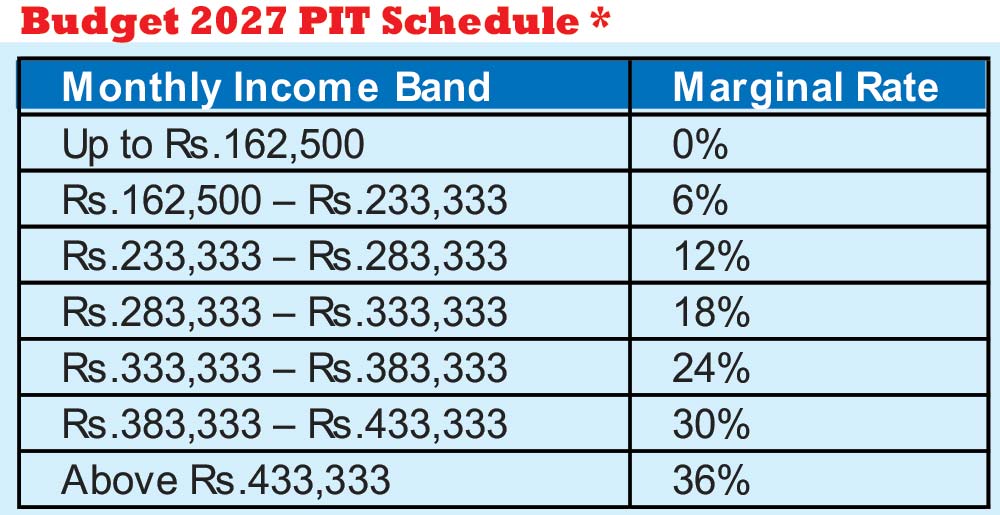
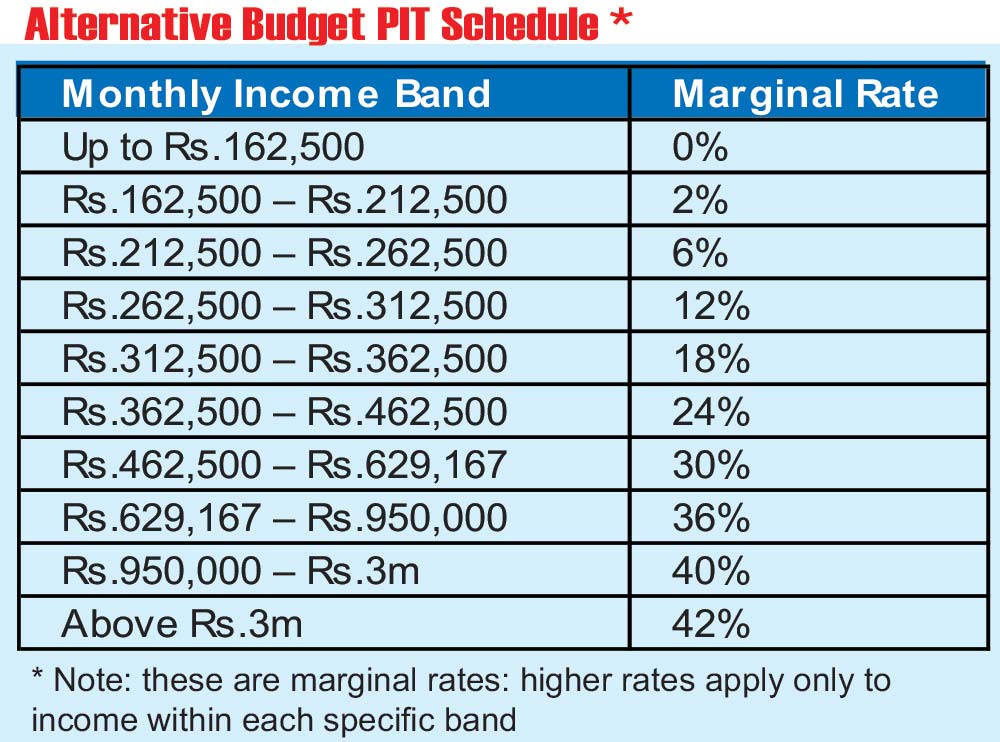
* Note: these are marginal rates: higher rates apply only to income within each specific band
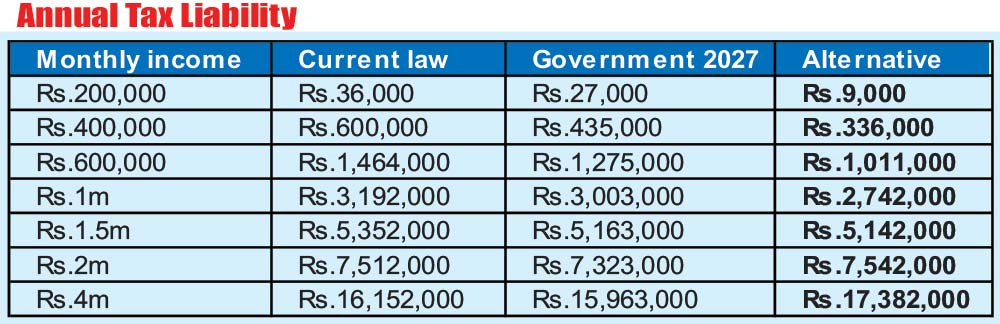
Relief is concentrated on lower and middle-income taxpayers and declines as incomes rise. The 40% and 42% top rates are transitional, with a three-year review allowing thresholds or rates to be adjusted if growth and revenue performance permit.
Advance Personal Income Tax (APIT)
Income tax not collected at source is generally settled through self-assessment, including quarterly instalments and a final payment. Advance Personal Income Tax (APIT) on employment income is deducted directly by employers and remitted to the IRD, making it one of the more reliable methods of collecting personal income tax.
Under the alternative Budget, APIT withholding tables would be adjusted to reflect the new marginal rates; the proposed 40% and 42% rates on the highest bracket of employment incomes would therefore be collected progressively through payroll during the year. APIT is not an additional tax so amounts withheld are credited against the taxpayer’s final income-tax liability, improving collection certainty while reducing the risk of unpaid tax and creating no additional taxes on the tax payer.
The Rs. 3.7 million annual-income category begins at approximately Rs. 308,000 per month and includes both middle-income professionals receiving tax relief and higher earners facing the proposed 40% and 42% rates. Available APIT data are insufficient to determine whether the higher rates would fully offset the revenue loss, requiring final calibration against detailed IRD data. The 10% withholding tax on interest would remain unchanged for ordinary savers, with a higher rate applying only to very large interest incomes.
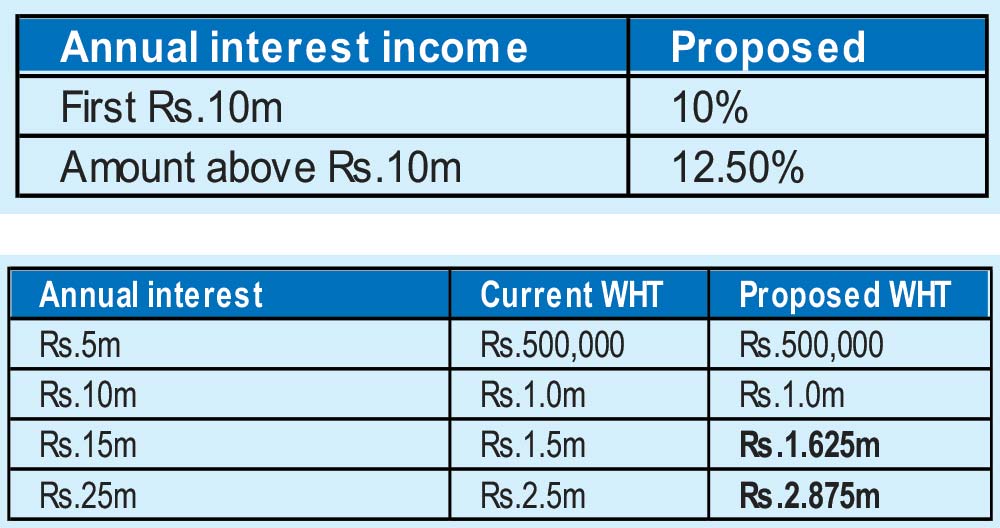
The higher withholding remains creditable against final PIT liability and should not automatically be counted as additional permanent revenue; its main purpose is to collect a larger proportion of the eventual tax liability earlier and reduce collection risk. The Rs.10 million threshold would have to apply to aggregate interest income across financial institutions rather than separately at each bank.
The alternative Budget would be an attempt to rebuild the ladder of middle-class asset ownership that has been severely damaged by the economic crisis: income becomes savings; savings become a deposit; a deposit becomes a home; work makes a family car attainable; and rising income once again produces a material improvement in living standards. That is what restoring aspiration must look like, and the national Budget must reflect this.
(The writer is a political commentator, media presenter, and foreign affairs analyst. A former banker, he spent 11 years in the industry in Colombo and Dubai, including nine years in corporate finance, working with some of Sri Lanka’s largest corporates on project finance, trade facilities, and working capital. He holds a Master’s in International Relations from the University of Colombo and a Bachelor’s in Accounting and Finance from the University of Kent (UK). He currently serves as Advisor on Political Economy to the Leader of the Opposition of Sri Lanka, and is a member of the Working Committee of the Samagi Jana Balawegaya (SJB). Email [email protected]; Twitter: @kusumw)



