Tuesday Oct 20, 2026
Tuesday Oct 20, 2026
Tuesday, 20 October 2026 05:25 - - {{hitsCtrl.values.hits}}
 Sri Lanka’s poultry industry faces a policy contradiction. The Government restricts maize imports to protect domestic growers while seeking to increase chicken and egg production and develop poultry exports. Yet maize is a principal feed ingredient, and uncertainty over its availability and price raises costs throughout the industry.
The question is not whether maize farmers deserve protection. It is whether that protection can be delivered without constraining feed manufacturers, poultry producers, consumers and exporters. A sustainable policy must reconcile agricultural incomes with food affordability, livestock production and export competitiveness.
A persistent gap in maize supply
Government estimates published in 2022 placed annual maize requirements for animal feed at about 700,000 metric tons. This benchmark needs updating as poultry production expands, but it illustrates the scale of demand.
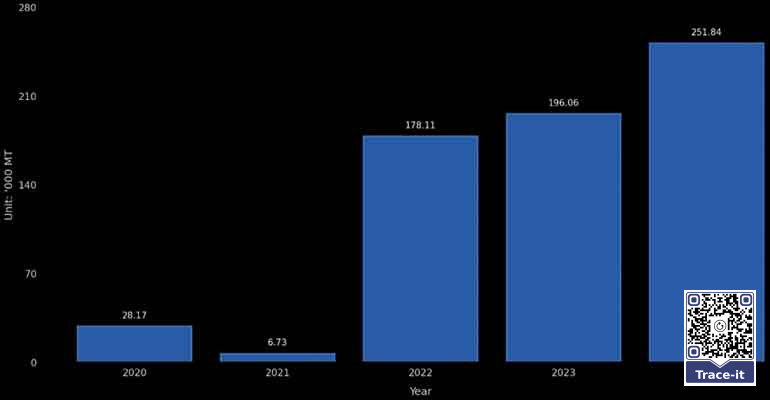
According to the Department of Animal Production and Health (DAPH), domestic maize output in the two cultivation seasons of 2024 totalled 223,497 metric tons, less than one-third of that estimated feed requirement. DAPH recorded 221,935 metric tons of maize imported for animal feed during the year. World Bank World Integrated Trade Solution (WITS) figures put overall non-seed maize imports at 251,843 tons. The figures cover different import categories and should not be treated as interchangeable.
Moreover, domestic maize also supplies Thriposha production and human consumption. Not all locally grown maize is available to poultry producers. The Food and Agriculture Organization estimated production at approximately 420,000 tons in 2025, suggesting a recovery in output, but not the elimination of seasonal supply risks.
These figures highlight the need for a current, disaggregated assessment of maize demand, domestic harvests and stocks. The 700,000-tonne estimate relates to feed requirements, while production and import figures cover different years and uses. A simple subtraction cannot establish the exact shortage. Authorities need to account for carry-over stocks, alternative feed ingredients and the timing of harvests and imports. Without that evidence, import decisions risk being disconnected from actual requirements and seasonal availability.
Farmer protection and its cost
The case for protecting maize growers is legitimate. Large imports during harvesting periods could depress farm-gate prices, particularly for smallholders lacking drying, storage and pre-agreed purchasing arrangements. However, restrictions imposed when local maize is insufficient can create scarcity and push up prices for feed manufacturers.
DAPH attributed inflationary maize prices in 2024 partly to restricted import periods and controlled volumes. The domestic maize price rose from roughly Rs. 130 per kilogram in January to Rs. 191 by November. Farmers able to sell at higher prices may benefit, but poultry producers face increased input costs.
In March 2026, the Cabinet approved a mechanism for registered feed manufacturers and importers to bring in maize to cover shortages outside harvesting periods. Subsequent restrictions linked to pressure on the rupee nevertheless renewed uncertainty. An import framework cannot support production planning if quantities and approvals change without clear supply data or advance notice.
Uncertain quotas can also favour firms with privileged access to permits, rather than the most efficient feed manufacturers. Farmers need assured buyers and fair harvest prices; the downstream industry needs sufficient raw materials. Better market information and competitive procurement would help reconcile both interests.
How maize taxation reaches the poultry farm
The Special Commodity Levy on imported maize increased from Rs. 25 to Rs. 50 per kilogram in May 2026. That is an additional Rs. 25,000 per imported metric tonne, before considering how costs are shared along the supply chain.
The effect on feed can be illustrated simply. If maize accounts for 50% of a feed formulation and the full Rs. 25 per kilogram increase is passed through, the additional input cost could reach Rs. 12.50 per kilogram of feed. This is an illustration, not an observed retail price increase: the result depends on the mix of local and imported maize, inventories, feed recipes and pricing decisions.
The 2026 tariff framework cited in the original analysis also lists customs duty, VAT, Cess and the Social Security Contribution Levy. Their applicability, interaction with the Special Commodity Levy and any exemptions require checking before calculating an effective import-tax burden.
The economic issue remains clear: costly or delayed maize imports raise the risk of more expensive poultry feed. That cost is not confined to large processors. Independent feed mills and small poultry farms may have limited bargaining power and fewer options to change suppliers, making them more exposed to sudden price increases. Import taxes should be evaluated alongside domestic output and feed-price data, not in isolation.
Higher output does not guarantee profitability
Feed is among the largest expenses in broiler and layer production. Higher feed prices raise the cost of chicken meat and eggs, but producers cannot necessarily pass increases to consumers, especially when growing supplies put downward pressure on selling prices.
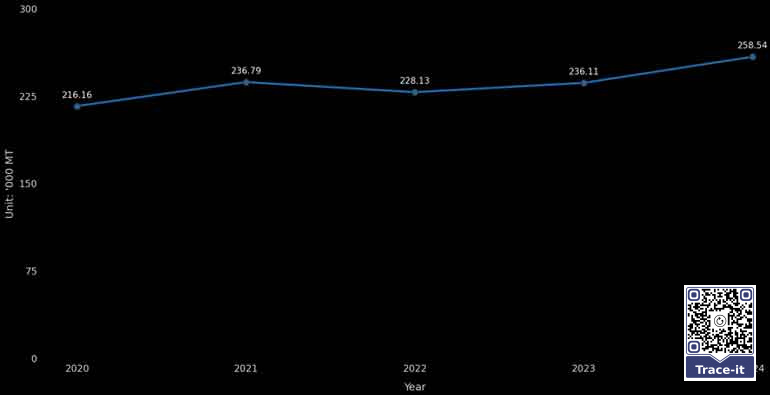
DAPH figures show poultry meat production rising from approximately 236,110 tons in 2023 to 258,540 tons in 2024. Egg output increased from 2,043.5 million to 2,953.06 million over the same period. These gains show the industry’s productive capacity, but they do not establish that farmers earned better margins.
Smaller farms are especially exposed. They have less capacity to purchase inputs in bulk, hold inventories or absorb price swings. When selling prices ease while feed costs remain high, investment and future production become harder to sustain. This matters for household access to affordable animal protein as well as for the industry’s growth.
A wider test of fiscal policy
Maize import taxes generate revenue and support domestic producer prices, but those benefits have an economic cost. Expensive feed can discourage investment in farms, feed mills, processing plants, cold storage and higher-value products. It can also limit employment, future export earnings and taxable profits generated elsewhere in the value chain.
The policy test should therefore extend beyond customs collections. Government must assess the combined effects on maize growers, poultry farmers, consumers, investors and public revenue.
A tariff that raises revenue at the border may still reduce the potential economic return from poultry production. Exchange-rate concerns deserve consideration because imports require foreign currency. Yet a longer-term assessment should also account for foreign exchange earned from poultry exports and the possibility that more efficient production could replace costly finished-food imports.
The appropriate test is the net economic benefit, not the maize import bill alone.
Exports are growing, but from a modest base
Sri Lanka already exports poultry products. DAPH reported exports of approximately 1,576 tons in 2024, increasing to nearly 2,610 tons in 2025, with a reported value of about Rs. 1.06 billion. The growth is encouraging, although export volumes remain small relative to domestic production.
The Maldives and selected markets in the Middle East and Asia offer possible opportunities for frozen, processed and value-added poultry products. However, access depends on competitive prices, reliable supply, animal-disease management, traceability, food-safety certification and cold-chain logistics.
Feed costs are central to this calculation. Sri Lankan processors cannot build lasting export relationships if maize is intermittently unavailable or disproportionately expensive compared with competitors’ inputs. Likewise, stronger processing capacity alone cannot offset an unpredictable raw-material policy.
DAPH’s 2025 poultry industry analysis identified maize import rules, taxation and approval procedures as areas requiring review.
Export growth will also depend on sustained production volumes and consistent product specifications. Buyers are unlikely to commit to long-term contracts when processors cannot reliably estimate input costs.
The competitiveness issue therefore runs from maize procurement through farming and processing to refrigerated shipment. Input-policy reform is necessary, although it will not be sufficient on its own.
Industry seeks predictable supplies
Sri Lanka Poultry Producers’ Industry Association President Dr. Ajith Gunawardena has raised concerns over the disruption caused by maize import restrictions.
According to Gunawardena, permission had been given to import approximately 300,000 tons, but imports were subsequently curtailed amid pressure on the rupee. Companies that had already opened letters of credit were permitted limited imports.
He stressed maize’s importance to poultry feed and said substituting rice made it difficult to achieve expected chicken and egg production levels. He also warned that possible El Niño conditions could threaten feed security and called for strategic maize reserves and a review of import restrictions.
His argument reinforces the need to treat maize as both a crop-income issue and a food-security input. But reliable reserve targets should be established through published demand and supply assessments rather than unsupported assumptions.
A policy framework for farmers and exporters
Reform does not require abandoning domestic maize growers or opening imports without safeguards. It requires five linked measures.
A more coherent maize policy should begin with a reliable national supply-and-demand assessment covering the requirements of broiler and layer production, dairy farming, Thriposha manufacturing and human consumption. Updated information on domestic harvests, available stocks and projected shortages would enable the Government to determine import quantities and timing based on actual market requirements rather than administrative discretion.
Such an approach should be supported by a predictable seasonal import mechanism that protects domestic maize growers during harvesting periods while allowing feed manufacturers to secure adequate supplies ahead of anticipated shortages. Greater transparency in import permit allocations, approved quantities and eligibility criteria would help minimise market distortions and prevent excessive concentration among importers.
However, protecting domestic maize farmers should not depend primarily on import restrictions and tariffs. Improving access to high-yielding seeds, irrigation, mechanised harvesting, drying and storage facilities, together with forward-purchasing agreements, would help increase productivity and reduce production costs. These interventions could strengthen farm incomes while gradually improving the competitiveness of locally produced maize without imposing additional costs on the poultry industry.
At the same time, the Government should consider a controlled raw material import mechanism for export-oriented poultry producers. Under such an arrangement, verified exporters could access maize and other essential feed ingredients at concessionary rates against documented production and export commitments. Appropriate monitoring, auditing and stock reconciliation would be necessary to prevent these imports from being diverted into the domestic market.
Beyond input costs, expanding poultry exports requires investment in animal disease surveillance, food safety certification, product traceability, modern processing facilities and refrigerated logistics. A coordinated public-private approach to these requirements would strengthen compliance with international market standards and improve Sri Lanka’s ability to compete in regional and global poultry markets. Ultimately, aligning agricultural protection with industrial competitiveness and export development should be the central objective of maize policy reform.
These reforms also demand coordination among agriculture, livestock, trade and fiscal authorities. Clear rules could be reviewed against practical indicators: domestic farm-gate prices, import approval times, feed costs, poultry output and export performance.
Decisions made to protect one commodity should be tested against their consequences for downstream production and export earnings. A published review would help distinguish genuine supply shortages from distribution problems and make policy adjustments more accountable.
Sri Lanka need not choose between protecting maize farmers and expanding poultry exports. The choice is between an unpredictable system of restrictions and a transparent policy that rewards domestic productivity while meeting genuine supply shortfalls.
If poultry is to become a stronger export earner, competitiveness must begin with the cost and reliability of its feed supply.
Under such a system, poultry processors producing for verified overseas markets could be permitted to import feed ingredients at concessionary rates, subject to strict documentation, audit requirements and controls against diversion into the domestic market.
This would help preserve domestic farmer protection while enabling exporters to compete on more commercially viable terms. Finally, export promotion must be supported by stronger industry infrastructure and international compliance.
Public-private investment in disease surveillance, food safety certification, modern processing facilities, traceability systems and refrigerated logistics will be necessary if Sri Lanka hopes to enter more demanding international markets. These measures should be coordinated through an integrated agricultural, industrial and trade development strategy rather than implemented through isolated policy interventions.
Protecting maize farmers and developing poultry exports are not mutually exclusive
Sri Lanka’s maize import policy should not be reduced to a choice between domestic farmer protection and unrestricted imports. Both agricultural livelihoods and livestock industry development are legitimate national priorities.
However, protecting maize farmers through unpredictable restrictions while expecting poultry producers to expand output, maintain affordable prices and compete in export markets creates an economically inconsistent policy environment. A more sustainable framework would combine targeted farmer support, productivity improvements, transparent import management and competitive access to essential feed ingredients.
Such an approach could strengthen domestic food security, improve poultry industry profitability, attract investment and create new opportunities for agricultural value-added exports. If Sri Lanka genuinely intends to move beyond import substitution and establish poultry as a significant export-oriented industry, competitiveness must be built across the entire production chain. That process begins not at the poultry processing plant or the export terminal, but with the availability, affordability and reliability of maize.
Protecting domestic maize farmers and expanding poultry exports need not be competing national objectives. Bridging the policy gap between them is ultimately a responsibility of the Government.
‘’The writer brings nearly 25 years of professional experience in journalism, media advocacy, public relations and reputation management, having worked with leading communications consultancies and industry associations across diverse sectors, including plantations, apparel, poultry, poverty reduction, health care and banking and finance. His expertise encompasses strategic communications, policy advocacy and stakeholder engagement, with a particular focus on economic and public policy issues. He is currently pursuing a Master’s degree in Economic and Public Policy Studies at the University of Colombo’’.
(The author is Consulting Director, Media and Advocacy, Mark and Comm)




