Friday Oct 02, 2026
Friday Oct 02, 2026
Friday, 14 August 2026 04:18 - - {{hitsCtrl.values.hits}}
 If an adjustment to the inflation target is considered appropriate, global experience suggests that it may be more prudent to make such an adjustment in smaller, measured steps rather than through a large one-off change. A credible target must ultimately serve as a bridge between structural economic realities and public trust, ensuring price stability protects all income groups while supporting long-term macroeconomic stability
 The Background
Inflation is a phenomenon faced by every citizen of a country and, therefore, warrants public attention. It affects the decisions of households, businesses, and the Government. Globally, central banks are generally entrusted with the responsibility of maintaining low and stable inflation, which is referred to as price stability. For this purpose, central banks implement monetary policy. When implementing monetary policy to maintain price stability, central banks generally have a targeted level of inflation.
Depending on the monetary policy framework of a country, this target may either be explicitly communicated to the public or, in some cases, central banks may aim to achieve price stability in general without specifying an explicit target. In particular, central banks that pursue an inflation-targeting policy framework, or its variants, set an inflation target that the central bank strives to achieve. This targeted level of inflation varies across countries and is influenced by the respective economic structures.
The Central Bank of Sri Lanka (CBSL) conducts monetary policy within a flexible inflation-targeting framework, which is a variant of the broader inflation-targeting framework. Flexible inflation targeting provides the overarching framework for the conduct of monetary policy by CBSL and is used to accomplish its core objective of achieving and maintaining domestic price stability.
The Central Bank of Sri Lanka Act, enacted in 2023, provides the legal basis for this framework. Under this, CBSL aims to keep inflation aligned with the target set out in an agreement between the Minister of Finance and the Central Bank. This agreement, known as the Monetary Policy Framework Agreement (MPFA), requires the Central Bank to maintain quarterly headline inflation at 5%. A margin of ±2 percentage points is specified under the MPFA to measure potential deviations from the target, which would trigger the relevant accountability measures.
The Central Bank Act states that the inflation target and related parameters may be reviewed once every three years or at a higher frequency under exceptional circumstances. Accordingly, the current inflation target, agreed upon in October 2023, is due for review in the near future. Against this backdrop, this article aims to shed light on the major factors that determine a country’s inflation target.
Inflation targets across the world
Specifying an inflation target involves selecting a price index to define the target, assigning a numerical value to the target, and deciding whether to define the target as a point or a band. A point target is generally associated with a band around the central target, which is used to measure deviations from the target and may also be linked to an accountability mechanism. A well-defined inflation target may also contain escape clauses or exemptions under specific circumstances.
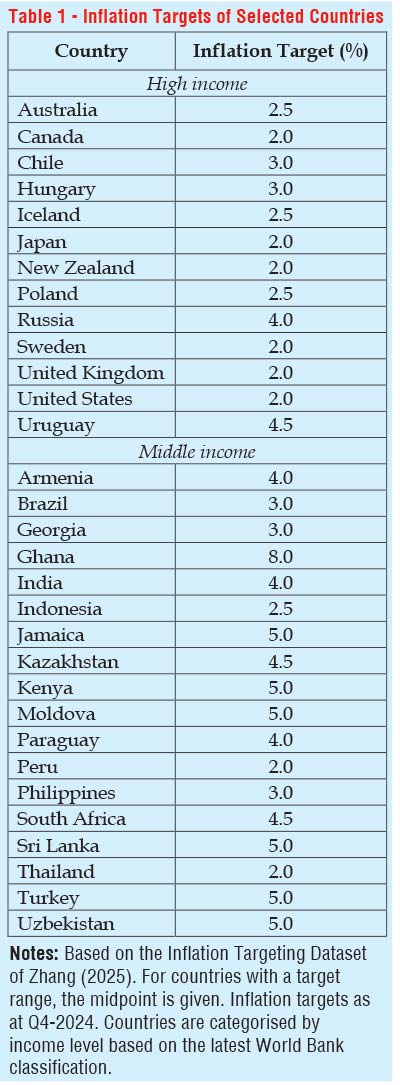 Table 1 presents inflation targets for selected countries worldwide. The dataset is based on a recent study by Zhang (2025), and the inflation targets are as of the fourth quarter of 2024. For countries with a range set as the inflation target, such as Australia and South Africa, the midpoint of the target range is given. For ease of analysis, the countries are categorised by income level based on the latest World Bank classification, which uses Gross National Income (GNI) per capita to classify economies.
As shown in Table 1, inflation targets for the selected high-income countries range from 2% to 4.5%. Countries such as New Zealand, Canada, the United Kingdom, Finland, Sweden, and Australia were among the early adopters of inflation targeting. These economies have evolved over a long period under inflation-targeting policy frameworks, and most have set relatively low inflation targets, such as 2%. However, not all high-income nations have such low inflation targets, as shown in Table 1.
Among middle-income countries, inflation targets exhibit greater diversity. Targets range from 2% for economies such as Peru and Thailand, to 5% for economies such as Moldova and Turkey, and to relatively high levels such as 8% for Ghana. Moreover, middle-income countries represent a diverse group, particularly in terms of financial market development and the effectiveness of monetary policy transmission mechanisms. Furthermore, in many middle-income countries, administered prices are an important component of aggregate price indices and therefore influence the short-run behaviour of inflation. Such economies also tend to be more susceptible to a range of supply shocks. All these factors are important considerations when determining a suitable inflation target.
Level of economic development
The level of economic development can have implications for both consumer price inflation and inflation volatility. The composition of the consumption basket can vary with the level of economic development. In high-income countries, the share of food in the Consumer Price Index (CPI) basket tends to be lower. The volatility of CPI inflation arising from supply-side shocks, such as adverse weather conditions and energy price shocks, is therefore relatively lower in advanced economies.
In contrast, the consumption baskets of developing countries are generally characterised by relatively large food shares, making their price indices more susceptible to supply-side shocks. Developing countries also tend to have more volatile macroeconomic environments and less-developed financial markets. All these factors need to be taken into account when choosing an inflation target.
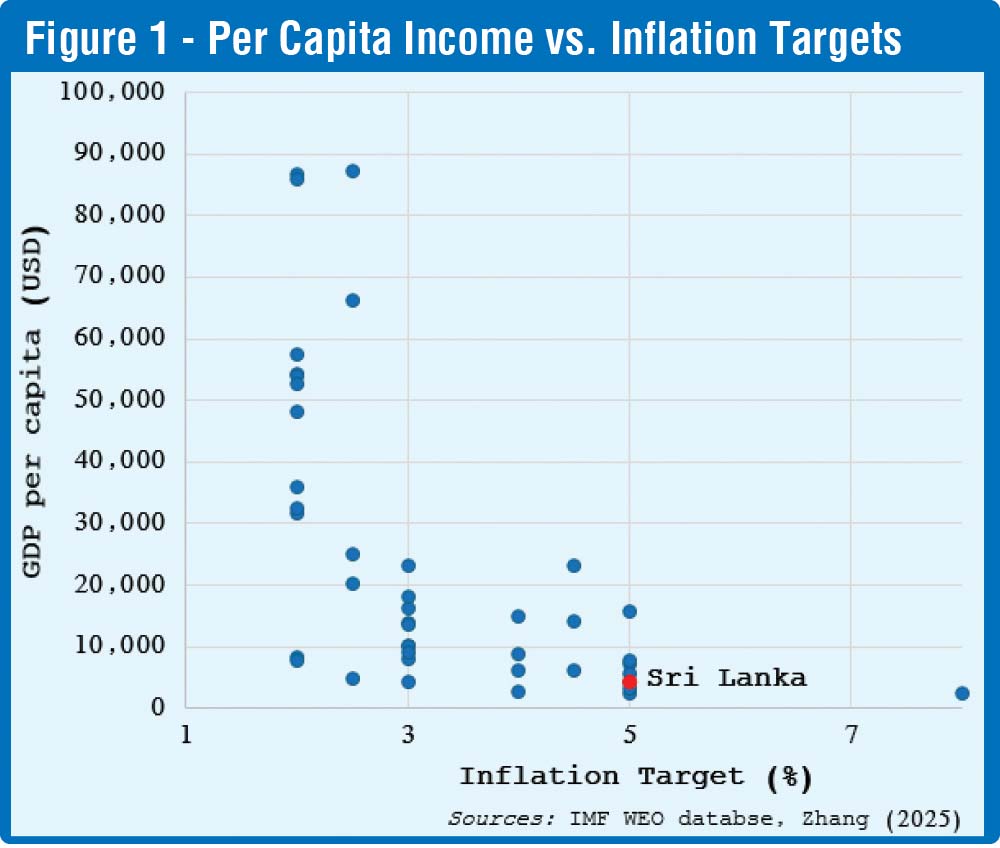
Figure 1 depicts the relationship between per capita income and inflation targets for a set of selected inflation-targeting countries. There appears to be an inverse relationship between the two variables. In high-income countries, inflation targets are concentrated around 2%. Among middle-income countries, however, inflation targets are distributed across a wider range of relatively larger values.
Country-specific characteristics of inflation dynamics
Typically, when a country sets an inflation target for the first time, it is natural to place greater weight on past inflation levels. A measure of central tendency of past inflation, such as average inflation over several years, provides a general indication of a country’s long-term equilibrium level of inflation – that is, the level of inflation that would prevail in the economy under normal circumstances.
However, when a country revises its inflation target, the exercise needs to be more forward-looking. Relatively less weight should be placed on past inflation levels, with greater focus instead placed on the level of inflation that the country can sustainably achieve in the future, given the overall macroeconomic outlook and the structure of the economy envisioned for the near future.
In addition to the average level of past inflation, the extent to which inflation has varied over time is also an important consideration. This is commonly referred to as inflation volatility. Inflation volatility generally depends on the composition of the consumption basket used in the CPI, the structure of the economy, income levels, the degree of financial market development, and other factors.
Figure 2 depicts the inflation targets of selected economies against inflation volatility, measured by the standard deviation of annual average inflation over the 20-year period from 2005 to 2024. There appears to be a broadly positive relationship between the two factors. This indicates that countries with lower inflation volatility tend to have lower inflation targets, while countries with higher inflation volatility tend to have higher inflation targets. This could partly be explained by the fact that, when inflation volatility is high, the inflation target may need to be set at a level that provides sufficient room for inflation to fluctuate without persistently breaching the target.
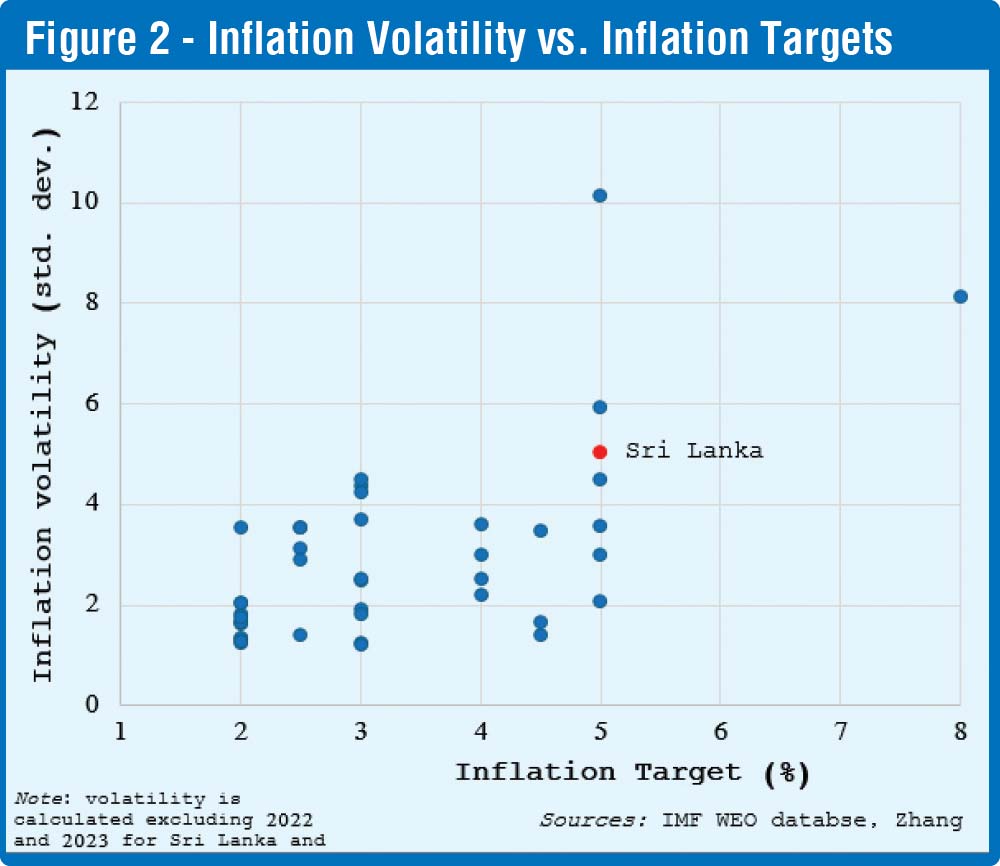
In the case of Sri Lanka, even after excluding 2022 and 2023 due to the exceptional inflationary shock experienced by the country, inflation volatility remains relatively high compared with most other inflation-targeting countries. Therefore, Sri Lanka’s relative position in terms of inflation volatility should be an important consideration when setting a credible inflation target.
Vulnerability to energy shocks
Global energy price shocks can have significant implications for a country’s inflation dynamics. While some economies are better equipped to withstand fluctuations in global energy prices, others face greater challenges and experience a stronger pass-through to domestic prices. Such supply-side inflationary pressures can affect both the level and volatility of inflation.
Therefore, when considering the country-specific characteristics of inflation dynamics discussed above, it is important to assess the extent to which a country is equipped to handle global energy price and other supply-side shocks. Resilience to energy shocks forms part of the broader economic resilience of a nation.
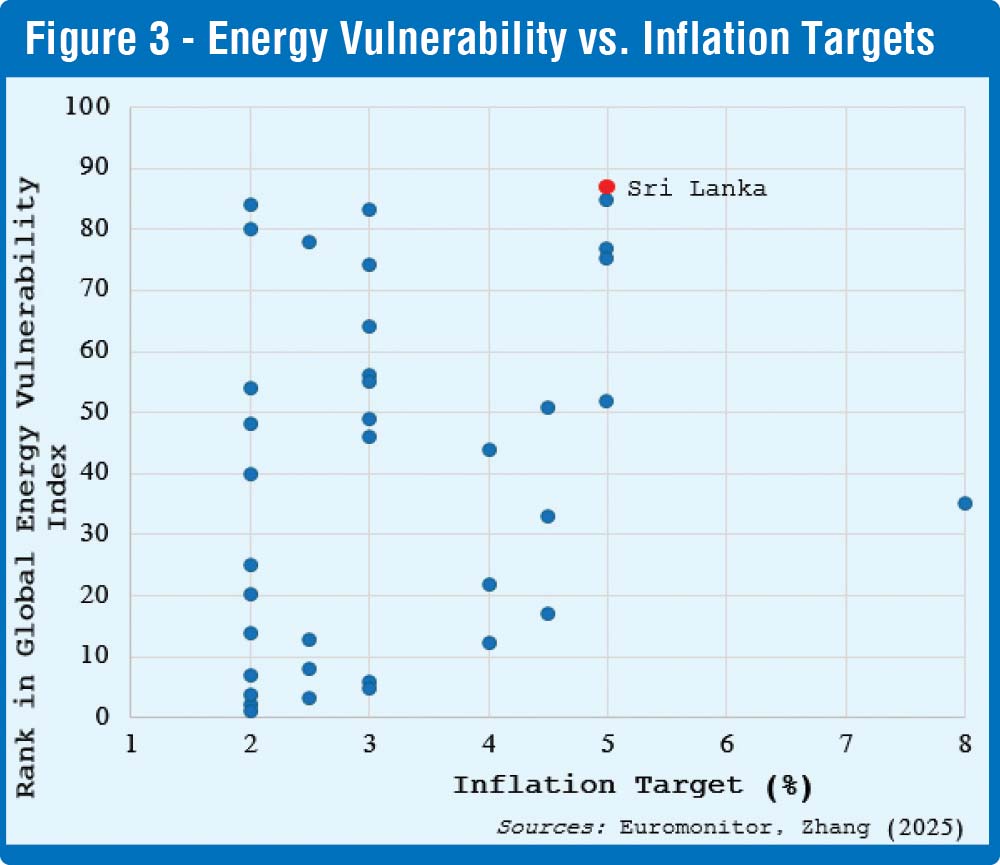
In this analysis, vulnerability to energy shocks is proxied by the Global Energy Vulnerability Index compiled by Euromonitor International. The index assesses a country’s energy security across several pillars, including alternatives to fossil fuels, energy reserves potential, energy accessibility, and energy efficiency. Figure 3 depicts the ranking in the Global Energy Vulnerability Index against the inflation targets of selected economies. Countries with relatively low energy vulnerability are ranked at the top, while countries with relatively high energy vulnerability are ranked towards the bottom.
Financial market development
Financial markets play an important role in the transmission of monetary policy actions to the broader economy. The degree of financial market development determines the time taken for policy actions to pass through to the economy as well as the magnitude of the transmission. Underdeveloped financial markets could distort the pass-through of monetary policy actions, whereby some policy adjustments may be attenuated during transmission. The opposite could also occur. Therefore, the outcome of an inflation-targeting policy framework is largely determined by the underlying institutions and markets in the financial sector.
For this analysis, the level of financial market development is proxied by the Financial Development Index compiled by the International Monetary Fund (IMF). The Financial Development Index provides a relative assessment of countries based on the depth, access, and efficiency of their financial institutions and financial markets. A higher index value reflects a higher level of financial market development.
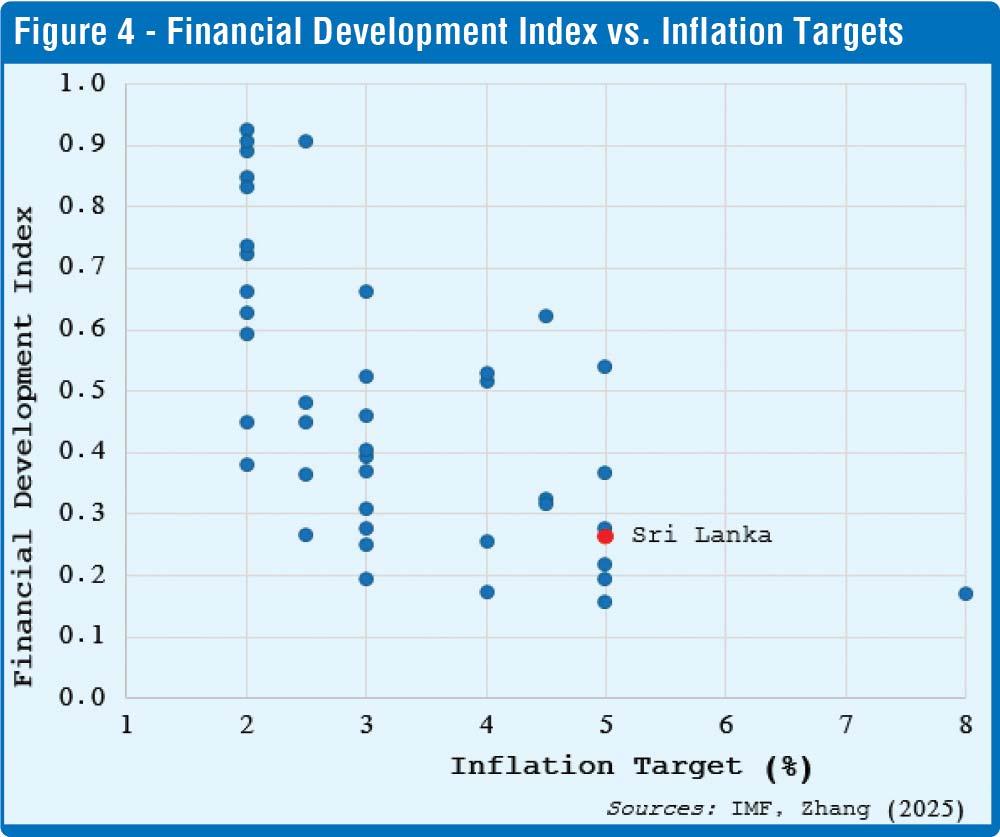
Figure 4 depicts the inflation targets of selected economies against their Financial Development Index as of 2020, the latest available data. It appears that there is an inverse relationship between the degree of financial development and inflation targets. Therefore, countries with well-developed and efficient financial markets and institutions tend to have lower inflation targets.
Central bank independence
Central bank independence is a necessary condition for effectively pursuing an inflation-targeting monetary policy framework. For this analysis, central bank independence is measured by the Central Bank Independence - Extended (CBIE) Index of Romelli (2025). It encompasses dimensions such as limitations on lending to the Government, financial independence, authority to formulate monetary policy, and the appointment procedures for the Governor and the Board.
Figure 5 depicts the inflation targets of selected economies and the corresponding Central Bank Independence Index as of 2023. A higher Central Bank Independence Index value indicates a higher degree of central bank independence. It appears that there is no strong relationship between the index value and the inflation target. Among countries with a high degree of central bank independence, some have set relatively low inflation targets, while others have set relatively high targets.
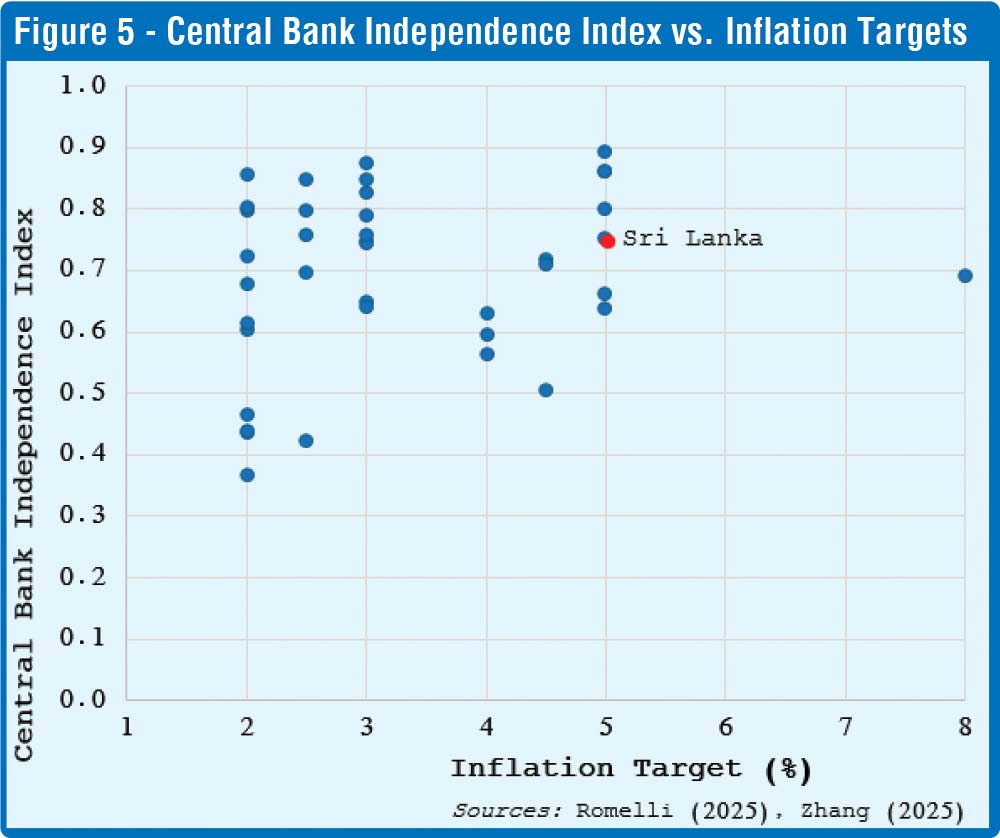
This suggests that a high degree of central bank independence does not necessarily imply that a country should target a lower inflation rate. In other words, the inflation target is not primarily determined by the degree of central bank independence, but rather by the structural characteristics of the economy.
Requirement for policy space
Developing economies may require larger changes in policy interest rates to bring about the desired changes in demand conditions and steer inflation towards the target. A narrow gap between the zero lower bound and prevailing policy interest rates could pose a risk of the central bank reaching the zero lower bound when a stronger monetary policy stimulus is required. This could force the central bank to shift towards unconventional monetary policy tools, the effectiveness of which may vary across countries. Having a comfortable margin between the zero lower bound and the normal level of policy interest rates is referred to as policy space in monetary policymaking.
When setting an inflation target, an assessment should therefore be made of the possible normal, or long-run equilibrium, level of nominal policy interest rates. This would be the sum of the natural real policy interest rate of the economy – the real policy interest rate when inflation is at its target and the real output gap is closed – and the inflation target. The lower the inflation target, the lower the long-run equilibrium nominal policy interest rate is likely to be. Therefore, when setting the inflation target, it is important to assess the implications for interest rates in the long run and the resultant implications for monetary policy space.
Conclusion
Price stability - a low and steady inflation rate - is the major contribution that monetary policy can make to economic growth (IMF, 1998). Sri Lanka has chosen to conduct its monetary policy within an inflation-targeting framework, given the success of economies that have used such frameworks to maintain price stability. Setting a credible and achievable inflation target is crucial under such a framework. An inflation target implies a broad consensus among key stakeholders in the economy about the appropriate or optimal rate of inflation.
This article does not aim to advocate a particular inflation target. Instead, it draws on global experience to assess how differences in macroeconomic circumstances can affect the appropriate inflation target. The analysis above shows that the structure of an economy – as reflected in its level of economic development or income; its vulnerability to energy and other supply-side shocks; the volatility of inflation; and the extent of financial market development – plays an important role in determining an appropriate inflation target. Central bank independence, meanwhile, should be preserved to ensure the effective implementation of monetary policy in achieving the chosen target.
Global evidence shows that while high-income countries have generally adopted relatively low inflation targets, middle-income economies have selected targets across a much wider range. In the context of Sri Lanka, any revision to the inflation target should therefore be considered alongside a candid assessment of the current structure of the economy and the direction in which the economy is expected to evolve over the coming years. The inflation targets adopted by other countries also indicate that Sri Lanka does not need to anchor its decision around a few selected values. Instead, the target can be considered from a broader perspective, taking into account the country’s own economic characteristics and its future trajectory.
If an adjustment to the inflation target is considered appropriate, global experience suggests that it may be more prudent to make such an adjustment in smaller, measured steps rather than through a large one-off change. A credible target must ultimately serve as a bridge between structural economic realities and public trust, ensuring price stability protects all income groups while supporting long-term macroeconomic stability.
(The author currently serves as a Senior Economist in the Economic Research Department of the Central Bank of Sri Lanka (CBSL). The views expressed in this article are his own and do not necessarily reflect those of CBSL)
Selected References
International Monetary Fund (1998). Inflation targeting as a framework for monetary policy. Economic Issues No. 15.
https://www.imf.org/external/pubs/ft/issues/issues15/
Romelli, D. (2025). Trends in central bank independence: a de jure perspective. In Are Central Banks Still Conservative? (pp. 59-94). Edward Elgar Publishing.
https://doi.org/10.4337/9781035337576.00010
Zhang, Z. (2025). Inflation targets, bands, and track records: a dataset of inflation targeting countries. Data in Brief, Vol. 61.



