Thursday Oct 22, 2026
Thursday Oct 22, 2026
Thursday, 29 January 2026 01:29 - - {{hitsCtrl.values.hits}}
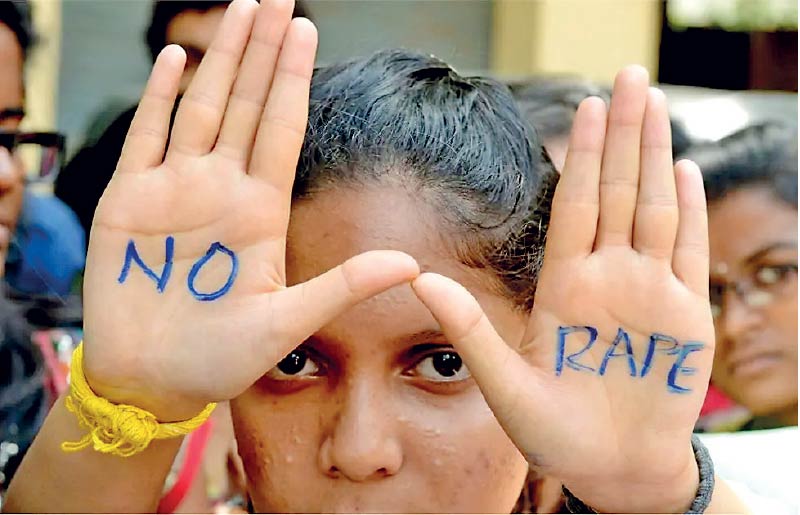
 When society chooses silence over justice, offenders are empowered, and victims are left to suffer alone. One of the key reasons rape is increasing in society is the failure to address harmful attitudes and behaviours
 How safe are our children? This haunting question confronts us once again, as a leading newspaper recently reported the dismissal of an appeal by a man convicted of raping a 15 year old girl in Sri Lanka. While the court’s decision affirms justice, the incident itself exposes a far more disturbing reality, rape remains a widespread and growing issue in our country.
This case is not an isolated incident. Across Sri Lanka, reports of sexual violence continue to rise, with many victims being minors. Even more alarming is the fact that countless cases remain unreported due to fear, shame, and social stigma.
When society chooses silence over justice, offenders are empowered, and victims are left to suffer alone. One of the key reasons rape is increasing in society is the failure to address harmful attitudes and behaviours. Victim-blaming, gender inequality, and the objectification of women continue to exist in many communities. The lack of proper education on consent and respect allows dangerous misconceptions to take root. Factors such as substance abuse, exposure to violent content, and weak moral guidance further compound this growing crisis.
Rape is not merely a criminal offence punishable by law, it is a curse that strikes at the very core of our community. The trauma endured by survivors is often lifelong, affecting their mental and emotional health, education, relationships, and sense of safety. Families are shattered, and it becomes harder for society to work together.
In several countries around the world, rape is treated with the severity it deserves. In some nations, offenders face life imprisonment, while in countries such as Singapore, strict laws include long prison sentences along with strokes of the cane. Recently, Singapore also introduced laws requiring convicted sex offenders to be professionally reassessed before being discharged after serving their prison terms. This is because studies have shown that some offenders have a tendency to repeat such crimes if not properly monitored or rehabilitated. These measures highlight the importance of long-term prevention, rehabilitation, and public safety, rather than simply releasing offenders without adequate evaluation. Such severe punishments act as strong deterrents and reflect a zero tolerance approach towards sexual violence.
In comparison, the need for stronger enforcement and faster legal processes in Sri Lanka remains an urgent concern. The dismissal of the appeal in this recent case sends a clear message that such crimes will not be tolerated. A firm and uncompromising justice system is essential to deter offenders and restore public trust. However, punishment alone cannot solve this crisis. True justice lies in prevention, in building a society that respects dignity, equality, and human rights.
This responsibility falls on all of us. Parents must educate their children about personal safety and boundaries. Schools must teach respect, consent, and gender equality. Community and religious leaders must speak openly against sexual violence. Most importantly, we must stop blaming victims and start supporting them with compassion and courage.
In conclusion, rape is not just a legal issue, it is a moral failure of society. Until we confront harmful attitudes, break the culture of silence, and stand united against sexual violence, this curse will continue to haunt Sri Lanka. The time to act is now for the safety of our children and the future of our nation.
The trauma endured by survivors is often lifelong, affecting their mental and emotional health, education, relationships, and sense of safety. Families are shattered, and it becomes harder for society to work together
The need for stronger enforcement and faster legal processes in Sri Lanka remains an urgent concern. The dismissal of the appeal in a recent case sends a clear message that such crimes will not be tolerated
Rape is not just a legal issue, it is a moral failure of society. Until we confront harmful attitudes, break the culture of silence, and stand united against sexual violence, this curse will continue to haunt Sri Lanka
(The writer holds an MSc Clinical and Health Psychology (UK), a BSc in Psychology (MY), an Advanced Diploma in Psychology, CBT certification, and a Diploma in Child and Adolescent Psychology (UK))




