Monday Oct 12, 2026
Monday Oct 12, 2026
Monday, 24 August 2026 03:47 - - {{hitsCtrl.values.hits}}
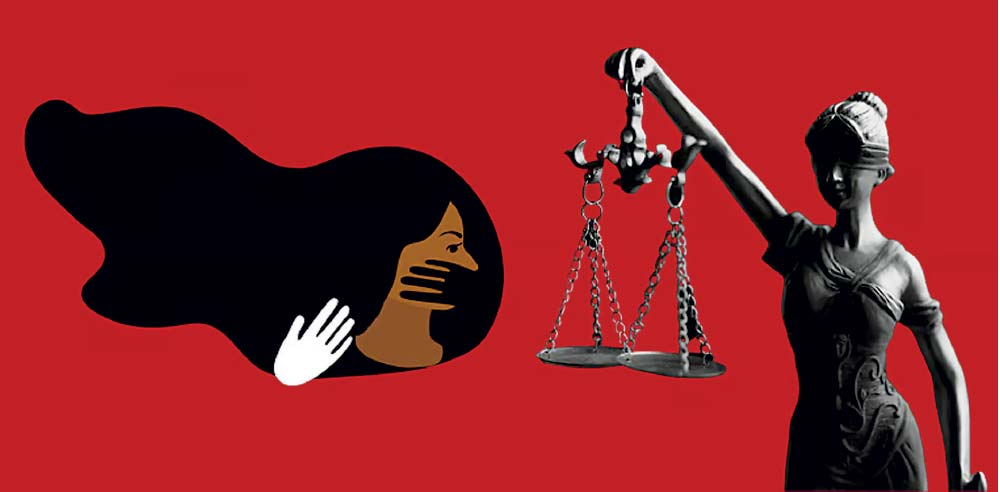
 We should also allow this case to remind us of what still needs to change. A successful conviction after fifteen years is certainly a reason for gratitude. It should not, however, become something we accept as normal. The State has a responsibility not only to prosecute perpetrators, but to build a justice system in which child victims and survivors can move through the process with dignity, safety and appropriate psychological support
 On 21 August 2026, the Child Protection Force received the conclusion of a case that has been before the justice system for almost fifteen years. The accused was found guilty of three counts of rape and sentenced to 15 years imprisonment on each count, with the sentences to run concurrently. He was also ordered to pay Rs. 1 million as compensation to the survivor and a fine of Rs. 10,000 on each count. For us, this is an important outcome, not simply because there has been a conviction, but because of what this case demonstrates about the importance of understanding trauma, preserving evidence and allowing the evidence to speak for itself.
Rape at age of 12 years
The survivor was only around the age of 12 years when the abuse began. She was repeatedly raped by her maternal uncle, who was also the father of three children. The abuse continued over a period of time and eventually resulted in the survivor becoming pregnant. The child was subsequently given up for adoption. What followed was not only a criminal investigation, but a complicated and deeply traumatic journey through the child protection and justice systems.
When the matter first came to the attention of the authorities, the survivor was approximately 14 years old and studying in Grade 10. She was taken to the Police to make a statement. At that stage, she was already pregnant. Following the initial statement, she was pressured by her aunt, who was the wife of the alleged perpetrator, to change her account and say that the rape had been committed by an unidentified person rather than her uncle. A further statement was therefore recorded reflecting that version.
 For anyone unfamiliar with the psychological impact of child sexual abuse, a change in a child's statement can immediately raise questions about credibility. But trauma does not work in the neat and predictable manner that a legal file sometimes demands For anyone unfamiliar with the psychological impact of child sexual abuse, a change in a child's statement can immediately raise questions about credibility. But trauma does not work in the neat and predictable manner that a legal file sometimes demands |
| Of the most important aspects of supporting a survivor through a case of this nature is recognising that the legal process itself can be difficult and retraumatising |
|
|
| Sri Lanka continues to have tens of thousands of cases pending before its courts, many of them for years. In cases involving children, however, delay has consequences that go far beyond statistics. A child grows up while waiting for justice |
| We also need greater understanding among all actors within the justice system about how trauma affects children. A child who freezes during abuse may later struggle to disclose. A child may initially remain silent. A child may change a statement because of fear, pressure, dependence or manipulation |
Psychological impact
For anyone unfamiliar with the psychological impact of child sexual abuse, a change in a child's statement can immediately raise questions about credibility. But trauma does not work in the neat and predictable manner that a legal file sometimes demands. During the abuse itself, this survivor experienced what we understand as a freeze response. She did not fight her abuser or run away. She froze. Her subsequent difficulty in speaking openly about what had happened, and the pressure placed upon her to change her account, have to be understood within the context of the trauma and circumstances surrounding the abuse.
On 17 October 2012, she was admitted to a child care institution because the home in which she was living was considered unsafe, as the house had not been fully constructed, despite her father being present in her life. Her time in the institution brought another important change. After almost a year of refusing to attend school, she returned to education and entered the second semester of Grade 10. She went on to successfully complete her G.C.E. Ordinary Level and Advanced Level examinations. While the legal process continued around her, she continued to build her life.
During her time at the institution, another statement was recorded from her by the Police. A DNA examination was subsequently conducted in relation to the child she had given birth to, and the results demonstrated a 99.9% match establishing the biological relationship between the child, the survivor and the father of the child. The DNA evidence became an important part of the case and ultimately assisted the Court in determining the matter.
The case concluded last week, almost fifteen years after the abuse occurred. We are particularly grateful to Attorney-at-Law Ayesha Ginige, who conducted the matter with dedication and commitment under my instructions as Senior Legal Consultant at Child Protection Force. We are also grateful to Legal Action Worldwide, who supported the case for two years. Thereafter, the Child Protection Force assumed responsibility for the case and continued to provide both legal and psychosocial support to the survivor.
Our involvement was never limited to the courtroom. One of the most important aspects of supporting a survivor through a case of this nature is recognising that the legal process itself can be difficult and retraumatising. The survivor required continued psychological support while the case proceeded, and CPF remained alongside her throughout this process.
A conviction cannot undo the abuse, restore the childhood that was lost or remove the psychological consequences of what happened. Legal justice is one part of recovery; sustained psychosocial support is another.
We are also grateful to the officers of the State who were involved in bringing this matter to its conclusion and to the Court for allowing the evidence before it to be properly considered. This case demonstrates why investigations must be thorough, why evidence must be preserved and why the justice system must be capable of looking beyond a single statement when assessing a traumatised child or survivor. The DNA evidence in this matter was particularly significant, but it could only assist because it had been obtained and preserved as part of the investigative process.
There is, however, a difficult reality that we cannot ignore while celebrating this outcome. This case took almost fifteen years to conclude. The survivor was a child when the abuse began. She was still a child when the matter entered the justice system. Today, she is an adult.
Not an isolated concern
This is not an isolated concern. Sri Lanka continues to have tens of thousands of cases pending before its courts, many of them for years. In cases involving children, however, delay has consequences that go far beyond statistics. A child grows up while waiting for justice. Memories change, witnesses become unavailable, evidence can disappear and, most importantly, the psychological burden of remaining connected to a traumatic event through a prolonged legal process can become part of the survivor's life for years.
This is why victim advocacy must become a much more central part of our justice system. A child who enters the system following sexual abuse should not simply become a witness whose role is to provide evidence for a prosecution. The child needs to be protected, psychologically supported, kept informed, treated with dignity and shielded from unnecessary re-traumatisation throughout the process.
We also need greater understanding among all actors within the justice system about how trauma affects children. A child who freezes during abuse may later struggle to disclose. A child may initially remain silent. A child may change a statement because of fear, pressure, dependence or manipulation. These realities do not mean that every inconsistent statement should automatically be accepted, but they do mean that inconsistency must be examined within the context of the child's circumstances and psychological state rather than viewed in isolation.
Today, therefore, we celebrate the conclusion of this case and the justice finally secured for this survivor. We thank everyone who played a role in reaching this outcome, particularly Ayesha Ginige, Legal Action Worldwide, the State officers involved and the Court.
But we should also allow this case to remind us of what still needs to change. A successful conviction after fifteen years is certainly a reason for gratitude. It should not, however, become something we accept as normal.
The State has a responsibility not only to prosecute perpetrators, but to build a justice system in which child victims and survivors can move through the process with dignity, safety and appropriate psychological support. The question we should continue to ask is not simply whether justice was eventually achieved, but how much of a child's life should be spent waiting for it.
At CPF, we will continue to stand beside survivors for as long as they need us. But ultimately, victim advocacy cannot depend only on organisations like ours carrying the burden. Child protection has to be a responsibility shared and prioritised by the entire justice system.
Today, we are grateful that this survivor finally received justice. Tomorrow, we must continue working towards a system where the next child does not have to wait fifteen years.
(The author is an Attorney-at-Law and Founder Child Protection Force)




