Tuesday Oct 27, 2026
Tuesday Oct 27, 2026
Tuesday, 27 October 2026 00:00 - - {{hitsCtrl.values.hits}}
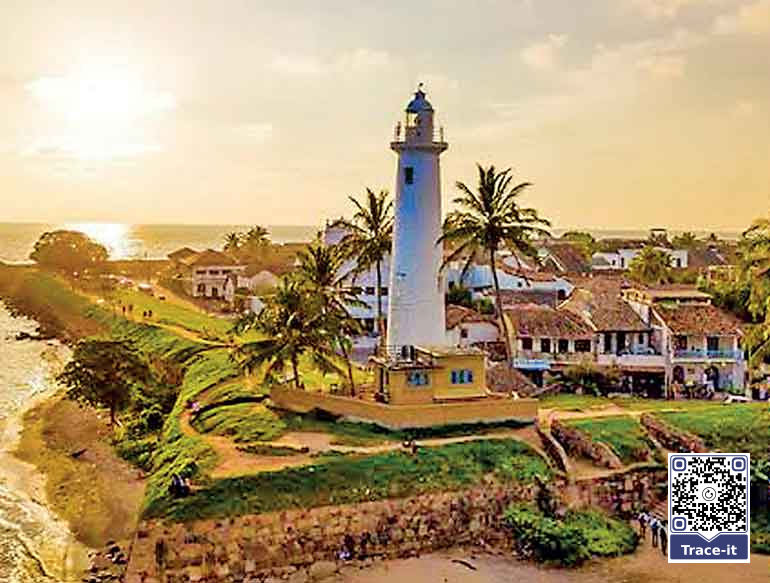
The Galle Fort
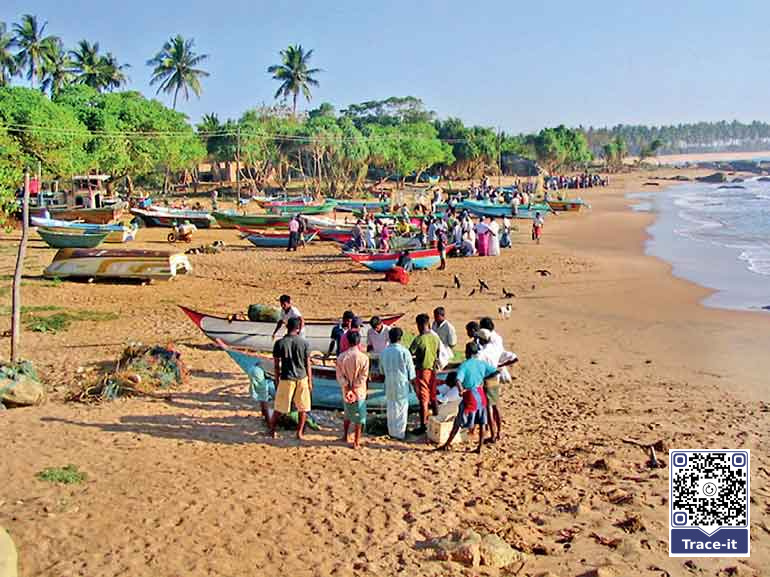
Small fishing village Kalametiya
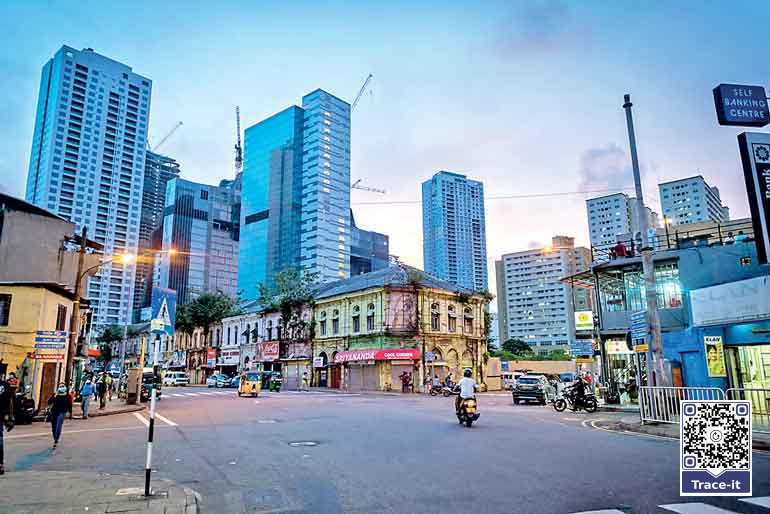
Kompangna Veediya
 “A good city is like a good party – people stay longer than really necessary because they are enjoying themselves,” said Jan Gehl, the Danish architect and urban planner. When tourism arrivals hit record levels in tourist hot spots, it doesn’t necessarily mean that tourists spend their money on the goods and services that host countries would like them to or spend time in the zones that need tourism most. Tourism gentrification refers to bespoke gentrification -- areas of cities undergo transformation specifically to make the area attractive to tourists, while gentrification in general is the process by which disadvantaged areas of a city undergo an influx of people who renovate, rebuild and regenerate an area, increasing property values. The collateral damage of gentrification is the displacement of the relatively less well-off inhabitants who leave due to the rapid inflation of prices that occurs due to gentrification.
Ruth Glass originally coined the word gentrification in reference to London[1]. The city grew along the banks of the River Thames, and as people migrated to the capital in search of work in the 1800s, the areas closest to the river became working-class neighbourhoods. Two centuries later, young professionals moved into these areas, forever changing their social character. Neil Smith argues that capital, more flexible than people, moves in a way to exploit gaps in rents[2]. Neighbourhoods change as gaps widen between lower-middle-class areas and middle-class areas next to them, capital moves in to gentrify it and rents it at higher values. If we imagine that the planet is one (very) large neighbourhood, we see this is true for tourism too. When neighbourhoods undergo tourism gentrification, this necessarily involves the local population. Tourism gentrification is a useful lens because it highlights the complex relationship that investors, tourists and local residents have with each other. Also, like tourism, tourism gentrification requires a high-risk investment in infrastructure that is dependent on factors that are sometimes beyond anyone’s control.
Centuries-old neighbourhoods
Growing up in Sri Lanka has given me a unique view of both tourism and tourism gentrification. I have witnessed the ebb and flow of the tourist tide and seen what happens in the times when the tide abruptly recedes. This has enabled me to observe the temporary and permanent impacts of tourism gentrification from the perspective of a relatively small player in the global tourist industry, Sri Lanka, where tourism (or the lack of it) can make a dramatic difference to the economy. I use the examples of three distinct areas, namely the UNESCO heritage site Galle Fort, Kalametiya, a fishing village in southern Sri Lanka and the distinct neighbourhood of Kompangna Veediya (Company Street), Colombo, which houses long-term residents with strong identities and connections to their neighbourhood that are centuries-old[3]. I have viewed each example through the analysis suggested by political scientist Margaret Kohn and look first at the displacement of local communities, the transformation of the existing space, and finally the polarisation that results[4]. I illustrate the paradox of homogenisation that occurs with over-tourism, defined as the excessive growth of visitors leading to overcrowding in areas where residents suffer the consequences of temporary and seasonal tourism peaks, which have caused permanent changes to their lifestyles, denied access to amenities and damaged their general well-being[5]. Understanding the impacts of tourism on cities involves a wide variety of factors, and a deep dive into tourism gentrification is a useful lens through which to examine these impacts.
The Galle Fort
The Galle Fort, on Sri Lanka’s southwest coast, dates from 1588. The Portuguese colonists established an outpost here, but it was soon taken by the Dutch, who turned it into a 52-hectare granite fortress with fourteen bastions from which they ran the Dutch East India trading company. The British conquerors added a lighthouse, and the picture-perfect Fort with its labyrinth of quaint, cobblestoned lanes was complete. Containing homes, businesses, libraries and schools that mix Dutch architectural style with traditional Moorish interiors, Galle Fort is presently regarded as the best-preserved “living fort” in Asia. The descendants of the Arab traders who frequented Galle, the Sri Lankan Muslim Moors, are the longest-term inhabitants of the Galle Fort, having lived for centuries in old homes with common verandas and roofs inside a walled community that has a magical appeal. 1988’s UNESCO designation of the Fort as a World Heritage Site marked a sea change in the life of the Galle Fort[6]. Investors raced into rent, restore and change Galle Fort homes, property prices skyrocketed from $50 to over $300 per square foot, and the global flow of capital began to move in, creating incredible changes. Verandas connecting homes that created a sense of community, are now boutique shops, restored homes boast interiors of efficient Scandinavian design and linked roof tops that were playgrounds for kite fliers are now walled off. Local property owners, dazzled by high prices, sold up and moved away. Tourism gentrification was encouraged with a revamped sewage system and an Army camp to guarantee tourists’ safety.
On the positive, tourists can expect a safe and exotic stay in Asia’s oldest living Fort with the bonus of being able to sip matcha lattes and eat thin-crust pizzas while they ‘do’ Galle. On the negative, there are very few original residents left due to tourism gentrification – they are now a minority, like a curiosity in a zoo. The majority of Galle Fort’s population are now tourists, who ironically came in search of the life lived by the earlier majority. Tourists are encouraged to learn how to make and eat traditional kidu rice while taking tours of family homes to see where ‘real people’ once lived. Sharon Zukin, four decades ago, predicted the “Instagrammability” of gentrification[7]. The romanticising of traditional spaces and the objectification of history exclude its people. Coffee shops, fashion boutiques, swimwear retailers and jazz bars now line Galle Fort streets, creating familiarity for tourists who had originally come to view another world, but are happy to spend their dollars regardless. Although the global tourist claims to be in a perennial search for unique experiences, gentrification creates homogeneity. Sharon Zukin further talks about how the tourist needs points of reference through creature comforts, particularly in alien environments[8]. Paradoxically, this creates a homogeneity in all “hot spots” for global travel. The same spas, boutiques, trinkets, multinational branded drinks, coffees and fast food create a zone of exclusion for the local inhabitants – almost a no-go zone.
The economic benefit of tourism is very valuable to Sri Lanka, but tourism gentrification has meant that many tourists never see the ‘real’ Galle. It begs the question, what, in 2026, is the ‘real’ Galle? Is it still Sri Lanka’s ninth-largest city in terms of population? Do Sri Lankans choose to purchase property, find work and settle in Galle? No, as they are unable to afford the inflated costs of renting or owning in Galle? Do Sri Lankans feel ‹ at home’ in Galle Fort, where they need to pay over the odds for a plate of rice and curry? No, tourism has rendered Galle Fort inaccessible for visiting locals. Tourist gentrification has meant longer-term conversions of old Galle Fort homes into boutique hotels, sparking tensions between tourists and residents in a myriad of ways. Noise pollution and relative cultural impropriety take their toll on this relationship. When quiet streets filled with the rustle of long dresses of the Galle Muslim women are suddenly taken over by happily loud surfers in swimwear, undercurrents of difference simmer below the surface. This must be addressed if tourism gentrification is to continue.
Small fishing village Kalametiya
Kalametiya, a small fishing village on Sri Lanka’s southern coast, attracts tourists who want an ‘off-the-beaten-track’ experience. Professor Oscar Amarasinghe argues that the south coast is one of the poorest regions in the country, and although dependent on fishing and farming, it is now facing a twin challenge – the corporatisation of fishing through trawlers and the opening of the beaches to large-scale construction of hotels and private villas that now line the pristine coast[9]. A new expressway halved the journey time to Kalametiya, and it is now a regular stop for tourists on their way to the national wildlife parks. Kalametiya now runs bird-watching tours in the mangroves, and the fisher families have sold their boats, as fishing is no longer profitable. Kalametiya is becoming increasingly dependent on tourism for survival. A particular problem is garbage disposal – with the rapid increase in ecological footprint, State garbage collection cannot keep pace. Large open dump sites have been created inland, which seep into groundwater supplies. Tourism gentrification has left a mixed legacy here – multiple new opportunities for the youth of Kalametiya to move away from the uncertain life of a family reliant on fishing for all income, but possibly the pace of tourism gentrification and failure of the Government to keep up with it has now made this hidden gem, a once self-sustaining village, a social and environmental time bomb.
Sri Lanka will continue to prioritise tourism with its irresistible domino effect. Although we need a long-term strategy to protect the economy from the vagaries of tourism, approximately 50% of income from tourists goes into the unofficial sector – directly to guides, drivers, beach cafes and smaller hotel owners, which is why the impact of an increase or decrease in tourism on incomes and livelihoods is immediate and crucial. To make this impact more sustainable, tourism gentrification must not focus only on the end-product tourism, but on holistic inclusion, making certain that all impacted are on board. The priority must be to attract top-dollar tourists while ensuring that the smallest participants in the tourist industry are treated fairly by extending small loans and prioritising eco-tourism, to ensure the sustainability of natural assets. Isolation and exclusion invariably lead to friction
Kompangna Veediya
2009 marked the end of Sri Lanka’s civil war, and successive governments have been aware of the crucial importance of tourism for the country’s GDP, leading to State-enforced tourism gentrification. 2011’s transfer of control of Colombo’s Urban Development Authority (UDA) to the Ministry of Defence (MOD) lead to the launch of the Urban Regeneration Program (URP) to create a “world-class city” by “liberating high value land” to create an attractive destination for global travelers. Legally, military force could be used to spark urban regeneration and achieve tourism gentrification. According to the Centre for Policy Alternatives (CPA), with an aim to create a slum free Colombo, the Government began forced evictions between 2011 and 2014[10] Notably, land was cleared for an Integrated Casino Resort, resulting in 20,000 families being relocated to purpose-built high-rise developments. Those displaced were not slum dwellers, but proud residents of Kompangna Veediya, a tightly knit neighbourhood that has existed next to the Fort (Colombo’s financial district) since the 17th century. Dr. Asha Abeyasekara, a sociologist, reveals how gendered and inequitable the impact of the URP has been. Replacement properties were registered in the name of the male resulting in women losing their social network, protection and neighbourhood day care system. Abeysekara calls this “intimate evictability” describing how the State creates “unwanted citizens”[11]. Multi-generational families, bonded together by emotion, memory and common purpose, describe Kompangna Veediya as their birthplace[12]. Following the first wave of evictions, Firi Rahman co-founded “We Are From Here” – a collective with fellow artists that highlights the experiences of a deeply interconnected community who continue to map in creative ways the impact of gentrification driven by State and corporate interests that threaten the existence of their neighbourhood by painting hyper-realistic portraits of the Java Lane Team, (Colombo’s oldest football club), on the alley walls to recreate life as it once was [13]. Off the coast of Colombo, close to Kompangna Veediya, is the new 269-hectare Port City, built through Chinese investment on reclaimed land, the biggest strategic infrastructure development since the civil war ended. Port City is billed to be the new face of modern Colombo; bespoke tourism with amusement parks, yachts and resort-quality golf courses.
Tourism gentrification in Port City and Kompangna Veediya will have a positive impact on job creation in the neighbourhood. Unfortunately, apart from the small percentage of staff from the area being hired to work in the new casinos, resort hotels and restaurants, there will be little or no trickle-down effect to regenerate the neighbourhood’s own economy. The tourists will come, eat at the restaurants, gamble in the casinos and stay at the hotels, and then leave. There has been no provision made for holistic tourism to be a beneficiary of tourism gentrification; the money that comes in is unlikely to reach the original inhabitants of Kompangna Veediya. If tourists are given the unique opportunity to explore a living Colombo neighbourhood, perhaps they will stroll the streets of Kompangna Veediya, joining the locals to play a game of football. If not, Port City may become ‘just another casino city. Indeed, today, the Collective for Historical Dialogue and Memory (CHDM) conducts $20 Memory Walks where tourists explore the by lanes of Kompangna Veediya with a guide, but it remains to be seen whether tourists will choose to come and spend their dollars at Port City instead of Singapore’s Sentosa Island. Perhaps Port City need not become another generic theme park town. Instead, if Kompangna Veediya’s old corner shops, bars, and train station platforms are restored, and given a new lease of life, tourists and locals alike will celebrate the neighbourhood --currently trending is the Kampong, Colombo’s newest speakeasy restaurant, where all menu items pay homage to Kompangna Veediya’s historic past – including a preparation of spicy sardines – a nod to the workers from Madagascar that were brought over during Portuguese colonial times. Tourism gentrification is a useful lens to understand the impact of tourism on cities better – residents see the appeal or lack thereof to those who visit and then learn how to live with change themselves.
The four years of recent challenges that we went through as a country meant far fewer tourists and belt-tightening all round. We ‘locals’ became tourists – travelling the island to occupy empty hotel rooms virtually free of charge. It was a difficult time, but it gave me a glimpse of how strong societal bonds are, and how neighbourhood must rely on each other in times of crisis. With adversity came true community spirit as shortages of vegetables sparked barter exchanges with neighbours. Now, free of bankruptcy, under an International Monetary Fund (IMF) reform, Sri Lanka is back trending on the global tourist map. Sadly, businesses built around tourism have gone bankrupt, and brain drain has taken its toll.
Prioritising tourism
Sri Lanka will continue to prioritise tourism with its irresistible domino effect. Although we need a long-term strategy to protect the economy from the vagaries of tourism, approximately 50% of income from tourists goes into the unofficial sector – directly to guides, drivers, beach cafes and smaller hotel owners, which is why the impact of an increase or decrease in tourism on incomes and livelihoods is immediate and crucial. To make this impact more sustainable, tourism gentrification must not focus only on the end-product tourism, but on holistic inclusion, making certain that all impacted are on board. The priority must be to attract top-dollar tourists while ensuring that the smallest participants in the tourist industry are treated fairly by extending small loans and prioritising eco-tourism, to ensure the sustainability of natural assets. Isolation and exclusion invariably lead to friction. This, coupled with the lack of a long-term strategy, means that the prosperity of tourist hotspots may be short-lived. Once tourists leave, who remains to keep the neighbourhood alive? The residents. It is wise to use tourism gentrification as a lens through which to look at the impacts of tourism, as it shows us the complexities of relationships between residents and tourists and helps us to understand better how to help all parties to co-exist in the long run.
End Notes:
[1] Ruth Glass London: Aspects of Change, 1964
[2] Neil Smith Towards a theory of gentrification, 1979
[3] UNESCO is the United Nations Educational, Scientific and Cultural Organisation
[4] Margaret Kohn What is Wrong With Gentrification, 2013
[5] C.Milano, J.M. Cheer & M. Novelli Overtourism: excesses, discontents and measures in travel and tourism, 2019
[6] Nethra Samarawickrama Remaking of the Fort, 2012
[7] Sharon Zekin Loft Living, 1982
[8] Sharon Zekin Culture of Cities, 1995
[9] Amarasinghe, Baavnik Building Resilience: Fisheries Cooperatives in Southern Sri Lanka, 2011
[10] Centre for Policy Alternatives (CPA), Forced Evictions in Colombo, the high cost of beautification, 2014
[11] Asha Abeysekera, The Hidden Cost of Urban Renewal in Colombo, 2025
[12] Basu, I and Hettiarachchi, R, Agentive Minorities: place-memory, identity and ontological security in post-war Sri Lanka, 2025
[13] Firi Rahman (fifth generation resident of Kompangna Veediya) founded the Artists Collective




