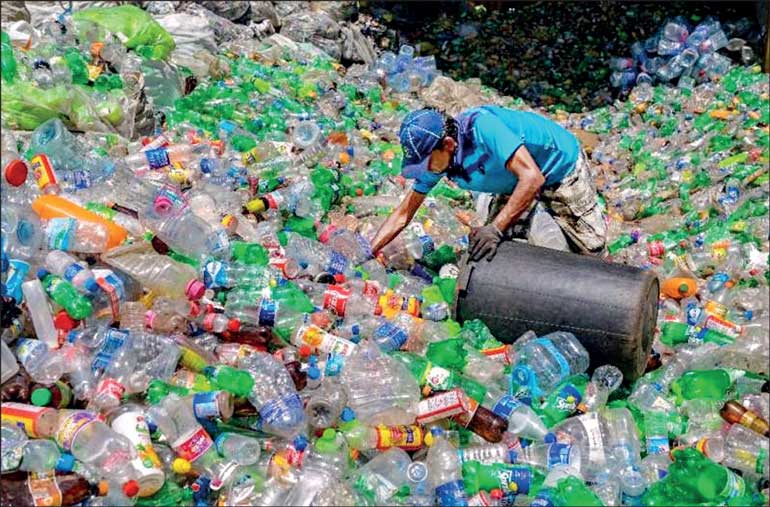
A serious effort is needed from policy makers about the use of plastics and to explore and promote, with incentives, the use of alternative environmentally friendly local materials. Plastic is convenient but it enriches manufacturers in other countries while causing the after-effect damage in Sri Lanka, to our health and the environment
 Plastics and plastic waste pose major health risks because they break down into tiny particles (microplastics and nano plastics) and release thousands of toxic chemicals that enter the human body through air, food, water, and skin contact (https://www.genevaenvironmentnetwork.org/resources/updates/plastics-and-health/
While exact global percentage of total human deaths caused directly by plastic does not exist because scientific tracking measures specific pathways rather than a unified global mortality rate, researchers estimate toll figures through specific environmental and chemical links:
- Mismanaged Waste and Burning: Charities like Tearfund estimate that between 400,000 and 1 million people die annually in developing countries from diseases, respiratory issues, and floods linked to uncollected or burned rubbish.
- Chemical Exposure (e.g., Phthalates and Bisphenols): Studies published in The Lancet and related journals tie specific plastic additives—such as DEHP—to hundreds of thousands of cardiovascular and heart-related deaths globally each year (for instance, over 356,000 heart disease deaths linked to DEHP in specific analyses).
- Broader Pollution Context: Overall global pollution accounts for roughly one in four premature deaths worldwide (about 9 million per year), though isolating the precise percentage uniquely attributable to plastics versus other industrial pollutants remains a major gap in global health data.
In Sri Lanka, judging by what one sees in rivers, river tributaries, seashores, garbage dumps, along streets, common practice of burning plastic, and many places where humans gather, it does not appear that the basic health risk message has been conveyed, or whatever that has been conveyed not adhered to by human beings. While the attention on reducing or eliminating plastic waste is commendable, although the outcome of efforts is questionable, there does not seem to be a focus on reducing the use of plastic in day-to-day life. Many utility items are made from plastic, plastic in different forms are used in agriculture, in fisheries and in advertising materials (banners etc.). Most of these are not recycled or are recyclable, and after some time, they are disposed of by burying them or burning them. Environment risks are enormous, but health risks are even more damaging, but less known to the public to human beings and other living beings.
Judging by the above common experience witnessed across the country, it does not appear that public health advisories warning against the common domestic habit of burning polythene bags, lunch sheets, and yoghurt cups to light firewood stoves etc., issued by the Health Ministry’s Environmental and Occupational Health Directorate has had much effect. Although these guidelines highlight severe risks of lung cancer, stroke, low birth weight, and respiratory illnesses for women and children exposed to indoor plastic smoke, it is uncertain whether enough has been done to educate and increase public awareness of these dangers.
Environment risks are longer term risks and not tangible risks other than being eyesores to some. Few seem to understand the damage plastic waste does to the environment either due to lack of knowledge about it or due to the very common general apathy and indifference towards it.
Health risks on the other hand are short-, medium- and long-term risks, and they are tangible. Even fewer people seem to know or understand the damage plastic can do to the health of human beings and other living beings. It is uncertain as to how well the health risk message is conveyed to the public. Health risks also result in a cumulative financial challenge as well, as the funds needed to attend to those falling sick from plastic related diseases increases substantially when more and more plastic enters the day-to-day life of the public.
The following are noted as to how exposure to damage from plastic happens:
- Ingestion: Eating or drinking from plastic containers, bottled water, or food contaminated with microplastics.
- Inhalation: Breathing in synthetic dust, tire wear particles, or smoke from open-air waste burning.
- Skin Contact: Absorbing chemical additives directly from personal care items or synthetic clothing
The most recent, verified scientific statistics and medical data connect plastic pollution directly to clinical health issues:
1. Direct Links to Lung Cancer (2026 Clinical Data)
A landmark study presented at the European Respiratory Society (ERS) Congress provided the most direct statistical link between inhaled plastics and cancer:
- 66% of lung cancer patients were found to have detectable microplastics embedded in their lung fluids, compared to 46% of individuals without cancer.
- Patients diagnosed with lung cancer were twice as likely to carry a heavy load/concentration of microplastics in their respiratory tract compared to healthy controls.
- The primary polymers found trapped in human lung tissue are polypropylene and polyethylene—the exact materials used to make plastic bags, bottles, and synthetic carpets.
2. Inhalation Rates and Lung Damage
The American Lung Association and global environmental health registries highlight how heavily our respiratory systems are bombarded by airborne plastic:
- 22,000,000 microplastics: The estimated number of invisible plastic particles a human inhales annually from the air, driven heavily by synthetic clothing fibres, indoor carpets, and degraded environmental trash.
- 3x Higher Inhalation for Kids: Children under six years old inhale three times more air and dust particles relative to their body weight than adults. Because they play closer to carpets and floors where synthetic dust settles, their developing lungs absorb a disproportionately higher plastic load.
- Inhaled plastic particles trigger oxidative stress and chronic inflammation in alveolar macrophages (the lung's defence cells), which medical researchers link directly to the development of asthma, chronic obstructive pulmonary disease (COPD), and tissue scarring (pulmonary fibrosis).
3. Plastic Production and Fenceline Communities
The comprehensive Minderoo-Monaco Commission on Plastics and Human Health tracked the health hazards of plastics across their entire lifecycle—from extraction to disposal:
- Families and children living in "fenceline communities" (adjacent to plastic production plants or open-air plastic waste incineration sites) show significantly elevated rates of childhood leukaemia, lymphomas, and respiratory disorders.
- Workers inside plastic manufacturing and recycling facilities suffer highly elevated mortality rates from lung cancer, mesothelioma, and cardiovascular disease due to the inhalation of chemical additives and micro-polymers.
4. The Chemical Threat: Endocrine Disruptors
Plastics are not just inert pieces of trash; they are chemical cocktails. Over 10,000 chemical additives are used to make plastics flexible or flame-retardant.
- Chemicals like BPA and Phthalates easily leach from plastic containers into food and water.
- These chemicals mimic human hormones. The World Health Organisation (WHO) and endocrine researchers link this internal chemical exposure to early-onset puberty, reproductive disorders, immune suppression, and an increased long-term risk of breast and colon cancers.
The following are noted as to how exposure to damage from plastic happens:
- Ingestion: Eating or drinking from plastic containers, bottled water, or food contaminated with microplastics.
- Inhalation: Breathing in synthetic dust, tire wear particles, or smoke from open-air waste burning.
- Skin Contact: Absorbing chemical additives directly from personal care items or synthetic clothing
The Sri Lankan situation
Sri Lanka imports about 500,000 metric tonnes of virgin plastic each year to manufacture local plastic products, driven by roughly 400 active processing and manufacturing companies. (https://www.mdpi.com/2313-4321/8/6/94). Other key statistics tracking the accumulation, consumption, and ecological proliferation of plastic across the country include:
- Consumption and Growth Rates: Plastic consumption in Sri Lanka increases by approximately 16% annually. [https://www.researchgate.net/publication/379607620_Present_Status_of_Microplastic_Pollution_Research_Data_in_Sri_Lanka_and_Microplastic_Risk_Mitigation_Solutions_Lessons_from_a_Global_Policy_Context]
- Single-Use Plastics (SUPs): Single-use plastics make up roughly 70% of the country's total plastic stream. [https://www.globalplasticaction.org/resources/publications/sri-lanka%E2%80%99s-struggle-with-single-use-plastics:-why-bans-alone-are-not-enough/8f96263d14fe21188f84ad1764c110e5b76e7384]
- Product-Specific Proliferation: Consumers utilise about 30 million yoghurt cups and 1,250 tons of PET bottles every month. [file:///C:/Users/Raj%20G/Downloads/UNEP-CHW-Norad-PrepMeeting-SriLanka-PRNT-2-20210315.English%20(3).pdf]
- Coastal and Marine Influx: The Marine Environment Protection Authority (MEPA) reports an annual influx of 1,500 metric tonnes of plastic directly into Sri Lanka's coastal waters. [https://www.defence.lk/Article/view_article/27501]
- Forecasted Surplus: Research models project a 54% increase in plastic surplus in Sri Lanka, signaling a steep acceleration in future plastic accumulation and disposal. [https://repository.ou.ac.lk/bitstream/handle/94ousl/3333/Proceeding-Book-ICPES%20%281%29-129.pdf?sequence=1andisAllowed=y]
- Wildlife Impact: Field surveys indicate that roughly 87% of Sri Lankan sea turtles have ingested plastic waste (https://www.defence.lk/Article/view_article/2750)
Sri Lankan researchers and health authorities have conducted several studies on plastic waste and microplastics. Most local research focuses on how plastics contaminate the food chain, drinking water, and air—particularly following the 2021 MV X-Press Pearl maritime disaster. While clinical studies measuring microplastics directly inside Sri Lankan human tissue are still limited, local data clearly maps out major health exposure pathways across the island.
- Seafood and Food Chain Contamination: Studies on fish sold in local markets found microplastics in nearly all examined fresh fish and almost half of dried fish—especially small species like anchovies and sardines that are eaten whole. High levels of plastic fibres were also documented in shrimp from the Negombo Lagoon and aquaculture farms in Puttalam (https://www.mdpi.com/2073-4441/16/3/447)
- Toxic Smoke from Open Burning: A 2025 field study in rural Pallewela found that 97% of surveyed households openly burn their plastic waste. Local air quality tests near burn sites detected dangerous spikes in PM2.5, dioxins, furans, and carbon monoxide, directly linking plastic burning to higher local hospitalisation rates for asthma, COPD, and heart disease. (https://jphe.amegroups.org/article/view/11450/html)
- River and Drinking Water Pollution: Research along the entire 142 km length of the Deduru Oya river confirmed microplastic contamination from headwaters to the coast, raising concerns about drinking water treatment and contamination in commercial table salt. (https://iesl.lk/SLEN/62/Microplastics_invading.php)
- Cosmetics and Personal Care Products: A 2024 scientific investigation of Sri Lankan personal care products (including face washes, scrubs, and baby creams) found undeclared synthetic microplastics in 40% of tested brands, creating direct skin-absorption and wastewater risks. (https://pmc.ncbi.nlm.nih.gov/articles/PMC11053188/)
- Public Awareness Gaps: A cross-sectional study in the Colombo District revealed that while 96.7% of respondents knew plastics harm human health, fewer than half understood that microplastics can cross the human placenta or enter the food chain. (https://journals.sjp.ac.lk/index.php/ijms/article/view/8704/6088)
Conclusion
Based on all of the above, it is clear that despite some efforts, the health and environment risks arising from the proliferation of plastic and widespread plastic waste generation and mismanagement continues without a vision and goals and objectives to address this issue along with strategies that are needed to address them. While much lip service is made about them, the actual efforts and outcomes have been far from satisfactory. There are insufficient programs in place to educate the public about the health hazards of plastics and the plastic waste and there is insufficient monitoring of whatever programs that may be in place. Addressing this serious issue needs serious strategies and the participation of the public in taking ownership of the cause and effects arising from the proliferation of plastic and the destructive methods used to get rid of plastic waste. Strategies must also include educational programs in schools, and amongst civil society entities, as well as in religious institutions, to apprise the public about the dangers arising to the health of humans and other living beings and to the environment, which in the end impacts on the health and well-being of all.
Addressing this issue is not just a Government directed and managed strategy although it needs to play a major role, particularly in introducing policies and regulations, and monitoring the implementation of these throughout the country. Implementation itself needs widespread effort and the active participation of local Government bodies, the private sector, civil society entities and religious institutions to educate the society and instil a sense of responsibility amongst the public.
Finally, a serious effort is needed from policy makers about the use of plastics and to explore and promote, with incentives, the use of alternative environmentally friendly local materials. Plastic is convenient but it enriches manufacturers in other countries while causing the after-effect damage in Sri Lanka, to our health and the environment.


