Friday Oct 16, 2026
Friday Oct 16, 2026
Thursday, 19 March 2026 02:58 - - {{hitsCtrl.values.hits}}
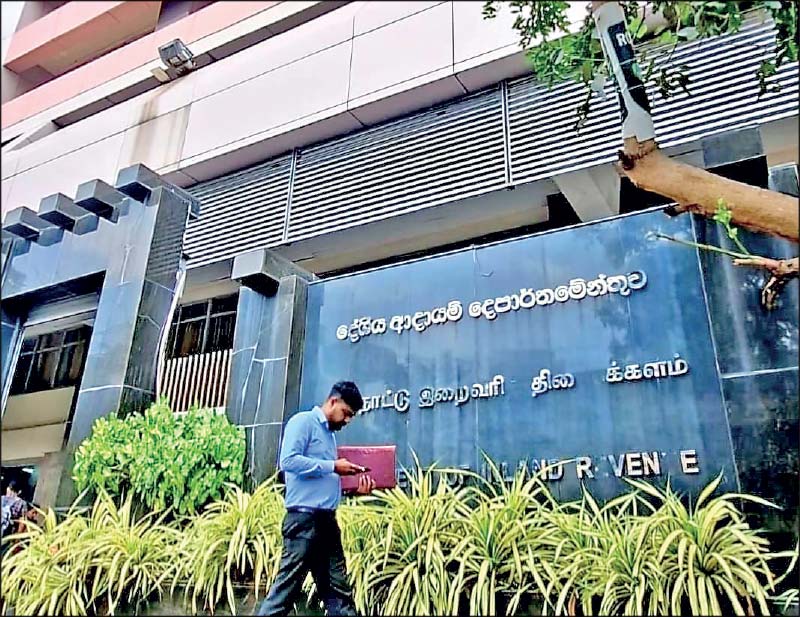
 Establishing such a database in Sri Lanka would enhance compliance, reduce audit risks, and support equitable revenue collection, particularly for a developing economy reliant on foreign investment. By investing in its creation, Sri Lanka can enhance economic resilience and global competitiveness
 In an increasingly globalised economy, transfer pricing has become a critical aspect of international taxation. Transfer pricing refers to the price at which related parties undertake a transaction. Transfer pricing regulations mandate that such transaction should be carried out at arm’s length. There are rules and methods to determine the arm’s length price at which such transactions between enterprises under common ownership or control should be carried out. At its core lies the arm's length principle, which stipulates that the terms of transactions between related parties should mirror those that would be agreed upon by independent entities under similar circumstances. This principle ensures fair taxation, tax avoidance and prevents profit shifting to low-tax jurisdictions. The Organisation for Economic Co-operation and Development (OECD) formulated the primary global transfer pricing principles formalising the arm’s length principle in their published guidelines. The tax authorities of various jurisdictions have utilised these concepts and introduced them as part of each jurisdiction’s legislation.
In Sri Lanka, transfer pricing regulations were introduced in 2006 under the Inland Revenue Act No. 10 of 2006 and have evolved significantly with the introduction of new provisions in 2018 under the Inland Revenue Act No. 24 of 2017 aligning with OECD guidelines. As per regulations there are different methods used to determine ALP. One of the commonly used methods for example is the Transaction Net Margin Method (TNMM).
According to this method the profitability of the transacting related party company is tested with independent comparable companies having similar operations in the market.
The comparable companies should be selected based on qualitative and quantitative data such as revenue, WIP, inventory, fixed assets, intangible assets etc. This type of data of companies operating in Sri Lanka should be ideally available and accessible to the public. A key challenge is the lack of a dedicated local database which carries such data. This is essential for identifying reliable comparable—uncontrolled transactions or companies used as benchmarks to compare the margin of a related party with that of an unrelated party. Establishing such a database in Sri Lanka would enhance compliance, reduce audit risks, and support equitable revenue collection, particularly for a developing economy reliant on foreign investment.
Local benchmarking database
The significance of a local benchmarking database cannot be overstated in enabling effective ascertainment of arm's length prices. Sri Lanka's economy, characterised by sectors like apparel, tourism, tea exports, and emerging IT services, differs significantly from regional peers. A domestic database would provide access to financial data from local independent companies, allowing for precise functional, asset, and risk (FAR) analyses tailored to Sri Lankan market conditions. Currently, taxpayers often rely on global or regional databases, which may not capture nuances such as local labor costs, regulatory environments, or economic volatility. With a local database, multinational enterprises (MNEs) operating in Sri Lanka could more accurately benchmark their intercompany transactions, such as intra-group loans, services, or goods transfers, ensuring prices reflect true market values. This would minimise transfer pricing adjustments during audits, as the IRD emphasises the "most appropriate method" based on reliable comparables, including the Comparable Uncontrolled Price (CUP), Resale Price Method (RPM), Cost Plus Method (CPM), Transactional Net Margin Method (TNMM), or Profit Split Method (PSM).
Furthermore, it would bolster Government revenue by curbing base erosion and profit shifting (BEPS), a priority under OECD's inclusive framework that Sri Lanka has joined. A national database would also foster transparency, encouraging voluntary compliance and reducing litigation costs for both taxpayers and the IRD. In developing countries like Sri Lanka, where foreign direct investment (FDI) is crucial for growth, such a tool would signal a mature tax regime, attracting more investment by providing certainty in pricing methodologies. Economically, it could help address fiscal deficits exacerbated by the 2022 crisis, ensuring that profits from local operations are taxed appropriately without deterring MNEs.
Using regional databases outside Sri Lanka presents substantial challenges in identifying suitable comparables. Regional databases, often covering Asia-Pacific countries like India, Thailand, or Singapore, aggregate data from diverse economies, leading to mismatches in comparability. For example, Sri Lanka's per capita GDP and inflation rates differ significantly from those in India, affecting profitability metrics like operating margins used in TNMM. Country-specific risks, such as political instability or currency fluctuations, are not adequately reflected in regional sets, potentially biasing arm's length ranges downward and resulting in under-taxation.
The OECD and UN Transfer Pricing Manuals highlight that developing economies face difficulties accessing reliable data, with commercial databases being costly and often lacking local granularity.
In Sri Lanka, where public company data is limited due to a smaller stock market, taxpayers must make extensive adjustments for differences in accounting standards (e.g., SLFRS vs. IFRS variants), market sizes, or functional profiles, increasing the risk of disputes. Regional comparables may include companies from higher-risk environments, but without proper risk adjustments, this can lead to inaccurate benchmarks.
Studies show that geographic proximity is less relevant than country risk in determining profitability, yet many practitioners default to neighboring countries, exacerbating biases. For instance, a Sri Lankan apparel exporter benchmarking against Indian firms might overlook local supply chain efficiencies or tariff impacts, leading to non-arm's length outcomes. The IRD does not prefer domestic over foreign comparables explicitly, but audits rely on public data, making regional sources prone to challenges if adjustments are deemed insufficient. This not only heightens audit scrutiny but also strains resources for small and medium enterprises (SMEs), which lack access to sophisticated tools. In essence, regional databases amplify uncertainties, potentially undermining Sri Lanka's efforts to enforce transfer pricing rules effectively since their enhancement in 2018.
Collaborative approach
Creating a benchmarking database in Sri Lanka requires a structured, collaborative approach, drawing lessons from other developing countries. First, the IRD could lead by compiling data from mandatory tax filings, audited financial statements, and submitted annually with income returns. This would involve anonymising sensitive information to ensure confidentiality while categorising companies by industry , size, and FAR profiles. Partnerships with private database providers could standardise the data, incorporating search engines for comparables in tangible goods, intangibles, or financial transactions. A phased rollout might start with high-risk sectors like exports, requiring companies above prescribed thresholds to contribute data.
To address data scarcity, integrate public sources such as the Colombo Stock Exchange listings and collaborate with regional bodies like the OECD or UN for technical assistance, as seen in toolkits for comparables in developing economies. Implement quality controls i.e screen for independence, apply quantitative filters (e.g., revenue ranges), and perform qualitative reviews via company websites or annual reports. Regular updates—annually or biannually—would maintain relevance, with user fees or Government funding sustaining operations. Legal frameworks under the Inland Revenue Act could mandate participation, while training programs for tax officials ensure effective utilisation. This model may then evolve into a comprehensive tool, potentially expanding to include profit level indicators (PLIs) like return on assets. In addition, the local database would be important for finalisation of advance pricing agreements in a more effective manner.
A local database will also provide accuracy and confidence for the Inland Revenue Department to introduce safe harbor rules. The authorities would have a better understanding of the actual operating margins of the various industries within Sri Lanka enabling the issuance of margins that the authorities consider sufficient and does not warrant further scrutiny under the safe harbour rules. This in turn would minimise the workload of Inland Revenue Officers in relation to transfer pricing audits and reduce cost of compliance to taxpayers.
In conclusion, a benchmarking database is vital for Sri Lanka to strengthen its transfer pricing regime, overcoming regional data limitations and fostering a fair tax environment. The digital data collected could also be used by the policy makers in understanding the performance of companies categorised by different parameters thereby enabling them to make meaningful tax policies and identifying industry specific issues and nuances. By investing in its creation, Sri Lanka can enhance economic resilience and global competitiveness.
(The author is Partner, Head of Tax, Deloitte Sri Lanka and Maldives)




