Saturday Oct 03, 2026
Saturday Oct 03, 2026
Wednesday, 25 March 2026 00:12 - - {{hitsCtrl.values.hits}}

We are getting closer to a “Thriving Nation – A Beautiful Life” by incorporating insurance into public-private partnerships and national development
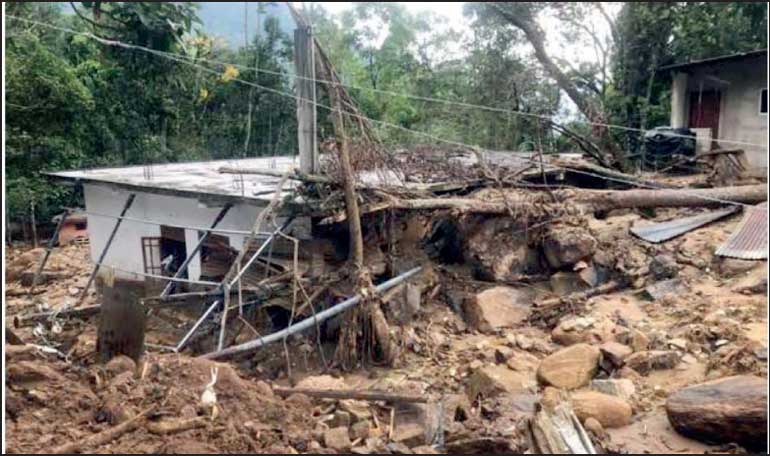
Cyclone Ditwah was a “silent crisis” rather than just a natural calamity
For Sri Lanka, the catastrophic passage of Cyclone Ditwah in November 2025 was a sobering reminder. While the country’s immediate response appropriately concentrated on providing humanitarian aid and reinstating vital services, the deeper economic and financial ramifications exposed a much more concerning reality: a significant insurance protection gap that jeopardises not only household security but also the stability and fiscal sustainability of the national economy.
Cyclone Ditwah was a “silent crisis” rather than just a natural calamity. Large portions of our population, productive industries, and public infrastructure are still critically underinsured despite decades of economic advancement. In the event of a shock, households, businesses, and eventually the State are forced to directly absorb losses due to the lack of sufficient risk transfer mechanisms. Addressing this gap has transcended regulatory monitoring to become a national priority in an era characterised by increased global volatility and growing climate concerns.
The wake-up call: Lessons from Cyclone Ditwah
One of the most destructive storms in our history, Cyclone Ditwah wreaked havoc throughout all 25 districts. The predicted overall economic impact is $ 4.1 billion, or almost 4% of Sri Lanka’s GDP in 2024. Agriculture, housing, and infrastructure were all significantly impacted by the losses: in light of this, claims from the insurance sector totalled about Rs. 58.5 billion. The fact that only about 6% of all losses were covered and over 94% remained uninsured is concerning when contrasted to the overall physical damage of almost Rs. 986.46 billion. This disparity is a result of inadequate readiness at all levels and structural flaws in risk transfer. The lack of coverage compels the Government to take on the role of “insurer of last resort”, shifting limited public funds from healthcare and education to emergency assistance.
The Vision 2035 roadmap: A seven-pillar strategy
The IRCSL is developing a medium-to-long-term roadmap (2026–2035) in collaboration with industry players, such as the Insurance Association of Sri Lanka (IASL), the Sri Lanka Insurance Brokers Association (SLIBA), the Actuarial Association, and the Sri Lanka Insurance Institute (SLII). “Insure Every Sri Lankan, Empower Every Household, and Finance National Growth” is our “Strategic” vision.
Seven strategic pillars form the foundation of Sri Lanka’s insurance industry’s “Vision 2035” roadmap, which aims to provide all residents with resilient, sustainable, and inclusive financial security. In addition to addressing sector-specific needs in agriculture, fisheries, and micro-enterprises along with supplementary financial literacy initiatives, Pillar 1 focuses on Coverage and Product Innovation, offering standardised, reasonably priced life, health, and property insurance, including government-backed solutions and mandatory risk coverage for SMEs. In order to make “protection at your fingertips” a reality, Pillar 2 places a strong emphasis on distribution and digital onboarding. It does this by utilising digital and diverse channels to streamline insurance access, make onboarding easier, and increase coverage throughout urban and rural populations. In order to improve openness, consumer confidence, and market involvement, Pillar 3 addresses Tax and Regulatory Clarity. It advocates for specific tax breaks for protection and health premiums while coordinating regulatory frameworks with international best practices. In order to support national infrastructure and strategic development, Pillar 4, Capital, Solvency, and Investment Freedom, seeks to bolster the National Insurance Trust Fund as a leading national reinsurer, improve sector stability, and mobilise long-term savings through pensions and life insurance products. Building a consolidated data environment connected to government databases, standardised health coding to expedite claims and reduce fraud, and elevating professional standards for advisers to guarantee integrity and knowledge are all part of Pillar 5’s focus on data, conduct, and consumer trust. In order to promote openness and trust, Pillar 6 emphasises talent, employment, and financial literacy as well as building a trained workforce, teaching insurance literacy in schools, and bolstering ethical standards in sales. Last but not least, Pillar 7 emphasises Execution, Governance, and Sustainability. It guarantees that the roadmap is actively carried out through specialised taskforces, monthly reviews, KPI tracking, and high-level oversight, producing quantifiable results like raising insurance penetration above 2% of GDP and creating jobs, with transparency, accountability, and disciplined execution at its core.
The economic engine: Jobs and growth
Increasing insurance penetration is a “People and Employment Engine” that goes beyond risk. Currently, the industry empowers over 49,000 agents and directly employs over 20,000 Sri Lankans. Our plan is to increase this workforce by 25%, generating tens of thousands of new jobs across the country.
By 2035, we commit to the following measurable national goals:
A unified call to action
The lessons from Cyclone Ditwah are obvious: resilience must be developed beforehand; it cannot be reactive. We have to decide whether to take immediate action or keep paying the exorbitant expenses of underinsurance.
We are getting closer to a “Thriving Nation – A Beautiful Life” by incorporating insurance into public-private partnerships and national development, which protects residents, boosts the economy, and gets Sri Lanka ready for future difficulties.
(The author is Chairman, Insurance Regulatory Commission of Sri Lanka.)



