Wednesday Oct 28, 2026
Wednesday Oct 28, 2026
Monday, 3 November 2025 01:32 - - {{hitsCtrl.values.hits}}
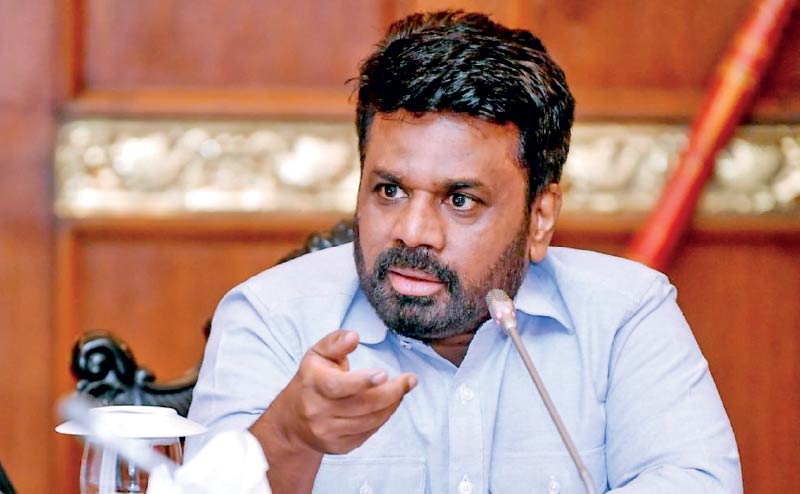
President Anura Kumara Disanayake
 AKD has sought to face the challenges by creating a dedicated Ministry of Digital Economy functioning under the President himself deviating from the traditional ministry of technology concept to drive Sri Lanka’s economy towards a digital world. Hence, creating a digital economy has become a goal of paramount importance for the present Government. In this context, the constructive suggestions and viewpoints expressed by IPS in its newest State of the Economy report are timely and opportune
 Digital economy
President Anura Kumara Disanayake or AKD Government has virtually stabilised the nominal or money side of the economy, thanks to his pursuance of the IMF prescribed policy package under its Extended Fund Facility or EFF implemented by Sri Lanka’s Government since March 2023. I say virtually because there are still risks of the nominal parameters in the economy – inflation rate, exchange rate, budget numbers, balance of payments, and external debt repayment capabilities – getting reversed if the real economy involving in the production of the real goods and services does not perform as expected.
Though the real economic growth has rebounded from its negative or near zero level a few years back to positive range recently, the attained growth of close to 5% in 2024 and 2025, is not different from the historical average growth of the country since independence. This is the growth which Sri Lanka would attain under normal circumstances even if the country would not do anything about it. Hence, in my view, as I had argued in a previous article in this series, this magic 5% growth is either zero or close to zero growth rate.
For Sri Lanka to attain a notable economic growth for improving the welfare of the people and joining the rich country club within the next 25 years or so, it needs to grow at least by about 9%, year after year, over this period. Hence, without being complacent about the current growth rate, the country should have a different strategy to push the real economy up to a high growth rate and sustain it over the next growth cycle.
IPS report on the state of the economy
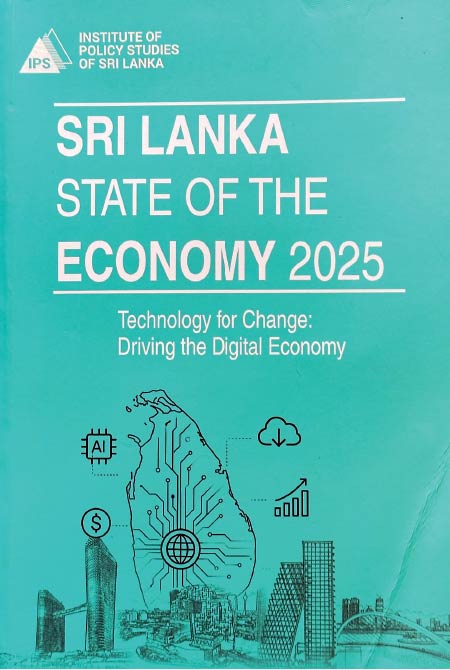
The Institute of Policy Studies or IPS, in its latest critical review of the economy, Sri Lanka: State of the Economy 2025, has aptly given this warning as follows: “The most important question at this mid-point of Sri Lanka’s post-crisis recovery is whether the government will continue to be a convincing change agent. The question matters for two key reasons. First, Sri Lanka is still in a cyclical growth recovery, driven by a rebound in consumer spending and investment. The output recovery is yet to be driven by structural factors such as technology infusion, infrastructure improvements, or regulatory reforms that lift production capacity. Second, a confluence of forces – an era of protectionism and tariffs, geopolitical conflicts, and volatile commodity prices – threatens to derail a self-sustaining recovery path”. However, though they are challenges, IPS says that they are also opportunities because “both fronts also open a window of reforms”.
 Dedicated Ministry of Digital Economy
AKD Government which is fully conversant of these challenges as well as opportunities they provide has set itself onto a massive technological transformation of the economy as the key policy strategy to drive the economy forward at the required high speed. This reminds me of the technological transformation undertaken by the Soviet Government in 1930s and the Chinese Government in 1980s to out-beat, on one side, and compete successfully, on the other, with the rising Western powers. An important element of the strategy was the diversion of resources for research and development or R & D through enhanced human talents and modern infrastructure facilities at universities and other research institutions. The result was that in many respects – military, space exploration, and medicines and health technologies – the two countries attaining comparable technological advancements with the Western world.
AKD has sought to face the challenges by creating a dedicated Ministry of Digital Economy functioning under the President himself deviating from the traditional ministry of technology concept to drive Sri Lanka’s economy towards a digital world. Hence, creating a digital economy has become a goal of paramount importance for the present Government. In this context, the constructive suggestions and viewpoints expressed by IPS in its newest State of the Economy report are timely and opportune.
EUDR challenges
Though Sri Lanka’s present strategy heavily relies on expanding the exportation of services, the importance of improving and sustaining the merchandise export sector for creating wealth, employment, and income and alleviating poverty across the nation should not be ignored. Says IPS: “Digitalisation improves service efficiency and lowers transaction costs, thereby strengthening the economy’s competitiveness. In the export-led growth strategy, digital solutions have become pivotal in meeting regulatory requirements in external markets such as the European Union (EU)”.
One important area identified by IPS, in this respect, is the compliance with the requirements of the EU’s Deforestation Regulations, commonly known as EUDR. As I had explained in a previous article in this series, EUDR is a measure adopted by EU to protect the globe from the harmful effect of climate change inducing gases by preserving the forest cover in the world. Sri Lanka’s rubber industry mainly and cocoa and coffee exports to a lesser extent get affected by EUDR because the relevant exporters will have to prove that their products do not come from deforested lands.
IPS has identified that 32% of Sri Lanka’s rubber exports, 16% of coffee exports, and 1% of cocoa exports are affected by EUDR. With regard to coffee and rubber, these percentages are critical restrictions for the growth of the respective industries. If Sri Lanka fails to meet the EUDR requirements, Sri Lanka will lose these export markets. As IPS has quantified, the reduction of rubber exports is significant amounting to about 8% of its exports, while its impact on the loss of GDP is negligible. However, its welfare loss is more than the loss in GDP since both rubber and coffee industries in Sri Lanka have been labour intensive. It is too costly for the smallholders in the two respective industries to meet the EUDR requirements. Hence, it is the large exporters, supported by the Government, who should shoulder the burden.
IPS says that Sri Lanka’s response to the EUDR challenge should be based on a digital solution. To ensure smooth product traceability, says IPS, advanced technologies like the blockchain systems, Geographic Information System or GIS tracking, and maintaining large datasets are needed. Given the high digital divide in Sri Lanka, this is beyond the reach of the smallholders involved in both rubber and coffee cultivation. Even for large exporters, the cost is too high, about 5% of the cost of production, according to IPS’s quantification. In this context, it is the Government which should create the necessary digital infrastructure for this
Digital solutions for EUDR challenges
IPS says that Sri Lanka’s response to the EUDR challenge should be based on a digital solution. To ensure smooth product traceability, says IPS, advanced technologies like the blockchain systems, Geographic Information System or GIS tracking, and maintaining large datasets are needed. Given the high digital divide in Sri Lanka, this is beyond the reach of the smallholders involved in both rubber and coffee cultivation. Even for large exporters, the cost is too high, about 5% of the cost of production, according to IPS’s quantification. In this context, it is the Government which should create the necessary digital infrastructure for this. The rubber exporters can be charged on a recurrent expenditure basis to cover the costs. Since the choice before Sri Lanka is whether to lose these industries or not, this is a necessary expenditure to be incurred by the Government under its digital economy creation strategy.
IPS says that there is high scope for Sri Lanka to promote digital enterprises to foster sustained economic growth. Sri Lanka’s current digital economy has been estimated at about $ 1.3 trillion or 4.5% of GDP. This in itself shows that there is a wide ocean out there for Sri Lanka to navigate to derive the full benefit from these economic activities, provided proper policies are adopted to generate a market-based incentive system
Window of opportunity
IPS says that there is high scope for Sri Lanka to promote digital enterprises to foster sustained economic growth. Sri Lanka’s current digital economy has been estimated at about $ 1.3 trillion or 4.5% of GDP. This in itself shows that there is a wide ocean out there for Sri Lanka to navigate to derive the full benefit from these economic activities, provided proper policies are adopted to generate a market-based incentive system. Emphasising on its importance, says IPS: “Emerging technologies such as artificial intelligence (AI), cloud computing, and data analytics, among others, are reshaping traditional industries and opening up new avenues for innovation and entrepreneurship”.
Since most of the employers want to adopt these technologies to foster growth, there is a general shift in global business toward them. But for Sri Lanka, which is low in both the digital infrastructure and digital penetration, there are profound implications which this general global shift will throw at it.
Macro implications of new technologies
Though IPS has not enumerated it, there are several macroeconomic implications for the global economy due to the fast adopt of same. This is valid for all countries irrespective of their present low level of digital penetration or high digital divide. First, the impact of skewed productivity gain by businesses of different sizes. Advanced technologies will help large businesses improve their productivity and be winners in the markets. But in all countries, in Sri Lanka’s case about 60%, the bulk of output is generated by medium and small sized businesses. That segment of the economy is not benefitted by the advanced digital technologies. As a result, there is no uniform improvement in productivity across the national economies. While large businesses, numbering a few, will benefit from it, the bulk of businesses is denied from its benefits.
Second, high technologies will generate an adverse income distribution in the form of favouring those engaged in them, while penalising all others who are denied of the opportunity. This is contrary to the goal of generating a fair income distribution in society. Third, high digital technologies favour capital owners, while reducing the income share of the labour owners. To get the highest advantage from digital technologies, Sri Lanka should address these issues right from the very beginning.
Accelerating digital payments
IPS has provided a narrative of the policy initiatives for a successful digital economy. Says IPS: “A key foundation for a robust digital economy is public and institutional trust in digital systems, safety, security, and integrity. To support this, the government plans to introduce new legislation and strengthen existing laws in cybersecurity, data privacy, and data protection. These measures are to be complemented by efforts to build institutional capacity to enforce and monitor compliance. The development of a strong digital payment infrastructure is another critical pillar. Accelerating digital payment systems between government, businesses, and citizens is essential for alleviating reliance on cash-based transactions improving economic efficiency”. IPS has emphasised on the need for developing and promoting digital payment platforms at retail level for attaining this goal fast.
Advanced technologies will help large businesses improve their productivity and be winners in the markets. But in all countries, in Sri Lanka’s case about 60%, the bulk of output is generated by medium and small sized businesses. That segment of the economy is not benefitted by the advanced digital technologies. As a result, there is no uniform improvement in productivity across the national economies. While large businesses, numbering a few, will benefit from it, the bulk of businesses is denied from its benefits
Sri Lanka’s cash-based retail transactions
Sri Lanka’s retail payments like paying for groceries at a grocery store, village fairs, bus and railway fares are mostly cash-based. Despite the promotion of electronic payment systems at retail levels, their use has been very minimal. Even in a backward country like Cambodia or Myanmar, consumers use e-cash payment systems to make retail payments. It is common for street food vendors in these countries to have a QR code in display to enable food buyers to make e-payments. As IPS has emphasised, this is a new development which Sri Lanka should have as the first step for converting the country to a digital economy.
Priority issues
As a policy recommendation, IPS has said that Sri Lanka should address on a priority basis constraints like weak e-commerce legislation, limited access to international payment systems, and low digital literacy in rural regions. It has provided to AKD Government actionable policy recommendations to enhance the digital eco-system, drawing from successful experiences in Asian countries and assessing technical, resource, capacity, and political feasibility. Says IPS: “To foster an inclusive and resilient digital economy in Sri Lanka, it is imperative to prioritise enhancing digital financial literacy, awareness, and adoption across all segments of society. Policymakers and stakeholders must implement targeted initiatives to ensure that women, youth, elderly, and rural populations are equipped to confidently and securely engage with digital financial tools”.
New dual economy
When an economy is transformed into a digital one, it is quite natural that big businesses with capacity and capability will acquire it faster than other segments, including the Government. This will lead to the creation of a dual economy like the economic system observed by the Dutch economist J.H. Boeke in early 20th century. He observed that in colonial economies in East Asia, there was the coexistence of a modern economy and a backward traditional economy stunting economic transformation. A similar development has emerged when countries have sought to create digital economies.
In this new dual economy, the duality is the coexistence of a technologically savvy segment, which is often a minority, with a backward and technology-phobic segment which is the majority. Though IPS has not overtly said so, its recommendation that those who are left behind the technological race, including the Government, should be promoted to embrace the new digital economy being created by the present Government.
I, therefore, believe that the IPS report for 2025 should serve as a guidance to AKD Government.
(The writer, a former Deputy Governor of the Central Bank of Sri Lanka, can be reached at [email protected].)




