Saturday Oct 03, 2026
Saturday Oct 03, 2026
Saturday, 13 June 2026 05:37 - - {{hitsCtrl.values.hits}}
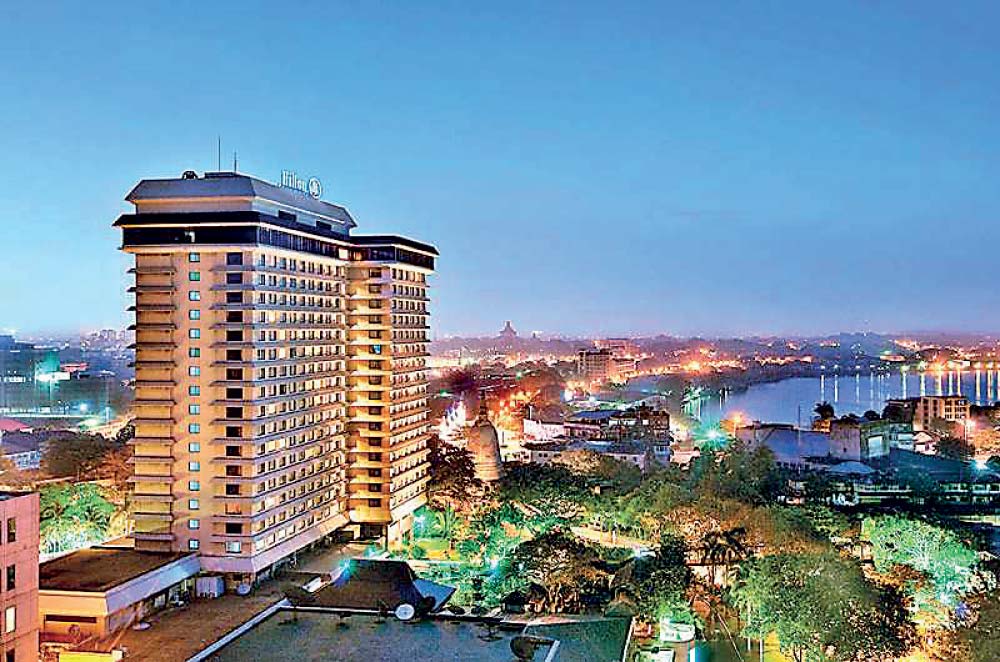
 Under their fiduciary responsibilities, Directors and officials are required to act in the best interests of the entity and, where public assets are concerned, in the best interests of the people of Sri Lanka. The obligation is not simply to sell an asset. The obligation is to obtain the best achievable value for that asset through a process that is transparent, defensible and beyond reproach
 Some assets are so significant that the State has a duty to approach their disposal with exceptional care.
The Hilton Colombo is one such asset.
Occupying more than seven acres of prime real estate in the heart of Colombo, the property is not merely a hotel. It is one of the most strategically located hospitality and commercial assets in Sri Lanka and forms part of the portfolio earmarked for divestiture under the Government’s commitments towards economic reform and State enterprise restructuring.
Against that backdrop, reports suggesting that the owning company, Hotel Developers (Lanka) PLC, may enter into a fresh long-term management agreement with the Hilton brand for a further five to seven years raise serious questions that deserve public examination before any decision is taken.
The issue is not whether Hilton is a respected international hotel operator. It undoubtedly is.
The issue is whether imposing a binding management contract on a property that is expected to be sold serves the interests of the Sri Lankan taxpayer.
Logic suggests the opposite.
A buyer paying hundreds of millions of dollars for a landmark hotel generally expects the freedom to determine the future direction of that asset. One purchaser may wish to continue under the Hilton flag. Another may prefer Marriott. Another may seek Hyatt, Accor, Shangri-La, IHG or an entirely different luxury brand. Yet another may wish to reposition the property altogether.
That freedom has value.
And value is precisely what the State should be seeking to maximise.
A hotel offered for sale without long-term operational encumbrances allows every prospective bidder to price the asset according to their own business strategy. A hotel sold with a binding management contract already attached inevitably narrows those options and may discourage otherwise interested parties from participating altogether.
The result could be fewer bidders, reduced competition and potentially a lower purchase price. That should concern every public official involved in the process.
Under their fiduciary responsibilities, Directors and officials are required to act in the best interests of the entity and, where public assets are concerned, in the best interests of the people of Sri Lanka. The obligation is not simply to sell an asset. The obligation is to obtain the best achievable value for that asset through a process that is transparent, defensible and beyond reproach.
In the post-crisis environment, those responsibilities carry even greater weight.
Sri Lanka has imposed higher taxes, reduced public expenditure and undertaken painful economic reforms. Citizens have repeatedly been told that every rupee matters. If that principle applies to taxpayers, it must surely apply to State assets worth potentially hundreds of millions of dollars.
This is where questions relating to governance become unavoidable. Would a long-term management agreement maximise competitive bidding? Would it enhance the sale value? Would it increase flexibility for prospective purchasers?
Or would it effectively pre-determine aspects of the property’s future before the market has had an opportunity to express its view?
These are not anti-Hilton questions. They are pro-value questions.
Any official entrusted with public property must be able to demonstrate that every decision taken before a sale was designed to increase value rather than potentially diminish it. That principle sits comfortably alongside fiduciary obligations, public property responsibilities and the broader spirit of anti-corruption and good-governance frameworks.
Be that as it may, if the objective is genuinely to obtain the highest possible price for one of Sri Lanka’s premier hospitality assets, then common sense suggests the property should be offered to the market as free from unnecessary encumbrances as possible.
After all, why would any seller voluntarily limit the choices of prospective buyers before the bidding even begins?
That is a question taxpayers are entitled to ask.
(The author is an independent broadcaster and investigative journalist, and be reached via [email protected])



