Thursday Aug 06, 2026
Thursday Aug 06, 2026
Thursday, 6 August 2026 05:19 - - {{hitsCtrl.values.hits}}
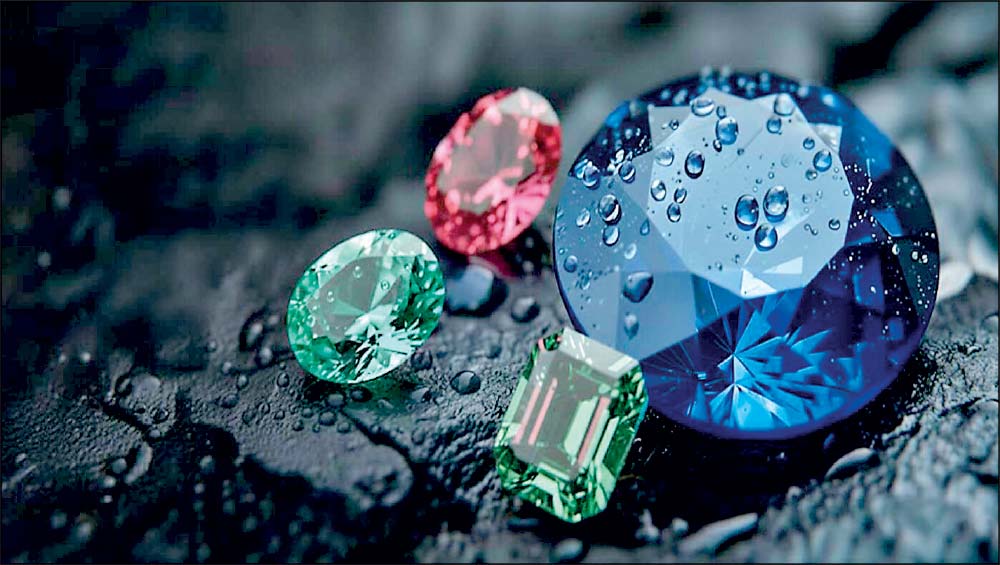
 While our gemstones are globally respected, the nation captures only a fraction of the value they create. Much of the branding, storytelling, design, retail and premium pricing occur elsewhere in the global value chain. This presents a compelling question for policymakers, industry leaders and marketers alike: Can Sri Lanka transform its gemstone heritage into a globally recognised luxury brand that strengthens both our economy and our national identity?
 Sri Lanka's reputation as the "Island of Gems" spans more than 2,500 years. From the time of the ancient Silk Route to today's global luxury jewellery houses, our island has been celebrated for producing some of the world's finest sapphires, rubies, spinels, cat's eyes, alexandrites and a remarkable variety of coloured gemstones. The legendary Ceylon Sapphire, renowned for its brilliance, clarity and vibrant colour, continues to command admiration among collectors, jewellers and royalty worldwide.
Yet despite this extraordinary heritage, Sri Lanka has not fully realised the economic potential of one of its most valuable natural assets.
While our gemstones are globally respected, the nation captures only a fraction of the value they create. Much of the branding, storytelling, design, retail and premium pricing occur elsewhere in the global value chain. This presents a compelling question for policymakers, industry leaders and marketers alike:
Can Sri Lanka transform its gemstone heritage into a globally recognised luxury brand that strengthens both our economy and our national identity?
I believe the answer is yes.
Having had the privilege of contributing to Sri Lanka's nation branding initiative through the Sri Lanka Institute of Marketing (SLIM) in collaboration with Brand Finance, I came to appreciate an important truth: a country's reputation is not merely a communications asset—it is an economic asset.
Today, I believe Sri Lanka's gemstone industry represents one of the strongest opportunities to demonstrate this principle.
Beyond mining: Building national value
Natural resources alone do not create prosperous nations.
Countries become globally competitive when they transform natural resources into internationally recognised brands.
Switzerland is admired not merely because it manufactures watches, but because it has built an enduring reputation for precision, craftsmanship and excellence.
France has transformed wine into a symbol of culture and prestige.
Italy has positioned craftsmanship as an expression of luxury.
Likewise, Botswana has successfully repositioned its diamond industry by moving beyond extraction to become a global hub for sorting, valuation and responsible diamond trading.
These countries demonstrate that economic value is created not only through production, but through branding, trust and reputation.
Sri Lanka possesses the same opportunity.
Competitive advantage we already own
Few countries possess the geological diversity found within Sri Lanka.
Our island produces world-class sapphires, spinels, garnets, zircons, tourmalines, chrysoberyls, cat's eyes and numerous other gemstones admired across international markets.
Beyond geology, Sri Lanka possesses several enduring competitive advantages:
These are strategic advantages that cannot easily be replicated.
The challenge is not our product.
The challenge is our positioning.
Country-of-origin effect
Marketing research consistently demonstrates that country of origin influences consumer perceptions, particularly within premium and luxury markets.
Consumers rarely purchase luxury products based solely on functional characteristics.
They purchase authenticity.
They purchase heritage.
They purchase trust.
They purchase identity.
A Colombian emerald carries prestige because of Colombia.
A Kashmir sapphire commands exceptional value because of its origin.
A Burmese ruby derives much of its reputation from Myanmar's history.
Similarly, the phrase "Natural Ceylon Sapphire" already enjoys significant recognition among gem professionals worldwide.
However, the broader international recognition of Sri Lanka itself has yet to fully translate into higher commercial value across the gemstone industry.
This is precisely where nation branding and industry branding intersect.
From commodity to luxury brand
Many Sri Lankan gemstones leave our shores as loose stones.
They may then be cut, branded, designed into jewellery, marketed and eventually sold under internationally recognised luxury brands in New York, Geneva, Hong Kong, London or Dubai.
Although the gemstone remains Sri Lankan, much of the value generated through branding and marketing is created elsewhere.
As a result, Sri Lanka frequently exports the raw beauty while importing little of the premium associated with the finished luxury experience.
Our objective should not simply be to export gemstones.
Our objective should be to export Brand Sri Lanka through every gemstone we sell.
Our next challenge is to ensure that every sapphire, spinel, cat's eye and ruby leaving our shores also carries something even more valuable—the reputation of Sri Lanka itself. If we succeed, we will not merely export gemstones. We will export trust. We will export heritage. We will export craftsmanship. And ultimately, we will strengthen Brand Sri Lanka—one gemstone at a time
Meeting expectations of modern luxury consumer
Today's luxury consumer is fundamentally different from that of previous generations.
Increasingly, buyers ask questions beyond colour, clarity and carat weight.
They want to know:
Fortunately, Sri Lanka is well positioned to answer these questions.
Our traditional mining heritage, experienced craftsmen and internationally respected gemological expertise provide an excellent foundation for building global trust.
However, trust must be communicated consistently through certification, traceability and compelling storytelling.
Positioning Sri Lanka as global home of natural coloured gemstones
Rather than competing primarily on price, Sri Lanka should aspire to become internationally recognised as the world's most trusted source of premium natural coloured gemstones.
Our positioning should emphasise:
This approach shifts competition away from price and toward reputation—where sustainable competitive advantage exists.
National Strategy, not individual effort
Strengthening Sri Lanka's gemstone brand cannot be achieved by exporters alone.
It requires collaboration across the entire ecosystem.
Government institutions.
The National Gem and Jewellery Authority.
Exporters.
Mining communities.
Jewellery manufacturers.
Tourism authorities.
Investment promotion agencies.
Academic institutions.
Marketing professionals.
Private sector innovators.
Nation branding succeeds when diverse stakeholders consistently reinforce the same national promise.
Our gemstones already tell an extraordinary story.
Our responsibility is to ensure the world hears it.
A stronger international reputation can increase export earnings, attract responsible foreign investment, stimulate jewellery manufacturing, create skilled employment, preserve traditional craftsmanship and strengthen luxury tourism. Most importantly, it can enhance Sri Lanka's global reputation
Roadmap for future
To unlock the full potential of Sri Lanka's gemstone industry, I believe five strategic priorities deserve national attention.
First, establish a globally consistent branding framework for Sri Lankan gemstones aligned with the broader Brand Sri Lanka strategy.
Second, strengthen international confidence through enhanced traceability, certification and ethical sourcing standards.
Third, position Sri Lanka as the world's preferred source for premium natural and untreated coloured gemstones.
Fourth, integrate gemstones into Sri Lanka's luxury tourism offering through mine visits, lapidary experiences, museums, educational centres and curated luxury travel.
Finally, encourage stronger collaboration between Government, industry, academia and marketing professionals to create a long-term international positioning strategy supported by research, innovation and digital marketing.
These initiatives require patience and coordinated leadership.
However, their economic impact could extend well beyond gemstone exports.
More than an export industry
The gemstone sector has the potential to contribute significantly to Sri Lanka's broader economic development.
A stronger international reputation can increase export earnings, attract responsible foreign investment, stimulate jewellery manufacturing, create skilled employment, preserve traditional craftsmanship and strengthen luxury tourism.
Most importantly, it can enhance Sri Lanka's global reputation.
Every Sri Lankan gemstone has travelled millions of years through geological history before reaching human hands.
It should also carry the story of a nation recognised for authenticity, craftsmanship and excellence.
Looking ahead
In an increasingly competitive world, reputation has become one of the most valuable forms of capital.
Countries that successfully build trusted brands enjoy greater resilience, stronger exports and higher-value industries.
Sri Lanka has already been gifted one of the world's greatest luxury products by nature.
Our next challenge is to ensure that every sapphire, spinel, cat's eye and ruby leaving our shores also carries something even more valuable—the reputation of Sri Lanka itself.
If we succeed, we will not merely export gemstones.
We will export trust.
We will export heritage.
We will export craftsmanship.
And ultimately, we will strengthen Brand Sri Lanka—one gemstone at a time.
(The author is a marketing strategist, business leader and advocate for nation branding with over two decades of experience in strategic marketing, business development, corporate communications and investment facilitation. He contributed to Sri Lanka's "Rebuilding the Nation Brand in a Time of Crisis" initiative led by the Sri Lanka Institute of Marketing (SLIM) in collaboration with Brand Finance, supporting efforts to strengthen Sri Lanka's international reputation and economic competitiveness. He believes Sri Lanka's gemstone industry represents not only an export opportunity but also a strategic platform for building a stronger Brand Sri Lanka and creating sustainable economic value for future generations)




