Friday Oct 02, 2026
Friday Oct 02, 2026
Saturday, 1 August 2026 03:10 - - {{hitsCtrl.values.hits}}
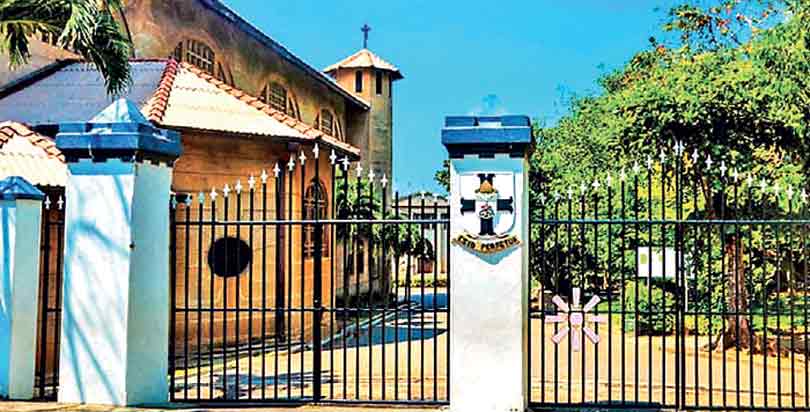
S. Thomas’ College, Mount Lavinia
 How S. Thomas’ College, 175 years old, four campuses, a stellar alumni body, can turn its inheritance into a national instrument of excellence and service
 Nations are not built by treaties or treasuries alone. They are built, generation after generation, in the quiet work of forming young people who think clearly, serve honestly, and lead well. At Independence, it was schools like S. Thomas’ College that supplied the country its first generation of statesmen, jurists, civil servants, and public intellectuals, formed not merely to hold office, but to understand office as a form of service.
A national engine, not a private one
Sri Lanka does not lack talent and STC’s alumni network, four campuses, and founding charter position it to close that gap as a national engine, not a private one. There is a wider current this ambition sits inside. Higher education has, for two centuries, been overwhelmingly a Northern-hemisphere export, Oxford, Cambridge, the Ivy League, setting the terms for what counts as a serious degree. That monopoly has begun to loosen: Singapore built a global schoolhouse, Doha an education city of branch campuses, and South Africa, India, Japan, and Malaysia have each pulled some share of higher education south and east. Sri Lanka has never had an institution positioned to make that claim, but STC, uniquely, has the campuses, the brand, and the relationships to attempt it. What is proposed is not an affiliate bolted onto a secondary school. It is STC Higher, a genuine tertiary institution on Thomian ground, offering internationally accredited degrees, so a young person in South Asia no longer has to cross a hemisphere for an education equal to the best in the world. This is the hardest claim in this piece, and it deserves to be treated as such: a secondary school does not become a degree-granting university by declaration, and internationally accredited tertiary status is a decade-long undertaking, built through accreditation partnerships and regulatory approval, not a launch event. What makes it a plausible ambition for STC rather than an overreach is precisely what already exists: an alumni network positioned to bring accreditation partners to the table, four physical campuses to house it, and a brand strong enough to attract a credible first cohort. The case for STC Higher is that the raw materials sit unused, not that the outcome is easy.
Where AI helps, and where it can’t
The measure of a great school, in the end, is not the excellence it keeps for itself. It is the excellence it sends out into the world.
This matters nowhere more than in Sri Lanka, still overwhelmingly rural, where a child’s postcode too often predicts their future more reliably than their ability does. AI has a genuine role in closing that gap: adaptive tutoring that meets a child at her actual level, gap-analysis that flags a struggling learner before any teacher notices, assessment that scales personal attention to thousands at once, at negligible cost. Used well, it dissolves the excuse that a rural child without a laboratory has nothing to offer the world. STC’s four campuses are already a physical and digital spine reaching into the terrain where opportunity is thinnest; the task is to extend them, treating every gifted, underprivileged child they discover as the mission itself.
 Great countries, in the end, are not the sum of their armies, their exports, or even their governments. They are the sum of what their schools were willing to demand of their young people, and how far they carried that demand beyond their own gates. Sri Lanka does not lack the raw material of greatness; it lacks institutions patient enough to go and find it, wherever it is hiding, and finish what they find
For all that AI can do, it cannot sit with a boy after a difficult report and tell him, credibly, that he is more than his results. It cannot run a chapel service, referee a rain-soaked house match, or notice, the way a housemaster notices, that a normally cheerful student has gone quiet. The formation STC has always claimed, character under pressure, loyalty to something larger than oneself, the instinct to serve rather than simply succeed, happens in exactly these undigitisable moments. The right posture is a clear division of labour: let algorithms carry the marking and the logistics of reaching thousands at once, and free every hour of human attention that recovers for the work only a person can do.
The mechanism
The mechanism itself is not mysterious. A unified Thomian Digital Campus, one platform, one shared identity, would let a lesson taught in Mount Lavinia reach a classroom in Ampara the same evening, curating the best teaching available anywhere rather than only what STC itself can produce. A free annual national aptitude program, open to every child regardless of school or district, would identify promise on reasoning rather than curriculum access, with paper-based sittings where connectivity has not reached. Every element must serve girls and boys in genuinely equal measure, a reminder Sri Lanka’s own record makes plain, since girls already outperform boys in progression to higher education nationally. Selected students, Satellite Scholars, would not need to leave home; each would be paired with a Thomian Companion, an alumnus who walks alongside them not as a tutor marking work but as a companion for the journey itself, there as the child reaches for the stars, with enrichment, mentoring, and a short residential camp each year brought to the Scholar rather than the other way round, while partner schools across the island could join as regional hubs extending the network wherever the college itself cannot physically reach.
Leaving no one behind
The same platform can reach a child the system overlooks for a different reason: a visual, auditory, physical, or cognitive difference no ordinary classroom accommodates. Screen readers, sign-language companions, adjustable interfaces, and AI-paced content are not expensive add-ons bolted on later; they are simply what a platform built with every learner in mind looks like from the outset. A school that means what it says about opening doors cannot mean it selectively.
The same Scholar network, once built, does not have to stop at reasoning ability. There is a quieter injustice it can also address, one with nothing to do with geography or wealth. Inside STC’s own classrooms, and every classroom in the country, sit children consistently at the back of the O/Level and A/Level grade sheet who are nonetheless among the most capable people their generation will produce. Some of the brightest minds care little for the exact curriculum being tested; their gifts run toward building, persuading, performing, competing, or leading, in ways no syllabus anticipated. A school that measures potential only by examination rank will lose these children before the world discovers what they can do. A wider concept of education, crediting ability in sport, the arts, enterprise, and leadership as seriously as an A grade, can be exactly what jet-propels these students past their better-ranked classmates once school ends.
Nor does this outward mission need to be bounded by faith, race, or region. A country as plural as Sri Lanka is best served by an institution reaching across every divide, Sinhala, Tamil, and Muslim children alike, on the same terms, with genuine proficiency in learning other subjects through English, from O/Level through A/Level, since that is the real gatekeeper to the world’s best universities. Done at scale, this produces something Sri Lanka has not had in generations: leaders from every district who never had to leave home to get there, each carrying the Satellite Scholar name as a mark recognised nationally and internationally, found, formed, and finished to lead on a global stage.
A circle, not a gift
None of this should be a one-way transaction. Every Satellite Scholar, every STC Higher graduate, should carry an expectation of return: a year teaching from afar or in person in the kind of school that once lacked what they were given, a spell serving as a shepherd celebrating inclusion and excellence. This is the same idea that built the school in the first place, applied at the scale of a generation, that talent and opportunity are held in trust, not owned outright.
Crossing the Road
This is not a new idea for STC to discover. Bishop Duleep Chickera once urged Thomians to cross the road, to step out of a well-resourced campus into the world of those who have far less, not as occasional charity but as a defining posture. Writing as an Old Boy who once boarded within these gates, I do not raise this lightly. At 175, the school stands at the milestone that demands the question be asked in full: not whether STC remains excellent, but whether it will finally cross that road all the way, building an entire architecture, digital, physical, and human, that lets it remain exactly where it is and still arrive, fully, wherever the road has not yet reached.
It would be dishonest to present this as simple. An institution this size does not turn quickly, and every idea here is easier to write down than to fund and sustain past an initial burst of enthusiasm. The real risk is not a lack of resources; it is that a vision this size quietly narrows into a slogan and a handful of pilots while the architecture itself never gets built. Guarding against that takes the same discipline STC already applies to cricket and academics: clear targets, honest reporting, and the willingness to kill what doesn’t work.
Great countries, in the end, are not the sum of their armies, their exports, or even their governments. They are the sum of what their schools were willing to demand of their young people, and how far they carried that demand beyond their own gates. Sri Lanka does not lack the raw material of greatness; it lacks institutions patient enough to go and find it, wherever it is hiding, and finish what they find. S. Thomas’ College, at 175, has the history and the moral inheritance to be exactly that institution. The founder built a school. This generation of Thomians has the chance to build something a country can be built on.



