Tuesday Oct 13, 2026
Tuesday Oct 13, 2026
Wednesday, 8 April 2026 03:44 - - {{hitsCtrl.values.hits}}
 The global economic landscape is undergoing a period of structural realignment. What began as isolated geopolitical tensions has evolved into a broader reconfiguration of trade, capital flows, and economic alliances. With continued instability in the Middle East and the accelerating strategic decoupling between the United States and China, the architecture of globalisation is being reshaped in real time.
For Sri Lanka-a small, open economy still recovering from the 2022 crisis-these developments present both risks and opportunities. Periods of global dislocation have historically rewarded countries that position themselves as stable and accessible. This creates what may be described as a “Neutrality Premium”: a relative valuation advantage for markets that remain open and balanced while others become increasingly fragmented.
I. The macro context: A world in transition
Three key forces are shaping the current environment:
With heightened risks around critical supply routes such as the Strait of Hormuz, oil price volatility is no longer episodic but structural. For Sri Lanka, which remains heavily dependent on fuel imports, rising energy costs directly impact inflation, currency stability, and external balances.
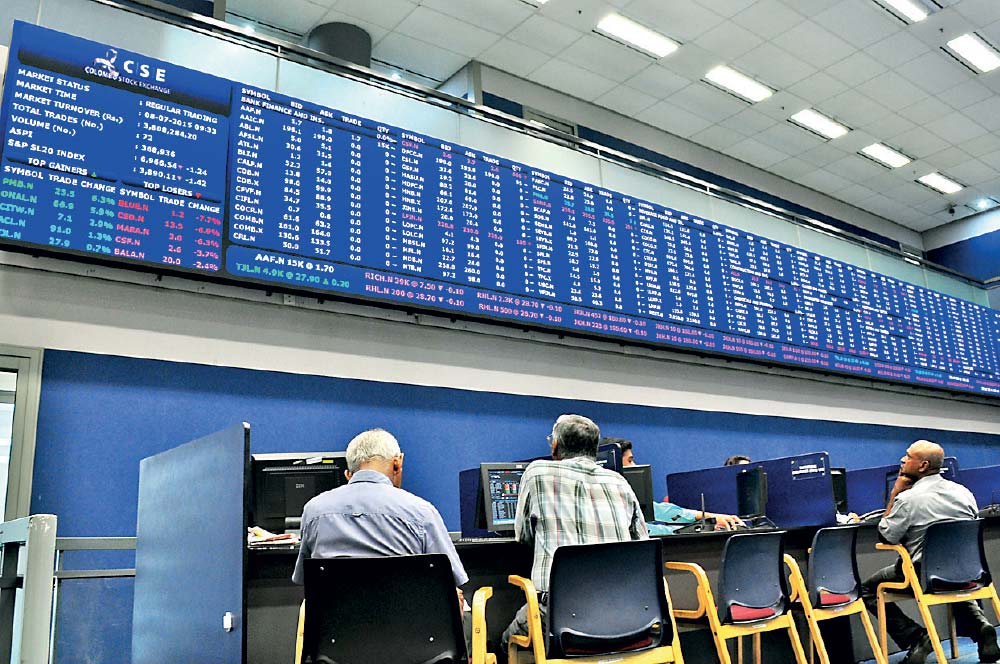
During periods of elevated global volatility, capital tends to retreat from frontier markets. This often creates liquidity constraints in the Colombo Stock Exchange (CSE), pushing valuations below intrinsic levels regardless of underlying fundamentals.
As geopolitical blocs consolidate, global capital is increasingly drawn to jurisdictions that maintain balanced relationships across major powers, including India, China, and Western economies.
II. Short-term pressures vs. long-term shifts
Investors must distinguish between temporary volatility and structural transformation.
Short-term dynamics (0 - 12 months)
Instability in the Middle East may disrupt traditional remittance flows. However, it could also encourage the return of skilled workers, providing some support to domestic sectors.
Persistently high global inflation, driven in part by energy costs, may limit the Central Bank of Sri Lanka’s ability to ease monetary policy, keeping borrowing costs elevated.
Long-term opportunities (1–5 years)
As global firs adopt “China Plus Many” strategies, Sri Lanka’s geographic position along key shipping routes presents opportunities in light manufacturing and assembly.
The Colombo Port City Special Economic Zone offers potential as a regional financial hub. Its success will depend on regulatory clarity, legal certainty, and ease of doing business for international investors.
III. Sectoral outlook
A strategic priority that reduces dependence on imported fuel and strengthens external stability.
Exposed to global demand cycles but supported by supply chain diversification trends.
Sri Lanka’s role as a transshipment hub becomes more valuable amid shifting trade routes.
Exposure to sovereign risk and interest rate sensitivity requires selective positioning.
Highly dependent on global travel sentiment and energy costs.
IV. Strategic priorities
For policymakers
Investment in renewable energy is not only an environmental priority but also a critical component of foreign exchange stability.
Preserving geopolitical neutrality is essential to sustaining investor confidence and attracting diverse capital flows.
For investors
Sri Lankan equities often trade at discounts relative to regional peers. Market dislocations may create selective entry opportunities.
Beyond headline indices, investors should monitor metrics such as reserve adequacy, IMF program progress, and port activity levels.
Conclusion: Navigating uncertainty
Sri Lanka has demonstrated resilience through a series of severe economic shocks. While the recovery remains incomplete, the current global environment presents a unique inflection point.
In a fragmented world, stability carries a premium. Countries that maintain openness and strategic balance are better positioned to attract capital and investment.
For disciplined investors, Sri Lanka’s capital market represents not only risk-but also the potential for mispriced opportunity.
(The author is an asset management professional with over twelve years of experience in investment management he is a Sri Lankan finance professional based in France. The views expressed are personal and do not constitute financial advice.)



