Monday Sep 21, 2026
Monday Sep 21, 2026
Monday, 21 September 2026 01:38 - - {{hitsCtrl.values.hits}}
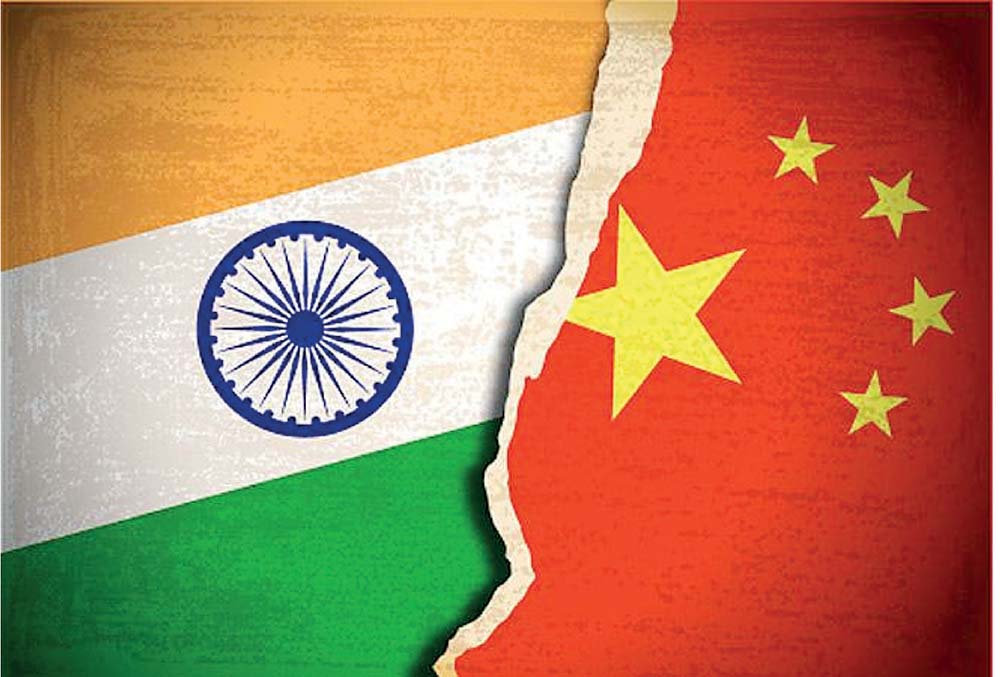
 Usually, we say that when the tide rises, all ships—large or small—rise equally. But in economic terms, that doesn't always happen. The collective global economy wasn't built to lift all boats; it was built in ways that let some float while others sink. That is the reality. We often see situations where many remain silent while a few take the high ground and move forward, leaving others to bear the collective suffering. When I wrote an article connecting this idea to the Colombo Port City, the new city being developed that extends the coast of Colombo. I argued that Colombo may become the new Venice of the Indian Ocean. The point wasn’t just about development. Sri Lanka occupies a unique geographical position: if you travel directly south from Sri Lanka, the next landmass is Antarctica. Something significant is happening there.
The Thwaites Glacier, now commonly called the “Doomsday Glacier,” is melting, and we are already discussing the possibility of roughly half a meter of sea-level rise from that glacier alone within the next 10–15 years. Beneath Antarctica, about 360 volcanoes add another layer of uncertainty. Major ice collapses into the ocean could potentially contribute to tsunami-generating events – we have just witnessed something similar in Nepal. Long ago, this happened in Lake Geneva in Switzerland.
Climate change
I raise these points not to be dramatic, but to emphasise that climate change is not a distant abstraction. We are living through it now, and we do not seem to have fully factored these risks into many of our development decisions. Climate change may almost be considered a foreign conspiracy to thwart our development.
We can already see local indicators that the climate is no longer what it once was. Some bird species arrive late, some disappear, and many environmental signals suggest that ecosystems have changed. Weather conditions are becoming more severe and are directly affecting many of us. In this context, we are facing a triple planetary crisis: climate change, biodiversity loss, and pollution. This is our current economy in action. We have developed together and worked together, but we occupy very different positions within the system, and both people and the planet are under pressure.
Bioeconomy and the circular economy
Therefore, we need a different kind of economy. Many of us speak about the bioeconomy and the circular economy. Some countries have embraced these ideas in policy, but actual implementation often looks very different. That is why action is imperative. We can listen to the United Nations Secretary-General, who repeatedly warns that we are on a “highway to climate hell,” that the planet is “on thin ice,” and that climate calamity is becoming commonplace. He speaks in very strong terms because the situation is serious. Yet, despite these warnings, our collective response remains insufficient. The message is simple: we need to act, and we need to act fast. We also know that our current trajectory points toward roughly 3.2°C of warming. Even the way we are expanding artificial intelligence raises concerns because much of that growth still runs on existing energy systems, making AI a major carbon emitter and a major water consumer. From a planetary perspective, we may have a responsibility to push ourselves back toward conditions more like those of the Holocene, the relatively stable period that favored human civilisation, rather than continuing deeper into the Anthropocene trajectory we have created.
Maritime Silk Route
When I visited the Beijing Science and Technology Museum, I was reminded of Sri Lanka’s historical connection to the ancient Maritime Silk Route. Records of the Chinese naval expeditions of the 15th century show Sri Lanka playing a prominent role in exchanges based on trade, goodwill, and coexistence rather than conquest. Today, we see the modern Belt and Road concept reaching different parts of Sri Lanka. The historical lesson I take from this is that cooperation works best when it is built on shared benefit rather than domination. I also had the opportunity to present related ideas at the Chinese Academy of Sciences, where I discussed the kind of economy and collaboration we need. One important point is that we must rethink what collaboration is for. Too often, we treat collaboration as a transaction: one party has a problem, and another party supplies a technology. A compliance issue receives a technical fix; a pollution issue receives another. But today, the deeper question is resource conservation. We should be asking: “I have a resource-conservation problem. What technology and what partnership actually help me solve that problem for the long term?” Sometimes we adopt the wrong technology because it solves the immediate problem while ignoring future challenges. Collaboration should not merely deliver short-term relief. It should help all parties address the larger planetary requirement that we collectively face. That means looking beyond narrow economic gains and considering future generations and realities.
Science and technology
Population, affluence, and technology drive environmental impact. In policy discussions, we often focus on population and affluence, but we sometimes overlook the central driver that can change outcomes: technology. Science and technology have given us extraordinary progress, but they have also contributed to many of the problems we face. Since population reduction and drastic reductions in living standards are neither practical nor desirable solutions, technology becomes the primary pathway through which we must address environmental and developmental challenges. That is why I emphasise two grand transitions: transitioning to net-zero economies and transforming economies into circular economies. One challenge is fundamentally about energy; the other, about materials. These are technical problems that require technical solutions. The question is whether we are willing to collaborate on these future-fit priorities or continue pursuing short-term gains through outdated approaches. What is appropriate for the future is often very different from what provides a quick fix today. As the saying goes, “It does not matter what you know until you know what matters.” Even in collaboration, we must think at that level. We should collaborate for the greater good rather than for partial and temporary benefits. We live in an age where any given opportunity is seen as a chance to gain an edge.
It is interesting that we are quite happy to sign documents to service, free of charge, weapons we may never use, which we once received as gifts. We have received free school uniforms year after year, and the list of gifts, including wheat flour from far away, can be quite lengthy, but that should not make us happy, as it points to an inherent and sustained weakness. I remember when two well-publicised maritime events occurred in our maritime zone – MT New Diamond and X-Press Pearl - the help of India, especially with the former, was quite invaluable. A Premier maritime hub is unlikely to receive adulation if such events expose the gap between statements and practice. The beggars cannot be choosers did come with a meaning. When two superpowers, who became superpowers, beating perhaps a better baseline, displayed many years ago by Sri Lanka, are two different stories, yet with one outcome surfacing – trillion-dollar economies, nuclear powers and strong muscle mass ready to flex. Gloves, kid gloves, and real ones get donned when each of these systems jostles for power in geographical regions. Those who get caught in between become geopolitical mincemeat.
Nawaz Sharifs of Pakistan
I remember two quotes from two Nawaz Sharifs of Pakistan. The former PM of Pakistan stated that true development in the country was only possible through modern technology. Dr Nawaz Sharif, the technology management scholar and former Director of UN ESCAP’s APCITT, said: “The capacity to produce technology is infinitely more important than the technology itself. A nation's prosperity depends not on the quantum of technologies it has amassed, but on its capacity to generate technologies. The essence of S&T Poverty is Poverty in today’s world – the most important parameter.
Sri Lanka’s technological limitations today are clear, and we need significant external assistance in many areas; we unashamedly almost always talk about how to plan and write proposals for help. The constructive question is not how to assign blame, but how to build the capabilities that allow us to respond better in the future. We fritter away our talent and say we do not have talent That brings me to my final point: an innovation-driven economy is the only sustainable way forward. This requires collaboration, knowledge sharing, research capacity, and technological advancement. I am reminded of Deng Xiaoping's observation that “science and technology are primary productive forces” and that modernisation depends on modernising science and technology. China embraced that idea and demonstrated its practical value. Sri Lanka has not yet embraced it consistently in policy, investment, and practice.
When elephants dance, the grass gets trampled - an African proverb with a similar meaning. When strong nations jostle for stronger positions, simpler folks without S&T strength face geopolitical mincemeat. If we are serious about lifting all boats with the rising tide, then science, technology, innovation, and meaningful collaboration must become the foundations of our collective future. Even if collaboration is not forthcoming, STI must remain top of mind in driving all internal processes.




