Thursday Oct 29, 2026
Thursday Oct 29, 2026
Thursday, 29 October 2026 00:24 - - {{hitsCtrl.values.hits}}
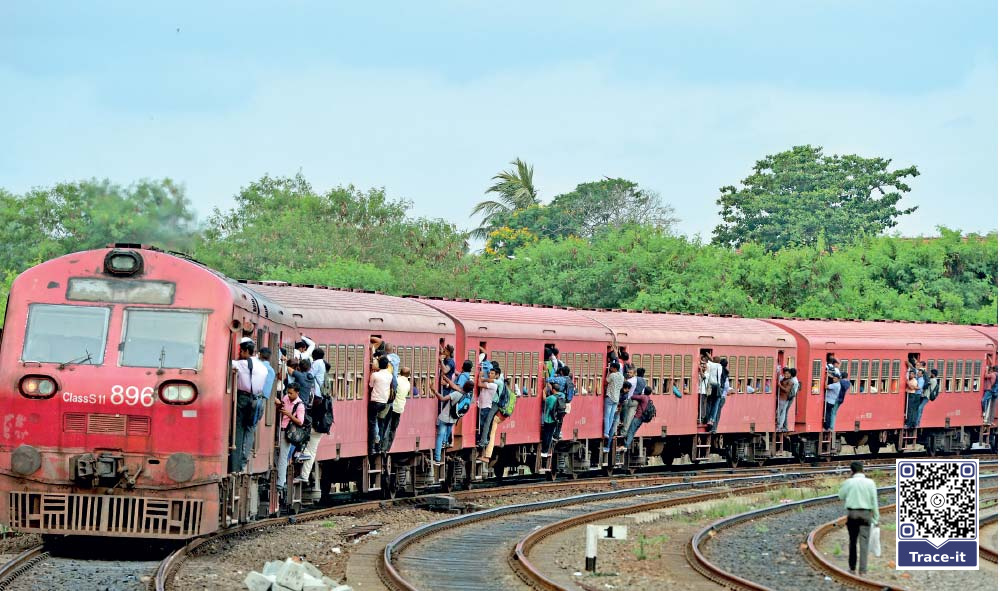
Railway modernisation offers Sri Lanka an opportunity to build on its existing infrastructure and ongoing development partnerships
 By prioritising practical delivery and sustainable financing, Sri Lanka can turn its transport plans into lasting economic gains—improving mobility, strengthening business productivity and building a more connected and competitive nation
 Efficient transport is fundamental to Sri Lanka’s economic growth. Shorter commuting times, reliable public transport and better connections between residential areas, commercial centres and regional economies can improve productivity and create lasting economic value.
The Government’s on-going commitment to infrastructure development, including the planned modernisation of Colombo’s suburban railway network, provides a strong foundation for further progress. Building on this direction, three planned transport initiatives deserve focused attention: the New Kelani Bridge–Athurugiriya elevated highway, the Colombo Light Rail Transit (LRT) project and railway modernisation.
1. Elevated Highway: New Kelani Bridge to Athurugiriya
The proposed 16.4 km elevated highway would connect New Kelani Bridge, through Orugodawatta, Dematagoda, Rajagiriya, Koswatta and Hokandara, to the Outer Circular Expressway at Athurugiriya. Its interchanges would improve access to Battaramulla, Malabe and important administrative and educational centres. The project was planned as a four-lane, access-controlled highway under a public-private partnership model.
An earlier parliamentary estimate put the project cost at Rs. 171.7 billion, with an 18-year Design-Build-Finance-Operate-Maintain-and-Transfer (DBFOMT) concession, including three years for construction. This is a historical estimate and must be updated before a new financing commitment is made.
The priority should be to update the feasibility study, refresh construction costs and traffic forecasts, and invite competitive proposals from qualified investors. The original phased alignment—from New Kelani Bridge to Rajagiriya and onwards to Athurugiriya—could provide a basis for sequencing construction, subject to updated engineering and economic assessments.
Financing proposals should compare toll-based concessions with availability-payment models, examining the implications for government expenditure, traffic risk and investor returns. Contracts should establish clear construction deadlines, maintenance standards and handback requirements, while environmental approvals and fair treatment of affected communities remain integral to implementation.
The objective is to connect Colombo’s eastern suburbs with the expressway network, improve access to employment centres and reduce congestion on heavily used roads.
2. Colombo LRT: Develop a sustainable financing model
The proposed 15.7 km Colombo LRT line from Fort to Malabe, via Battaramulla, was designed with 16 stations and an estimated journey time of approximately 30 minutes. In 2019, Japan offered a concessional yen-loan package of up to ¥30.04 billion, at 0.1% annual interest, with a 40-year repayment period and a 12-year grace period. These were the original terms, not a confirmed current financing offer.
The Government has continued engagement with the Japan International Cooperation Agency (JICA). In February 2026, Foreign Affairs Minister Vijitha Herath confirmed that discussions were ongoing, with no final agreement yet reached.
The next step should be a fresh technical and financial appraisal, examining updated construction costs, passenger demand, land requirements and long-term operating expenditure. Discussions with JICA should explore renewed concessional financing, revised project scope and the possibility of phased implementation.
Station-area commercial development, retail concessions and advertising could supplement fare revenue. However, the financial plan must also provide for routine maintenance, staffing, electricity and rolling-stock replacement, with any necessary operating subsidy transparently budgeted.
The long-term objective should remain a reliable, high-capacity urban transport system supported by a financially sustainable operating model.
3. Railway Development: Build on existing investment
Railway modernisation offers Sri Lanka an opportunity to build on its existing infrastructure and ongoing development partnerships.
In April 2026, the President’s Office announced plans for the first phase of electric train services on three Colombo suburban corridors: Maradana–Makumbura on the Kelani Valley Line, Fort–Ragama on the Main Line, and Fort–Panadura on the Coastal Line, with commencement planned for early 2027.
The active Asian Development Bank Railway Efficiency Improvement Project includes a $160 million loan within a total project cost of $192 million. Its objectives include improving railway operations, safety, maintenance facilities, ticketing systems and technical capacity.
Priority should be given to completing funded works, upgrading track and signalling infrastructure, improving train frequency and reliability, and ensuring that the new electric services are supported by adequate power supply, maintenance facilities and rolling stock.
Further investment should be guided by passenger demand and economic returns, including improved capacity on the Kelani Valley and other high-demand commuter routes. Integrated ticketing and convenient connections with buses would make rail a more practical option for daily commuters.
Operational funding is just as important as construction finance. Annual maintenance budgets, performance targets for punctuality and cancellations, and transparent reporting on passenger numbers and operating costs would help protect the value of public investment.
Lessons from Bangladesh and the Philippines
Regional experience demonstrates the importance of pairing infrastructure investment with sustainable financing and reliable operations.
Bangladesh’s Dhaka MRT Line 6 began commercial operations in December 2022, with services extended in November 2023. Its operator reported an average of 318,162 passengers daily between January and March 2026. This illustrates the potential scale of demand that a functioning urban mass-transit system can serve.
The Philippines provides a useful example of sustained railway rehabilitation. In March 2026, Japan’s JICA signed a further ¥21.6 billion loan for rehabilitation and maintenance of Metro Rail Transit Line 3. The 40-year loan carries a 10-year grace period and will fund upgrades to tracks, power systems, trains and maintenance equipment. Earlier rehabilitation restored operations to the line’s design speed of 60 km/h and reduced service interruptions.
The lesson for Sri Lanka is to secure financing that matches each project’s needs, deliver improvements in manageable phases, and establish reliable maintenance and operating arrangements from the outset.
Prioritising investment for maximum impact
While the LRT remains an important long-term ambition, its substantial capital requirements and recurring operating costs may be difficult to accommodate immediately, even with concessional financing. In the near term, priority should therefore be given to advancing the New Kelani Bridge–Athurugiriya elevated highway and railway modernisation. A carefully structured public-private partnership could support the highway, while the railway programme can build on existing development-partner financing and planned electrification. The LRT should remain in the development pipeline, progressing towards implementation when updated feasibility studies, sustainable financing and a credible operating plan establish its affordability.
The Government’s wider development agenda provides an opportunity to bring these planned initiatives together under a clear transport investment roadmap, with defined milestones, transparent procurement, environmental safeguards and long-term maintenance arrangements.
By prioritising practical delivery and sustainable financing, Sri Lanka can turn its transport plans into lasting economic gains—improving mobility, strengthening business productivity and building a more connected and competitive nation.
(The author is the President, Ceylon Institute of Builders)




