Friday Oct 02, 2026
Friday Oct 02, 2026
Tuesday, 19 May 2026 02:46 - - {{hitsCtrl.values.hits}}
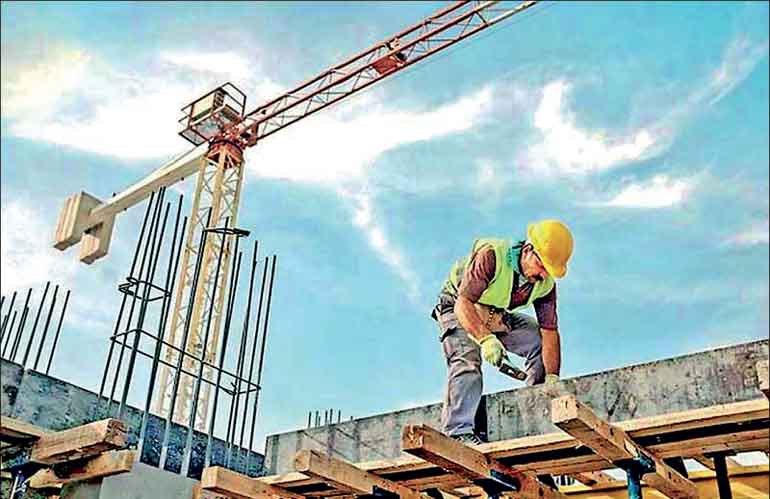
 Sri Lanka’s construction sector showed encouraging signs of recovery in 2025, following the severe economic disruptions of preceding years since the 2019 Easter Sunday incident. Improvements in macroeconomic stability, including easing inflation and a relatively stable exchange rate, contributed to a noticeable reduction in construction costs. Key materials such as steel and fuel became more affordable compared to peak crisis levels, allowing developers and contractors to cautiously re-engage in stalled and new projects. However, this fragile recovery is now under threat.
Unjustified price increases
Recent increases in fuel prices, coupled with the ripple effects of ongoing global conflicts, have begun to drive costs upward once again. Given Sri Lanka’s heavy reliance on imported materials and fuel, such external shocks inevitably influence the cost structure of the construction industry. To a certain extent, price adjustments in response to these factors are both expected and economically justified.
Yet, a growing concern within the sector is that these conditions are being used as a pretext for exploitative and unjustified price increases. Rather than reflecting genuine cost pressures alone, some suppliers and intermediaries appear to be engaging in profiteering, inflating prices beyond reasonable margins. This lack of transparency and accountability in pricing mechanisms has created an environment where market distortions can thrive. This has happened even during COVID- 19 and economic crisis periods between years 2020 to 2023.
The consequences of this extend far beyond contractors and developers—it directly impacts ordinary citizens. Rising construction costs translate into higher housing prices, increased rental rates, and more expensive infrastructure development. For many Sri Lankan households already burdened by a high cost of living, this creates an additional and deeply unfair strain.
In effect, everyday citizens are being forced to absorb the combined impact of global crises and local market exploitation. The dream of affordable housing becomes increasingly unattainable, while essential infrastructure projects risk delays or cost overruns that ultimately fall on taxpayers. What should have been a period of recovery is instead becoming another phase of financial pressure for the general public.
In particular, the Ditwah affected housing and infrastructure reconstruction have just begun and the budgets forecasted have already become insufficient. Both the real impact and market price manipulations will increase the cost of reconstruction works, unless required mechanisms are brought into, for fair pricing of construction inputs reflecting factual inflation. This is where the role of Government becomes not only relevant, but the public is appealing to intervene appropriately.
Well-functioning market
A well-functioning market requires oversight, particularly during periods of economic instability. The Government must take proactive steps to monitor and regulate construction material prices, ensuring that increases are justified and not driven by opportunistic behaviour. This does not imply heavy-handed price controls, but rather the implementation of transparent pricing benchmarks, stronger competition policies, and stricter enforcement against anti-competitive practices. It included price control on cement as well through Consumer Affairs Authority regulations.
A well-functioning market requires oversight, particularly during periods of economic instability. The Government must take proactive steps to monitor and regulate construction material prices, ensuring that increases are justified and not driven by opportunistic behaviour. This does not imply heavy-handed price controls, but rather the implementation of transparent pricing benchmarks, stronger competition policies, and stricter enforcement against anti-competitive practices
Additionally, reducing import barriers and encouraging fair competition can help prevent artificial price inflation caused by limited supply channels or monopolistic tendencies. It is a known fact that major construction material supplies in Sri Lanka are in an oligopolistic market. By improving market transparency and accountability, authorities can ensure that price movements more accurately reflect real economic conditions rather than exploitation.
In fairness to manufacturers the increase in prices due to reasons attributable to parity rates increases, higher cargo charges, increase in risk premiums, energy cost hike and the like shall be recognised.
However, an increase already taking place around 25% in some major materials for existing stocks or before arriving new stocks, may not be justifiable. This will jeopardise economic activities adding further suffering to Ditwah affected persons and families’ expectation of a shelter.
In conclusion, while Sri Lanka’s construction sector demonstrated resilience and recovery in 2024/25, current developments highlight a critical vulnerability. Economic stabilisation alone is insufficient if market actors are allowed to exploit periods of uncertainty. Without timely and effective Government intervention, the burden of these practices will continue to fall disproportionately on ordinary citizens, undermining both public welfare and long-term sectoral growth.
Ensuring fair pricing is therefore not just an economic priority—it is a matter of equality, protection, and sustainable development.
(The author is the President of Ceylon Institute of Builders)



