Wednesday Oct 14, 2026
Wednesday Oct 14, 2026
Wednesday, 14 October 2026 00:24 - - {{hitsCtrl.values.hits}}
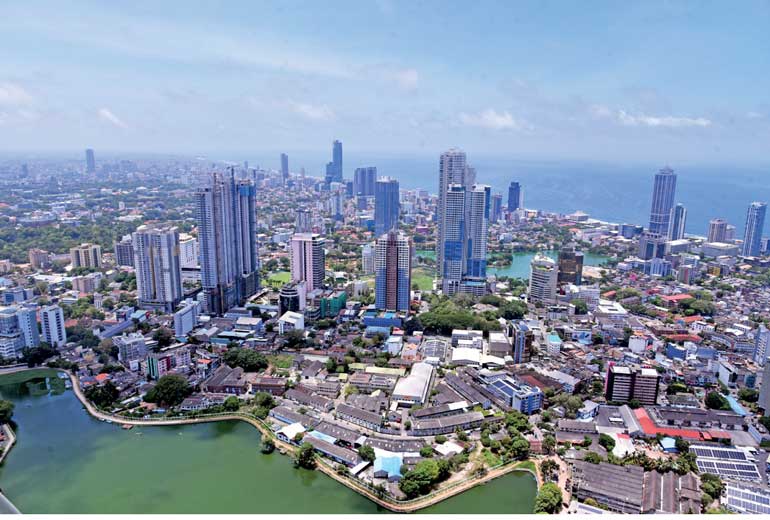
 With workers’ remittances exceeding $ 8 billion and fresh equity investment remaining modest despite a recovery in headline foreign investment, Sri Lanka should consider a professionally governed national investment platform to mobilise diaspora and global capital into cash-generating infrastructure and productive assets
Sri Lanka has made considerable progress in restoring macroeconomic stability. The next challenge is more difficult: how do we finance the investment required to move from economic recovery to sustained economic growth?
The country requires substantial long-term capital for energy, ports and logistics, digital infrastructure, water and waste management, agricultural logistics, tourism and export-oriented industries. Historically, much of Sri Lanka’s infrastructure development has depended on government expenditure, sovereign borrowing and development finance. Following the debt crisis, however, the next investment cycle cannot simply recreate the previous borrowing model. Private capital must play a much larger role.
Sri Lanka’s foreign investment performance improved significantly in 2025. According to the Central Bank of Sri Lanka, direct investment liabilities increased to $ 1.044 billion from $ 759 million in 2024. This represents an important recovery.
However, the composition provides important context. Of the $ 1.044 billion recorded by CBSL, $ 352 million represented equity and investment fund shares, while $ 692 million represented debt instruments. Within the equity component, $ 266 million represented reinvested earnings, while $ 85 million represented equity other than reinvested earnings.
This does not diminish the improvement. Reinvestment by existing foreign investors is itself an indication of confidence, while debt funding is a legitimate component of foreign direct investment. But the composition shows that Sri Lanka still needs substantially greater fresh equity and investment into new productive projects.
The Board of Investment provides another perspective. BOI reported $ 1.057 billion of FDI inflows in 2025, an increase of 72% from 2024. Of the 188 companies that infused FDI during the year, 24 were new projects contracted with BOI during 2025. These contributed $ 134 million, or 13% of total FDI inflows, while the remaining $ 923 million came from project expansions and capital infusions into existing operations.
The CBSL and BOI figures should not be treated as identical measures because their coverage and compilation methodologies differ. But both point to the same broader challenge. Sri Lanka’s foreign investment recovery is encouraging, yet substantially greater private capital is required to finance a higher and sustainable growth trajectory.
The $ 8 billion opportunity
Against this background, another foreign exchange flow deserves attention.
Workers’ remittances reached a historic high in 2025. According to CBSL, they amounted to approximately $ 8.076 billion during the year.
These flows should not be directly compared with FDI. Remittances are primarily money earned overseas and transferred to support families and households. They are not investment capital, and the objective should certainly not be to divert them from their existing purpose.
But their scale tells us something important. Sri Lanka has a substantial global community that already maintains a deep financial relationship with the country.
Sri Lankans living and working overseas also hold savings, pensions, investment portfolios and businesses. Many possess professional expertise and international networks that could contribute to the country’s development.
The opportunity is therefore not to convert remittances into investment. It is to create a credible mechanism capable of attracting part of the additional savings and investment capital held by Sri Lankans abroad, alongside capital from other international investors.
To illustrate the potential scale, an amount equivalent to just 5% of 2025 remittance flows would represent approximately $ 404 million. At 10%, it would exceed $ 800 million. This is not a proposal to redirect remittances into investment, nor are these figures forecasts or fundraising targets. They simply illustrate the potential significance of diaspora investment relative to Sri Lanka’s current foreign investment flows.
A national investment platform
I previously proposed establishing a government-sponsored Public Infrastructure Fund structured as a foreign-currency investment vehicle capable of mobilising private capital from Sri Lankan expatriates and international investors.
The concept should now be considered more broadly. Sri Lanka could establish a Sri Lanka Growth and Investment Fund, or SLGIF, with infrastructure as its initial investment pillar and the ability to invest selectively in other strategic growth sectors over time.
Its mandate should be to mobilise long-term diaspora, institutional and international private capital and invest it commercially in productive, cash-generating assets capable of generating sustainable investment returns while contributing to economic growth.
This distinction is fundamental. SLGIF should not become another government expenditure fund or a mechanism for financing budget deficits. Investor capital should principally be deployed into identifiable assets with sustainable revenues, measurable cash flows and the capacity to generate commercial returns.
Government should catalyse capital, not provide all of it
Sri Lanka’s fiscal circumstances make this model particularly relevant. The Government does not need to provide billions of dollars in cash to establish such an institution.
It could provide limited seed capital and, subject to proper valuation, governance and legal safeguards, potentially contribute selected commercially viable state assets or project rights. That commitment could then be used to attract diaspora capital, domestic institutional investors, development finance institutions, climate funds, international infrastructure investors, banks, pension and insurance funds and strategic investors.
The contribution of state assets is politically sensitive in Sri Lanka and should be approached on that basis. What is proposed here is not privatisation under another name. Assets would be transferred at independently assessed value into an institution in which the State retains an appropriate economic interest. Any subsequent realisation should be governed by transparent rules established at the outset, with the objective of preserving and recycling capital for productive investment rather than financing recurrent government expenditure.
The objective should be to move away from a model where the Government principally borrows and builds towards one where limited public resources mobilise substantially larger pools of private capital.
Government capital should be catalytic rather than dominant.
Invest in assets that generate cash
A fundamental investment principle of SLGIF should be that capital is primarily deployed into cash-generating assets.
Infrastructure should remain the first major investment pillar, but a project should not qualify merely because it is nationally important. It should have identifiable and sustainable revenues capable of supporting an appropriate commercial return.
Renewable energy projects with contracted revenues, ports and logistics facilities generating user charges, warehouses and cold-chain infrastructure producing rental and service income, digital infrastructure supported by contracted revenues, commercially structured waste and water projects and selected tourism assets are examples.
Where commercially appropriate, preference should be given to assets generating foreign-currency revenues or possessing a natural relationship with foreign-currency earnings. Ports, export logistics, tourism and export-oriented businesses could provide examples, particularly when the original investment capital is raised in US dollars.
Depending on the asset, SLGIF could invest through equity, infrastructure debt, bonds and other appropriately structured instruments. Credit enhancement and blended finance could also help viable projects attract additional private capital.
The distinction between a nationally desirable project and a commercially investable project must remain clear. Some socially important infrastructure will require direct government expenditure. SLGIF should not disguise such expenditure as commercial investment.
The objective should be straightforward: invest in productive assets, generate cash returns, distribute appropriate returns to investors and recycle capital into the next generation of investments.
Capital alone will not solve the problem
Sri Lanka frequently treats infrastructure financing as a search for money. But investors cannot finance a project simply because the country needs it.
Projects require credible feasibility studies, regulatory approvals, realistic financial projections, identifiable revenue streams, appropriate risk allocation and competent sponsors and operators.
A Project Preparation Facility should therefore operate alongside SLGIF to identify suitable projects, undertake feasibility work, support technical preparation and financial structuring and convert national development priorities into commercially bankable investment opportunities.
Sri Lanka ultimately needs a pipeline of projects capable of withstanding commercial investment scrutiny. This is how infrastructure moves from being principally a government expenditure item towards becoming an investable asset class.
The biggest challenge is trust
Creating the Fund may be the easier part. Convincing Sri Lankans overseas to invest will be much harder.
Diaspora investors will want to know who controls their money, who selects investments, whether political authorities can influence decisions, what happens following a change of Government, who safeguards the assets, who audits the Fund and whether capital and returns can be repatriated.
These questions cannot be answered simply by appealing to patriotism. Patriotism may create interest, but investment discipline will determine whether the capital actually comes.
There is also a recent history that any serious investment proposition must acknowledge. Sri Lanka defaulted on its external public debt in 2022. International investors considering a new long-term commitment will inevitably assess that experience when considering sovereign, currency and repatriation risk.
The answer should be structural rather than promotional. SLGIF should not simply become another form of sovereign borrowing. Investor capital should be deployed into identifiable cash-generating operating assets, appropriately ring-fenced through professionally governed fund and project structures. Returns should principally arise from the revenues generated by those assets rather than future government borrowing or recurrent Treasury funding.
This would not eliminate Sri Lanka country, currency or regulatory risk, but it would create a fundamentally different investment proposition from simply lending to the State.
Institutional independence should therefore be built into SLGIF from inception. Consideration should be given to establishing it through specific legislation defining its mandate, governance, investment powers, reporting requirements and independence.
Its Board should include qualified independent professionals with experience in investment management, infrastructure, banking, law and risk, including appropriate representation from experienced professionals within the global Sri Lankan diaspora. Professional management, rather than political authorities, should make individual investment decisions.
The supporting architecture should be equally concrete. Fund assets and investor monies should be held or overseen by an independent custodian or trustee, while underlying infrastructure assets should sit within clearly defined project structures. The Fund should be subject to annual independent audit, third-party valuations and scheduled investor reporting.
The principle is straightforward. Government establishes the institution, professionals manage it, independent institutions safeguard the assets and investors measure its performance.
Currency risk cannot be ignored
There is another issue that could determine whether SLGIF succeeds or fails: currency depreciation.
An overseas investor may invest $ 100,000 into a Sri Lankan asset and receive an attractive return in rupees. But if the rupee depreciates substantially, much of that return can disappear when proceeds are converted back into dollars.
For an international investor, therefore, the relevant measure is not simply the return generated in rupees. It is the return after currency movements.
SLGIF should have a formal foreign exchange risk management framework from inception. Natural hedges should be the first line of defence, particularly investments generating foreign-currency or foreign-currency-linked revenues. But many domestic infrastructure projects will predominantly generate rupee revenues.
For these investments, a market-based hedging mechanism should be explored.
The Central Bank of Sri Lanka could play an enabling role, together with licensed commercial banks, in facilitating longer-term USD/LKR swap or forward arrangements for qualifying foreign-currency investment into productive assets.
There is policy precedent for such an approach. In 2021, CBSL announced a zero-cost swap facility to hedge foreign exchange risk associated with qualifying private-sector offshore borrowing. The circumstances were different, but the precedent demonstrates that such a mechanism has previously been contemplated by CBSL.
A similar principle deserves examination for long-term diaspora and institutional investment through SLGIF.
This does not mean CBSL should guarantee an exchange rate indefinitely, nor should the State assume unlimited foreign exchange liabilities. Any mechanism must be commercially priced, prudently managed and consistent with monetary policy, reserve management objectives and financial stability.
Currency risk cannot simply be transferred from the investor to CBSL or the taxpayer. Its cost must be transparent and appropriately priced into the investment structure.
But Sri Lanka cannot realistically expect international investors to provide long-term dollar capital while asking them to carry unlimited rupee depreciation risk. Commercial bank swaps and forwards, appropriately designed CBSL-facilitated arrangements, an FX liquidity reserve and natural hedging through foreign-currency-generating investments could form part of the solution.
Currency confidence is part of investment confidence.
Learning from other countries
Sri Lanka does not need to invent the entire model.
Bangladesh’s Infrastructure Development Company Limited, IDCOL, demonstrates how a specialised institution can support private-sector infrastructure and renewable energy investment. India’s India Infrastructure Finance Company Limited, IIFCL, demonstrates the role of specialised infrastructure financing and mechanisms such as credit enhancement. Colombia’s Financiera de Desarrollo Nacional, FDN, provides another example of combining infrastructure finance with project structuring and institutional capital mobilisation.
At a fundamentally different scale, Saudi Arabia’s Public Investment Fund demonstrates one relevant institutional principle: a professionally managed national investment institution can be used strategically to support infrastructure, new industries and economic transformation.
The difference is important. Saudi Arabia deploys accumulated sovereign wealth; Sri Lanka must first mobilise capital it does not yet have. The lesson for Sri Lanka is therefore institutional, not financial.
Start small and build credibility
Sri Lanka should resist the temptation to announce a multibillion-dollar fund before the institutional framework and investment pipeline exist.
The first priorities are governance, professional management, currency risk management and a credible pipeline of bankable investments.
SLGIF could begin with a limited number of high-quality projects, potentially alongside established development finance institutions and private investors. Renewable energy, ports and logistics, digital infrastructure, cold-chain and agricultural logistics, waste management and selected tourism infrastructure could provide potential starting points.
The first investments must demonstrate commercially acceptable returns, sustainable cash flows and measurable economic impact.
If those investments perform, investors receive expected distributions and overseas investors can repatriate their capital, the Fund will develop something more valuable than any promotional campaign: a credible track record.
Once that credibility is established, the Fund can scale.
From remitters to investors
Sri Lanka’s global community already makes an extraordinary contribution to the economy. In 2025 alone, workers’ remittances of more than $ 8 billion were several times larger than the country’s foreign direct investment inflows. At the same time, official data show that fresh equity inflows and investment into newly contracted projects remain relatively modest.
These are different economic flows and should not be presented as substitutes. But together they demonstrate both the scale of Sri Lanka’s economic relationship with its overseas community and the need to broaden the country’s sources of productive investment capital.
We have spent years developing mechanisms through which Sri Lankans overseas can send money home. The next challenge is to create credible mechanisms through which they can invest money at home.
But they should not be asked to invest merely because they are Sri Lankan. They should be offered professionally structured investments in productive, cash-generating assets, supported by transparent governance, identifiable revenue streams, appropriate investor protection and credible mechanisms for managing foreign exchange risk and repatriating income and capital.
If SLGIF can establish that discipline, its appeal should extend beyond the diaspora. Development finance institutions, domestic institutional investors and international investors could participate alongside Sri Lankans overseas.
Sri Lanka’s next infrastructure cycle should not become another sovereign borrowing cycle. It should become an investment cycle in productive assets that generate income, create employment and support economic growth.
The country does not lack investment opportunities, nor is there a shortage of capital globally. What Sri Lanka needs is a credible institutional bridge between the two.
A professionally governed Sri Lanka Growth and Investment Fund, built around cash-generating assets and appropriate protection against currency risk, could be that bridge.
(The author is an investment banker and corporate finance adviser with over three decades of experience in structured finance, capital markets, private equity, mergers and acquisitions and corporate advisory. The views expressed are personal)
Sources: Central Bank of Sri Lanka, Annual Economic Review 2025, Statistical Appendix, Table 11, Balance of Payments – Financial Account; Board of Investment of Sri Lanka, BOI Announces $ 1 Bn FDI Success in 2025, January 2026; Central Bank of Sri Lanka, Measures to Encourage Offshore Borrowings by Private Sector, 7 June 2021.



