Saturday Oct 03, 2026
Saturday Oct 03, 2026
Thursday, 21 May 2026 04:23 - - {{hitsCtrl.values.hits}}
 The choice before Sri Lanka is clear: to remain constrained by inherited caution or to embrace a forward-looking strategy of integration, connectivity, and openness. By leveraging its geographic position, diplomatic legacy, and maritime strengths, Sri Lanka can emerge not as a peripheral player, but as a central node in a rapidly evolving Asian regional order
 Historical legacy and the roots of strategic caution
Sri Lanka stands today at a defining strategic crossroads. An island nation in South Asia alongside the Maldives, it possesses a civilisational heritage spanning over 2,500 years. Yet its modern political economy and institutional framework remain deeply shaped by nearly 450 years of colonial rule under the Portuguese, Dutch, and British. While these influences introduced systems of law, administration, and global trade linkages, they also fostered a cautious and inward-looking national outlook.
This caution was historically justified. Colonial rule was characterised by economic extraction, social stratification, and the British policy of ‘Divide and Rule,’ leaving enduring sensitivities surrounding sovereignty, identity, and external engagement. Consequently, many within Sri Lankan society continue to approach regional integration with understandable apprehension.
However, in today’s interdependent global economy, such caution risks becoming a constraint rather than a safeguard. For small and medium-sized states, isolation limits opportunity, whereas structured regional cooperation enhances resilience, bargaining power, and long-term growth.
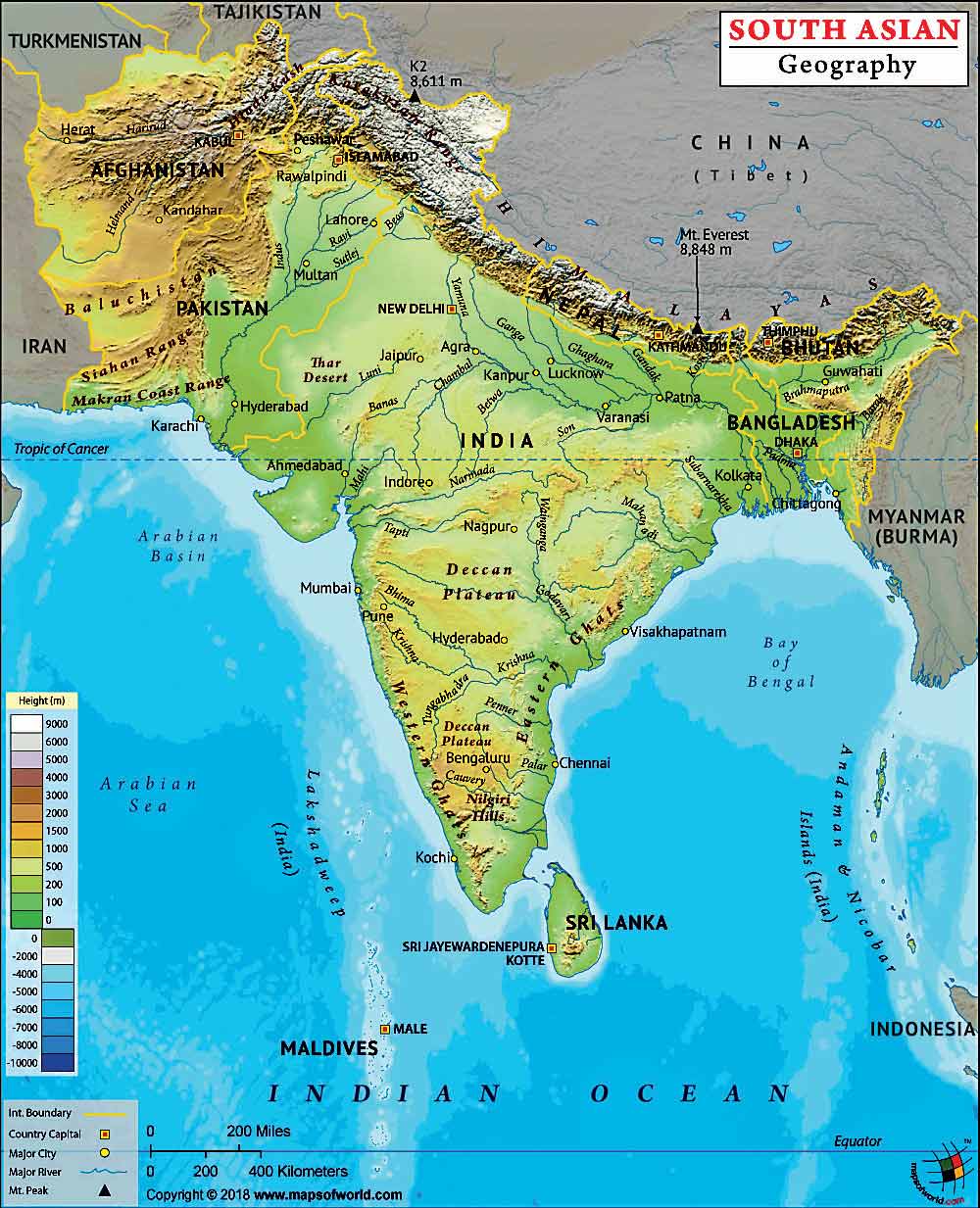 Rethinking regional cooperation: Lessons from the world
Global experience shows that regional integration, when well designed, can be transformative. The European Union has turned a historically conflict-prone region into one of stability and prosperity, with intra-regional trade accounting for nearly two-thirds of total trade among member states, supported by a vast single market of over 440 million people.
Comparable trajectories are evident beyond Europe. In Latin America, MERCOSUR—comprising Brazil, Argentina, Uruguay, and Paraguay—expanded intra-regional trade nearly tenfold between 1990 and 2015. Similarly, the Pacific Alliance has deepened integration among Chile, Colombia, Mexico, and Peru, collectively representing over 40% of Latin America’s GDP.
In Africa, the African Continental Free Trade Area—the largest in the world by number of countries—aims to boost intra-African trade by over 50% through tariff reductions and trade facilitation, with early signs of emerging regional value chains.
Closer to Sri Lanka, ASEAN offers a particularly relevant model. Singapore transformed itself from a resource-scarce port city into a global financial and maritime hub, with GDP per capita rising from under USD 1,000 in the 1960s to over USD 70,000 today. This underscores how openness and connectivity can elevate even small states to global prominence.
By contrast, SAARC countries—home to over two billion people—remain among the least integrated regions globally. This underscores a clear lesson: integration strengthens sovereignty by enabling shared growth, scale, and resilience.
Towards a broader Asian regional framework
Sri Lanka is well-positioned to advocate a broader Asian Social, Economic, and Security Alliance engaging India, China, and Japan alongside partners across South, West, and East Asia. These regions together account for nearly half the world’s population and close to one-third of global output, exceeding USD 120 trillion.
Growth patterns are uneven but complementary. West Asia is expected to grow modestly at around 2.8%, while South Asia remains one of the fastest-growing regions, with India projected at 6.5–7.2%.
Within this landscape, Sri Lanka’s geographic advantage and its long-standing “Friend to All, Enemy to None” Foreign Policy provide a credible platform to position the country as a neutral and reliable investment destination. As global capital responds to geopolitical realignments, Sri Lanka can emerge as a hub for regional investment flows seeking stability and regulatory certainty.
With nearly one-third of global maritime trade passing through the Indian Ocean, such a framework would also strengthen supply chains and enhance maritime security.
Climate cooperation as a shared necessity
South Asia is among the region’s most vulnerable to climate change. Rising sea levels, shifting monsoon patterns, and increasingly frequent extreme weather events threaten agriculture, fisheries, and livelihoods.
A coordinated regional approach would strengthen bargaining power in global negotiations, improve access to climate finance, and accelerate the sharing of adaptation technologies. For countries such as Sri Lanka and Bangladesh, such cooperation is essential for long-term resilience.
Financial integration and regional capital formation
Financial integration remains a critical pillar of regional cooperation. A regional capital market anchored by the Colombo Stock Exchange could enhance capital mobility, attract global investors, and support infrastructure development.
In Europe, cross-border investment flows run into trillions of Euros, while in Southeast Asia, financial integration continues to deepen. A similar framework in South Asia could improve liquidity and position Sri Lanka as a financial gateway.
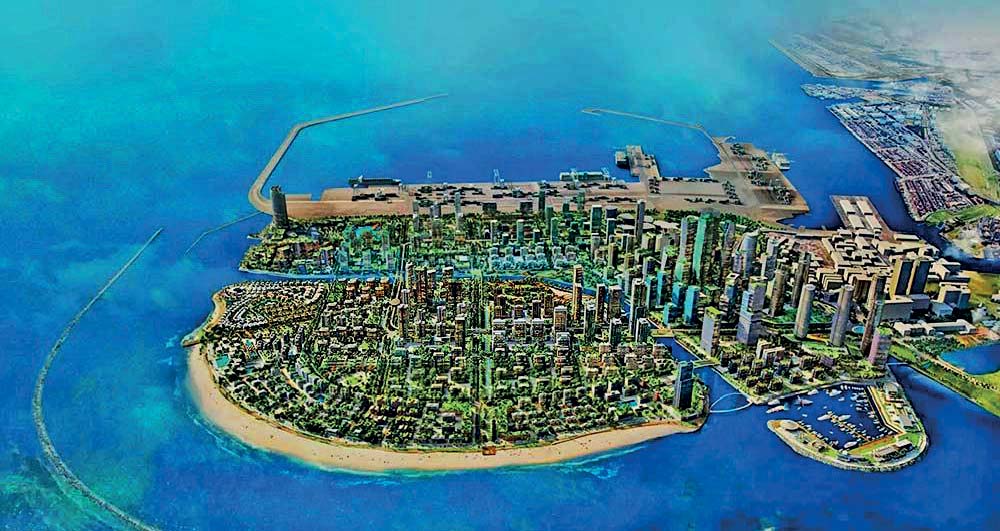
Asia’s Financial South Hub - Port City Colombo
A key enabler is the Colombo Port City, a 269-hectare Special Economic Zone designed as a ring-fenced, internationally oriented financial hub. Built on globally benchmarked regulatory and fiscal principles, it offers competitive tax concessions, unrestricted foreign ownership, and streamlined administration.
Its strengths—including multi-currency transactions, minimal exchange rate risk, and full profit repatriation—enhance its attractiveness to international investors and position it as a potential anchor for a South Asian investment ecosystem.
Monetary cooperation in a changing global order
Volatility in global financial markets has renewed interest in reducing dependence on the United States dollar. While a common South Asian currency remains a long-term aspiration, practical interim measures are feasible.
These include bilateral currency swaps, regional clearing arrangements, and digital payment platforms. The Eurozone experience underscores both the opportunities and complexities of monetary integration, highlighting the importance of gradual implementation.
Reviving Sri Lanka’s tradition of strategic neutrality
Sri Lanka’s diplomatic history offers valuable lessons. Under Sirimavo Bandaranaike, the country championed the Indian Ocean as a Zone of Peace and contributed to easing regional tensions.
Grounded in the principles of the Non-Aligned Movement, this approach enabled smaller states to maintain autonomy amid great power rivalry. In today’s multipolar world, renewed strategic neutrality can again position Sri Lanka as a credible and trusted regional partner.
Connectivity as an engine of growth
Connectivity remains a key driver of integration. Closer engagement with India presents one of Sri Lanka’s most immediate opportunities. Electricity grid interconnection enables cross-border energy trade and supports renewable energy integration, as demonstrated by India’s links with Bhutan and Nepal.
Transport connectivity also holds promise. The historic Adam’s Bridge between Mannar and Rameswaram reflects earlier physical links, while ferry and rail services operated until the 1980s. Reviving and modernising these connections could significantly enhance trade and mobility.
Reconnecting Sri Lanka and India: Beyond geography
Re-establishing ferry, rail, and potential land connectivity between Sri Lanka and India is both historically grounded and economically viable.
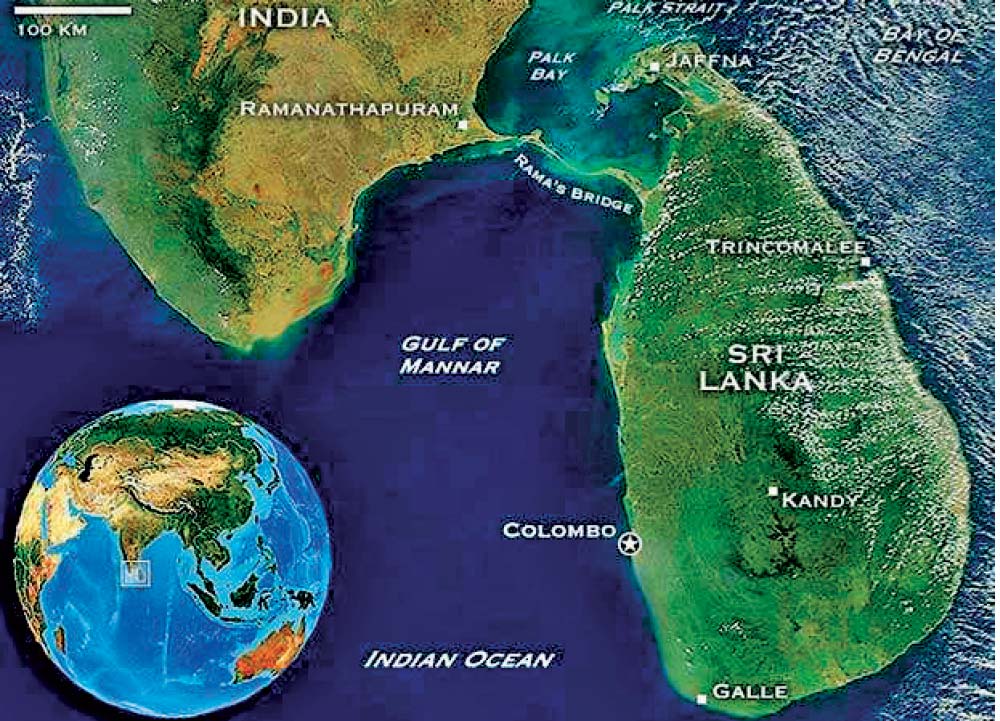
The Historic Adam’s Bridge Connects Sri Lanka and India
Global examples illustrate the transformative impact of such linkages. The Johor–Singapore Causeway supports over 300,000 daily crossings, while Hong Kong’s integration with mainland China has expanded trade without eroding institutional autonomy.
Reconnecting Sri Lanka—particularly with Tamil Nadu—could boost trade, tourism, and investment while strengthening Colombo’s role as a transshipment hub, provided sovereignty concerns are addressed through clear safeguards
Reorienting national security towards the maritime domain
Sri Lanka’s security environment is increasingly shaped by maritime challenges, including illegal fishing, narcotics trafficking, and transnational crime.
With a coastline of approximately 1,770 kilometres and an Exclusive Economic Zone of about 517,000 square kilometres, the country must reorient its strategic focus toward maritime security. Strengthening naval and air capabilities, supported by modern state of the art assets and surveillance systems, is essential.
For an island nation, economic and maritime security are inseparable, making this shift both logical and necessary.
Positioning Sri Lanka as a maritime and logistics hub
Sri Lanka’s proximity to major East–West shipping routes provides a natural advantage. The Port of Trincomalee, one of the world’s finest natural harbours, offers strong potential for development as a regional free port.
By expanding into ship registration, maritime services, logistics, training, and marine tourism, Sri Lanka can position itself as a key node in the Indian Ocean economy. Singapore’s success illustrates what can be achieved through strategic vision and efficient management.
Conclusion: A strategic choice for the future
Sri Lanka stands at a decisive moment. The transition from insularity to integration is no longer optional—it is imperative. Regional cooperation offers expanded economic opportunity, strengthened national security, and greater resilience in an uncertain global environment.
The experience of other regions shows that integration, when strategically managed, enhances rather than diminishes sovereignty. The challenge is therefore not whether to integrate, but how to do so on terms that maximise national advantage.
Three priorities stand out. First, Sri Lanka should proactively anchor itself within regional economic and financial networks by positioning Colombo and Port City as gateways for South Asian and wider Asian capital flows. Second, it must accelerate connectivity with India through energy, land connectivity, transport, and digital linkages, while ensuring robust legal safeguards that address sovereignty concerns. Third, a decisive shift toward maritime security and logistics development—particularly through the strategic utilisation of Trincomalee and Colombo—should underpin national security and economic policy.
The choice before Sri Lanka is clear: to remain constrained by inherited caution or to embrace a forward-looking strategy of integration, connectivity, and openness. By leveraging its geographic position, diplomatic legacy, and maritime strengths, Sri Lanka can emerge not as a peripheral player, but as a central node in a rapidly evolving Asian regional order.
(The author is Emeritus Professor at the University of Sri Jayewardenepura)



