Friday Oct 16, 2026
Friday Oct 16, 2026
Saturday, 25 April 2026 00:00 - - {{hitsCtrl.values.hits}}
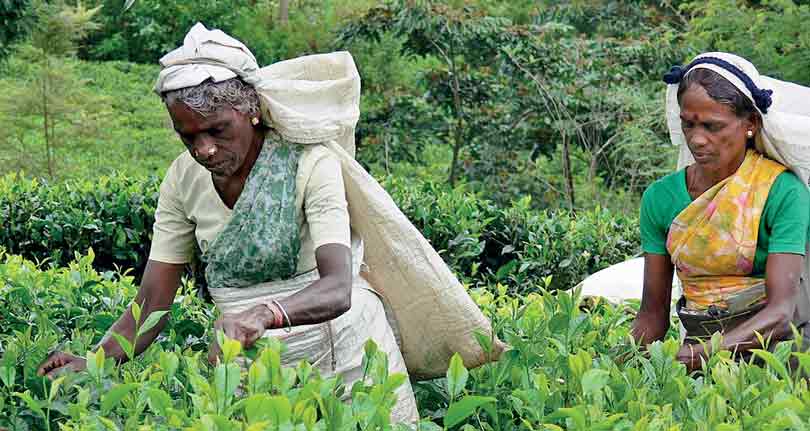
 Picture a young woman on a Hatton estate, sitting in a digital hub, completing a software quality assurance task for a Chennai-based fintech firm. On her phone, a single app tells her that the hydro plant on her estate generated Rs. 47,000 in revenue this morning; that the carbon sequestered by the plot her family tends was purchased last week by a European airline; and that a garment factory in Biyagama has just funded a water regeneration zone on her estate's upper catchment. She is a shareholder in all of it. She has not left.
Every component of that app display is either already operational somewhere in the world or a direct extension of infrastructure that exists in Sri Lanka today. What does not yet exist is the assembly — the political will, the financial architecture, and the strategic roadmap to put it together.
Land nobody properly valued
Sri Lanka's plantation economy generates close to $3 billion in annual export revenue and employs over a million people. But its most underappreciated asset is the land itself: 772,000 hectares of ecologically significant terrain, much of it idle, all of it capable of producing food, energy, income, and environmental security simultaneously.
 Sri Lanka’s plantation economy generates close to $3 billion in annual export revenue and employs over a million people. But its most underappreciated asset is the land itself: 772,000 hectares of ecologically significant terrain, much of it idle, all of it capable of producing food, energy, income, and environmental security simultaneously
About 80% of land in Sri Lanka, including forests and reserves, is owned by the State, and vast tracts lie idle in the hands of Government agencies. This has long been identified as a structural constraint on growth. The Government's 2025 policy to unbundle and release unutilised state plantation land is therefore not a routine land disposal. It is the most consequential economic lever Sri Lanka has pulled in a generation — and the EOI process must be structured accordingly: not as a land disposal exercise, but as the foundation of a national water security architecture. From this single act — transparent long-term leases of 30 to 99 years for commercial agriculture, renewable energy, and agro-tourism—an entirely new productive economy can be assembled across all 24 districts.
A credible rollout must map the right activity to the right ecology. The Up Country suits tea and temperate vegetables—leeks, carrots, strawberries—that currently face import competition. The Mid Country, where climate change is making rubber monoculture increasingly risky, is suited to intercropping with pepper, cardamom, and vanilla. The Low Country is optimised for coconut, rubber, and tropical fruits. In each zone, smallholders — too fragmented to access markets alone — must be brought in through cooperative aggregation, allowing them to share certification costs and data infrastructure, and ensuring they are equal beneficiaries of the unbundling.
Sri Lanka is living the consequences of that failure in real time. The flooding that inundated Ditwah and submerged communities in recent seasons was not simply a weather event — it was a land management failure
The cooperative is not merely an administrative convenience. Kenya's Tea Development Agency — a private company owned by roughly 600,000 smallholder tea farmers, each a shareholder in the factories they supply — turned what was once a collection of subsistence plots into a global export force. In 2024, KTDA smallholder farmers posted production gains of 12.4 percent, outperforming every large-scale producer in the country. The cooperative was the mechanism. Ownership was the motive. Sri Lanka's smallholders need both.
Water, canopy, and infrastructure nobody built
The land's most underappreciated return is not commercial. It is hydrological. The 700,000-plus hectares now being opened to private investment are not simply idle farmland awaiting a commercial tenant. They are the upstream catchment infrastructure on which every downstream reservoir, every paddy field, and every municipal water supply in this country ultimately depends. The upcountry plantation belt receives among the highest rainfall intensities in Asia — yet chronic water insecurity persists across the dry zone, because the land between the rain and the reservoir has been allowed to fail.
Without ownership, a harvesting machine is a threat. With ownership, it is a productivity tool that pays its owners. A motorised harvester can process 60kg of leaf; a worker’s physical limit is roughly 18kg per day. The surplus flows to estate profit. As shareholders, workers receive a dividend from that surplus. The machine increases income without breaking backs
Sri Lanka is living the consequences of that failure in real time. The flooding that inundated Ditwah and submerged communities in recent seasons was not simply a weather event — it was a land management failure. Degraded slopes with no canopy to slow rainfall impact, no root networks to channel water into the soil, and no litter layers to absorb the first force of a downpour convert every unseasonal deluge into a runoff catastrophe. At the other extreme, the searing heat bearing down on the island at present — temperatures that stress crops, disrupt flowering cycles, and exhaust soil moisture reserves between rain events — is the same degraded landscape expressing itself in reverse. The more we green, the more we offset both.
The science of water use gives us precise language for what is at stake. Green water — the rainfall absorbed into soil and taken up by plant roots — is the foundation of dryland agriculture and forest ecosystems. Blue water — the surface and groundwater drawn for irrigation, industry, and municipal supply — is what communities, factories, and farms compete over when green water fails. Grey water — the volume of freshwater needed to dilute pollutants from agricultural runoff, industrial discharge, and leaching nutrients back to acceptable quality standards — is the hidden cost that degraded land imposes on every water user downstream. Restored plantation canopy across these 772,000 hectares maximises green water retention, recharges blue water reserves, and reduces the grey water burden on the entire watershed system below.
This is not charity. It is the return on decades of labour that generated the export revenue Sri Lanka spent elsewhere. The estate that cannot care for its elders has no moral claim on the loyalty of its youth
The interception that a closed forest canopy provides — fog capture, litter-layer absorption, root-channel infiltration — is absent on abandoned tea fields where shade trees were never replaced. Rehabilitated canopy reverses this dynamic. Every hectare restored to functioning multi-storey canopy is, in hydrological terms, a distributed water storage facility — one that operates continuously, requires no civil maintenance budget, self-repairs after disturbance, and improves in performance over time. A cinnamon grove is a watershed asset. A pepper garden on a stabilised slope is a groundwater recharge facility that pays its own way.
The opportunity this creates across all 24 districts is without precedent in Sri Lanka's infrastructure history. A network of small-scale reservoirs — distributed across the island, anchored by restored multi-storey canopy in their catchment areas — constitutes a nationally significant water storage and flood-mitigation system that requires no concrete dam, no civil engineering megaproject, and no sovereign borrowing. The canopy does the work. Each restored hectare slows rainfall to infiltration speed, feeds the tanks and aquifers below, and moderates the flash floods and dry-season deficits that have alternated with increasing severity as climate change deepens.
This is where the garment sector's interest becomes directly material. The factories of the Western Province — which consume enormous volumes of blue water in dyeing, washing, and finishing, and generate a significant grey water footprint in the process — depend on rivers that originate in these very upcountry catchments. Participating in the Water Stewardship Credit mechanism is not philanthropy for these firms. It is supply chain protection: funding upstream canopy restoration to replenish the groundwater their operations draw down and reduce the grey water load their discharges create. Every kilometre of restored riparian buffer is, in water accounting terms, a liability offset on their production ledger.
A National Water Compact, gazette-notified in parallel with the first EOI tender round, formalises these obligations in enforceable terms. Lessees in designated catchment zones accept binding requirements: canopy cover maintenance with verified compliance thresholds; riparian buffer widths on all waterways traversing the holding; and soil management plans approved by the district irrigation authority before lease commencement. These conditions attach to the lease, survive ownership changes, and are enforceable through forfeiture — not through a fine schedule a profitable operation can absorb as a cost of business. Verified compliance generates Water Stewardship Credits — bankable instruments under the Green Bank — redeemable against sovereign green bonds and tradeable to downstream industrial water users, including the garment factories whose production depends on protecting that supply.
Food security and climate defence: The same operation
Released land, properly managed, is also a climate shield. The scientific counter to unseasonal deluges and extreme heat is multi-storey canopy development — green spots where an upper canopy intercepts the kinetic energy of rainfall, while shade layers regulate ground temperature and preserve soil moisture. The land becomes a sponge. But it also becomes a larder.
The mixed-crop plots that workers tend on restored land are not just export revenue lines — they are household food security. A family growing vegetables, fruit, and protein crops on a quarter-acre plot is insulated from the price volatility that has repeatedly devastated estate communities. The cooperative that aggregates their produce for export to Colombo or Chennai also becomes the mechanism for selling surplus within the estate community — at known prices, without middlemen, and with the worker on both sides of the transaction as producer and shareholder.
The Cabinet has opened the door. The land is there — underutilised, unbundled, and waiting. From it can flow food for the families who tend it, energy for the districts around it, premium export income for the nation, and environmental security for the watersheds beneath it
Agroforestry at scale resolves the false tension between greening and food production — because they are the same operation conducted at different elevations. Intercropping high-canopy shade species with spices, fruit, and high-value vegetables simultaneously increases canopy cover, improves soil moisture retention, reduces erosion, and generates commercially viable output from the first or second year of establishment. Land unbundled for national export strategy must simultaneously be land that feeds the people living on it. These are not competing goals. They are the same asset, the same cooperative, and the same supply chain, operating at two scales.
New capital, new investors
Financing this requires expanding the definition of investor. Two sources are immediately actionable.
India has demonstrated consistent willingness to invest in the welfare of communities of Indian origin in the plantation regions. That demographic link is an untapped channel for equity investment and technology transfer. The second source is more structural: Gulf sovereign wealth funds are no longer passive holders of oil revenues. Saudi Arabia's Public Investment Fund, through its Agricultural and Livestock Investment Company, has already acquired a minority stake in Olam Agri specifically to achieve food security for the kingdom. Qatar's sovereign vehicle, Hassad Food, was created precisely to invest in agricultural land for food security purposes. These funds are not looking for charity cases — they are looking for guaranteed, traceable supply chains. Sri Lanka's unbundled plantation land, organised into certified mixed-crop zones for spices, fruits, and vegetables, is exactly what they are seeking to fund. The sovereign-to-sovereign agreement is the vehicle; the land is the collateral.
None of this diminishes export ambition — it sharpens it. Sri Lanka's plantation exports have long competed on volume in a market that increasingly rewards provenance and traceability. The Plantation Data Trust, linking smallholder cooperative plots to RPC supply chains, creates the audit trail that commands a premium. A cooperative in Nuwara Eliya whose carbon sequestration, water stewardship, and labour practices are digitally verified commands a price that anonymous bulk shipments never will. The strategy does not choose between feeding the worker and earning foreign exchange — it uses the same land, the same data infrastructure, and the same restored ecology to do both.
Ceylon cinnamon — the true Cinnamomum verum, produced almost exclusively in Sri Lanka — commands a global price premium with no genuine substitute. Yet most cinnamon still leaves the island as raw quills, processed elsewhere, surrendering the majority of value at the border. An integrated spice value chain — estate-based primary processing, cooperative-owned grinding and packaging, direct-to-market digital channels — shifts that value capture back to the grower. Land-scarce nations in the Middle East and Asia actively seeking offshore food and spice production agreements represent a sovereign-to-sovereign opportunity that converts idle private and estate land into bankable export supply chains.
For housing, the vehicle is Estate Housing Bonds: long-term, lower-yield instruments issued against construction built to ICTAD standards, structured to qualify as ethical investments for Social Enterprise Funds and global impact investors. Workers service the bonds through affordable rent-to-own payments. Government borrowing is bypassed. High-quality assets are delivered directly to the workforce.
Worker as shareholder
The most transformative element of the rollout is the shift from wage earner to owner. Any Regional Plantation Company taking on a lease of released land must allocate 10-15% of equity to an Employee Share Ownership Plan. Workers earn these shares through productivity and tenure — not cash purchase. But this arrangement requires a prior negotiation, not a subsequent one: unions must accept mechanisation and productivity-linked benchmarks before pilot estate selection begins, with the equity mandate as the non-negotiable return. The union's role then shifts from wage negotiation to dividend protection — a more durable position as mechanisation proceeds. Research confirms that companies with significant equity participation plans tend to generate productivity gains that benefit the enterprise and the worker simultaneously.
The contrast with the alternative is instructive. In Munnar, Kerala, most tea estate labourers remain landless to this day. The result has been a workforce with no stake in productivity, no buffer against wage cuts, and no reason to stay. Sri Lanka's plantation communities are one generation away from the same trajectory. Equity changes the calculation.
This reframes mechanisation entirely. Without ownership, a harvesting machine is a threat. With ownership, it is a productivity tool that pays its owners. A motorised harvester can process 60kg of leaf; a worker's physical limit is roughly 18kg per day. The surplus flows to estate profit. As shareholders, workers receive a dividend from that surplus. The machine increases income without breaking backs.
The transition moves workers from physical labour to technical supervision — operating harvesters, managing automated rubber tapping systems, monitoring tree health by drone. Their irreplaceable asset is experiential knowledge: knowing which tree is ready and which is stressed, which bush will yield and which will not. That expertise is what machines cannot replicate, and what Mechanisation Academies on each estate will formalise and transmit to the next generation. Seniors unable to operate machinery move into quality grading, mentoring, and estate logistics — roles that preserve and transmit what no algorithm holds.
Caring for those who built it
The rollout must go further than retooling. For those who retire, the estate is not a place they leave — it is a place that owes them a dignified life. A dedicated Senior Care Dividend, drawn from the Green Bank's carbon, energy, and land revenues, funds on-estate care facilities, health coverage, and income support. This is not charity. It is the return on decades of labour that generated the export revenue Sri Lanka spent elsewhere. The estate that cannot care for its elders has no moral claim on the loyalty of its youth.
The education pipeline completes the picture. Strategic partnerships with South Indian education providers — particularly in Tamil Nadu and Kerala, which have developed recognised qualifications for remote employment in India's expanding digital economy — can qualify estate youth to work as software QA testers, data processors, or remote service workers for Chennai or Bangalore firms without relocating to Colombo. The result is a dual-income model: an estate dividend and a digital-economy salary that revitalises families without forcing migration. Memoranda of understanding with these providers need to be signed within six to twelve months. The relevant cohort is making its decision now, not in three years.
Covenant
The Cabinet has opened the door. The land is there — underutilised, unbundled, and waiting. From it can flow food for the families who tend it, energy for the districts around it, premium export income for the nation, and environmental security for the watersheds beneath it. A unified strategy across all 24 districts — diversifying crops by zone, attracting impact capital for housing, mandating worker ownership, building cooperative supply chains that serve both the household and the export market, and honouring the seniors who made this economy possible — is coherent, fundable, and overdue.
(The writer, is a former Governor who advocates for the next generation of development and governance)




