Sunday Sep 13, 2026
Sunday Sep 13, 2026
Friday, 17 July 2026 00:24 - - {{hitsCtrl.values.hits}}
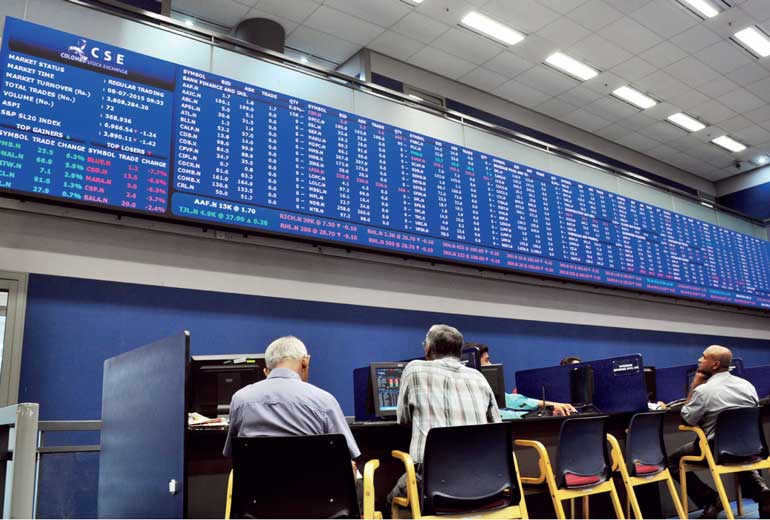
 Three years ago Sri Lanka was a country running on empty. Petrol queues stretched for kilometres, the rupee was in free fall, and the government had just told its creditors it could not pay its bills. Today the queues are gone, inflation shifted to single digit regime, and the economy grew 5.1% in the first quarter of 2026. Which is the fastest since the crisis began. By most visible measures, the patient has walked out of the emergency ward.
But ask any doctor what happens after a patient survives a heart attack, and they will tell you survival is only the first test. The real question is whether the underlying condition that caused it has actually been treated or just stabilised for now. Sri Lanka’s economy faces exactly that question this year, and the early answers are not entirely reassuring.
The vital signs look good.
The chart underneath does not
Start with the headline number. The Department of Census and Statistics says the economy expanded 5.1% year on year in the January to March quarter, up from 4.8% the quarter before. This was fuelled by the construction, mining, and IT service leading the way. The International Monetary Fund, which has kept Sri Lanka on life support through a $3 billion bailout since 2023, has just released another $695 million tranche after certifying that the country is largely keeping its promises on tax collection and spending discipline.
This is genuine, hard-won progress. Inflation, which touched nearly 70% in late 2022, has been tamed to low single digits. The government is now running a primary budget surplus, collecting more revenue than it spends, before interest payments for the first time in years. None of this happened by accident. It took unpopular subsidy cuts, tax hikes, and years of austerity that households are still feeling in their cost of living.
Yet underneath that improving headline, the rupee has been quietly losing ground all year. It has slipped from around Rs.296 to the US dollar in mid-2025 to roughly Rs.335-336 by late June. This is a depreciation of more than 12% over twelve months, including a 5.4% slide since January alone. The Central Bank has been careful to frame this as an orderly, managed adjustment rather than a panic. Nevertheless, a currency does not weaken for no reason. It weakens because more dollars are leaving the country than are coming in, and the central bank is unwilling or unable to keep selling its own reserves to minimise that gap.
And those reserves are not as deep as the headline figure suggests. Sri Lanka held about $6.77 billion in gross official reserves at the end of April. This sounds substantial until you remember the country needs roughly that much every two to three months just to pay for its imports. Strip out $2.1 billion in debt repayments due within the year and roughly $765 million in forward dollar commitments already promised and the cushion gets thin fast. Under the IMF program, the Central Bank is supposed to build reserves to $8.9 billion by year end. Which is a target that gets harder to hit every month the current account stays in deficit.
Two shocks arrived from completely different directions at the same time
What turned a manageable adjustment into something more uncomfortable were two events Sri Lanka has no control over.
The first was Cyclone Ditwah, which tore through the country, especially the central tea-growing districts of Kandy and Nuwara Eliya late last year. It knocked nearly a million kilograms off tea production and disrupted the December tourist season just as visitor numbers were climbing. For a country that depends on agricultural exports and tourism for foreign exchange, a storm in the hill country is a balance of payments story, not just a local one.
The second was the war in West Asia, which reignited in February 2026 and has driven global oil prices higher ever since. Sri Lanka imports almost all of its fuel, and when crude oil prices rise, the effect ripples through everything from electricity bills to bus fares to the cost of running a tea factory. By March, the government was rationing fuel and shifting parts of the public sector to a shortened working week just to manage demand. The IMF has been blunt about the consequences. It has cut its 2026 growth forecast for Sri Lanka to around 3%, down from the 5% actually achieved last year. The IMF cites higher oil prices, weaker tourism receipts, and a current account now expected to swing back into deficit after a rare surplus in 2025 as fundamentals behind this decision.
Put together, a cyclone in the country and an oil shock seven thousand kilometers away in the Middle East have landed on Sri Lanka’s books in the very same quarter. That is not a coincidence the country engineered. It is what economists mean by being small and open. It is small enough that it cannot influence global oil prices or Middle Eastern politics and open enough that it arrives on countries› doorsteps within weeks of each other.
The real diagnosis: an economy that still doesn’t earn enough dollars
Here is the uncomfortable truth that the 2022 crisis exposed and that three years of austerity have not fully fixed. Sri Lanka does not generate enough foreign exchange of its own to comfortably run itself, let alone absorb shocks like these.
Consider the country’s three traditional dollar earners; tea brought in $1.5 billion in export earnings in 2025. Which is a reasonable 5% increase. But still a fraction of what the economy needs and now facing fresh pressure as cyclone-damaged plantations recover. Tourism generated $3.2 billion last year on a record arrival of 2.36 million visitors, except earnings barely grew at all. The earnings, in fact, grew only 1.6%, because the average tourist is now spending less per day than in 2024. More people are coming, but each one is leaving behind less money. December earnings actually fell nearly 15% year on year even as arrivals rose. Apparel, the workhorse of the export economy, crossed $5 billion for the first time. But the industry now has to navigate a 20% United States tariff on its goods, a policy decision in Washington that the World Bank estimates could shrink Sri Lankan garment exports to America by up to 12%.
Add it all up, tea, apparel, tourism, IT services, everything the country sells abroad and total export earnings will reach about $17.25 billion in 2025. That is a real achievement and a record high. But measured against the size of the economy and its import bill (fuel, machinery, vehicles, food, and medicine), it is not enough cushion to absorb a war in the Middle East and the cyclone in the same year without the currency wobbling.
This is the chronic condition the IMF program was never designed to cure on its own. The bailout fixed the emergency, stopped the bleeding, restructured unpayable debt, and rebuilt some trust with creditors. What it could not do, because no austerity program can, is manufacture new dollar earning industries out of thin air. That requires different medicine and sustained investment in expanding what the country sells to the world, not just stabilising what it already has. Until Sri Lanka’s export base grows by several billion dollars a year rather than a few hundred million, it will keep being one bad season (one cyclone, one war, one weak tourist year) away from currency pressure.
A third shock is brewing eight thousand kilometres from Colombo
If the West Asia war and Cyclone Ditwah were the shocks Sri Lanka has already absorbed, there is a third one forming that the country has had no part in creating at all, a possible bursting of the global boom in artificial intelligence stocks.
This past week offered a preview of what that might look like. On Tuesday, South Korea’s stock market, one of the most exposed in the world to the AI and semiconductor boom, plunged 10% in a single session triggering an automatic trading halt. Samsung and SK Hynix, the two chipmakers that together make up roughly half the value of that market, each lost more than 12% before partly recovering the next day. The tremor reached Wall Street too, with the technology heavy Nasdaq posting its worst week in over a year. Some analysts now describe the AI rally as entering its final stage before a correction. Others insist the underlying demand for chips and data centres remains genuine and the wobble was just nerves. 
Why should anyone in Colombo care what happens to a chip stock in Seoul? Because South Korea’s experience is a warning about concentrating a small number of companies and a single narrative carrying outsized weight in markets with global capital pouring in on the hope the good times will not stop. If that capital reverses even partially, it tends to pull money out of emerging and frontier markets first, tightening financial conditions exactly when countries like Sri Lanka can least afford it. A US Federal Reserve that turns more cautious on rates because of an AI-driven wobble, or a flight to safety that strengthens the dollar against everything else, would land on Sri Lanka’s reserves and rupee just as surely as a Middle East war does, just through a different door.
This is the nature of being a small open economy in 2026. Shocks do not queue up politely and arrive one at a time. They arrive from the unfavourable weather conditions, from the Persian Gulf, or from a server farm in Seoul, all in the same season.
From crisis management to
growth strategy, the pivot
Sri Lanka has not yet made
This brings us to the real choice in front of the country’s economic management, and it is bigger than any single budget or quarter’s GDP number.
For roughly three years, Sri Lankan economic policy has been almost by necessity crisis management. Stop defaulting, restructure debt, rebuild reserves, hit IMF quarterly targets, and survive the next review. That mode has a logic of its own, reacts to the immediate threat, defends whatever stability exists, and buys time. It worked in the narrow sense that the country did not collapse further and is now growing again.
But crisis management and growth strategy are not the same discipline, and continuing to run the first when the moment calls for the second is itself a risk. A country can hit every IMF target, keep its primary surplus, and still find itself permanently vulnerable to the next oil shock or bad cyclone season. Because none of that fixes the underlying export shortfall. The recent national budget, themed around fiscal discipline, sets a growth target of roughly 7% for 2026, considerably more optimistic than the IMF’s own projection of around 3%. That gap between ambition and realistic forecast is itself a symptom. A government still managing quarter to quarter, hoping growth outpaces the shocks, rather than building export capacity that would make the next shock survivable by design rather than by luck.
What would a genuine shift to growth targeted policy look like? It means targeting export expansion, getting that $17 billion figure to $20 billion and beyond, with annual increases measured in billions rather than a few hundred million dollars. This should be done as the central economic priority, not a side conversation. It means capital spending that actually gets built rather than budgeted and then quietly underspent, as has happened for years. It means using the upcoming amendments to investment laws and the Colombo Port City framework to attract the kind of foreign investment that builds new factories and new earning capacity, not just new debt. It means accepting that debt repayments due in 2028 are close enough now that the work to be ready for them has to start today, not in 2027.
None of these are complex economic theories. It is the basic, unglamorous discipline of building dollar earnings capacity faster than the world can through shocks at you. Sri Lanka has proven over the last three years that it can survive a crisis. The next three will test something harder. Whether it can grow its way to genuine resilience or keep lurching from one external shock to the next, each time hoping the IMF program and bit of luck will see it through.
The patient is out of the emergency ward. The question the country’s policymakers have not yet answered and need to urgently address is whether they are still treating the symptom or finally treating the disease.
(The author is an independent economic analyst and researcher focusing on Sri Lanka’s macroeconomic policy and post-crisis recovery. Views expressed are personal)




