Thursday Oct 22, 2026
Thursday Oct 22, 2026
Tuesday, 13 January 2026 02:57 - - {{hitsCtrl.values.hits}}
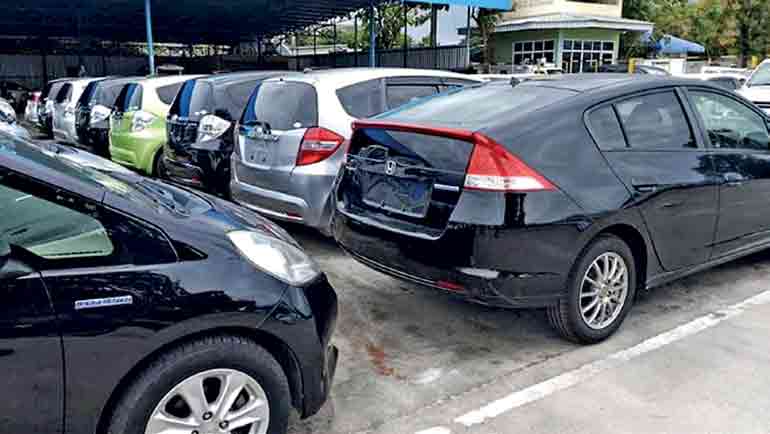
 Sri Lanka’s foreign exchange position is once again under pressure, following the impact of Cyclone Ditwah and a renewed surge in imports, particularly vehicles, after the relaxation of import restrictions. The rupee has depreciated by nearly 6%, reflecting rising demand for foreign currency, a trend likely to intensify as capital goods and essential stocks are imported to support post-cyclone recovery. In this context, policymakers must reassess how to protect tax revenue while stabilising the exchange rate. A disciplined framework for re-exporting used vehicles offers a pragmatic solution one that can generate foreign exchange, modernise the vehicle fleet, and ease pressure on the US dollar without destabilising the financial system.
Domestically, Sri Lanka’s transport sector is caught between affordability challenges and environmental concerns. Import duties have artificially inflated vehicle prices, leaving the middle class unable to access new vehiclesBenefits of re-exporting used vehiclesRe-exporting used vehicles offers Sri Lanka a multi-dimensional policy solution with economic, environmental, and trade benefits:n Foreign exchange generation: Overseas markets value affordable and reliable vehicles, enabling Sri Lanka to earn foreign currency beyond traditional exports and directly easing pressure on the foreign exchange balance.nFleet modernisation: Systematic removal of older vehicles incentivises citizens to upgrade to safer, more fuel-efficient models, improving the overall quality of the national vehicle fleet.nEnvironmental gains: Phasing out high-emission vehicles reduces air pollution, lowers carbon intensity, and improves urban air quality, supporting national climate and sustainability goals.nGlobal trade positioning: Sri Lanka can establish itself as a regional re-export hub, diversifying its export portfolio and strengthening its role in the global secondary vehicle trade.nIndustry and employment development: Re-export hubs stimulate demand for logistics, inspection, certification, refurbishment, and shipping services creating skilled employment and reinforcing trade-related infrastructure.nTargeted niche markets: Strong demand exists in Africa and South Asia, particularly for durable Japanese vehicle brands, presenting an immediate and scalable market opportunity.nInternational support and partnerships: Sri Lanka can enhance policy design and credibility by engaging with the Used Vehicles Program, a multi-donor initiative led by the UN Environment Programme (UNEP). Further, Positioning Sri Lanka as a South Asian pilot country would complement ongoing UNEP initiatives in Africa and Asia, strengthening regional cooperation and knowledge transfer.nPublic–private partnerships (PPPs) for vehicle refurbishment and skills development: Through PPPs, Sri Lanka can establish modern automotive workshops and technical training centres to inspect, refurbish, upgrade emission and safety standards, and certify used vehicles prior to re-export—enhancing resale values, ensuring compliance, creating skilled employment, and supporting circular-economy objectives.n Regional re-export gateway: Sri Lanka can offer its inspection, refurbishment, and re-export facilities to neighbouring countries, particularly the Maldives, where space constraints limit such activities generating service-based foreign exchange earnings and maximising infrastructure utilisation. Policy recommendations
- Vehicle Re-Export Authority: Establish a dedicated body to regulate, certify, and oversee re-exports.
- Control mechanism – Banking sector and 60-day FX rule: All foreign exchange earnings must be routed through licenced Sri Lankan banks. Exporters should repatriate earnings within 60 days of shipment. The Central Bank must oversee compliance, impose penalties for delays, and suspend licences for repeated violations. Digital tracking systems linking customs and shipping records will enhance transparency.
- Targeted market strategy: Focus on regions such as Africa and South Asia where demand for affordable used vehicles is strong.
- Ring-fenced FX earnings: Ensure inflows are used exclusively for importing new vehicles and spare parts. Introduce incentive mechanisms whereby exporters of used vehicles can access import-duty concessions for bringing in new vehicles.
- Eligibility-based import of well-maintained, low-emission vehicles: Allow the importation of extended-registered vehicles in good condition (e.g., low mileage and well-maintained cars) under strict eligibility criteria.
- Emission standards: Only vehicles meeting minimum environmental criteria should be eligible for re-export.
- Public awareness campaigns: Educate citizens on the benefits of re-exports while assuring continued access to affordable transport.
- Government support: Provide assistance to repair or upgrade vehicles that do not meet minimum export requirements, including import-tax concessions on spare parts.
- Government-to-Government partnerships: Establish bilateral agreements with importing countries or their key trade organisations to ensure transparency, prevent malpractices, and secure sustainable market access.
- Facilitating expatriate vehicle re-imports: Allow expatriates to bring down their used vehicles from overseas by paying a nominal duty, provided the vehicles meet minimum usage and eligibility criteria (age, mileage, and emission standards). All payments must be routed exclusively through legitimate Sri Lankan banking channels.
- mport tax conssio
Re-exporting used vehicles represents a forward-looking policy option for Sri Lanka. Strategic foresight demonstrates that re-exporting is not merely a short-term fix, but a transitional policy capable of evolving into a long-term strategy for economic resilience, environmental responsibility, and public benefit. It strengthens foreign exchange reserves, modernises the vehicle fleet, and reduces emissionsStrategic foresight roadmap
- Short Term (2026–2027): Establish the Vehicle Re-Export Authority, pilot exports to Africa, and enforce foreign exchange discipline.
- Medium Term (2028–2035): Expand dismantling and parts resale, integrate digital compliance systems, and align with IMF reserve targets.
- Long Term (2035+): Transition toward EV and hybrid re-exports, positioning Sri Lanka as a green mobility hub in South Asia.
ConclusionRe-exporting used vehicles represents a forward-looking policy option for Sri Lanka. Strategic foresight demonstrates that re-exporting is not merely a short-term fix, but a transitional policy capable of evolving into a long-term strategy for economic resilience, environmental responsibility, and public benefit. It strengthens foreign exchange reserves, modernises the vehicle fleet, and reduces emissions. With a banking-sector-led control mechanism ensuring foreign exchange inflows within 60 days, the proposal offers both economic and environmental dividends. By combining opportunity with responsibility, Sri Lanka can move toward sustainable prosperity while safeguarding its financial system.(The author is a senior financial professional. He could be reached via email at [email protected])Recent columns
COMMENTS




