Monday Oct 12, 2026
Monday Oct 12, 2026
Saturday, 23 May 2026 04:28 - - {{hitsCtrl.values.hits}}
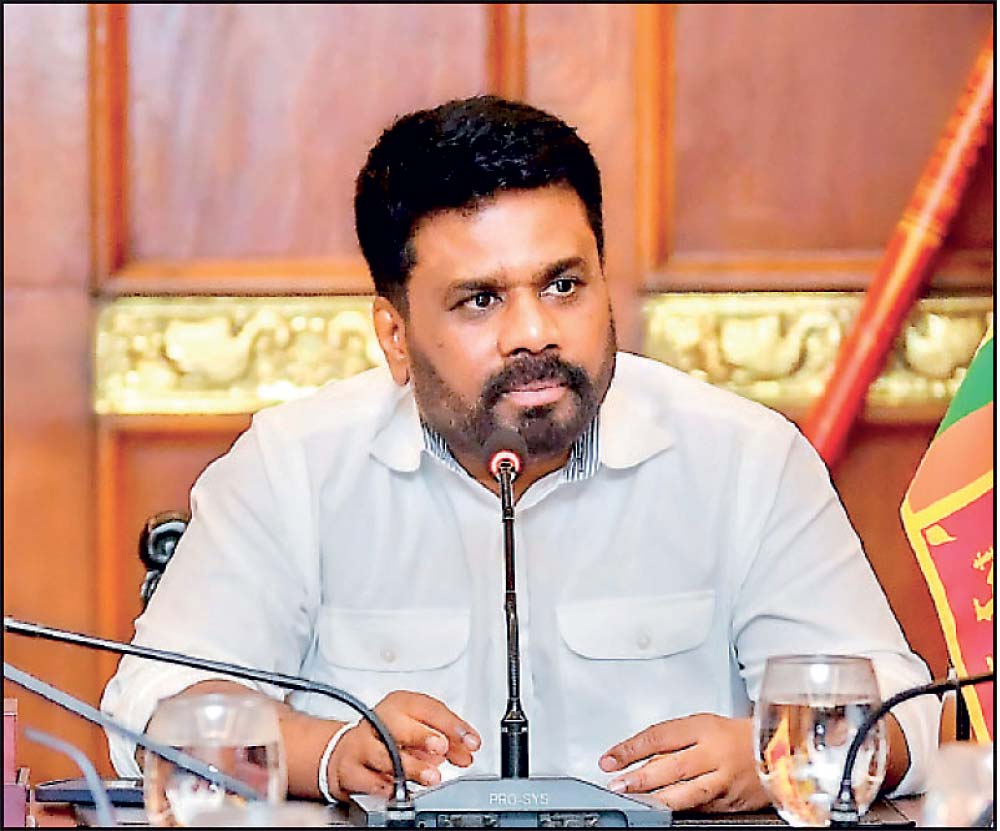
President and Finance Minister Anura Kumara Dissanayake
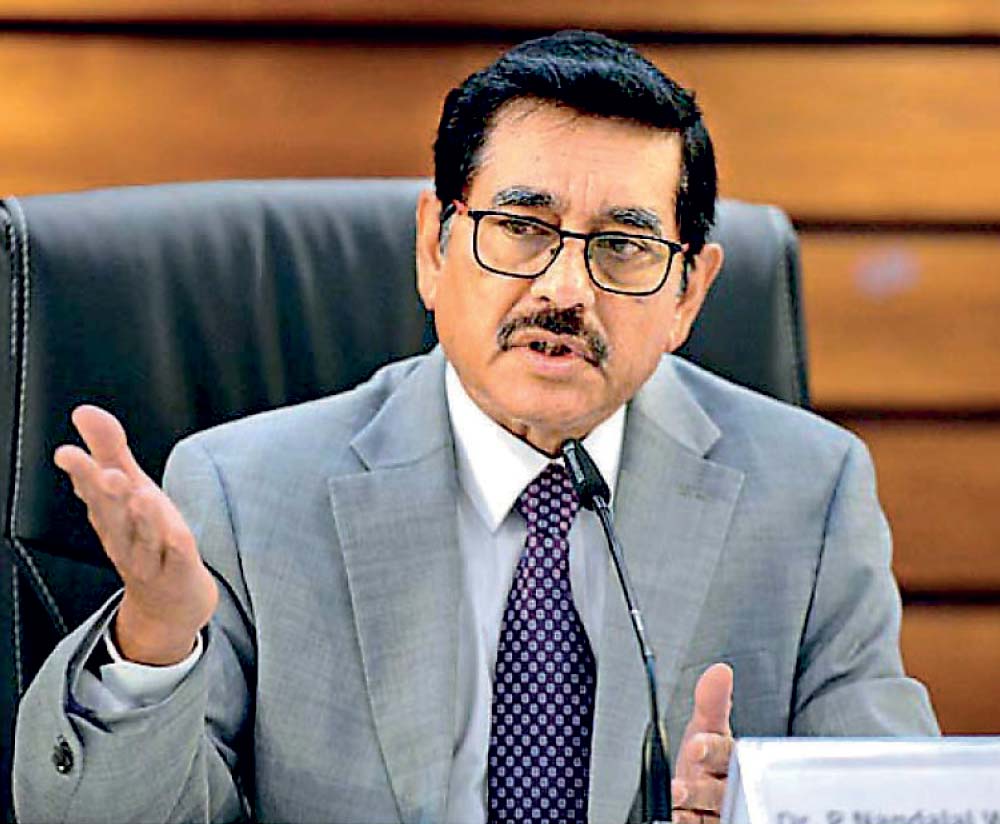
Central Bank Governor Dr. Nandalal Weerasinghe
“We cannot solve our problems with the same thinking we used when we created them.”
— Albert Einstein —
 Introduction
Sri Lanka’s recent, unexpected currency depreciation—which pushed the Sri Lankan Rupee (SLR) toward the 345–354 per US Dollar range—has triggered widespread economic anxiety, evoking dark memories of the 2022 collapse. While mainstream commentators routinely blame generic global shocks or resort to circular political rhetoric, they consistently overlook the structural reality. The crisis stems from a profound policy asymmetry: Sri Lanka aggressively stabilised and strengthened its internal LKR Balance Sheet, but left its external foreign exchange (FX) Balance Sheet entirely exposed and unhedged. In other words, my deep understanding is that the state fortified its domestic currency fortress but left the external gates entirely unlatched. Also, the breakdown of institutional coordination between the Ministry of Finance and CBSL, the friction that scuttled the SLR. As I see it, the left hand chased domestic growth while the right hand protected central bank reserves, leaving the SLR to take the full force of the blow.
This article deconstructs the institutional jurisdictions responsible for this divide, exposes the costly fiction of uncoordinated “stabilisation,” and outlines the precise monetary, fiscal, and structural mechanisms needed to permanently reclaim and defend a sustainable exchange rate equilibrium of about $1 = SLR 300.
The anatomy of the Two Balance Sheets: Jurisdictions and institutional blame
To understand why the rupee collapsed unexpectedly, one must first break down the sovereign ledger into its two distinct operational components: the internal LKR Balance Sheet and the external FX Balance Sheet.
The Internal Balance Sheet encompasses (i) the domestic fiscal accounts, (ii) domestic debt stock, and (iii) the central bank’s domestic monetary base (M0). Its custodians are the Ministry of Finance (the Treasury)—which compiles the annual Government Financial Statements via the Department of State Accounts—and the Central Bank of Sri Lanka (CBSL), which manages local banking liquidity.
Conversely, the External Balance Sheet measures Sri Lanka’s economic interface with the rest of the world. It is dictated by (i) the Balance of Payments (BOP), (ii) official foreign exchange reserves, and (iii) the International Investment Position (IIP). Under the Central Bank of Sri Lanka Act, No. 16 of 2023, the statutory onus of safeguarding external sector stability rests squarely with the CBSL’s Economic Research and International Operations Departments.
However, liability for long-term external obligations is shared: the External Resources Department (ERD) of the Ministry of Finance holds the exclusive mandate to negotiate and log foreign project loans and sovereign debt. To put it simply, imagine managing your household budget. Just because you are extremely disciplined at home—cutting back on groceries, paying off your local store credit, and saving a massive stack of Sri Lankan Rupees in your cupboard—it does not mean you have a single US dollar to buy imported petrol or medicine. The domestic market operates in rupees, but the global economy strictly requires foreign currency. No matter how clean, balanced, and strong your internal rupee book is, it cannot automatically print or attract the foreign dollars needed to pay off global debts. Conflating the two is like assuming that because you are king of your own household, the international supermarket down the street will accept your home-made tokens as valid payment. Simply, the fundamental policy failure lies in treating these two highly distinct Balance Sheets as a single monolithic entity, falsely assuming that internal fiscal discipline would automatically insulate the external capital account.
The illusion of recovery: Strengthening the LKR, neglecting the Dollar
Following the pre-emptive sovereign default of 2022, Sri Lanka embarked on an aggressive path of revenue-based fiscal consolidation. By early 2026, the internal LKR Balance Sheet showed remarkable signs of technical correction. The government successfully elevated its tax-to-GDP ratio from a dismal 8.2% to over 13.5%, locked in a primary budget surplus target of 2.5%, and legally barred the CBSL from direct monetary financing (money printing). Local banking liquidity was stabilised, and domestic debt optimisation (DDO) brought temporary predictability to local currency markets.
However, this internal correction masked a dangerous, unhedged vulnerability on the external Balance Sheet. The apparent buildup of gross official reserves to nearly 6.8 billion $was not driven by organic, non-debt commercial inflows. To put it plainly for the common man, “organic” growth means the country is genuinely earning its own dollars rather than relying on financial life support. It happens when the cash flowing into the island from physical tea and garment exports, booming tourist arrivals, and direct foreign factory investments structurally exceeds what we spend on imports—meaning the dollars are ours to keep, completely free of any obligation to pay them back. Instead, it was artificially propped up by short-term bilateral currency swaps, stringent temporary import bans, and the suspension of bilateral external debt servicing. The structural external Balance Sheet remained fundamentally broken: a chronic trade deficit persisted, and genuine, non-debt Foreign Direct Investment (FDI) remained stagnant. The state fortified its domestic currency fortress but left the external gates entirely unlatched.
The breakdown of institutional coordination: The friction that scuttled the SLR
When external shocks hit the economy—catalysed by geopolitical conflicts in the Middle East, rising global freight rates, and a universally strengthening US Dollar—the lack of strategic alignment between the Ministry of Finance and the CBSL was laid bare.
In my view, given pressure to stimulate real economic growth and ease the pain of austerity, domestic interest rates were lowered. This is true. This premature monetary easing narrowed the real interest rate premium, diminishing the incentive for market actors to hold local currency assets.
When the dollar demand subsequently spiked due to reasons such as vehicle imports, the CBSL faced a critical policy crossroad: draw down its hard-earned foreign reserves to defend the rupee’s peg, or allow the exchange rate to act as a shock absorber. This is true as well. Operating under its new statutory mandate, prioritising price stability and reserve adequacy, the CBSL chose reserve preservation. They stepped back, allowing the currency to slide. Simultaneously, the Ministry of Finance failed to deliver the aggressive trade and investment climate overhauls required to convert macro-stability into physical dollar earnings, which I explained in detail in my previous article “Structural Reforms Are Now More Crucial Than Ever”. The left hand chased domestic growth, while the right hand protected central bank reserves, leaving the SLR to take the full force of the blow.
The transmission mechanism: How unexpected depreciation risks a 2022 regression
An unexpected currency depreciation is not just an abstract accounting adjustment; it is a violent economic destabiliser that targets the most vulnerable segments of society. Because Sri Lanka remains heavily reliant on imported intermediate inputs, a tumbling rupee immediately converts into cost-push inflation. The cost of fuel, electricity, fertiliser, and raw industrial components surges, directly undermining the CBSL’s inflation targets and squeesing household incomes.
More dangerously, an unpredicted currency slide shatters investor and manufacturing confidence. It signals to international markets that Sri Lanka’s external sector anchor is purely nominal, triggering capital flight and encouraging the resurgence of informal FX channels. If left unchecked, this loss of confidence threatens to unravel the hard-won fiscal gains of the last three years, pushing the economy back toward the destructive cycle of hoarding, supply shortages, and hyperinflation that defined the 2022 crisis.
 Sri Lanka’s sudden currency depreciation exposes a critical policy asymmetry: while the state successfully consolidated its internal rupee Balance Sheet through fiscal discipline, it left its external dollar Balance Sheet vulnerable and unhedged
Monetary correction: The CBSL’s levers to reclaim around the 300 LKR target
Restoring the rupee to a stable, market-driven value around 300 LKR per US Dollar cannot be achieved through artificial administrative pegs, which would only deplete reserves and invite a secondary black market. Instead, the CBSL must deploy targeted monetary interventions to alter the organic supply-and-demand dynamics of the FX market. This means that, instead of trying to artificially freeze or force the price of the dollar down, the Central Bank needs to act as a smart market regulator. It must use tools that make it highly attractive for people to hold rupees in the bank while strictly ensuring that the dollars our exporters earn are brought back home and sold in local markets, naturally increasing the supply of foreign currency.
First, the Monetary Policy Board must recalibrate its overnight policy rates to maintain an optimal real interest rate premium. By ensuring that domestic yields on Treasury bills and bonds comfortably outperform inflation, the CBSL can attract foreign portfolio capital back into local debt markets, generating an immediate demand for LKR.
Second, the CBSL must rigidly enforce and audit mandatory export proceeds repatriation and conversion timelines. Allowing exporters to hoard foreign earnings in offshore accounts starves the domestic spot market of commercial liquidity; pulling these flows strictly into the formal banking system provides the organic dollar supply needed to naturally appreciate the currency.
Capital Account transformation: Shifting from sovereign debt to greenfield equity
The Ministry of Finance must permanently discard the legacy thinking that views external Balance Sheet management through the lens of international borrowing. Sri Lanka cannot loan its way out of a Balance of Payments crisis. The rebuilding of foreign assets must be driven exclusively by non-debt capital inflows. The Board of Investment (BOI) and the Ministry of Finance must execute a radical pivot toward greenfield Foreign Direct Investment (FDI). This requires fast-tracking approvals for multinational projects in strategic sectors such as high-value manufacturing, logistics, and the Colombo Port City. Furthermore, the state must aggressively formalise secondary foreign inflows. By modernising commercial banking remittance networks—making them faster, cheaper, and digitally superior to alternative informal networks—the state can redirect billions of dollars out of the shadow economy and directly onto the formal ledger of national reserves.
Structural competitiveness: Digital structuralism and energy autonomy
Long-term currency stability is ultimately a reflection of a nation’s structural competitiveness. Sri Lankan exports are currently weighed down by immense domestic transaction costs, driven by institutional corruption and bureaucratic delays within state departments, customs, and ports.
The implementation of “Digital Structuralism”—the aggressive, end-to-end digitalisation of public offices, revenue collection, and procurement systems—is vital. Removing these hidden friction costs immediately enhances the global price competitiveness of Sri Lankan goods, structurally expanding the trade surplus.
Equally critical is the immediate containment of the island’s largest recurring external drain: the import of fossil fuels for power generation. The Ministry of Energy must aggressively fast-track utility-scale renewable energy infrastructure, including wind and solar projects. Every megawatt of clean energy generated domestically permanently obliterates a corresponding demand for commercial dollars on the import ledger, structurally shifting the baseline valuation of the rupee.
To reclaim and permanently defend a stable anchor around $1 = SLR 300, Sri Lanka must move from short-term stabilisation to a unified, dual-engine framework
Institutionalising a joint macroeconomic framework to prevent regression
Sri Lanka cannot afford to let its twin Balance Sheets operate in institutional isolation. To ensure the economy never again drifts into the conditions of 2022, a unified policy architecture must be legally institutionalised.
The state must establish a statutory Macroeconomic Policy Coordination Committee (MPCC) that structurally links the CBSL’s Monetary Policy Board with the Treasury’s fiscal planners. This committee must ensure that (i) domestic growth targets, (ii) public-sector wage adjustments, and (iii) interest-rate policies are mathematically aligned with external reserve adequacy ratios and Balance-of-Payments projections. Only when the internal LKR Balance Sheet is systematically synchronised with the external FX Balance Sheet will Sri Lanka break free from the boom-and-bust cycle, providing policymakers with a bulletproof, dual-engine framework to secure permanent economic sovereignty. In plain terms, a country is no different from an ordinary household. You can work incredibly hard at home, cut your expenses, and save a massive stack of local rupees in your cupboard. But if you do not actively earn foreign dollars through exports or investments, you still cannot buy fuel, medicine, or groceries on the international market. True recovery means we must stop relying on borrowed money and start genuinely earning our own global cash. Only when our domestic discipline matches our global earning power will the rupee finally stand strong.
Executive summary
Sri Lanka’s sudden currency depreciation exposes a critical policy asymmetry: while the state successfully consolidated its internal rupee Balance Sheet through fiscal discipline, it left its external dollar Balance Sheet vulnerable and unhedged. The illusion of recovery, propped up by debt suspensions and temporary import bans rather than organic commercial earnings, crumbled when premature domestic monetary easing collided with external global shocks. Because the Ministry of Finance pursued domestic growth while the central bank focused on reserve preservation, the uncoordinated policy framework forced the rupee to absorb the blow.
To reclaim and permanently defend a stable anchor around $1 = SLR 300, Sri Lanka must move from short-term stabilisation to a unified, dual-engine framework. This requires the CBSL to enforce strict exporter-proceeds repatriation and maintain real interest-rate premiums, while the Ministry of Finance pivots from sovereign debt to Greenfield equity and digital structuralism to boost export competitiveness. Ultimately, the country must legally institutionalise a statutory Macroeconomic Policy Coordination Committee (MPCC) to systematically align domestic growth targets with external Balance-of-Payments realities, breaking the boom-and-bust cycle for good. Only when our domestic discipline matches our global earning power will the rupee finally stand strong.
(The author, among many, served as the Special Adviser to the Office of the President of Namibia from 2006 to 2012 and was a Senior Consultant with the UNDP for 20 years, and a Senior Economist with the Central Bank of Sri Lanka (1972-1992). He can be reached at [email protected])




