Thursday Oct 22, 2026
Thursday Oct 22, 2026
Monday, 7 September 2026 04:10 - - {{hitsCtrl.values.hits}}
 A prolonged El Niño drought forces a massive, unbudgeted outflow of foreign currency to fund these fuel imports. At the same time, because domestic agriculture will be crippled by climate whiplash, the country will be forced to spend even more foreign exchange to import essential foods like rice, milk powder, and lentils just to prevent widespread malnutrition. This creates a worst-case scenario for our Balance of Payments, where our import expenses skyrocket while our agricultural export revenues (such as tea and rubber) collapse due to weather stress. This foreign exchange drain comes at the worst possible moment in our economic history
 Chilling warning
The British Meteorological Office has issued a chilling warning that should instantly shake us out of our collective complacency.
According to their latest global climate projections, the planet is on track for a severe El Niño trajectory building toward 2027, which is estimated to be the hottest year of the century1. Alarmingly, scientists warn that this atmospheric disruption could mirror the catastrophic global climate shift of 1877—a dark year in human history when intense global droughts caused absolute crop failures, leading to the starvation and deaths of millions of people across Asia, including neighboring India2.
Ceylon, the name given to it before it became Sri Lanka in 1972, was not affected directly by the disaster, but indirectly through the influx of famished South Indians who were welcome by the colonial planters without regard for cholera and smallpox which they brought to the island3.
The scientific backing behind the Met Office’s warning relies on sophisticated computer modeling of ocean temperatures and satellite tracking. These tools show an unprecedented accumulation of thermal energy in our oceans. When the atmosphere absorbs this heat, it warps global weather systems like a spinning top thrown out of balance. Because our planet’s climate is interconnected, a spike in heat in one ocean triggers a domino effect across the globe. For an island nation like Sri Lanka, still recovering from profound economic vulnerabilities, this warning is not a distant scientific theory; it is a clear and present danger to our food security, power grid, and national financial survival.
Fan and bathtub: Understanding El Niño and La Niña
To understand this global threat, we must understand what El Niño is. Imagine a giant bathtub representing the Pacific Ocean. Normally, a powerful electric fan—representing the steady atmospheric “trade winds”, so called because early sailors used these winds to navigate across oceans, blows across the water from East to West. This fan pushes the warm surface water away from the West side of South America and piles it up over South Asia and Australia. As the warm water moves West, cold, nutrient-rich water rises from the deep ocean floor near Peru to fill the gap.
Centuries ago, Peruvian fishermen noticed that every few years, around Christmas time, this cold water would mysteriously disappear, replaced by an unusually warm ocean current that killed off their fish catches. Because it happened around the birth of Christ, they named this warm current “El Niño,” which is Spanish for “The Boy Child.”
Sometimes, the opposite happens. The cosmic fan blows much harder than usual, piling up even more warm water in the West and making the waters near Peru icy cold. Scientists, and not Peruvians, needing a name for it started calling this cold phase "La Niña" or “The Girl Child”, the exact opposite to El Niño.
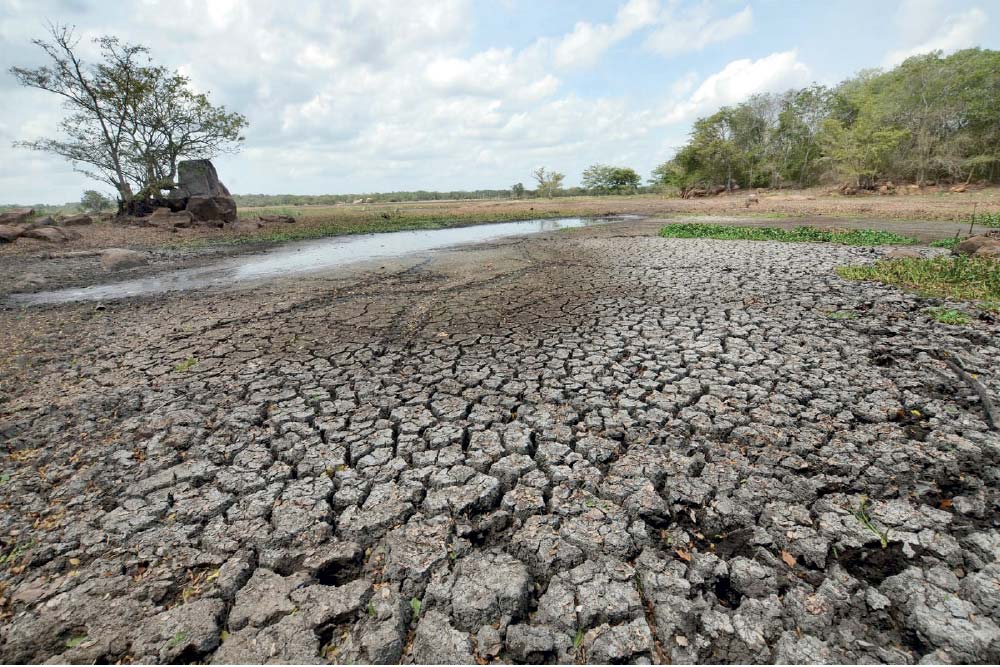
Right now, the fan is breaking down. The trade winds are stalling, and during an El Niño year, that massive pile of hot water in the West sloshes backward toward South America. This shifts the entire planet›s rain clouds, bringing floods to desert regions and throwing a blanket of drought over South and Southeast Asia.
Sri Lanka’s impending climate whiplash
How does a shifting ocean current thousands of miles away harm Sri Lanka? It happens through a massive atmospheric highway called the Walker Circulation, named after Gilbert Walker, a Cambridge mathematician who became the head of the Indian Observatories in 1904.
When the Pacific Ocean’s heat engine moves East, it completely alters the air pressure across the Indian Ocean, destabilising its predictable, bimodal monsoon patterns, known as Indian Ocean Dipole or IOD, the difference between the surface sea temperature in the East side, say Indonesia, and the West side, say, East Africa. The current El Niño is expected to activate the positive phase of IOD, raising the temperature on the Western side of the Indian Ocean close to East Africa.
Sri Lanka, though located in the middle, is expected to experience changes in the Monsoon patterns altering rain and drought conditions. This is not good news for its agriculture, both food crops and commercial plantations4.
As Sri Lanka looks toward a potentially record-breaking hot year, Sri Lanka faces what meteorologists call a double-edged sword of agricultural disruptions, striking different regions during different seasons: In the Western and Central zones, El Niño in the Pacific will fail the South-West Monsoon causing severe drought and threatening the current Yala crop. This is currently happening. In the Northern and Eastern zones, there will be flash floods threatening the oncoming Maha crops.
This is the possibility about which Sri Lanka should be adequately wary.
Because El Niño is a global phenomenon, major food-exporting giants like India, Vietnam, Thailand, and Australia will simultaneously battle their own severe droughts, blistering heatwaves, and collapsing crop yields. When global agricultural supply drops, international market prices will skyrocket. Furthermore, exporting nations will look out for themselves first; they will ban international food exports to prioritise feeding their own citizens. This is the usual practice of India which is Sri Lanka’s main food source in an emergency
Power grid crisis: Drying reservoirs and hydropower failure
The agricultural fallout is only one side of the coin; the impending El Niño threatens to paralyse Sri Lanka’s national electricity grid. Sri Lanka relies heavily on its large hydroelectric complexes—such as the Laxapana, Mahaweli, and Samanala reservoir networks—to generate roughly one-third of its domestic electricity. Hydropower is a highly cost-effective, domestic source of clean energy, but it is entirely dependent on consistent monsoonal inflow. A dry spell will cripple hydropower generation forcing CEB to switch to thermal power that needs the country to spend its foreign exchange resources to meet the high energy bills.
When the reservoir water levels plunge drastically, Sri Lanka will be forced to make an impossible choice. It must choose between power generation and food production. Both are important policy goals and in the past, when the country could not afford to use the reservoir waters anymore, it had to generate thermal power to keep factories running. It causes a double whammy: to import food, it should now spend more foreign exchange. Further, thermal power is more expensive and, when CEB adjusts its fares to match the costs, the economy will have to take the additional burden of high costs of production.
Foreign exchange trap: Threat to debt repayment
Relying heavily on fossil-fuel thermal plants to survive a drought creates a direct macroeconomic emergency. Sri Lanka does not produce coal or petroleum; every metric ton used to generate emergency electricity must be purchased from foreign markets using precious United States dollars.
A prolonged El Niño drought forces a massive, unbudgeted outflow of foreign currency to fund these fuel imports. At the same time, because domestic agriculture will be crippled by climate whiplash, the country will be forced to spend even more foreign exchange to import essential foods like rice, milk powder, and lentils just to prevent widespread malnutrition. This creates a worst-case scenario for our Balance of Payments (BOP), where our import expenses skyrocket while our agricultural export revenues (such as tea and rubber) collapse due to weather stress.
This foreign exchange drain comes at the worst possible moment in our economic history. Following our historic sovereign debt restructuring, Sri Lanka has negotiated a grace period on bilateral and commercial debt repayments that shields our economy. However, this safety net is temporary. Principal and restructured interest payments are scheduled to resume in earnest, forcing Sri Lanka to meet heavy international debt obligations.
This will also exacerbate the current foreign exchange crisis. To prevent another devastating economic default, the Central Bank must build and maintain foreign exchange reserves of at least $ 15 billion. If the country wastes its thin, hard-earned dollar reserves—which currently hover precariously under $ 7 billion—on emergency diesel imports and food shipments, it will completely hollow out the existing fragile foreign exchange buffer. The El Niño climate crisis could trigger a secondary economic crisis, breaking Sri Lanka’s post-restructuring financial recovery before it can fully take root.
El Niño is an inevitable force of nature, but our vulnerability to it is entirely man-made. Since we cannot change the winds, we must aggressively change our strategies. The solution lies in proactive human planning, policy mobilisation, and a total rethinking of our resource management
Global food supply squeeze
In past domestic agricultural crises, Sri Lanka simply relied on importing cheap grain from regional neighbours to bridge local food deficits. This time, that exit strategy is off the table.
Because El Niño is a global phenomenon, major food-exporting giants like India, Vietnam, Thailand, and Australia will simultaneously battle their own severe droughts, blistering heatwaves, and collapsing crop yields. When global agricultural supply drops, international market prices will skyrocket. Furthermore, exporting nations will look out for themselves first; they will ban international food exports to prioritise feeding their own citizens. This is the usual practice of India which is Sri Lanka’s main food source in an emergency.
If Sri Lanka waits passively without an immediate plan, it will become helpless victims of a global food shortage. The country cannot import food that isn’t available on the market, and it cannot afford food that is priced in exorbitant, inflated foreign currency.
Man-driven strategies: What we must do right now
El Niño is an inevitable force of nature, but our vulnerability to it is entirely man-made. Since we cannot change the winds, we must aggressively change our strategies. The solution lies in proactive human planning, policy mobilisation, and a total rethinking of our resource management:
Call for an immediate national task force
We cannot afford to treat this incoming crisis with the typical, slow-moving bureaucratic response. If we wait for the reservoirs to run dry and the crops to wither before we act, the economic damage will be irreversible.
The Government must immediately set up a high-level, multi-sectoral National El Niño Response Task Force. This body must bring together the Agriculture Ministry, the Ceylon Electricity Board, the Department of Meteorology, the Irrigation Department, and the Finance Ministry under a unified command structure. To ensure we pass through this period successfully, the task force should be given the legal mandate to execute three highly specialised, non-traditional strategies:
1. Implement a national water credit scheme
Water conservation can no longer rely solely on moral appeals; it must be driven by economic incentives. The Task Force must establish a national water credit scheme targeting the commercial, industrial, and agricultural sectors. Under this framework, large factories, beverage plants, commercial farms, and urban housing complexes will be assigned strict, seasonal water-use quotas.
Entities that consume less than their designated allocation will earn tradable «Water Credits,» which can be sold back to the Government or exchanged for tax deductions. Conversely, those who exceed their limits will face heavy financial penalties. At the village level, the scheme will reward Agricola farmer organisations that efficiently pool canal allocations, transforming water from a neglected public utility into a highly valued national asset.
2. Deploy advanced technology and cloud-seeding partnerships
We must actively mobilise global scientific expertise to fortify our domestic defence. The task force must forge immediate bilateral agreements with international climatology panels and advanced meteorological networks in countries like Australia and Japan. Through these partnerships, Sri Lanka can secure real-time satellite data and predictive AI modelling to monitor localised soil moisture depletion levels.
Furthermore, the Government must prepare frameworks for targeted cloud-seeding operations. By collaborating with seasoned international aviators and environmental scientists, Sri Lanka can deploy aircraft to seed clouds over critical highland catchment areas like Victoria, Castlereigh, and Maussakelle. While cloud-seeding cannot stop a global El Niño, triggering rainfall directly over our primary hydroelectric dams can stabilise our power grid and prevent costly thermal fuel imports.
3. Establish community-level grain and tuber banks
To protect our rural populations from immediate starvation and regional supply lines from collapsing, the task force must decentralise food security. Rather than keeping all buffer stocks in centralised urban silos, the State should utilise our network of Grama Niladhari (GN) divisions to build community-managed grain and tuber banks.
As farmers harvest hardy alternatives like Kurakkan, sorghum, and green gram, the Government will buy these crops at guaranteed baseline prices and store them directly within local rural centres. Communities will also be trained to systematically slice, dry, and preserve cassava harvests into long-lasting flour stocks. If the central distribution networks are broken by fuel shortages or hyperinflation, these decentralised village banks will serve as localised lifeboats, ensuring that every village has enough dry food to survive the peak of the drought.
The countdown to a challenging climate cycle has already begun. The solution lies entirely in proactive human planning, robust policy mobilisation, and swift Government action. We must start preparing our fields, our reservoirs, and our national financial defences today, or prepare to face the consequences tomorrow
Final call to action
Nature has given us a clear warning through the global scientific community. The countdown to a challenging climate cycle has already begun. The solution lies entirely in proactive human planning, robust policy mobilisation, and swift Government action. We must start preparing our fields, our reservoirs, and our national financial defences today, or prepare to face the consequences tomorrow.
(The writer, a former Deputy Governor of the Central Bank of Sri Lanka, can be reached at [email protected])
References:
(Endnotes)
1. https://www.metoffice.gov.uk/blog/2026/an-unprecedented-el-nio-and-its-implications-for-the-weather-forecast
2. https://heritagetamil.in/great-famine-1876-78-a-tale-of-drought-debt-and-imperial-indifference/
3.https://www.jstor.org/stable/2173871
4.Wickramasinghe, Kamanthi (2026) available at: https://news.mongabay.com/2026/07/sri-lanka-prepares-for-impending-el-nino-with-traditional-and-new-approaches/




