Monday Oct 12, 2026
Monday Oct 12, 2026
Monday, 20 April 2026 02:31 - - {{hitsCtrl.values.hits}}
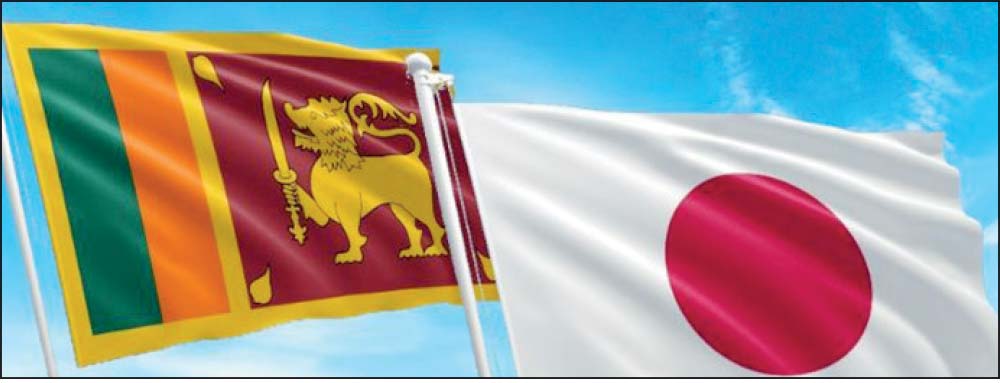
 The current disruption to traditional markets should not be seen purely as a setback. It is also a moment of recalibration. By pivoting towards Japan and positioning within a broader regional economic framework, Sri Lanka can move up the value chain, strengthen resilience, and reduce exposure to external shocks
 Sri Lanka’s export sector is facing an uncomfortable reality. Markets that once offered predictability—the Middle East, the European Union, the United Kingdom, and the United States—are no longer as stable as they once seemed.
Geopolitical tensions, economic slowdowns, shifting demand patterns, and tightening regulations have created an immediate disruption for Sri Lankan manufacturers. Orders are less consistent, margins are shrinking, and competition is intensifying. The old export playbook is under strain.
Overdependence comes at a cost
For years, Sri Lanka has relied on a narrow set of markets. While this brought scale and familiarity, it also created structural vulnerability.
When disruptions hit these regions, the impact is felt instantly—across factories, supply chains, and employment. The current turbulence is a clear reminder that diversification is no longer optional; it is essential.
Japan: A strategic and timely alternative
In this environment, Japan emerges as more than just another market—it is a strategic necessity.
As the world’s third-largest economy, Japan offers stability, high purchasing power, and a strong preference for quality and reliability. Sri Lanka’s strengths—from high quality apparel (though it is a setback against other neighboring countries that have duty free entry advantage) to premium tea, zero defect electronic components, processed foods to rubber-based products and IT services—align well with Japanese demand. In addition, access to Japanese markets will unlock new opportunities for new supply segments that our domestic industry is capable of serving.
Unlike more volatile markets, Japan rewards consistency and long-term commitment, offering exporters a pathway to sustainable growth.
Beyond trade: The promise of a Regional Economic Corridor
The opportunity becomes even more compelling when viewed through the lens of a potential Sri Lanka–Japan–India Economic Corridor, proposed by the Ministry of Economy Trade and Industry, Japan. If realised, such a corridor could transform Sri Lanka from a simple export origin into a strategic hub within a broader regional value chain. The advantages for local manufacturers. supply chain partners, shipping companies and their local agents benefitting from strategically located short-haul sea lanes between India and Sri Lanka, would be significant:
nEnhanced Market Access: Seamless integration with both Japanese and Indian markets would allow Sri Lankan exporters to tap into two of Asia’s largest and most dynamic economies
Raising the bar for market entry
Yet, neither Japan nor participation in a regional corridor will deliver benefits automatically.
Sri Lankan exporters must be prepared to meet exacting standards. Quality, precision, and reliability are non-negotiable. Packaging must be refined, compliance must be strict, and delivery must be consistent.
Equally important is a shift in mindset—from short-term transactions to long-term partnerships.
Ability to establish one to one contacts, breaking cultural barriers rather than copying and pasting marketing strategies for other markets will be a crucial factor.
Turning disruption into opportunity
The current disruption to traditional markets should not be seen purely as a setback. It is also a moment of recalibration.
By pivoting towards Japan and positioning within a broader regional economic framework, Sri Lanka can move up the value chain, strengthen resilience, and reduce exposure to external shocks.
A call to action
Waiting for traditional markets to stabilise is no longer a viable strategy. The future lies in diversification, deeper integration, and higher standards.
Japan and India are rapidly building a very strong economic partnership. Through the potential economic corridor, they offer Sri Lanka a chance to redefine our country’s role in global trade.
The question is not whether this opportunity exists. It is whether Sri Lankan exporters are ready to seize it.
(The author is the Senior Partner of Strategic Management Alliance and recipient of the Order of the Rising Sun Gold and Silver Rays from the Government of Japan)




