Saturday Oct 17, 2026
Saturday Oct 17, 2026
Friday, 3 July 2026 00:20 - - {{hitsCtrl.values.hits}}
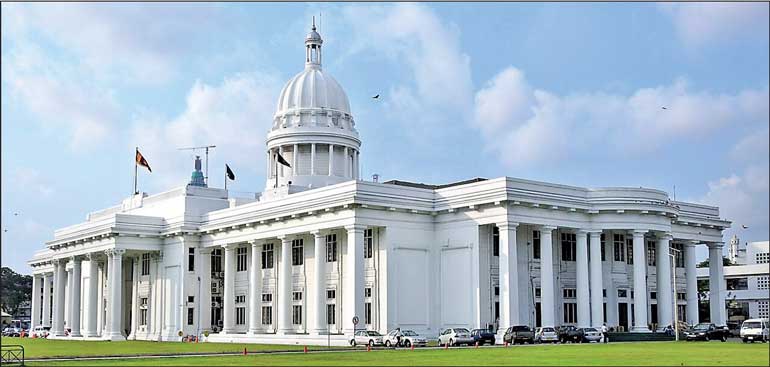
Colombo Municipal Council

Colombo Mayor Vraîe Cally Balthazaar

Sri Lanka’s worsening dengue epidemic is not merely a public health emergency. It is also a test of urban governance, institutional accountability, and the rule of law.
With over 53,000 reported dengue infections and 31 deaths recorded during the first half of 2026, the nation is once again confronting the devastating consequences of a disease that is, to a significant extent, preventable.
The sharp surge in infections during June, following increased rainfall, underscores the urgent need not only for effective vector control but also for a critical examination of whether public authorities have faithfully discharged the statutory responsibilities entrusted to them.
Beyond epidemiology and public health
Behind these alarming statistics lies a question that extends beyond epidemiology and public health. It is fundamentally a question of governance, public administration, and the rule of law.
When a preventable disease reaches epidemic proportions within a city, citizens are entitled to ask whether the public authorities entrusted with protecting urban health have adequately discharged the legal duties imposed upon them. In Colombo, that inquiry must inevitably include the performance of the Colombo Municipal Council (CMC), the local authority principally responsible for maintaining municipal infrastructure, environmental sanitation and public health within the city.
The purpose of raising this issue is neither to politicise a public health emergency nor to assign blame without evidence. Rather, it is to reaffirm a principle that lies at the heart of democratic governance: every public authority exercising statutory powers must also be answerable for the manner in which it performs the statutory duties entrusted to it.
The CMC is not merely another administrative institution. It is a statutory corporation established by law to perform functions that directly affect the health, safety and welfare of hundreds of thousands of residents and the millions who enter Colombo each year for work, commerce, education and essential services.
Among its statutory responsibilities are the maintenance of municipal roads, stormwater drainage systems, canals under its control, environmental sanitation, waste management, nuisance prevention and the implementation of measures necessary to safeguard public health. These responsibilities are not discretionary aspirations. They are legal obligations that form an integral part of urban governance.
Municipal drainage infrastructure is particularly significant because its proper functioning directly influences mosquito breeding. Efficient drainage prevents water stagnation, facilitates the rapid removal of stormwater, reduces flooding and eliminates many of the artificial habitats in which Aedes aegypti and Aedes albopictus mosquitoes breed.
Conversely, blocked drains, silted canals, clogged roadside gullies, neglected catch pits, accumulated refuse and poorly maintained drainage networks create ideal breeding environments. Numerous scientific studies have consistently demonstrated the close relationship between inadequate urban drainage management and increased transmission of mosquito-borne diseases.
No serious observer would suggest that deficiencies in municipal drainage alon determine dengue outbreaks. Rainfall patterns, temperature, humidity, population density, household practices, private property maintenance and individual preventive measures all influence disease transmission. Nevertheless, municipal infrastructure remains one of the most significant environmental factors that public authorities are able to control.
Legal and administrative responsibility
That reality places a correspondingly important legal and administrative responsibility upon municipal authorities.
Throughout recent years, residents across many parts of Colombo have repeatedly expressed concern regarding blocked drains, stagnant water, overflowing roadside gullies, poorly maintained canals and delays in routine drainage maintenance. Such concerns have frequently appeared in the media and on public platforms, particularly following periods of heavy rainfall.
Whether these reported conditions represent isolated operational shortcomings or broader systemic deficiencies is a matter requiring objective investigation rather than speculation. However, where persistent environmental conditions capable of facilitating mosquito breeding coincide with a substantial dengue outbreak, legitimate questions arise as to whether existing maintenance systems operated with the diligence, efficiency and effectiveness reasonably expected of a public authority entrusted with safeguarding public health.
Public accountability
Public accountability requires that such questions be answered through evidence rather than assumption.
Accordingly, an independent and transparent inquiry should examine several important issues.
Were statutory obligations relating to drainage maintenance, desilting operations, environmental sanitation and nuisance prevention carried out in accordance with accepted engineering and public health standards?
Were routine inspection programmes implemented throughout the municipal area to identify blocked drainage systems before they became significant public health hazards?
Were preventive maintenance schedules adhered to consistently, particularly before and during the southwest monsoon season when heavy rainfall predictably increases mosquito breeding opportunities?
Were adequate financial resources allocated for drainage maintenance and dengue prevention, and if so, were those resources utilised efficiently, transparently and for their intended purposes?
Were warnings, recommendations and technical advice issued by public health authorities acted upon promptly by the relevant municipal authorities?
Finally, did any administrative shortcomings, institutional neglect, procurement delays, staffing deficiencies or management failures contribute to environmental conditions that increased mosquito breeding and, consequently, disease transmission?
These are neither political nor rhetorical questions. They are matters of public administration deserving careful, impartial and evidence-based examination.
The principle of accountability is well established in every democratic society. Public authorities are entrusted with statutory powers because they perform essential public functions. Those powers are inseparable from corresponding legal responsibilities. The legitimacy of public administration depends not merely upon authority but equally upon accountability.
Where statutory obligations are performed competently, public confidence is strengthened. Where deficiencies occur, transparent investigation becomes essential—not merely to determine responsibility, but to identify institutional weaknesses, improve administrative performance and prevent recurrence.
Accountability should never be viewed solely as a mechanism for attributing blame. Its primary purpose is corrective. It promotes transparency, strengthens institutional integrity, encourages administrative reform and ultimately protects human life.
Public health governance
Public health governance functions most effectively when public institutions remain open to scrutiny rather than insulated from it.
Citizens likewise possess an important constitutional role in safeguarding accountable governance. Democratic participation extends beyond voting at elections. It includes monitoring public administration, seeking access to information, engaging constructively with public institutions and pursuing lawful remedies where statutory obligations appear not to have been adequately fulfilled.
Civil society organisations, professional bodies, engineers, public health specialists, environmental experts and public-interest advocates all have important roles to play in ensuring that municipal governance achieves the standards expected by the public.
Among the lawful measures deserving consideration are requests for the publication of drainage maintenance schedules, inspection reports, engineering audits, procurement records and expenditure relating to drainage maintenance and dengue-control programmes. Greater transparency strengthens public confidence while facilitating independent evaluation of institutional performance.
Where credible evidence indicates that statutory responsibilities have not been adequately discharged, the legal mechanisms available under Sri Lankan law should be permitted to operate without interference. Independent oversight, administrative investigation and judicial review, where appropriate, exist precisely to ensure that public authorities remain answerable for the performance of their statutory duties.
Equally important, accountability must always be founded upon evidence rather than assumption. No public institution should be condemned without due process. Equally, no institution should be shielded from legitimate scrutiny merely because its responsibilities are politically sensitive or administratively complex.
The present dengue epidemic should therefore become an opportunity not only to strengthen mosquito-control programmes but also to improve urban governance more broadly.
Colombo requires an integrated approach involving municipal engineers, environmental officers, epidemiologists, waste-management specialists, urban planners, public health inspectors and community organisations working together under clearly defined responsibilities and measurable performance standards.
Routine drainage maintenance should become proactive rather than reactive. Modern asset management, geospatial monitoring, predictive maintenance systems, regular engineering inspections and transparent public reporting can substantially improve the management of municipal drainage infrastructure. Public participation in reporting blocked drains and environmental hazards should likewise be strengthened through responsive administrative systems.
Preventing dengue cannot be achieved solely through public awareness campaigns urging households to eliminate mosquito breeding sites. Such campaigns remain indispensable, but they cannot substitute for the proper maintenance of public infrastructure that falls exclusively within governmental responsibility.
Public health is a shared responsibility. Citizens must maintain their own premises, eliminate standing water, cooperate with public health inspectors and follow preventive advice. At the same time, public authorities must discharge the statutory duties entrusted to them with diligence, competence, efficiency and integrity.
Neither responsibility can substitute for the other.
Every preventable dengue infection represents more than an unfortunate statistic. It reflects a failure somewhere within the chain of prevention. Every neglected drain, every blocked canal, every unrepaired roadside gully and every delayed maintenance programme increases the risk borne by ordinary citizens who are entitled to expect that their city will be administered responsibly and competently.
Dengue is a biological disease, but epidemics often expose failures far beyond biology. They reveal the strengths and weaknesses of governance, infrastructure, public administration and institutional responsibility.
When public authorities faithfully discharge their statutory duties, they protect lives before hospitals become overwhelmed. When those duties are neglected, the consequences are measured not merely in blocked drains or flooded streets, but in preventable illness, avoidable suffering and lives lost.
Sri Lanka’s response to the present epidemic must therefore extend beyond mosquito control. It must reaffirm a fundamental principle of democratic governance: public power is inseparable from public accountability. Where statutory duties are not faithfully discharged, transparency, independent scrutiny and the rule of law must prevail—not only to determine responsibility where appropriate, but also to strengthen public institutions and better protect the health, safety and lives of the people they exist to serve.




