Thursday Oct 15, 2026
Thursday Oct 15, 2026
Wednesday, 22 April 2026 00:20 - - {{hitsCtrl.values.hits}}
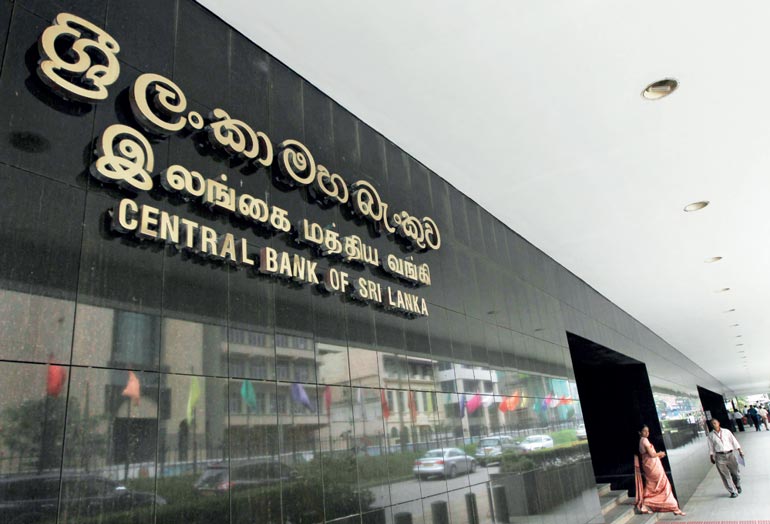
 The topic of Central Bank Independence (CBI) has been the subject of extensive discussion in various forums, including Parliament and the news media in Sri Lanka, over the years. The long-awaited goal of CBI was finally achieved with the enactment of the Central Bank Act in 2023, the biggest landmark in the history of monetary policymaking. The immediate trigger was the condition agreed by the Government under the IMF program. While the Act delivers the expected results promptly, unfounded criticisms of CBI undermine its benefits. This article shows, first, based on internal and external evidence, that CBI has significantly contributed to monetary stability and economic growth in Sri Lanka. The Central Bank independence functions well in Sri Lanka. Second, CBSL contributes to economic growth by fostering an enabling monetary and financial environment that supports business prosperity.
Central Bank Independence (CBI) is the freedom of a nation’s monetary authority to conduct policy without political or financial interference from the Government. Under the CBSL Act, the Central Bank of Sri Lanka (CBSL) is granted operational and administrative institutional independence to achieve its objectives, including setting policy tools, such as interest rates, to manage inflation. Its primary objective is to maintain low, stable inflation (price stability), and its core objective is to stabilise the financial sector. The other major functions include the management of the exchange rate (with no political pressure to depreciate or appreciate) and the national payments and settlement system.
The evolution of the CBI debate
Over the last several decades, the international consensus on CBI has shifted dramatically. In the 1970s, many central banks were subservient to fiscal authorities, often leading to “monetary financing” of deficits and resulting in stagflation. The 1990s marked a “Golden Age” of CBI, during which the success of several central banks (the US Federal Reserve, the German Deutsche Bundesbank, the Bank of England) popularised the idea that an autonomous central bank (legally empowered) is the best defense against high inflation. However, critics argue that CBI creates a “democratic deficit,” as unelected technocrats make decisions that affect every citizen’s livelihood without direct accountability. This is not true in many countries, including Sri Lanka’s CBI. The CBSL is accountable to the Parliament and reports at least 3 times  annually to the Committee on Public Finance (COPF). In addition, the Parliament (COPF) is authorised to summon CBSL to discuss specific matters as and when required. The direct interaction between CBSL and the Parliament is now more regular and frequent than before 2023. However, as in the past, the CBSL-related questions in Parliament are responded to by the Minister of Finance. The standard practice for all public institutions is to report to Parliament through the relevant minister/ministry.
Central bank independence is measured using indices based on several indicators, including legal statutes, the term of office for governors, the appointment of board members, and limitations on lending to the Government . Currently, over 125 countries have central banks with significant legal independence, a massive increase from the mid-20th century (David Romelli, Notes on the CBIE index and associated data, 2024). In developing nations, CBI has become a cornerstone of “Second Generation” structural reforms. The IMF often mandates increased central bank autonomy as a condition for financial assistance, as happened in Sri Lanka. Some other countries used CBI to attract foreign direct investment (Brazil, Chile, and South Africa).
Based on the latest CBI index, European countries (e.g., Germany, Austria, Portugal) have the highest scores, ranging from 0.87 to 0.95 (on a scale of 0-1), indicating the highest independence. At the same time, Ethiopia, South Sudan, and Vietnam recorded the lowest scores (below 0.30). Indonesia is the highest in Asia, with an index of 0.79. The independence index for Sri Lanka is 0.76, up from 0.42 before 2023 (the year of the CBSL Act granting independence).
Relationship between CBI and economic growth
Economic growth—defined as the increase in an economy’s capacity to produce goods and services, measured from one period to another—is deeply influenced by the monetary environment. CBI fosters growth in several ways, including maintaining price stability. High and volatile inflation acts as a tax on investment and consumption; by anchoring inflation expectations, an independent central bank reduces uncertainty, lowers long-term interest rates, and encourages capital accumulation.
Empirical research supports a positive relationship between CBI and economic growth (the higher the independence, the greater the economic growth). This outcome is facilitated through the free policy space given to central banks to maintain low and stable inflation. Some studies found a near-perfect inverse correlation between CBI and inflation. By keeping inflation low, CBI creates the “macroeconomic stability” necessary for growth. Research suggests that for every 0.1 increase in the CBI index (on a 0-1 scale), average inflation in developing countries drops by approximately 1.5% to 2%. In the post-1990 period, countries with high CBI scores (e.g., New Zealand) experienced average GDP growth rates 1.2% higher than those with low CBI scores and chronic hyperinflation (Alesina, A., and Summers, L. H. (1993). Central Bank Independence and Macroeconomic Performance: Some Comparative Evidence. Journal of Money, Credit and Banking, 25(2)).
At the regional level, South Asia and the ASEAN region highlight a fascinating contrast between institutional stability and emerging reforms (Muhammad Redawn, “Central Bank Independence and Economic Growth: Evidence from ASEAN Countries”, Journal of Business and Economic Analysis, Vol. 6, No. 1, 2023). While ASEAN nations have historically leaned toward higher legal independence to attract investment, South Asian nations have recently begun a significant shift toward legislative autonomy to combat chronic inflation. For example, following the 1997 Asian Financial Crisis, Indonesia granted Bank Indonesia significant independence through Act No. 23 of 1999. Empirical studies show that this shift was pivotal in  stabilising the Rupiah and reducing inflation from over 50% in 1998 to a consistent 3–5% range in the following decades, providing the bedrock for Indonesia’s average annual GDP growth of 5%. Vietnam and Thailand: Research into ASEAN-9 indicates that legal CBI has a positive impact on economic growth. In Vietnam, while the central bank remains closely linked to the Government , recent moves toward greater operational autonomy have been credited with improving the country’s credit rating and attracting record-high Foreign Direct Investment.
In India, the inflation-targeting framework helped stabilise the Rupee and anchored expectations, supporting India’s position as the world’s fastest-growing major economy. In Pakistan, high Government influence has historically hampered growth. Recent independence reforms aim to decouple the central bank from the political cycle to address chronic balance-of-payment crises.
Sri Lankan situation
The Central Bank of Sri Lanka (CBSL) has undergone a significant institutional metamorphosis since its inception in 1950. Historically, the CBSL operated under the Monetary Law Act (MLA). For decades, the Secretary to the Treasury was on the Monetary Board, creating a direct link between the Ministry of Finance and monetary policy. This often led to “fiscal dominance,” in which the bank was forced to print money to fund Government deficits, a major factor in the 2022 economic crisis.
A turning point occurred with the passing of the Central Bank of Sri Lanka Act, No. 16 of 2023. This landmark legislation:
Gains from CBI
The move towards greater independence yielded enormous benefits for the Sri Lankan economy:
nInflation: Headline inflation reduced from 60% in 2022 to 2.2% by the end of 2025. Core inflation fell from 47.7% in 2022 to 2.5% over the same period. Inflation expectations are anchored around the policy rate.
Does the Central Bank of Sri Lanka support economic growth?
Another highly debated issue is whether CBSL contributes to economic growth in Sri Lanka within the framework of independence. The nexus between the CBSL’s functions and economic growth is completely misunderstood. Opponents of CBI claim that CBSL does not support economic growth, which is factually incorrect. Of course, it does not produce goods and services (the real economy), which are facilitated by other public institutions (e.g., EDB, BOI, Ministry of Industries) and delivered by businesses. CBSL contributes to creating an enabling monetary and financial environment.
To explore the nexus between monetary and financial stability and economic growth in simple terms, let us focus on the general growth process in a country. According to the initial thinking of economic theory, growth was thought to be determined by capital and labor; subsequently, other factors such as technology, natural resources, human capital, trade, and investment were added as determinants of economic growth. The question is whether the mere availability of all these resources ensures growth. Not really. To use these resources efficiently (low costs and more outputs) and productively, a country needs policies/strategies, particularly in developing countries where markets are underdeveloped. Therefore, policies become a growth-determining factor. Generally, two types of policies are required for the efficient use and allocation of resources: sectoral policies (trade, investment, industry, social, labor, etc.) and macroeconomic policies (monetary and fiscal), the importance of which is intensified in a globalised and integrated world.
The CBSL Act states that in pursuing its objectives, it will take into account “the stabilisation of output towards its potential level”, which is basically economic growth. And this is exactly what CBSL does. It is abundantly clear from the evidence given above that CBI facilitates economic growth through various channels (e.g., low and stable inflation). One way to understand this link is to ask a counterfactual question. If there had been no low inflation, no low interest rates, no stable exchange rate, and no financial stability over the last 3 years, could Sri Lanka have achieved 5% growth in 2024 and 2025?
 At the global level, there is extensive empirical research on the link between core functions of central banks (monetary and financial stability) and economic growth, particularly in emerging economies. Monetary stability was shown to be a prerequisite for sustained economic growth. (Fischer, S., The role of macroeconomic factors in growth. Journal of Monetary Economics, 32(3),1993). Further, another study states that “Macroeconomic stability is a necessary condition for growth. No country has sustained high growth for long without it. The reason is simple: it is very difficult to invest in the future if the present is unstable.” (Commission on Growth and Development, “The Growth Report: Strategies for Sustained Growth and Inclusive Development”, World Bank, 2008). This study identified 5 pillars of sustained economic growth: Macroeconomic stability (monetary and fiscal stability), Trade Openness, Higher Rates of Investment (in particular, in infrastructure), market-based resource allocation complemented by strategic state intervention, and commitment to long-term development goals.
According to the experience of emerging economies, macroeconomic and financial stability are common determinants of growth. Based on this empirical evidence, the case of Sri Lanka is not an exception, as CBSL has contributed to economic growth and development, particularly over the last 3 years since CBSL’s independence, either directly or indirectly, as mentioned above (e.g., low and stable inflation). No country in the world has developed its economy without monetary and financial stability, which are considered as the foundation of economic growth.
(The author is former United Nations Director of Trade and Investment and the Chief Economist for the Asia-Pacific Region)
References:




