Monday Oct 12, 2026
Monday Oct 12, 2026
Monday, 20 April 2026 02:44 - - {{hitsCtrl.values.hits}}
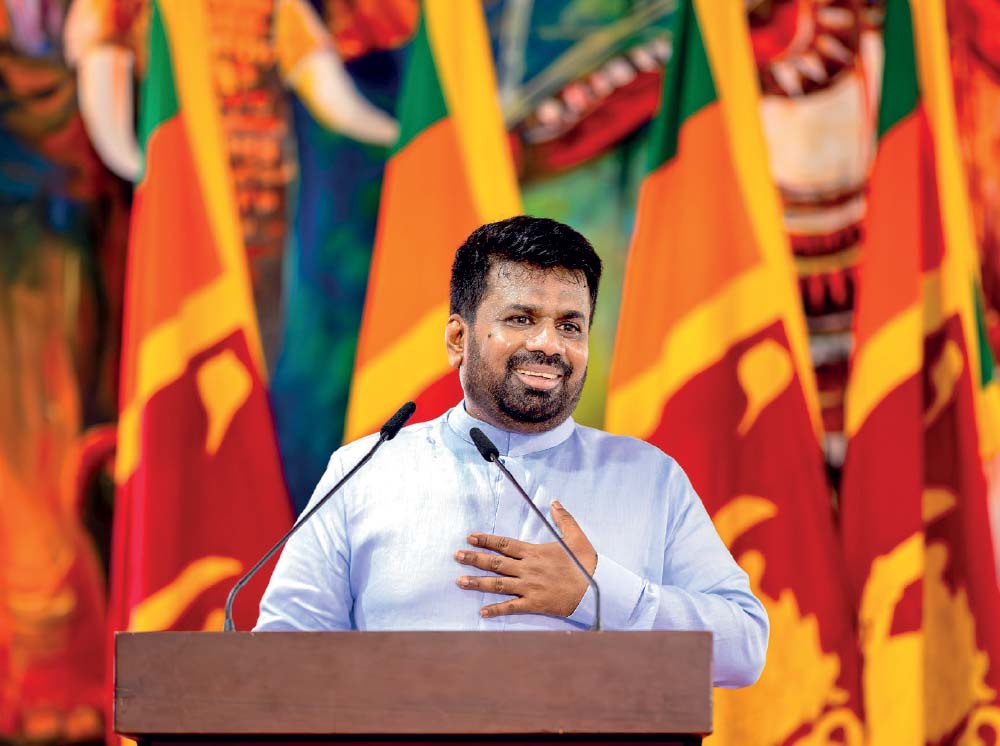
President Anura Kumara Dissanayake
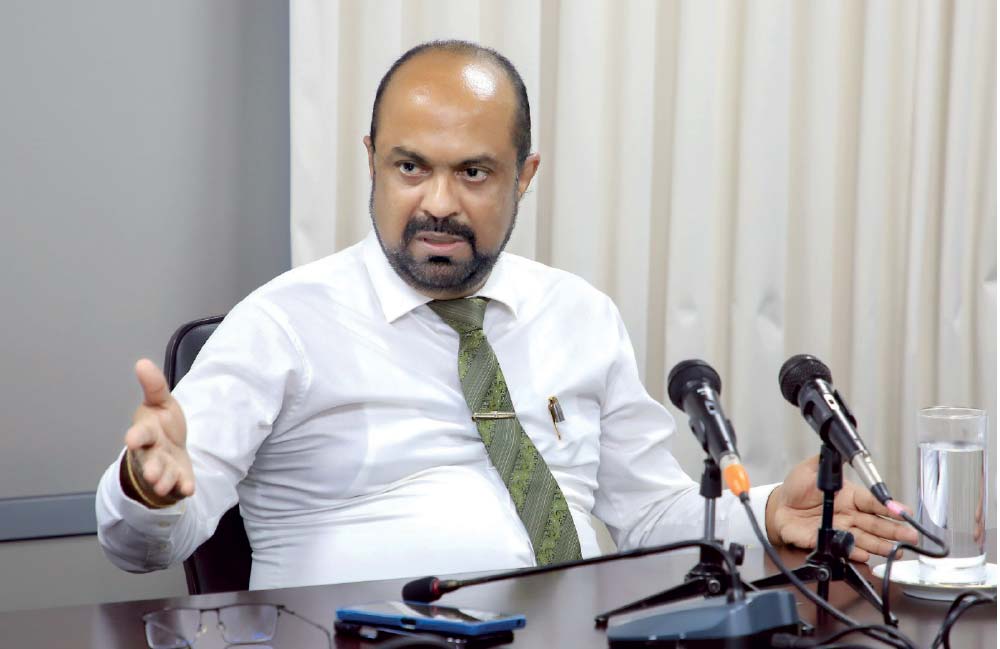
Energy Minister Kumara Jayakody
— John F. Kennedy —
 Under the leadership of Anura Kumara Dissanayake, the administration has consistently projected itself as a break from the past—a force committed to clean governance and institutional reform
Introduction: A mandate against corruption
The Government led by Anura Kumara Dissanayake came to power on a clear and uncompromising promise: to eradicate fraud and corruption that had long functioned as a structural cancer within Sri Lanka’s political economy. This was not merely an electoral slogan but a defining moral and political commitment—one that resonated deeply with a public fatigued by decades of institutional decay, rent-seeking, and governance failures.
In this context, every action, decision, and response by the Government is inevitably measured against that central pledge. The credibility of the administration rests not only on policy outcomes but also on its ability to uphold principles of transparency, accountability, and institutional integrity. Any deviation—real or perceived—therefore carries consequences that extend beyond individual actors to the legitimacy of the entire governing project.
It is within this broader framework that the resignation of the Energy Minister Kumara Jayakody must be understood—not as an isolated event, but as a test case for the Government’s anti-corruption credentials.
A political milestone
The resignation of Kumara Jayakody marks a significant political milestone. He is the first high-profile Cabinet minister in the current administration to step down amid allegations of fraud and corruption. This alone elevates the episode beyond routine political controversy.
Importantly, his resignation follows a no-confidence motion in Parliament that ultimately failed. This sequence is critical. On the one hand, parliamentary processes did not find sufficient grounds to remove him. On the other hand, political pressure and public scrutiny remained sufficiently intense to compel his resignation.
This duality—formal survival but political withdrawal—highlights a deeper tension between legal thresholds and political accountability. It raises a fundamental question: should accountability be determined strictly through institutional procedures, or does public trust impose a higher standard?
In stepping down, Jayakody appears to acknowledge that the legitimacy of governance depends not only on technical innocence but also on the perception of integrity.
A Government elected on a platform of systemic reform must ultimately rely on institutions, not individuals, to deliver accountability
The language of conscience
At the heart of Jayakody’s statement lies a powerful and culturally resonant phrase: “හර්ද සාක්ෂියට එකඟව” (“in accordance with my conscience”). This is not a casual expression. It is a deliberate moral invocation—one that seeks to anchor his position in personal integrity rather than procedural defence.
In political communication, language matters profoundly. By foregrounding “conscience,” Jayakody shifts the terrain of debate. Instead of engaging primarily with allegations, evidence, or procedural correctness, he appeals to an internal moral compass as the ultimate arbiter of his actions. This means he leaves allegations, evidence, or procedural correctness for the Presidential Commission.
This is significant for two reasons. First, it humanises the political actor, presenting him not as a bureaucratic functionary but as an individual guided by ethical principles. Second, it introduces a subjective dimension into what is otherwise expected to be an objective institutional process. However, while morally compelling, such an appeal also raises important analytical questions about the role and limits of personal conscience in public office.
Fact vs. subjectivity
From an analytical standpoint, it is essential to distinguish between fact and subjective assertion. Jayakody’s invocation of conscience falls squarely within the latter category.
A statement grounded in conscience reflects an internal judgment—it conveys what the individual believes to be true. However, it does not constitute independently verifiable evidence. It neither confirms nor disproves allegations; rather, it positions the speaker’s moral certainty as a form of defence.
This distinction is critical in the context of public accountability. Governance systems are designed precisely because individual perceptions—however sincere—are insufficient as mechanisms of verification. Institutions such as the proposed Presidential Commission exist to establish facts through evidence, due process, and transparent inquiry. Therefore, while Jayakody’s statement may carry moral weight, it does not—and cannot—substitute for objective validation.
Defence and justification
The appeal to conscience functions simultaneously as both a defence and a justification.
As a defence, it signals that the minister believes he has acted in good faith. The implicit message is clear: “I did not knowingly engage in wrongdoing.” This is an important distinction. Good faith, however, is not equivalent to the absence of wrongdoing. Administrative failures, systemic weaknesses, or even negligence can occur without malicious intent. The Presidential Commission will look into the above so that the public will be convinced of the truth.
As a justification, the invocation of conscience shifts the evaluative framework from outcomes to intentions. It suggests that actions should be judged not solely by their consequences but by the ethical motivations behind them.
While this perspective has moral appeal, it sits uneasily within modern governance frameworks, which prioritise accountability based on measurable outcomes and procedural compliance. In public administration, intentions matter—but they do not absolve responsibility.
Allegations and counter-claims
The controversy surrounding the coal procurement process adds further complexity. Allegations of fraud and corruption have been raised within the political arena, particularly by Opposition actors. These claims, by their very nature, demand rigorous investigation and substantiation.
At the same time, the Government—through Minister Vijitha Herath—has categorically rejected allegations of fraud while acknowledging that the imported coal was of substandard quality.
This dual position is analytically significant. It separates criminal culpability from administrative deficiency. By denying fraud but admitting quality issues, the Government implicitly concedes that while there may not have been intentional wrongdoing, there were failures in procurement standards, oversight, or quality control. In short, it is an institutional failure in procurement that I emphasised in my article “When Procurement Fails, The Nation Pays: The Lanka Coal Company Crisis and Its Economic Consequences.”( https://www.colombotelegraph.com/index.php/when-procurement-fails-the-nation-pays-the-lanka-coal-company-crisis-its-economic-consequences/ ). Such a position, while defensible, does not eliminate accountability. Substandard outcomes—particularly in critical sectors like energy—carry economic and public costs. They demand explanation, correction, and, where necessary, responsibility.
The broader implications of this episode extend beyond the individuals involved. It serves as a test of the Government’s commitment to its anti-corruption mandate. In this context, the role and leadership of President Anura Kumara Dissanayake stand out as particularly decisive and institutionally significant. His governance approach reflects a firm insistence that allegations must be addressed through formal mechanisms rather than political shielding
Political positioning
Jayakody’s reliance on “conscience” must also be understood as a form of political positioning.
By invoking moral integrity, he aligns himself with the broader ethical narrative of the Government. Under the leadership of Anura Kumara Dissanayake, the administration has consistently projected itself as a break from the past—a force committed to clean governance and institutional reform.
In this context, Jayakody’s statement signals continuity rather than divergence, which is vitally important. It suggests that even in the face of allegations, he remains morally consistent with the Government’s foundational principles.
However, this positioning carries a paradox. While it reinforces the moral narrative, it also shifts the focus away from institutional accountability and toward individual integrity, as I noted in the article mentioned above. This creates a tension: a Government elected on a platform of systemic reform must ultimately rely on institutions, not individuals, to deliver accountability.
Burden on the Opposition and vital opportunity
The role of the Opposition in this context is equally critical. Allegations made in Parliament or public discourse carry weight, but they must ultimately be substantiated through evidence. So this is a massive opportunity.
The proposed Presidential Commission of Inquiry represents the appropriate institutional mechanism for this process. It provides a structured, legally grounded platform for examining claims, evaluating evidence, and arriving at conclusions.
For the Opposition, this is a moment of responsibility. Allegations of fraud and corruption must move from political rhetoric to demonstrable public evidence. Failure to do so risks undermining credibility and diluting the seriousness of anti-corruption discourse. The responsibility is therefore not routine but substantial and consequential. Any deviation from evidence-based substantiation, or failure to substantiate such allegations when formally challenged, would carry serious political costs. It would directly weaken public confidence in the Opposition’s credibility and judgment. At this juncture, such a loss of trust would be particularly damaging, as it erodes the Opposition’s moral authority to speak on governance and accountability. Ultimately, the inability to substantiate claims would not only weaken individual arguments but also diminish the broader public perception of the Opposition as a reliable watchdog of power. At the same time, the existence of allegations—whether proven or not—reinforces the need for robust investigative processes. Accountability is not a partisan issue; it is a systemic requirement.
Institutional accountability vs. moral authority
At its core, this episode raises a fundamental question about the nature of accountability in democratic governance: Can moral authority substitute for institutional accountability?
The answer, in principle, must be no.
Conscience is inherently subjective. It varies from individual to individual and cannot be externally verified. Institutions such as the Lanka Coal Company, by contrast, are designed to provide objective, consistent, and transparent mechanisms for determining truth.
This does not diminish the value of personal integrity. On the contrary, ethical leadership is essential. However, in the public sphere, integrity must be complemented—and ultimately validated—by institutional processes or by its leadership. A system that relies solely on individual conscience risks arbitrariness and inconsistency. A system that relies solely on institutions risks rigidity and detachment. Effective governance requires a balance—but one in which institutions remain the final arbiter.
The significance of resignation
Jayakody’s resignation is itself a noteworthy development and hence an exception. It signals a high-quality character as well as an unusual willingness to step aside at the height of political pressure rather than resist institutional scrutiny. In a political culture where ministers often cling to office until formal findings are reached, this act sets a different standard of political responsibility. It also reflects an implicit recognition that public trust can be as consequential as a legal determination. However, resignation alone does not settle questions of accountability; it merely creates space for a more rigorous and transparent examination of the facts. In many political contexts, resignation is resisted until formal guilt is established. Here, the decision to step aside—despite surviving a no-confidence motion—signals recognition of the importance of perception, trust, and institutional integrity.
By resigning, he removes any potential conflict between his official position and the investigative process. This can be interpreted as an effort to protect the credibility of both the inquiry and the Government. It strengthens the institutional perception that investigations can proceed without executive influence or perceived interference. Such a step also helps safeguard the integrity of the decision-making process, ensuring that outcomes are judged on evidence rather than political proximity. In doing so, it reinforces the principle that public office holders must not occupy positions that could compromise investigative neutrality. Ultimately, this move sets a precedent where accountability is not only declared but also structurally enabled through voluntary withdrawal from authority. However, resignation is not resolution. It is a procedural step that enables investigation—not a substitute for it.
For the Opposition, this is a moment of responsibility. Allegations of fraud and corruption must move from political rhetoric to demonstrable public evidence. Failure to do so risks undermining credibility and diluting the seriousness of anti-corruption discourse. The responsibility is therefore not routine but substantial and consequential
Implications for governance and political leadership
The broader implications of this episode extend beyond the individuals involved. It serves as a test of the Government’s commitment to its anti-corruption mandate. In this context, the role and leadership of President Anura Kumara Dissanayake stand out as particularly decisive and institutionally significant. His governance approach reflects a firm insistence that allegations must be addressed through formal mechanisms rather than political shielding. The acceptance and enabling of a minister’s resignation under scrutiny demonstrates a clear signal of zero tolerance toward reputational risk within the cabinet. This response also reinforces the perception of strong executive discipline, where political authority is exercised to protect institutional credibility rather than individual positions. Ultimately, this episode underscores a leadership style that prioritises systemic integrity over political convenience.
If the investigative process is conducted transparently, independently, and efficiently, it will reinforce public confidence. If it is delayed, diluted, or politicised, it risks undermining the very principles the Government seeks to uphold.
Moreover, the case highlights the importance of strengthening procurement systems, oversight mechanisms, and institutional checks. Preventing future controversies requires not only addressing current allegations but also reforming the structures that allow such issues to arise.
Summary and conclusion
Kumara Jayakody’s resignation marks a moment of both challenge and opportunity for Sri Lanka’s governance framework. It is not merely an administrative transition but a stress test of the country’s broader anti-corruption architecture and its ability to translate political promises into institutional outcomes.
His appeal to conscience is morally assertive and politically resonant. It reflects a personal conviction of integrity and aligns with the ethical narrative of the Government which is vitally important. However, it remains a subjective assertion—one that cannot substitute for objective verification or institutional proof. In governance terms, conscience may explain intent, but it cannot determine accountability.
The Government’s response, including the categorical denial of fraud while acknowledging issues related to substandard coal, introduces a nuanced but complex narrative. It distinguishes between criminal intent and administrative failure, but also leaves important questions of oversight, procurement integrity, and systemic control open to scrutiny. Within this framework, the Opposition bears a heightened responsibility to substantiate its claims through credible, verifiable evidence rather than political assertion alone. Failure to do so would risk eroding its own credibility at a critical juncture in public discourse.
Importantly, the leadership role of President Anura Kumara Dissanayake in managing this episode has been notably decisive and institutionally grounded. His handling of the resignation reflects a governance style that prioritises procedural integrity and institutional confidence over political shielding. By allowing due process to proceed without obstruction and reinforcing the principle of accountability within the executive structure, his leadership signals a strong commitment to the Government’s anti-corruption mandate. This approach strengthens public perception that governance decisions are being guided by systemic principles rather than individual protection.
The resignation itself, therefore, becomes more than an individual act—it reflects an emerging standard of political responsibility where stepping aside is used to preserve institutional credibility and investigative independence.
Ultimately, the resolution of this issue must rest on robust institutional processes rather than personal declarations or political narratives. Conscience is not evidence. Moral conviction is not accountability. In a system committed to eradicating corruption, truth must be established not by assertion, but by proof.
The enduring test for this Government is clear: whether it can convert its strong moral mandate into a durable institutional reality, and whether leadership—particularly at the highest level—can consistently ensure that principles of transparency and accountability are not only declared, but demonstrably upheld in practice.
(The author, among many, served as the Special Advisor to the Office of the President of Namibia from 2006 to 2012 and was a Senior Consultant with the UNDP for 20 years. He was a Senior Economist with the Central Bank of Sri Lanka (1972-1993). He can be reached via [email protected])




