Saturday Sep 19, 2026
Saturday Sep 19, 2026
Saturday, 19 September 2026 00:00 - - {{hitsCtrl.values.hits}}
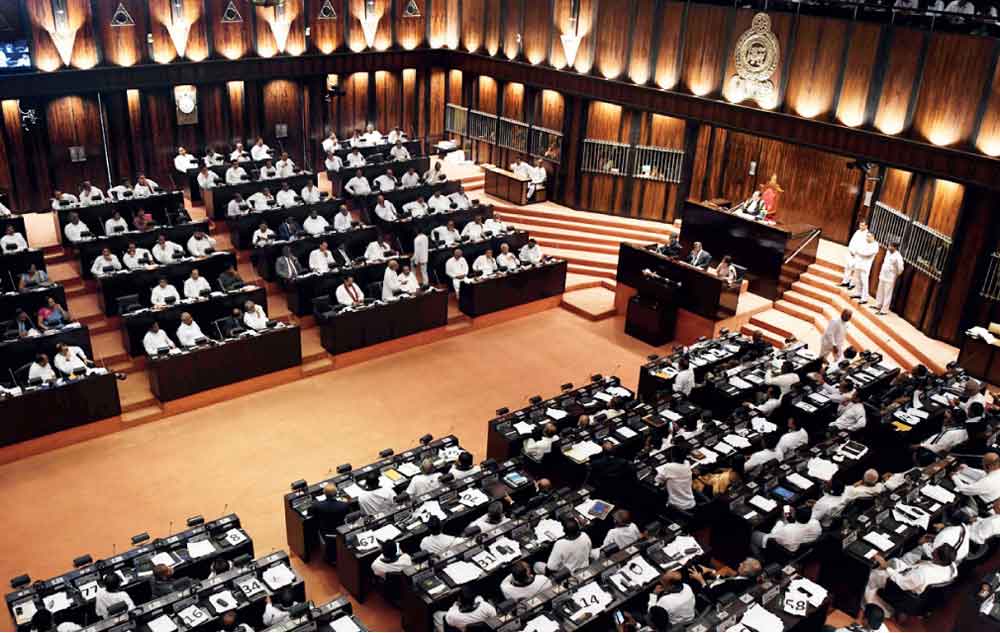
Parliament of Sri Lanka
The NPP Government is in a very commanding position with an over whelming mandate, hence this opportunity should be fully utilised towards the introduction of an effective electoral system in electing the representatives of the people. It is the hope and aspiration of a majority of the voters that a suitable and effective electoral system reflecting the effective will of the people is introduced
 It has been reported a Parliamentary Select Committee towards reviewing the existing electoral process has been appointed and the citizens have been invited to submit their proposals. This has prompted me to share my thoughts as a keen follower of the political developments of our country. I have in the past written extensively, advocating the necessity to amend our Parliamentary Electoral System which, in my view needs to be reviewed towards effective representation of the will of the people.
At this opportune moment I wish to highlight some of the flaws in our present system of electing representatives to the Parliament under the PR System. I cherish the numerous opportunities I had decades ago in visiting and most importantly, listening to numerous interesting Parliamentary debates of reputed intellectual politicians of yesteryears. One has to read the Hansard of yesteryears which will bear testimony to their valuable contributions.
The last Presidential election followed by the Parliamentary Elections held in November, 2024, were the most peaceful election ever witnessed by the country, notably in the absence of a permanent IGP. There were no cutouts, no posters etc., unlike in previous elections where the aforesaid were the order of the day. The country was at complete peace, people moved feely with their day to day activities during and after the elections, particularly on the day the counting was in progress with the emergence of a new President and a new government elected with a five sixth majority with a vast number of new faces and the defeat of several veterans. We, the citizens of the country, should be proud of the pleasant atmosphere which prevailed after the elections.
Notable flaws in the PR system
Under the prevailing PR System, the procedure in electing a representative, leads candidates from one and the same party firing shots at each other to obtain the preferential votes which ultimately decides the winner. Candidates are compelled to compete not only with their rivals in the opposing parties; they have to compete with rivals within their own party as well which is not a healthy phenomenon.
Individuals’ desires to enter Parliament and serve the people are compelled to campaign not only in their chosen electorate as the candidate; they are compelled to campaign in the entire District within which their electorate is located which is a major challenge and a costly exercise.
There were numerous instances in the past of such organisers, even though they won their electorates, couldn’t gain entry to Parliament due to their inability to win the confidence of the voters of the entire District. A few even though they failed to win the designated electorate, were able to gain entry due to their ability to win the entire District. In certain cases some electorates were fortunate to have more than one member to represent them while a few others were deprived of any representation. This is a major flaw which needs to be rectified towards an effective system of representation. The candidates who possess the ability to conduct an effective marketing campaign and possess the money power ultimately gain entry to the Parliament. In other words it ultimately boils down to one’s ability to conduct an effective marketing campaign, spend lavishly and such campaigns needless to state are costly.
Introduction of the PR System
The PR system deprives intellectuals without any money power to enter Parliament. Millions are expended by candidates for their campaigns.
At all Parliamentary elections instances of interparty clashes for preferential votes, a compelling necessity were witnessed.
It is no exaggeration to state based on the interactions with various people, it appears a large majority of the voting population were unaware of the candidates competing at elections; apart from a handful able to gain publicity in marketing their preferential number.
Popular candidates at times are not successful due to their inability to effectively market their preferential number which is a major deciding factor. A large percentage of the voters go to the polling booths, ignorant of the candidates in the fray. This is one of the reasons which compels the candidates to canvas their numbers right up to the polling booth in violation of the election law.
The complication of the PR System deprives the voters of knowing their representative from their electorate. Even, I have no idea of the representative of my electorate as there are many elected from the District and some of them do not even reside in the electorate hence they are not approachable.
It has been revealed a large number of votes were rejected at the Parliamentary elections. This may be due to lack of understanding of the complicated electoral process. The format of the ballot paper accommodating numerous symbols and the preferential numbers of the candidates confuses the voters.
Popular candidates respected in their chosen electorates at times fail to enter Parliament even though they win their electorates, due to their inability to win the entire District.
Deprives the entry of Independent Candidates
The 1978 Constitution was a complete departure from the previous electoral process of electing direct representatives through the electorates(First past post system). Prior to 1978 candidates from recognised political parties and even independent candidates were able to contest in any electorate of their choice. There were a few well known and popular Members of Parliament, not aligned to any political party contested as independents and won their electorates due to their popularity. They immensely contributed in sharing their knowledge and were active participants of several important Parliamentary debates. In the past electoral system there were a few multi-member constituencies in certain electorates, to ensure the representation of the minorities. Colombo South, Colombo Central, Nuwara-Eliya – Maskeliya and Batticaloa, and Pottuvil are some of the constituencies which come to my mind.
The PR system deprives the entry of any independent candidates unless they form a group and file in their nominations collectively. The success of such independent groups are remote and this has completely shut the door for the entry of any such candidate unless they are aligned to a registered political party. It is to be noted, there were no independent members of Parliament after the introduction of the 1978 Constitution.
Proportional Representation (PR)
The then UNP Government of President J.R. Jayawardene introduced the PR system with the sole aim of retaining its power base. The party consistently polled more votes in every Parliamentary election even though they couldn’t win a majority of seats which deprived them the luxury of forming a government on few instances. The then framers, it was revealed, felt the introduction of a PR system will ensure their uninterpreted continuity of power. However, they were proved wrong at successive elections, most importantly at the last elections where the UNP couldn’t even win a single seat electorally. The only exception was Jeevan Thondaman of the CWC who contested under the UNP.
1978 Constitution and the National List
The existing electoral system provides for the accommodation of members through the National List, based on the overall percentage of votes obtained island wide by each party. This provides for the appointment of 29 members, while 196 are elected under the PR System. All parties are entitled to appoint members based on their overall performance. Many Civil Organisations have been consistently appealing to the party leaders to refrain from appointing defeated candidates through the National List. President Maithirpala Sirisena during his Presidency, towards strengthening his powerbase within the party and against the principles of good Governance appointed several defeated candidates through the National List; some of them were even rewarded with Ministerial responsibilities. Perhaps Sri Lanka may be the only country in the World where even candidates rejected by the people could still enter the Parliament. The framers of the constitution envisaged the introduction of the National list mainly to accommodate intellectuals and technocrats not in a position to contest and win at an election as the country could immensely benefit from their expertise.
The original purpose for which this was introduced does not appear to have been fully achieved. The current limitation of 29 members under the National List needs to be re-examined or it will be feasible to scrap it completely which will be welcomed by all.
Constitution of 1972 and the abolition of appointed MPs
At this stage let me recall the Constitution of 1972 introduced by the then United Front Government of Sirimavo Bandaranayke completely abolished the National List or the “Appointed MPs” as they were called then. All candidates had to enter Parliament through the will of the people. Prior to the 1972 Constitution there was a provision to appoint MPs under the clause of “Appointed MPs” which was restricted to only six members reserved for certain communities. All appointed members of Parliament were compelled to contest at the 1977 general elections and all of them who contested lost.
It’s undesirable for defeated candidates to stake any claim through the National List. They should have the courage and conviction to bow to the will of the people. Needless to say Parliament is the Temple of Democracy.
Parliamentary vacancies and By-elections
Prior to the introduction of the PR System, whenever a vacancy occurred in Parliament, the voters had the opportunity of electing a new member of their choice at a by- election. In several countries such vacancies are filled by having by- elections for a vacant seat. The PR system deprived this opportunity to the people.
The incumbent government is deprived of testing the public opinion at regular intervals whenever an opportunity arises due to death, resignation or a member forfeiting the seat consequent to an election petition. Previously, all vacancies were filled after a by-election. This gave an opportunity to the people to give a message to the Government and the Opposition on several vital issues affecting not only the particular electorate; the entire country. Such an exercise will be a valuable tool for the Government and opposition to ascertain the acceptability of their direction.
It’s noteworthy to recall two such by elections, consequent to major resignations in our Parliamentary history. J.R. Jayewardene, the then Leader of the Opposition and first MP for Colombo South resigned his seat in protest against the extension of the life of the Parliament by the then Government of Sirimavo Bandaranayke. The other was the resignation of S.J.V. Chelvanayakam, the then Leader of the Federal Party resigning his Kankesanturai seat in protest against the introduction of the 1972 Constitution. Both the aforesaid personalities were re-elected with wider margins at the by-elections in spite of the massive propaganda of the then powerful Government.
The replacement of this system by PR resulted in a situation where such vacancies are now filled by the candidates defeated at the previous elections, gaining entry to Parliament based on their preferential votes polled at the last elections. Individuals, defeated at the previous elections, become Members of Parliament overnight. This deprives the voters an opportunity to elect a new representative of their choice. It will be desirable to give due consideration to the re-introduction of by-elections.
Re-introduction of the First Past post system
In some of my previous articles I have advocated the re-introduction of the “First Past post system”(FPP) replacing the PR (Proportional representation) System. It is the view of a vast majority of the people that the current electoral system is not in line with effective representation of the people. This has been stressed by the NPP Government which has recognised the need for a new Parliamentary Electoral system with the true reflection of the will of the people.
The re-introduction of the “First past post system” in which the people elect their representatives’ electorate wise is a compelling necessity towards the entry of personalities of unblemished character, integrity etc. It will also provide the voters with the representatives they deserve. The NPP wave brought in a large number of Professionals to the current Parliament. Such personalities could effectively contribute towards the Governance by sharing their knowledge and expertise for the greater benefit of the country.
Anti-Defection Law
Serious consideration should be given towards strengthening the existing “Anti Defection Law” preventing members from crossing over to other parties. Such cross overs should automatically result in forfeiting their seats. This will also ensure the stability of a Government. Fortunately the NPP wave prevented any such crossovers in the current Parliament.
Presidential election and nomination of candidates
The NPP Manifesto pledges to abolish the Executive Presidency. However, if the Executive Presidency is retained under the proposed new constitution attention should be made towards the eligibility criteria of the candidates. At the last Presidential election, there were candidates from various parties and colors. Most of them were well aware, their prospects of victory were remote. Some filed in their nominations as proxies for the major candidates while some others may have filed in their nomination with the aim of gaining cheap publicity, free air time etc. According to the Media reports this cost the country and the Election Commission substantial amount. It also contributed to confusing the voters in identifying their preferred candidate from the long ballot paper.
Consideration should be given towards amending the eligibility criteria to make it mandatory for a candidate to at least obtain a stipulated minimum number of votes from the total votes polled. The deposit should be increased substantially. This will ensure the entry of only serious candidates. This will be a blessing not only for the Election Commission, it will also enable the voters to select their preferred candidate without any difficulty.
Introduction of Electronic Voting Machines(EVM)
Time is now opportune in the era of Digitalisation to consider utilising Technological innovations towards the conduct of elections particularly in casting and counting of votes. In comparison to the Pencil and paper system which is in existence at present. Effective introduction of EVM will ensure the voice of the people are clearly heard and there is no room for any manipulation. This will minimise the massive cost incurred at present and will eliminate all forms of manipulation in tampering with the choice of the voters.
Expenditure on elections
Massive amounts were expended at the last Presidential and Parliamentary elections followed by the Local Government elections. The Provincial Council Election is due anytime now, all of which results in the expenditure of a substantial sum. Needless to say Democracy is a costly exercise, hence elections should be held on the due dates to ascertain the will of the people for which cost effective measures should be in place.
Elections after elections
It will be desirable if consideration is made in exploring the possibility and a mechanism to have all three major elections on one and the same day (i.e., the Presidential, Parliamentary and Provincial Councils or Local Government).
Not only could billions of rupees be saved, it will ensure political stability and the policy makers could concentrate on their mandate without wasting their precious time and energy on election campaigns. This will not be a complicated process compared to the PR system which confuses the voters. However, the feasibility of such an exercise should be carefully examined.
Voting Rights for overseas Sri Lankans
The NPP Manifesto pledges to safeguard the voting rights of overseas Sri Lankans. This is a welcome move as millions of rupees are remitted to the country by the overseas Sri Lankans particularly from the Middle Eastern countries. They have made tremendous sacrifices to be away from their families, hence they should be given an opportunity to participate in the electoral process in electing their representatives and their voices should be heard.
This could also strengthen the existing bonds of the overseas Sri Lankans towards greater investment and the return of skilled people to the country. It has been reported that over 141 countries around the World allow their non-resident citizens to vote.
Impact of indelible ink
It has been reported the Government has decided to remove the legal provision on marking the voters with indelible ink during elections. This proposal has been welcomed by the election monitors and most importantly the Election Commission has stated it was they who made the initial recommendation. This proposal, if implemented will result in substantial savings for the Government by way of administrative expenditure and will also result in an expeditious process of the voting. Since the production of NIC is now compulsory, impersonation, it has been stated, is not a possibility.
Expectation
The NPP Government is in a very commanding position with an over whelming mandate, hence this opportunity should be fully utilised towards the introduction of an effective electoral system in electing the representatives of the people.
It is the hope and aspiration of a majority of the voters that a suitable and effective Electoral system reflecting the effective will of the people is introduced which is a compelling necessity and the need of the hour.




