Saturday Oct 03, 2026
Saturday Oct 03, 2026
Saturday, 3 October 2026 00:00 - - {{hitsCtrl.values.hits}}
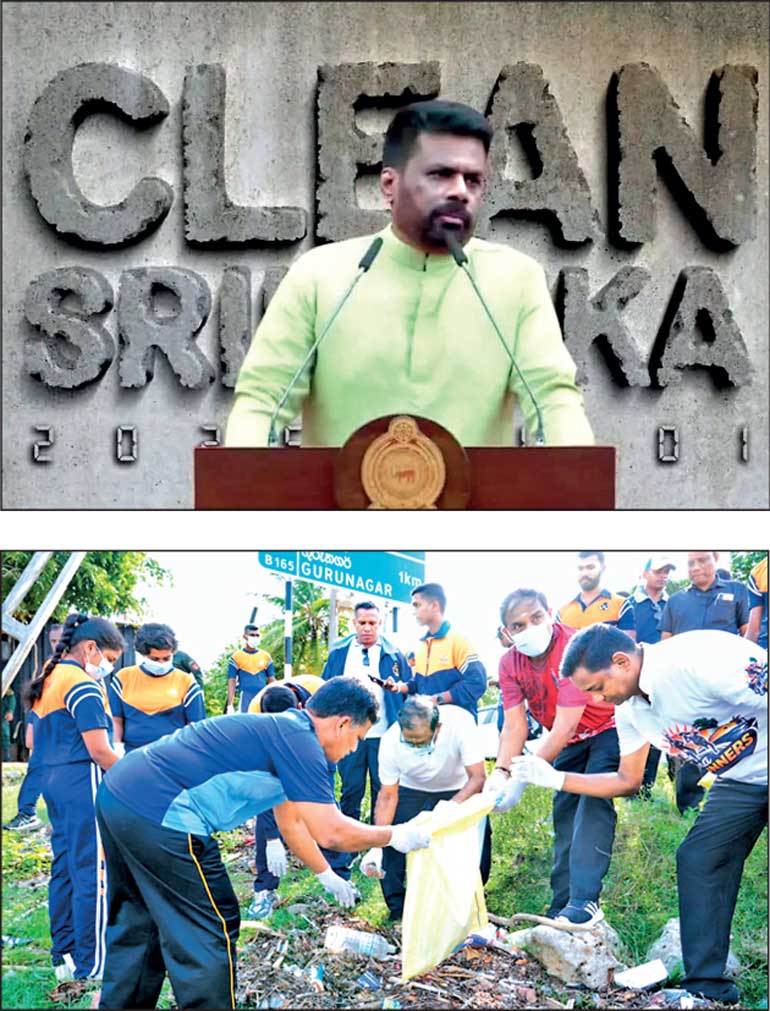
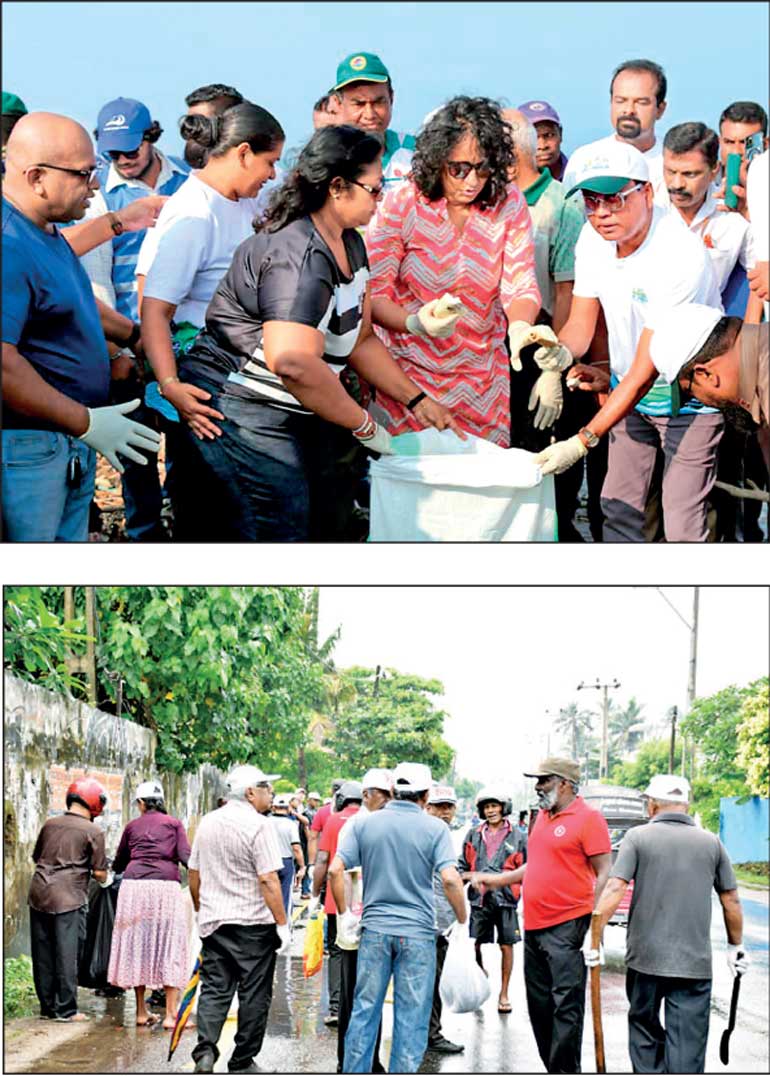
 A clean country is a reflection of its people and their thinking. Sociologists, neuroscientists and environmental psychologists have explored how our physical surroundings can function as an external reflection of our internal states. When a community or an individual prioritises cleanliness and order, it may indicate a sense of discipline, collective respect and a commitment to long-term wellbeing. The question, therefore, is whether the current level of cleanliness in our neighborhoods reflects the ‘internal state’ of ourselves.
This article does not attempt to address the political issues surrounding the ‘Clean Sri Lanka’ campaign. Instead, it asks a few questions. Has the initiative changed behavior, or mainly created visibility? Has it addressed symptoms, or the systems producing them? Is ‘cleanliness’ being treated as a campaign, or as a change in social norms and institutional responsibility? What happens when the political spotlight moves elsewhere? And perhaps the most important question: who is actually batting?
The cricketing metaphor is deliberate. Cricket is deeply rooted in the Sri Lankan psyche. It is also an English game that became embedded in our culture during the post-colonial era. It therefore provides a familiar language through which to examine a national challenge.
Sri Lankans will remember the post-war era of Colombo beautification, which sought to address fundamental issues while convincing the public of the importance of sustaining a clean environment. The deployment of resources to achieve specific tasks, together with continued supervision and maintenance, played an important role in transforming the visibly different landscape. Discipline, maintenance and continued attention to behavioural aspects were integral to that transformation.
It demonstrated that such transformation requires an energetic and commanding drive, together with unwavering standards for both the public and institutions. Foreigners, tourists and Sri Lankans alike embraced the change. Yet standards subsequently deteriorated, and we are still struggling to return to those levels. Today, we find ourselves attempting to re-ignite the momentum without essentially having a comprehensive and cohesive strategy and institutional structure to support it.
‘Clean Sri Lanka’ can therefore be viewed through several levels of the cricketing metaphor: Who is actually batting? Who has been bowled out? And who is blaming the pitch and the umpires?
Government is batting — launching programs, allocating resources, setting targets and demonstrating political commitment.
Institutions are batting — converting policy into enforcement through provincial councils, Pradeshiya Sabhas and municipal services; managing waste, human resources and field operations; maintaining fleets; handling procurement; ensuring accountability; and, perhaps most importantly, providing continuity.
Citizens are batting — but not all in the same way. Some continue to litter in public spaces, across both affluent and less-affluent communities. Others are beginning to change everyday habits, from littering and waste disposal to their behavior in public spaces. Garbage continues to find its way into abandoned lands, public drains, gutters and other inappropriate places.
Businesses are batting — by taking responsibility for the environmental and social consequences of production and consumption. Some do; some do not. The pollution of Beira Lake through waste discharged from surrounding buildings provides one example of how institutional and commercial responsibility intersect with the cleanliness of the wider environment.
The political system is batting — by finding resources, monitoring institutions and their leadership, and determining whether an initiative can survive beyond political cycles.
And perhaps,
Society itself is the scoreboard — revealing whether anything has actually changed. Have we changed how we act? Or are we merely continuing to change what is visible?
People can be ‘bowled out’ by the consequences of their own habits as well as institutional inefficiency. Some blame the pitch; others take the umpires to task. The continuing escalation of dengue and its spread provides a familiar example. So does the persistent experience of unpleasant smells and polluted air in public spaces. These are not simply individual problems or institutional problems. They reveal the interaction between behavior, systems and accountability.
This provides a useful distinction between a ‘visible’ initiative and a ‘transformative’ initiative.
Social-media campaigns and highly visible public initiatives can create impressive images, public participation and short-lived enthusiasm. But have they produced sustained cleanliness in our streets and public spaces? Have they changed behavior? Institutional change is much less photogenic.
Institutions require both systemic and structural change. Ultimately, they should be able to operate with minimum supervision, much like a habit that becomes part of a routine. Enforcement has a role in encouraging adoption — moving from innovators and early adopters towards the early majority and, eventually, a wider social norm.
The enforcement and institutionalisation of new practices can then cascade down to households, communities and neighbourhoods. helping ensure that changed behavior continues even after the campaign disappears. That is when sustainability begins to become a culture rather than a campaign — when transformation becomes visible not through publicity, but through everyday behaviour.
Perhaps ‘Clean Sri Lanka’ has not been able to focus adequately on this core domain because of the breadth of its other features and objectives, which may have distracted from the fundamental importance of establishing a clean environment and a new culture of cleanliness.
Historically, many administrations have spent considerable time and energy fighting the old without building the new. Yet some of Sri Lanka’s most visible transformations came from building something new: the post-war rebuilding effort, Colombo beautification, highways, pathways, public landscapes and newer developments such as Port City. Whatever one’s view of these individual projects, they demonstrate the difference between continuously fighting what already exists and deliberately constructing what one wants to see instead.
In cricket, a team is not judged simply because it walked onto the field. It is judged by how it handles the innings: how it deploys its strategy, builds partnerships, responds to changing conditions, recovers from setbacks and, ultimately, what appears on the scoreboard.
So the question remains:
Has Clean Sri Lanka changed the game, or merely changed the scorecard?
Perhaps that is the difference between a quantitative reality and a qualitative transformation.



