Monday Oct 12, 2026
Monday Oct 12, 2026
Saturday, 9 May 2026 03:33 - - {{hitsCtrl.values.hits}}
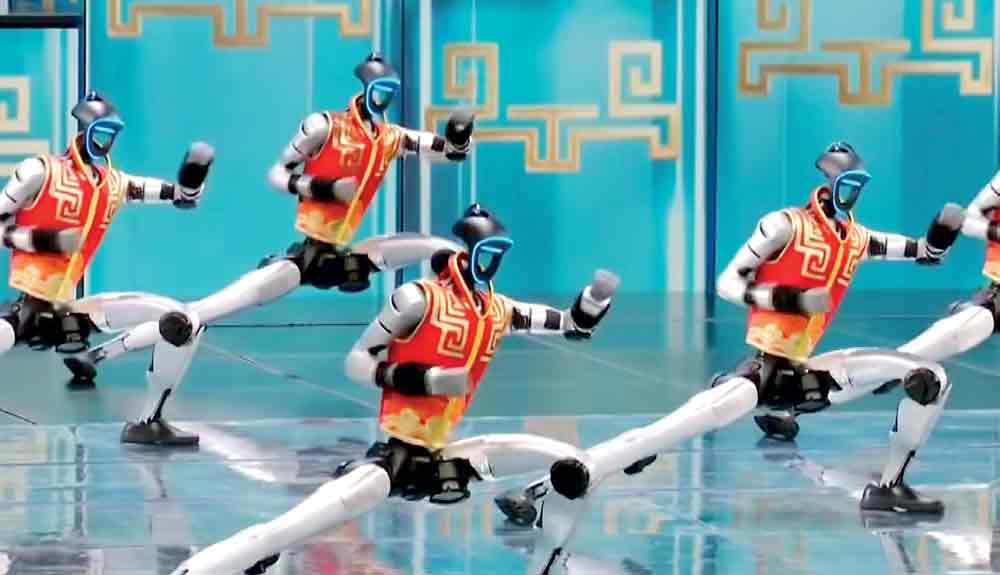
China robot CCTV show
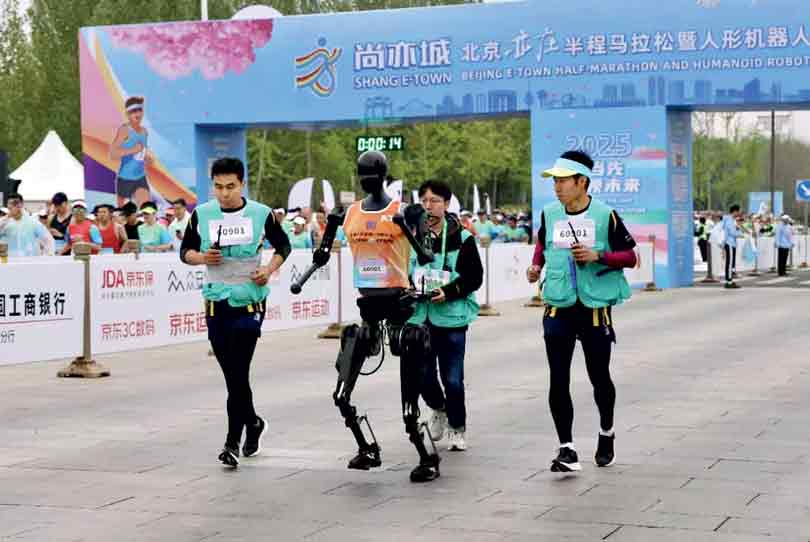
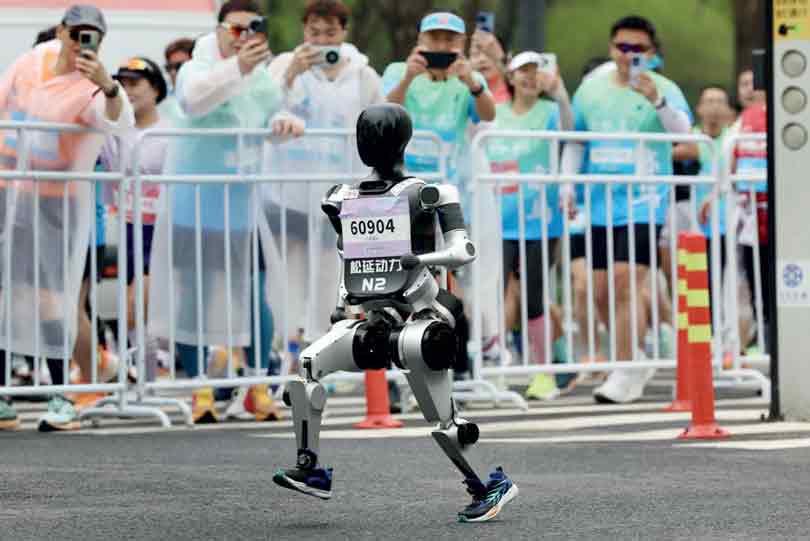
 Recently, a unique humanoid robot half-marathon was held in Beijing, where more than 100 robot teams competed alongside 12,000 human runners, drawing widespread attention from major international media. HONOR’s “Lightning” humanoid robot completed the roughly 21-kilometer (13-mile) course in 50 minutes and 26 seconds - surpassing the human half-marathon world record of 57 minutes and 20 seconds held by Ugandan athlete Jacob Kiplimo.
The progress is striking. At the same event just one year earlier, the champion humanoid robot, “Tiangong,” finished in 2 hours, 40 minutes, and 42 seconds. Cutting nearly two hours from the finishing time in a single year highlights the rapid pace of iteration in China’s robotics technology. Following the excitement generated by humanoid robots at the CCTV Spring Festival Gala earlier this year, the marathon has once again prompted a broader question: what impact will China’s advances in embodied AI have on society and global development?
Chinese innovation: Breaking bottlenecks and advancing self-reliance
The Beijing E-Town humanoid robot half-marathon offers a vivid demonstration of China’s continued technological innovation and the development of new productive forces. Progress in embodied AI and robotics has been driven by advances in independent research and development, supported by the world’s most comprehensive manufacturing ecosystem and a favorable policy environment.
According to the 2025 Humanoid Robot Yearbook published by Morgan Stanley, China has generated five times as many humanoid robot patents as the United States over the past five years. The country has also overcome key “chokepoint” constraints in core components, reducing reliance on foreign technologies and strengthening domestic capabilities.
 According to IDC, global shipments of humanoid robots reached approximately 18,000 units in 2025 - an increase of 508% year on year with China accounting for over 90% of total shipments. During the same period, China’s industrial robot exports grew by 48.7%, making it a net exporter in this sector
This progress is increasingly visible in commercialisation. Among the robots featured at the 2026 CCTV Spring Festival Gala, the localisation of core components has helped reduce costs to near the RMB 10,000 level - bringing humanoid robots closer to mass-market accessibility and, potentially, into everyday households.
Chinese practice: Expanding applications to empower society
Embodied AI is not only a technological tool but also a driver of broader societal transformation. Under the “AI Plus” initiative, robotics is being integrated across economic and social sectors, reshaping how people work and live.
The China Development Report 2025 notes that human-machine collaboration centered on intelligent robots is emerging as a new production paradigm, capable of significantly enhancing productivity. Robots are now deployed across 71 major sectors and 241 industry subcategories of the Chinese economy, increasing labor productivity by an average of 22.3%.
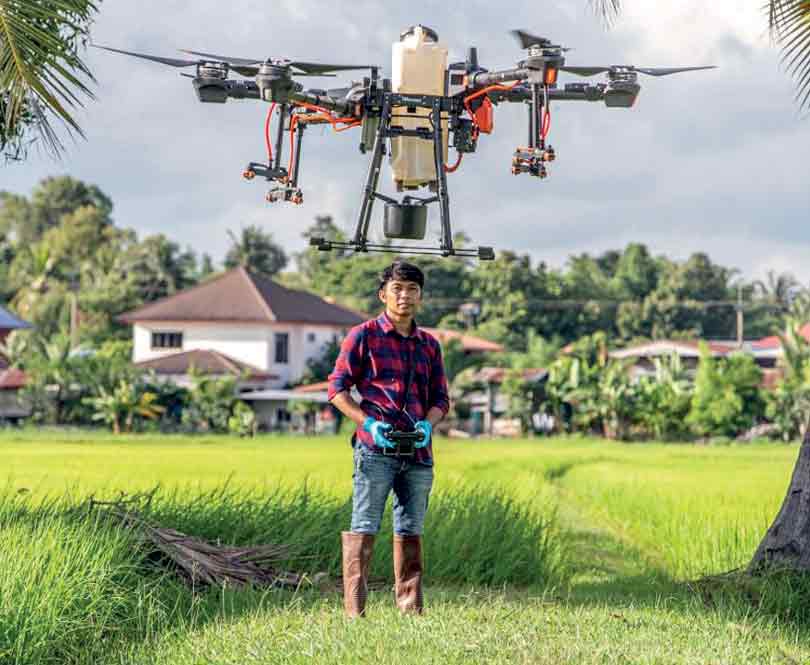
In agriculture, intelligent systems support precision sowing, fertilisation, and pest monitoring, with DJI Agriculture drones as a leading example. In households, robots are increasingly capable of performing routine tasks and providing companionship, as seen in UBTECH’s home robots
Beyond industry, embodied AI is expanding into critical and high-risk environments. Robots are increasingly used in demining, disaster response, high-altitude operations, hazardous-material handling, and extreme-weather rescue tasks that reduce risks to human life while improving operational efficiency. Looking ahead, embodied AI may also support exploration in deep sea, outer space, and polar regions.
At the same time, applications are expanding throughout everyday life. In healthcare, robotic systems assist in precision surgery, rehabilitation, and emergency response for example, the snake-arm single-port surgical robot developed by Beijing Surgerii Technology. In agriculture, intelligent systems support precision sowing, fertilisation, and pest monitoring, with DJI Agriculture drones as a leading example. In households, robots are increasingly capable of performing routine tasks and providing companionship, as seen in UBTECH’s home robots.
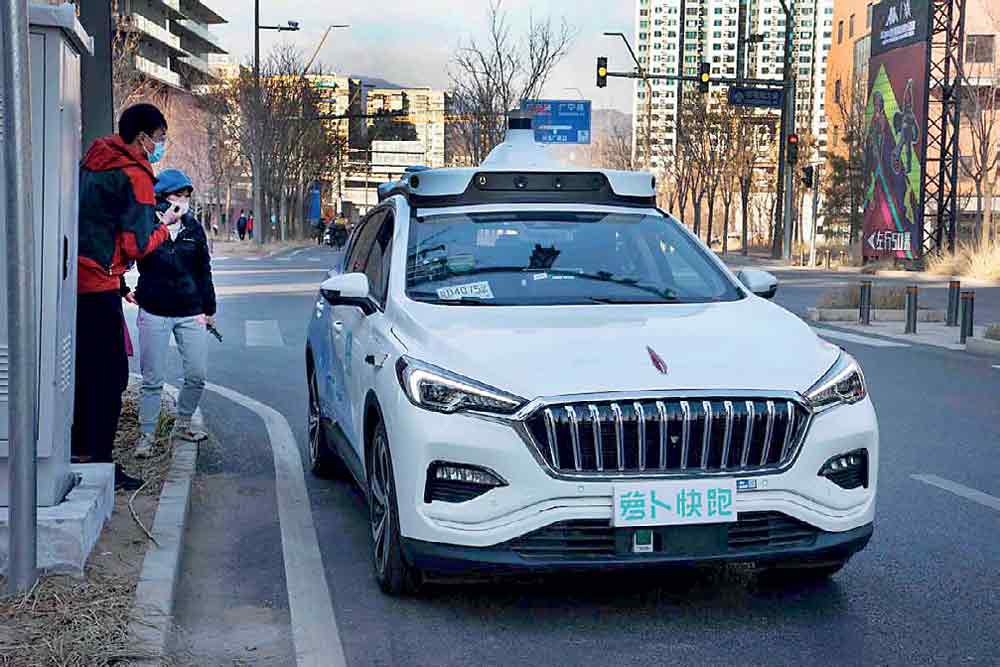
In transportation, autonomous driving technologies are improving safety and efficiency; Baidu’s Apollo Go service, for instance, now operates in multiple cities worldwide. In elderly care and disability support, robotic systems offer health monitoring, rehabilitation, and emergency assistance, easing pressure on families and public services. Additional applications are emerging in tourism, education, logistics, and service industries, such as Unitree Robotics’ robot dogs used for delivery and support tasks.
Contribution: Sharing innovation for global development
The development of embodied AI should not be confined to a small number of countries. China has consistently emphasised openness, inclusiveness, and shared benefits, promoting international cooperation to ensure that technological advances contribute to global development.
According to IDC, global shipments of humanoid robots reached approximately 18,000 units in 2025 - an increase of 508% year on year with China accounting for over 90% of total shipments. During the same period, China’s industrial robot exports grew by 48.7%, making it a net exporter in this sector.
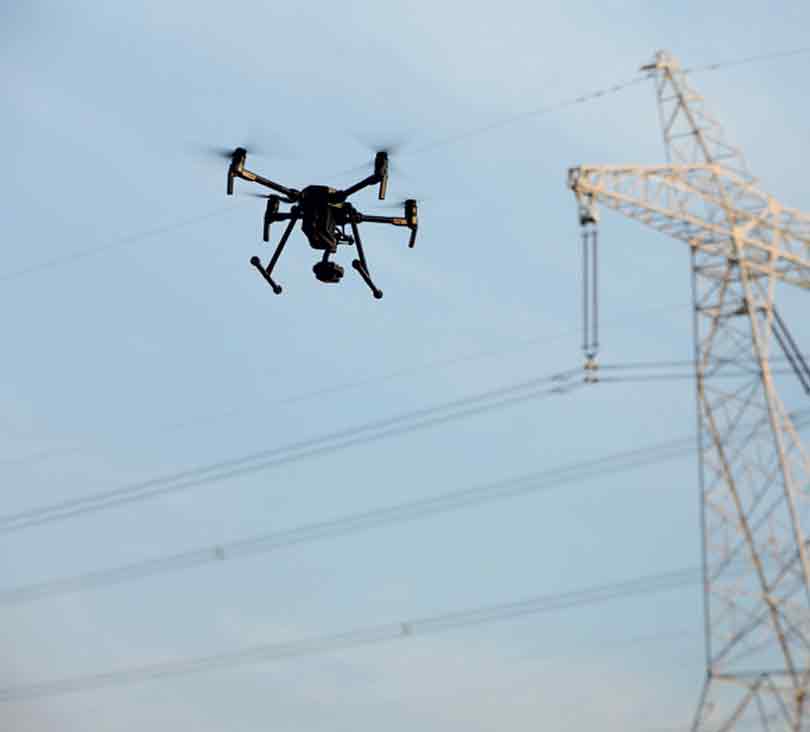
China is also actively supporting global applications of AI. The report AI from China Benefits the World (2025) highlights examples such as tumor-screening systems in Singapore, railway safety platforms in South Africa, power-grid inspection drones in Brazil, smart mining systems in Thailand, disaster-warning tools in Mongolia, and smart agriculture solutions in Cambodia.
At the governance level, China proposed the Global AI Governance Initiative in 2023, advocating a people-centered approach and the principle of “AI for good.” At the 2025 World Artificial Intelligence Conference, Premier Li Qiang emphasised openness, equitable access, and international cooperation particularly with countries of the Global South.
China has expressed its willingness to work with the international community to strengthen global governance frameworks, oppose harmful uses of AI and robotics, and ensure that these technologies develop in ways that support human well-being and the advancement of civilisation. China’s approach to embodied AI ultimately reflects a broader vision of building a community with a shared future for humanity
Supported by open-source models and low-cost deployment, Chinese AI firms have rapidly expanded their global reach. According to MIT research, China’s share of global open-model downloads reached 17.1 percent between August 2024 and August 2025, surpassing the United States for the first time. Companies such as DeepSeek and ByteDance’s Doubao have provided accessible AI tools to global users, contributing to efforts to narrow the digital divide.
China’s approach: Balancing innovation with security
As embodied AI evolves from cloud-based systems to physical entities, it introduces not only new opportunities but also new risks including misuse, safety concerns, and ethical challenges. Ensuring safe and responsible development has therefore become a shared global priority.
China emphasises that security is a prerequisite for development. It promotes a people-centered approach while working to establish technological, industrial, and regulatory frameworks that are secure, reliable, and controllable. As of June 2025, China had implemented 229 national and industry standards in the robotics sector.
China is also actively supporting global applications of AI. The report AI from China Benefits the World (2025) highlights examples such as tumor-screening systems in Singapore, railway safety platforms in South Africa, power-grid inspection drones in Brazil, smart mining systems in Thailand, disaster-warning tools in Mongolia, and smart agriculture solutions in Cambodia
Looking ahead, the 15th Five-Year Plan (2026-2030) identifies robotics and embodied AI as strategic emerging industries and future drivers of economic growth. The year 2026 marks a critical stage in scaling real-world deployment and advancing toward mass production.
China has expressed its willingness to work with the international community to strengthen global governance frameworks, oppose harmful uses of AI and robotics, and ensure that these technologies develop in ways that support human well-being and the advancement of civilisation.
China’s approach to embodied AI ultimately reflects a broader vision of building a community with a shared future for humanity. By advancing innovation while promoting openness, inclusiveness, and equitable access, China seeks to ensure that the benefits of AI are not confined to a few but are shared across nations and societies. As technological transformation accelerates, the real measure of progress will lie not only in breakthroughs, but in how widely and responsibly those breakthroughs are distributed. In this context, embodied AI becomes more than a driver of economic growth - it becomes a platform for cooperation, mutual development, and collective progress, helping to shape a future in which technology serves all humanity.
(The author is the Founding Director of the Belt and Road Initiative Sri Lanka (BRISL), a pioneering organisation dedicated to research, dialogue, and engagement on China’s Belt and Road Initiative (BRI). Alongside his leadership role, he is a researcher and commentator on international relations, economics, and geopolitics, with a particular focus on Asia and the Global South’s evolving role in world affairs. He is a committed advocate for a multi-polar world order and for strengthening the Global South’s voice in shaping international systems and advancing economic integration)




