Monday Oct 12, 2026
Monday Oct 12, 2026
Tuesday, 21 April 2026 02:21 - - {{hitsCtrl.values.hits}}
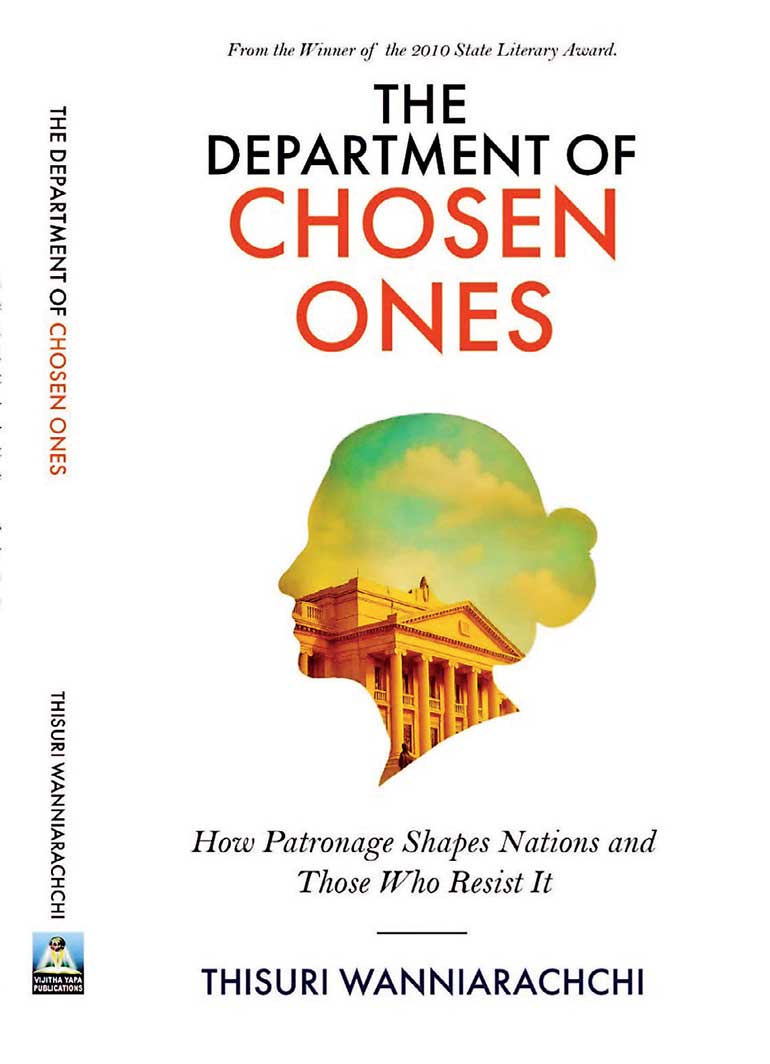
Seven years after the 2019 Easter Sunday attacks, the grief remains intertwined with unanswered questions and a lingering sense of institutional failure. This chapter from The Department of Chosen Ones by Thisuri Wanniarachchi, published by Vijitha Yapa Publications and recently longlisted for the 33rd Gratiaen Prize, reflects on the immediate Government response to the attacks
 Grief came fast, but anger followed soon after. The explosions had torn through churches and hotels while the country rested under the illusion of safety. In the stillness that followed, sorrow hung heavy, but beneath it was a quiet rage: not only for the lives lost, but for the warnings ignored, the intelligence dismissed, the arrogance that let it happen.
The process of counting the dead became a national debacle. The numbers shifted with every press briefing—359, then 321, then down again. It wasn’t just an accounting error; it was a reflection of the chaos that had seeped into every institution. Between too many dismembered limbs, bodies were miscounted, some identified twice, others not at all. Families wandered between hospitals and morgues clutching photographs and ID cards, begging for confirmation. The media reported one figure, the police another, and the Ministry of Health a third. Eventually, the Government admitted what everyone already knew—that we didn’t have a grip on the truth, even about our dead. To the world, it looked like disorganisation. To those of us inside, it felt like something far worse: a nation unable to face its own reflection.
That week, Colombo fell silent under curfew. The emptiness felt like déjà vu. It had been ten years since the end of the war—long enough for collective amnesia to set in. Many of us had grown up reading about the mass deaths of civilians caught in the final crossfire of the war. The army had shepherded them into so-called no-fire zones, but reports later confirmed those areas were shelled anyway. Civilians reportedly died by the thousands. Woven into our disapproval of the Rajapaksas then was a deeper discomfort—an unease with the kind of military leadership that had allowed it to happen. I used to argue with my father about it. He always said the same thing: it’s easy to judge from a distance—when your life isn’t on the line, when you’re not watching your colleagues get picked off one by one. You don’t know what it’s like to make decisions in those conditions, he’d say.
 The architecture of neglect over time changes shape. It looks like war. It looks like peace. It looks like bankruptcy, and then like growth. It hides inside debt designed to default, tariff structures meant to restrict consumer choice and keep people just a little poor, just a little hungry, just a little desperate. It looks like education systems built to produce underemployment, institutions engineered to keep some people marginalised and the whole country always at the brink of conflict
In the days after the Easter attacks, it felt like we’d stepped into a time machine. Colombo Fort was crawling with security. At the World Trade Centre, where our offices were, STF troopers stood watch with bomb-sniffing dogs. False emergencies became routine. On Tuesday afternoon, panic erupted—someone said a van packed with explosives was headed for the towers. Alarms rang out. We ran down twenty-two floors. In the lobby, people spilled into the street—confused, disoriented, asking, Where to now?
And right there, in the middle of it, I understood—just a little—what my father meant. People change in fight or flight. I turned to an STF officer as he told me not to panic. We both sighed. That day, standing in the thick of it, my long-held views on ethical warfare and accountability cracked.
“I hope we wipe these terrorists out,” I said. “Whatever it takes.”
He nodded, clutching his weapon a little tighter.
It frightened me, how quickly conviction curdles when you’re afraid.
Colombo was quiet in the way cities are after a disaster—too clean, too still, as if someone had pressed mute on an entire country. Inside Government buildings, phones rang with a kind of desperation. The word recovery appeared in memos before anyone had time to grieve. By the next morning, we were at the table with officials from the Treasury, Central Bank, Department of Census, and Ministry of Tourism, drafting an Economic Recovery Plan for the Prime Minister—to put the country back together while it was still bleeding. The stock market was crashing. Tourism had collapsed overnight; planes arrived empty and left full. Hotels hollowed out, beach towns fell silent. Confidence vanished in a day, so our first task became confidence itself. What we built wasn’t so much a plan as national triage: one voice, one message, one fragile attempt to say the country was still standing.
Curfews froze supply routes; produce rotted in Dambulla. We worked with the military to move essentials, holding meetings between sirens, keeping the machine running even when we hated its sound. I took calls on supply chains with one hand and scrolled through lists of the dead with the other. Bureaucracy doesn’t pause for mourning. By the next evening, the recovery plan was done—an act of faith more than policy, written to convince the world, and ourselves, that Sri Lanka was still standing. But even before the recovery plan reached the Prime Minister’s table, another committee on tourism revival had already been appointed.
The new recovery committee brought together ministers—including Harsha—alongside the Chief of Defence Staff, senior security officials, and hotel operators large and small. Their first task was a nationwide security audit: to restore confidence at home and trust abroad. The plan was simple but urgent—secure the country, reassure the world, and revive tourism before the monsoon arrived. Embassies were briefed, airlines lobbied, and hotel owners coordinated with the military to design safety protocols. For a brief moment, there was rare alignment between Government, business, and defence—each aware that both reputation and survival were on the line.
Some ministers rose to the occasion. Arjuna Ranatunga, the former national cricket captain who had once led Sri Lanka to win a World Cup, now led the Ministry of Transport and Civil Aviation, go figure. He focused on mobility; and Harsha on recovery—pushing for credit relief for small businesses collapsing under debt. Even the luxury hotels—the Kingsbury, Cinnamon Grand, and Shangri-La—were desperate for liquidity.
There is a policy architecture of neglect that shapes this country—a system built to keep collapse alive and well-fed. It’s an entire school of architecture on its own—part postmodern, part deconstructivist
Not everyone was as useful. The octogenarian Minister of Tourism, often seemed adrift. In one meeting, he answered an embarrassingly personal phone call on speaker in the middle of a briefing on the national security audit. The room fell into stunned silence. When it ended, we carried on as if nothing had happened. The irony wasn’t lost on anyone: we were trying to restore global confidence while struggling to maintain it in our own room. At another session, the Chief of Defence Staff presented slides from the investigation—grim images of the suicide bombers, including the now-infamous photograph of them pledging allegiance to ISIS. When they zoomed in slightly on the lone female attacker on screen, the Tourism Minister leaned forward, asking to see more. There was a pause—long enough for everyone to feel it. The room shifted uncomfortably until Ranatunga’s steady voice cut through, urging the presentation to move on to the next slide, restoring a professionalism that had momentarily slipped
The meetings were exhausting—endless hours of damage control while the country unraveled outside. One of those evenings, after yet another meeting at the Treasury, we stumbled into the elevator, too drained to speak, craving only a glass of water and silence. Just as the doors began to close, a security officer thrust out his arm to stop them—and in stepped two hotel owners, billionaire tycoons.
One had watched his property torn apart that morning, its marble lobby slick with blood and veiled in smoke—a place once defined by elegance, now reduced to horror. The other owned one of the few luxury hotels in the neighbourhood that had been spared—its colonial façade still standing pristine, as if untouched by the chaos consuming the city. They couldn’t have been more different. One was born into a lineage of hoteliers from the colonial times, the product of inherited wealth and old-world polish. The other was self-made, a man who had built himself from the ground up—brick by brick, deal by deal—until his empire spanned finance, energy, manufacturing, and leisure. Old money and new money—heritage and hustle. Both looked wrecked, their eyes sunken, their expensive colognes doing little to mask the devastation. Two men who had spent their lives competing for the same tourists now stood shoulder to shoulder in the smallest elevator in Colombo, bound together by a tragedy no balance sheet could absorb.
The elevator creaked downward, the air thick with exhaustion and disbelief. No one spoke; it was the kind of silence that hummed. The self-made tycoon, widely known as one of the richest men in the country, had taken the attack’s blows with unnerving calm. In the lull, he turned to me with a faint, crooked smirk and said—almost conversationally—“You know, the terrorists had planned to attack his hotel too, but when they arrived and found no guests, they gave up and went away.” For a second, the world seemed to stop. I didn’t know how to react. It felt far too soon for jokes. Then the other hotelier let out a short, strangled laugh and patted him on the shoulder. I didn’t want to laugh—it was cruel, premature—but the absurdity cracked through anyway. A guilty chuckle escaped me, the kind that slips out before your conscience can catch it. And for that strange, suspended moment, in a steel box filled with grief and irony, the unbearable weight of the day fractured—just enough to remind us we were still human. Humor, I realised, was the last honest rebellion left in us. Even when the mind demanded composure, the heart and lungs refused to comply. Deep down, humans are wired to seek light—even in the darkest of places.
That evening, back at the ministry, Harsha slumped into his chair, the weight of the day settling over him. He looked defeated, the fight drained from his shoulders. It was clear what he was thinking—that somewhere along the way, we had lost the plot. Our efforts were misplaced, our compassion misdirected, our focus turned away from the people who needed it most. The billionaires would recover eventually. Their hotels would reopen. But for the drivers, guides, café owners, and souvenir sellers, their incomes had evaporated overnight and there might be no coming back.
He began to reflect on what other countries had done in moments like this.
“Do you remember what the U.S. did after 9/11 for small business owners?” he asked.
“I was eight when 9/11 happened,” I said, smiling faintly. “But yes—let me look into it.”
He was right. After the 9/11 attacks, the United States rolled out an entire suite of federal recovery programs through the Small Business Administration—grants, micro-loans, and emergency employment services to keep small businesses afloat, especially in New York. It wasn’t just capital; it was confidence. Upskilling, reskilling, apprenticeships—tools to help people rebuild while the economy caught its breath. Maybe, we thought, we could do this too.
269 people were killed in the Easter attacks. Thousands of lives destroyed forever—families torn apart, children without birthdays to celebrate, lovers without weddings, parents with no one left to grow old with. So many lives, once filled with laughter, now reduced to coffins, cold bodies, and official counts. It was unthinkable pain: suffering no one should ever have to endure. For all the inequities and everyday cruelties in our country, this kind, where the powerful inflict irreversible harm on the innocent, was the worst of all
We kept returning to that idea. Could we cushion small and medium enterprises—the invisible spine of the economy—from collapse? But every time we ran the numbers, the answers grew bleaker. Treasury was bracing for a sharp revenue dip, and the moratoriums we had offered meant the banks were under strain too. There was no fiscal room left—only mounting pressure.
At one point, I suggested that maybe the big businesses could help, more out of hope than conviction. But most were drowning in debt themselves. The few that were thriving—the usual campaign financiers—had lost faith in Government after our catastrophic failure on security. We couldn’t exactly go back to them now, hat in hand, asking for help to fix what the system itself had allowed to break.
In the recovery meetings that followed, I tried again and again to push my own idea: to fast-track the digital social registry. The World Bank had already allocated $ 75 million for a social safety nets project. If we moved quickly, not only could we inject much-needed foreign exchange at a critical time, a fully populated registry with household-level data could change everything. If we have that infrastructure in place, we would know exactly who needed help—families who’d lost income, small businesses that had gone under, the people who quietly kept the country running. We could replace Samurdhi with a targeted emergency assistance program built through that registry. And all those small business support programs we were thinking about, they too could be targeted through this registry. If we were to do it this way, we might be able to convince the World Bank or other multilaterals to finance those programs; no need to go with a begging bowl to big businesses or scrape the Treasury’s budget barrels.
But there was little appetite for reform at that time. Reforming Samurdhi meant opening its beneficiary lists to scrutiny—a can of worms no one wanted to touch in an election year. Nobody wanted to antagonise the Samurdhi unions. Each time I raised it, people nodded politely and moved on. I could almost hear the thought around the table: Here she goes again, talking about the damn social registry.
One of those nights, frustrated, I called Susil. I told him the recovery plans were all top-down, that the Government seemed more concerned with bailing out big businesses than helping the poor or the small businesses who had lost everything. I told him I felt like an idiot—complicit in the same machinery that had failed so catastrophically. Why am I still here? I asked. Why am I still in Government after all this?
He listened, as he always did. Then, after a pause, he said quietly that he’d spoken to many people since the attacks, but few had mentioned the poor—or how recovery might work for them. If I left, he said, it would be one less voice arguing for equity in the room. His words were kind, but they didn’t stop me from feeling useless.
The bombs didn’t just break buildings. They shattered the illusion that anyone was steering the ship. The State Intelligence Service had received specific warnings—names, targets, timing. But no one acted.
The President was out of the country on a private holiday with his family when the attacks happened. He did not return immediately. Unverified reports circulated that he had been shopping in Singapore that afternoon—while the country was counting its dead. He didn’t take the first flight back, or the next few. He arrived late at night. The Prime Minister didn’t fare much better. How could he not have attended a single National Security Council meeting for nearly six months? Whether out of principle or exclusion didn’t matter. He was elected to be there, and he should have fought for that seat. The result was absence. When leadership mattered most, there was none. In one of his first post-attack interviews, he smiled awkwardly while discussing the death toll. Maybe it was nerves. Maybe it was his way of holding it together. But it looked like detachment. And that moment broke something. Whatever trust had been hanging on by a thread finally snapped. These men weren’t coming back—politically, morally, spiritually. Perhaps they had never really shown up to begin with.
It all unfolded quickly—though not as suddenly as it felt. In the weeks after the attacks, grief curdled into suspicion. On the streets and on television, anger turned toward the Muslim community at large. The line between extremists and ordinary citizens blurred in the public mind, and before long, even the Government began to bend under the weight of that hysteria. In Parliament, the atmosphere grew poisonous. Opposition members hurled accusations and innuendo across the chamber, feeding the same fear that was consuming the streets outside. Within days, pressure mounted for Muslim ministers to resign. By early June, several had stepped down “voluntarily,” saying they wanted to allow investigations to proceed without interference. But it didn’t feel voluntary—it felt like surrender. The state had chosen appeasement over principle. Mangala was one of the few who thought it was madness. He offered to resign in solidarity, ready to make a stand, but in the end, he was talked out of it. The economy was hanging by a thread, and losing the finance minister then would’ve been catastrophic. Still, he was right—it was a cowardly decision, one that traded justice for convenience and unity for fear. I whined to Harsha, fuming. How could a Government that preached reconciliation abandon its own so easily? He just sighed, the kind of sigh that comes from knowing too much. The decision, he said, had already been made. The President and Prime Minister had agreed—it was out of our hands.
And in that void, the Rajapaksas moved. Just weeks after the bombings, Gotabaya Rajapaksa announced his presidential candidacy. It felt orchestrated—precision-timed. No one said it aloud, but many thought it: Was this part of something bigger? Was this convenient chaos? We had no proof, but something about it felt off.
Perception, though, shifted overnight. People began saying the quiet part out loud: At least the Rajapaksas kept the country safe. At least they got things done. We had spent years telling the public they were corrupt, abusive, guilty. But we had failed to prove it. Our court cases dragged. Our reforms stalled. Our own President had reappointed Mahinda as Prime Minister in the 2018 coup attempt. The hypocrisy was undeniable. We had no moral high ground left.
What politics now, anyway? The roof had caved in, and we had no ground to stand on. How could we talk about re-electability—let alone pretend we deserved to hold the offices we already occupied? The aftermath of the attacks was saturated with talk of eradicating “radical Islamists,” reviving tourism, and rebuilding the country’s “resilience.” Inside Government, everyone stayed busy enough not to discuss the real fallout.
269 people were killed in the Easter attacks. Thousands of lives destroyed forever—families torn apart, children without birthdays to celebrate, lovers without weddings, parents with no one left to grow old with. So many lives, once filled with laughter, now reduced to coffins, cold bodies, and official counts. It was unthinkable pain: suffering no one should ever have to endure. For all the inequities and everyday cruelties in our country, this kind, where the powerful inflict irreversible harm on the innocent, was the worst of all.
That first Friday evening, everyone else had left the office early. A special task-force sniper walked his bomb-sniffing German Shepherd through the corridors, the sound of his boots echoing against the marble. I listened as the elevator doors closed and carried them away. With no one else in sight, I climbed onto my table and hugged my knees, tugging my saree around my shoulders. Through the floor-to-ceiling glass, I looked out at a city I no longer recognised—Colombo’s streets, usually pulsing with traffic, noise, and light, now lay cold and hollow. The curfew had been lifted, but the silence that followed felt apocalyptic.
If someone had told me you could empty Colombo’s streets at rush hour on a Friday, I would have said it would take meticulous planning. But we had managed it through sheer neglect. We had dropped the ball on national security so hard that no one felt safe enough to leave home—let alone confident in our ability to govern. It takes real effort to reach this level of dysfunction: precision, calculation, intent. This was no accident. It was a masterpiece of failure.
There is a policy architecture of neglect that shapes this country—a system built to keep collapse alive and well-fed. It’s an entire school of architecture on its own—part postmodern, part deconstructivist. The Parliament of Sri Lanka, designed by Geoffrey Bawa, rises from the waters of Diyawanna Lake in tiered copper roofs and open pavilions—an ode to balance and transparency. But its interiors have long been shaped by another kind of architecture—the architecture of neglect. Decades of it.
The architecture of neglect looks like too many columns, each one built to impress but supporting nothing of value. It has doors that don’t open and doorbells that don’t ring. It has a signature roof—carefully designed with gaping holes that let the monsoon pour straight through. A flaw that has become a feature. It keeps the rainsweepers employed, the mop manufacturers in business, and the illusion of productivity alive.
The architecture of neglect looks like two committees with the same mandate, neither allowed to fully implement their recommendations. It is rich in detail—minutes written in perfect cursive, press briefings polished to perfection, memos that die quietly in inboxes. Heavy with signatures that mean nothing, plans that no one will ever carry out. It never forgets its hierarchies. Never. There are always special entryways for the powerful, a lounge for the chosen ones, a chair reserved for the one who arrives last. There is always a fountain—grand enough to fight fires once they blaze, but never to stop the spark from starting the fire in the first place. It looks like a defense budget vast enough to give a lifetime of free telecommunications to a nation, but not the will to send a single warning when danger comes knocking.
The architecture of neglect—it’s not lazy. It hums. It moves. It stamps, circulates, convenes. It performs efficiency the way actors perform grief—with precision, without feeling. It knows how to look busy while standing perfectly still. It isn’t careless. It’s calculated. It is criminal—but it never confesses. It can effortlessly watch people die just so power stays in the right hands. It doesn’t fail by accident. It fails by design—meticulously, elegantly, fatally.
And over time it changes shape. It looks like war. It looks like peace. It looks like bankruptcy, and then like growth. It hides inside debt designed to default, tariff structures meant to restrict consumer choice and keep people just a little poor, just a little hungry, just a little desperate. It looks like education systems built to produce underemployment, institutions engineered to keep some people marginalised and the whole country always at the brink of conflict.
Throughout our history, the architecture of neglect has looked like many things: pogroms, insurgencies, uprisings, and wars. It wears the faces of dynasties, of patronage, of bureaucracies that bow and citizens who forget they have equal rights. It’s a chameleon. It outlives governments. It feeds on every failure and calls it experience. It lives—and it thrives—to see another day.
And that week, it looked like 269 coffins.
(The writer is a Sri Lankan economist and author. She holds a PhD in Public Policy from the University of Colombo and a BA in Political Economy from Bennington College and Kansai Gaidai University. She has served in the Government of Sri Lanka and worked in international development, advising Governments, kingdoms, and multilateral banks on social protection policy and investment operations across South and East Asia, the Middle East, and Southern Africa. Before her career in public policy, Thisuri was a novelist, authoring two award-winning books: Colombo Streets, which won the State Literary Award for Best Novel in 2010, and The Terrorist’s Daughter, which was nominated for the same award in 2015. The Department of Chosen Ones is her first work of nonfiction)




