Wednesday Oct 21, 2026
Wednesday Oct 21, 2026
Friday, 27 March 2026 00:25 - - {{hitsCtrl.values.hits}}
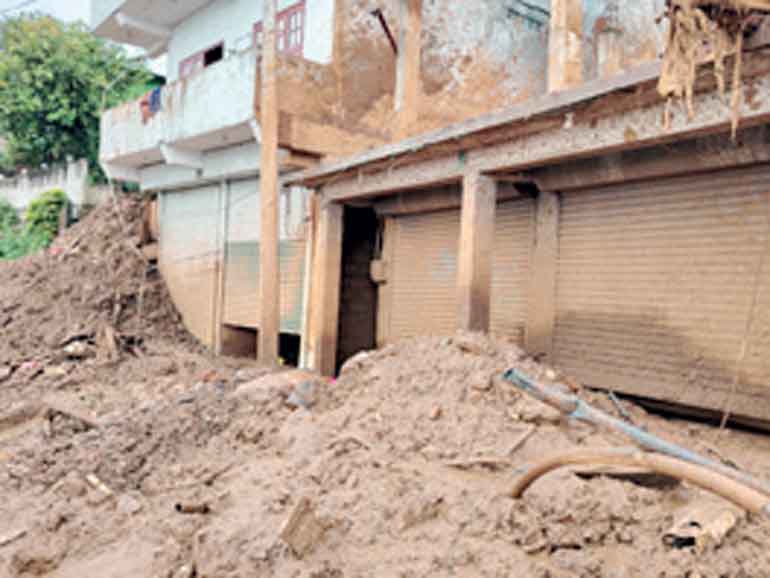
 When Cyclone Ditwah swept across Sri Lanka in November 2025, affecting over 2 million people, it was the latest chapter in a pattern of intensifying climate-related hazards reshaping the island’s risk landscape.
Rising temperatures, erratic rainfall and frequent extreme weather events are no longer projections – they are lived realities. Average temperatures in the country could rise by 1.5 to 3.4°C within this century. Over the past 40 years, Sri Lanka has experienced flood-related damage every year, ranging from localised events to nationwide disasters.
The impacts cascade across sectors and systems. During Cyclone Ditwah, intense rainfall damaged irrigation tanks, triggering spillovers that inundated paddy fields, disrupting thousands of farming households. What began as a meteorological event escalated into a food, livelihood and economic crises, affecting approximately 2.3 million people.
Hazards such as cyclones, floods or extreme rainfall are natural phenomena. They become disasters when they intersect with underlying vulnerabilities. Their impact is determined by the resilience of infrastructure, the depth of planning, and the strength of preparedness systems in place.
Recovery must, therefore, begin long before disasters strike.
From response to resilience
After Cyclone Ditwah, the Government moved swiftly to coordinate response efforts. At the same time, it launched a Post-Disaster Needs Assessment (PDNA), supported by the UN system, the European Union, the World Bank and the Asian Development Bank. The PDNA utilises a data-driven methodology to estimate damages, losses and recovery needs, that guide long-term recovery planning. UNDP is supporting this process to ensure that national recovery strategies and sectoral recovery plans are risk-informed, inclusive, climate-sensitive and financially sustainable.
While preliminary findings show significant damages, they also demonstrate how investments in resilience can deliver impact.
In some areas, irrigation systems had already been strengthened through the government’s Climate Resilient Integrated Water Management initiative, supported by UNDP. Farmers also received localised weather forecasts and agro-meteorological advisories, like practical guidance on when to plant crops, how to manage irrigation, and how to prepare for extreme weather.
When Cyclone Ditwah brought intense rainfall, these measures made a significant difference. Reinforced water tanks and canals helped the systems withstand heavy inflows. Farmers released excess water early, protecting crops and preventing damage to water storage structures.
Preparedness must also extend to businesses and infrastructure. Cyclone Ditwah showed how exposed these sectors are: infrastructure alone accounted for 42 percent of total damage, followed by residential buildings at 24 percent.
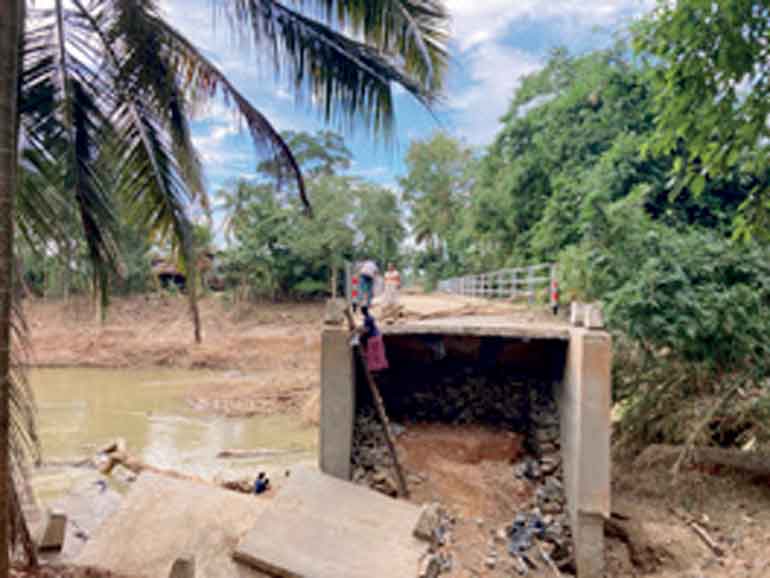
The PDNA is also identifying more preventative measures such as stronger building standards, better drainage and flood protection for key transport routes, strategies for safely managing industrial waste and improved zoning of industrial parks away from high-risk river basins. For businesses, especially MSMEs, simple business continuity plans and restoring market access can reduce losses and help operations restart faster after disasters.
Financing preparedness
When disasters do occur, fiscal preparedness is as critical as physical preparedness.
In the absence of pre-arranged financial mechanisms, governments are often forced to redirect development budgets toward emergency relief and reconstruction. Funds intended for schools, healthcare or long-term infrastructure improvements are instead used to repair damaged roads, restore utilities and support affected households. As climate-related disasters become more frequent, this reactive cycle places increasing strain on public finances and slows development progress.
Risk financing instruments, be it contingency funds, credit lines or insurance mechanisms, are designed to secure resources in advance so that they can be released quickly after a shock. This reduces uncertainty, accelerates recovery and helps protect long-term development investments.
When disasters do occur, fiscal preparedness is as critical as physical preparedness. Preparedness must also extend to businesses and infrastructure. Cyclone Ditwah showed how exposed these sectors are
The Caribbean shows how this model can work. It is of the world’s most disaster-prone regions globally with high exposure to hurricanes, tropical storms, floods, landslides and storm surges. The region’s vulnerability is amplified because most Caribbean nations are small island developing states, with populations and infrastructure concentrated along coastlines
Here, the Caribbean Catastrophe Risk Insurance Facility (CCRIF), a regional risk pool that provides parametric disaster insurance to governments, releases funds automatically when predefined thresholds such as wind speed or rainfall are exceeded.
Since its inception, CCRIF has delivered over $480 million in payouts to member countries following natural hazards and extreme weather events. After Hurricane Melissa in 2025, one of the strongest hurricanes ever recorded globally, Jamaica received nearly $92 million in rapid insurance payouts, enabling faster emergency response and early recovery efforts.
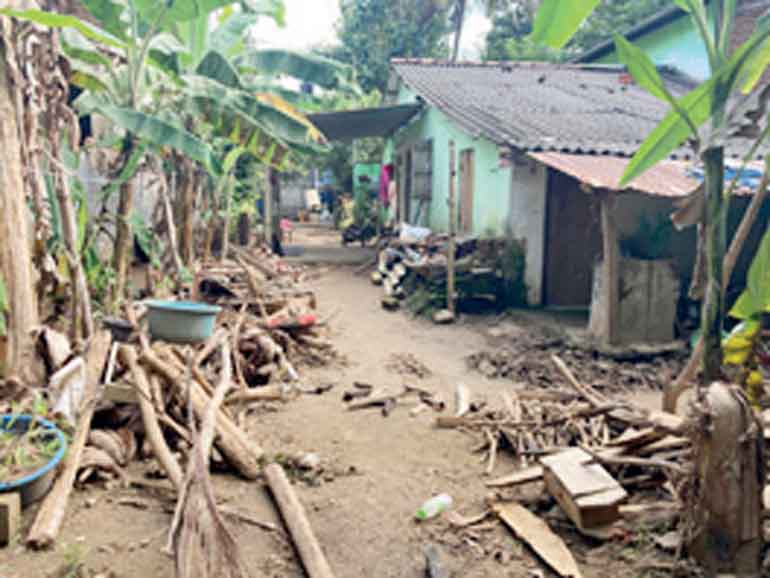
The recently launched National Climate Finance Strategy by the Government of Sri Lanka identifies disaster risk insurance among key financial instruments. The next step will be to test, refine and scale these instruments in ways that complement public investment and strengthen fiscal preparedness for future shocks.
A systemic approach to disaster risk reduction
As disaster risks intensify, preparedness must become systemic rather than reactive. The question is not if another cyclone will make landfall, but whether institutions, infrastructure and financing mechanisms are ready when it does. Established mechanisms such as the National Disaster Management Coordination Committee (NDMCC) in Sri Lanka has a key role to play. It’s an opportune moment to implement and action strengthened integrated disaster risk management and implement lessons learnt through informed and concerted efforts.
As disaster risks intensify, preparedness must become systemic rather than reactive. The question is not if another cyclone will make landfall, but whether institutions, infrastructure and financing mechanisms are ready when it does
Disaster risk reduction requires coordinated action across infrastructure, ecosystems and finance. Stronger building standards and better land-use planning can reduce exposure to hazards. Protecting forests, wetlands and watersheds strengthens natural buffers against floods and droughts. Risk financing tools ensure governments can respond quickly without undermining development gains.
By advancing these priorities through long-term planning, Sri Lanka is turning the lessons of Cyclone Ditwah into a pathway toward safer, more resilient development.
(Azusa Kubota, Resident Representative, UNDP in Sri Lanka and Ronald Jackson, Head, Disaster Risk Reduction and Recovery for Building Resilience, UNDP)




