Wednesday Oct 28, 2026
Wednesday Oct 28, 2026
Tuesday, 27 October 2026 00:00 - - {{hitsCtrl.values.hits}}
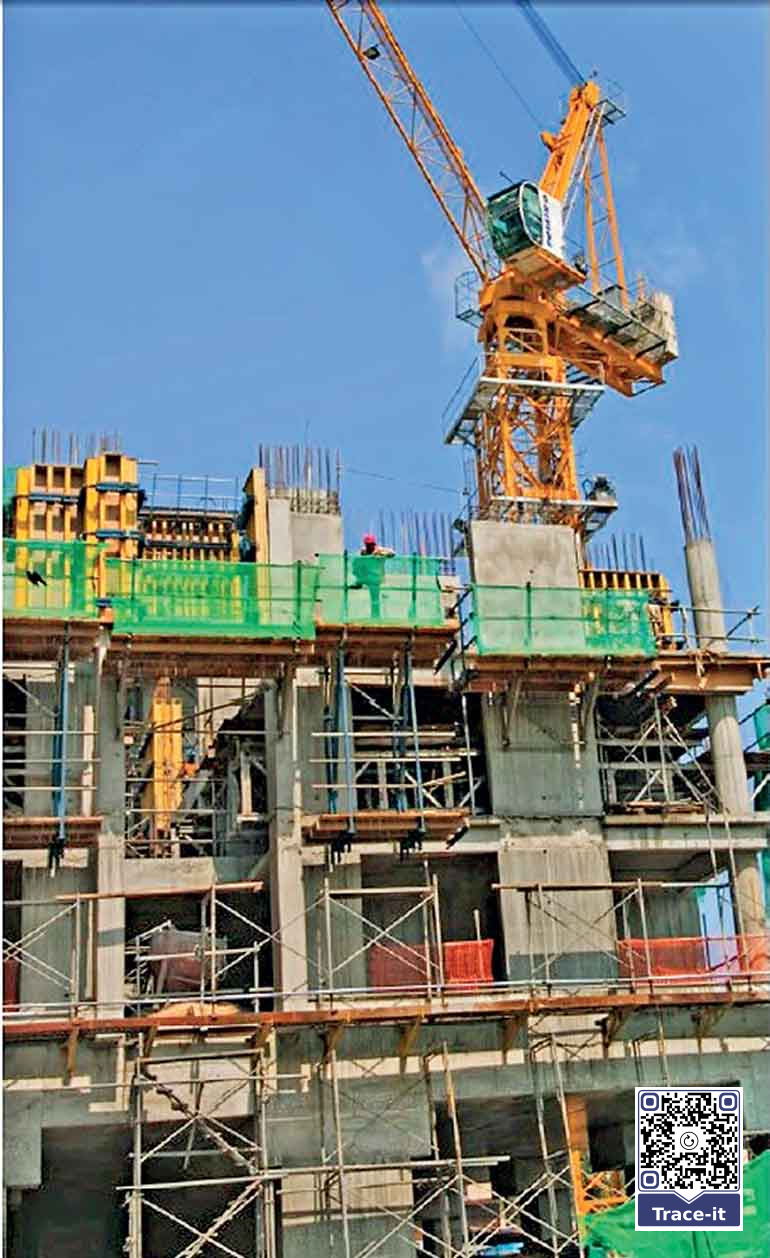
 Sri Lanka’s construction and property development industry has travelled through one of the most difficult periods in its history. Developers, contractors, engineers, suppliers and financial institutions have had to navigate economic instability, escalating construction costs, high financing expenses, exchange-rate fluctuations, taxation changes, shortages of skilled labour and disruptions to material supplies.
For an industry in which projects are conceived, financed and delivered over several years, these are not temporary inconveniences. They can fundamentally change the economics of developments that were planned and priced under completely different market conditions.
Nevertheless, I remain confident about the long-term future of Sri Lanka’s construction sector. Construction should not be viewed merely as an industry that builds apartments, offices or infrastructure. It is an economic ecosystem that creates employment, supports numerous industries, attracts investment and produces long-term national assets.
The challenge now is to transform the resilience demonstrated by the industry into sustainable growth.
Time has become a cost
Property development requires substantial investment long before revenue is fully realised. Land must be acquired, designs prepared, approvals obtained, financing arranged, contractors mobilised and construction completed before the final value of a project can be realised.
During this period, economic conditions can change considerably.
A project planned when interest rates, exchange rates, material prices and taxation were at one level may ultimately have to be completed under entirely different conditions.
Once commitments have been made to customers, however, responsible developers must continue working towards completion.
This is why time has become one of the most expensive components of construction.
Every unnecessary month lost through approval delays, financing issues, procurement difficulties or inefficient project management adds cost. Interest continues to accumulate, site overheads remain, contractors stay mobilised and customers wait longer.
Improving the speed of project delivery is therefore not merely a matter of convenience. It has a direct impact on affordability and investment.
Affordability must remain central
The industry’s next major challenge is maintaining affordability.
When cement, steel, aluminium, lifts, air-conditioning systems, electrical equipment, sanitaryware and labour become more expensive, the obvious response may appear to be increasing selling prices.
But developers cannot indefinitely transfer every cost increase to customers.
Household incomes and purchasing power do not automatically increase whenever construction costs rise.
The sustainable solution must therefore come from productivity.
Better architectural planning, value engineering, stronger procurement, reduced material wastage, modern construction methods and improved project management can collectively reduce unnecessary development costs.
Technology will also play an increasingly important role. Building Information Modelling, digital project monitoring, AI-assisted planning, modern formwork and other construction technologies can improve productivity and shorten development periods.
The objective must be to maintain the right balance between quality, affordability, commercial viability and long-term value.
Financing and development must work together
Construction is highly capital-intensive, making the banking sector an essential participant in the development process.
Banks understandably have a responsibility to protect depositors and manage credit risk. Developers have an equally important obligation to demonstrate financial discipline, transparency and the ability to complete projects.
However, large property developments can extend over several years. Financing structures should therefore recognise realistic construction programmes and project cash flows.
Excessive financing costs ultimately become part of the cost of development. If projects are delayed, these costs compound further.
Closer cooperation between financially responsible developers and financial institutions can create better outcomes for both the industry and customers.
Developers must reciprocate by strengthening collections, controlling expenditure, managing cash flow carefully and giving priority to completing projects already undertaken.
Faster approvals without lowering standards
Regulatory efficiency is another area where Sri Lanka can make significant progress.
Planning controls, environmental requirements, fire and safety standards, traffic considerations and infrastructure coordination are essential for responsible development.
The issue is not whether Sri Lanka needs regulation. It unquestionably does.
The question is whether those regulations can be administered more efficiently and predictably.
When approvals take unnecessarily long periods, capital remains idle while financing and other costs continue accumulating.
Sri Lanka should progressively move towards an integrated digital approval framework with transparent requirements, clearly defined responsibilities and measurable processing timelines.
Faster approvals should never mean weaker standards. Sri Lanka needs strong standards delivered efficiently.
This is particularly important when competing internationally for investment. Investors can accommodate demanding regulations when the requirements are clear and consistently applied. What discourages investment is uncertainty.
Protecting our human capital
Sri Lanka has produced highly capable engineers, architects, quantity surveyors, project managers, technical officers and skilled construction workers.
However, migration has created shortages across several professional and technical categories.
The response should be greater investment in people.
Construction companies must provide opportunities for young professionals, apprentices and trainees to acquire practical experience while ensuring that knowledge held by senior professionals is transferred to the next generation.
Technology should support rather than undermine this process. Its greatest value is not simply replacing manpower but enabling people to become significantly more productive.
Sri Lanka’s skilled human capital remains one of our strongest competitive advantages.
Construction’s wider economic contribution
The economic impact of construction extends far beyond a building site.
A major development generates work for architects, engineers, quantity surveyors, banks, insurance companies, lawyers, accountants, material manufacturers, transport operators, equipment suppliers and numerous subcontractors.
Thousands of skilled and unskilled workers depend directly or indirectly on construction activity.
After a building is completed, economic activity continues through facility management, security, maintenance, utilities and other services.
Construction therefore has a powerful multiplier effect.
When construction slows substantially, the consequences spread throughout the economy. When responsible construction expands, the benefits similarly extend across businesses and households.
For this reason, a healthy construction sector should form part of Sri Lanka’s broader economic growth strategy.
The Diaspora opportunity
Sri Lanka also has considerable potential to attract greater property investment from Sri Lankans living overseas.
Our diaspora across the United Kingdom, Europe, Australia, Canada, the Middle East, the United States and elsewhere maintains strong personal and economic connections with the country.
Many want to own a home in Sri Lanka, provide accommodation for family members or maintain a long-term investment here.
This represents an important opportunity to attract foreign-currency investment.
But overseas buyers expect international standards. They require transparency, professional communication, construction quality, dependable completion schedules and confidence in the legal and regulatory environment.
The more we strengthen these areas, the more competitive Sri Lanka becomes as an international property investment destination.
Developers must accept responsibility too
It would be incorrect to discuss the industry’s challenges while placing responsibility entirely on government, banks or economic circumstances.
The private sector must also raise its standards.
Developers must strengthen corporate governance, financial discipline, transparency, construction quality and customer communication.
Most importantly, the industry must recognise a fundamental principle:
Launching a project is not the real achievement. Completing it successfully and handing it over to customers is the true measure of a developer.
Customer confidence is one of the industry’s most valuable assets. It can take years to establish and very little time to damage.
Developers must therefore honour commitments, communicate transparently, manage capital responsibly and prioritise the completion of projects already undertaken.
Building a Stronger Sri Lanka
Sri Lanka’s construction industry has demonstrated remarkable resilience through an exceptionally difficult economic period.
The responsibility now is to convert that resilience into sustainable growth.
Government, regulators, banks, developers, contractors and professional institutions all have a role.
We need stable policies, efficient approvals, sustainable financing, stronger governance, greater adoption of technology and continued investment in skilled human capital.
Above all, we need confidence.
Sri Lanka needs housing. It needs infrastructure. It needs modern commercial development. It needs foreign investment and productive employment opportunities for young people.
A strong and responsible construction industry contributes to all of these objectives.
The challenges remain significant, but the opportunity is greater.
As business leaders, our responsibility is not merely to identify difficulties or wait for economic conditions to improve. It is to find solutions, improve efficiency, protect customer and investor confidence, complete what we have started and continue investing in the country’s future.
With disciplined private-sector leadership and a stable, investment-friendly policy environment, Sri Lanka’s construction and property sector can move beyond recovery and become a powerful contributor to investment, employment and sustainable economic growth.
The question is no longer simply how we overcome the challenges facing construction. The greater question is how we use this period to build a stronger industry—and through that industry, help build a stronger Sri Lanka.
(The author is Group Chairman/CEO, Blue Ocean Group of Companies)




