Saturday Nov 14, 2026
Saturday Nov 14, 2026
Saturday, 14 November 2026 00:00 - - {{hitsCtrl.values.hits}}
- Our grandchildren will inherit more than the financial obligations of our generation. They will inherit the opportunities we create, or fail to create, while we have the chance. Those still unborn had no voice in the borrowing decisions of today; surely they deserve our foresight in building tomorrow’s earning capacity. We cannot promise them a future without risk or debt. We can, however, work to leave them an economy less dependent on borrowing to meet its needs, and better able to prosper through what it produces and earns
- Our grandparents planted trees without knowing who would gather the fruit. We continue to enjoy their gift. Let us respond with the same quiet sense of duty: open the channels now, enable new activities to take root, and allow time for them to flourish. The harvest may take years, but the planting must be done now
 We plan future debt repayments and strive to grow earnings from established sources. But can these alone secure our future? We must also open entirely new income pathways today, so that future generations can reap the benefits
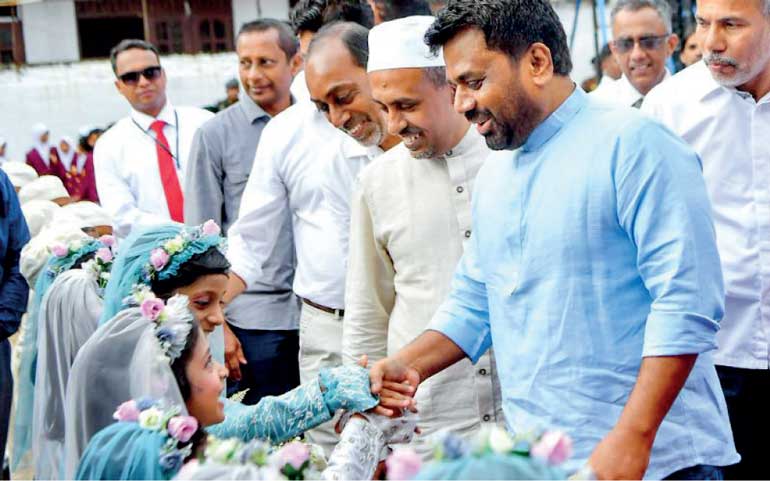
Imagine a little girl preparing to enter school in January 2027, excited about her new uniform, books and the world opening before her. She knows nothing about international borrowing, debt restructuring or the foreign currency obligations Sri Lanka will face as she grows up. She did not choose those obligations. Yet the decisions we make today will influence the opportunities available to her and, one day, to children not yet born.
In our village gardens stand magnificent old fruit trees planted by grandparents and great-grandparents. Some of those who planted them never lived to enjoy their full harvest. We still gather the fruit and enjoy the shade, often without thinking about the people whose foresight made this possible. They planted for generations they might never meet. What are we planting today for ours?
Sri Lanka has made important progress in recovering from the economic crisis of 2022. The efforts to restore stability, restructure debt and rebuild confidence deserve recognition. But recovery and long-term economic security are different achievements. The first deals with the crisis we have experienced; the second asks whether we are building an economy less vulnerable to the next one. It demands that we think not only of this year or the next Budget, but of 2035, 2040 and beyond.
The danger is real, even if it is not always visible in daily life. The IMF’s May 2026 assessment projects foreign currency public debt service averaging about 3.3% of GDP annually over 2027 to 2032. That is a substantial call on the country’s future external resources, alongside the foreign exchange needed for imports and other international payments. Borrowing can be productive and necessary, but recurring dependence on new external financing, without expanding our capacity to earn, leaves future generations exposed. The child entering school next year will live with the consequences long after today’s decisions have passed from public memory.
Our Treasury rightly devotes serious attention to fiscal management, debt sustainability and future repayment schedules. Yet an improved Budget balance in rupees does not, by itself, ensure access to the dollars needed for external obligations. That requires a strong and resilient capacity to earn from the world, together with prudent external financing and reserves. The Treasury’s Medium-Term Debt Management Strategy for 2026 to 2030 shows the value of planning ahead. Should we not complement that discipline with a similarly purposeful plan for creating additional earning capacity?
Increasing exports, tourism, established services and other existing sources of income remains essential. Much professional effort already goes into improving their performance, productivity and access to markets. But there is a second task, distinct from doing more of what we already do: identifying and making possible entirely new kinds of business activity. Better results from existing channels do not automatically create new channels. Unless we deliberately open them, they may never feature in our future earnings.
Harvest may take years, opening channels need not
A fruit tree takes years to mature, but planting it need not. A new industry may likewise take years to develop products, earn the trust of customers and produce substantial recurring income. In many cases, however, the enabling step is much quicker: clarify a regulation, remove an avoidable restriction, introduce a workable procedure or secure a coordinated decision. Some proposals will require legislation or substantial safeguards, and those must be respected. But the natural time required for a business to grow should never be confused with the time needed to make its establishment possible.
As an industrialist who has spent decades developing products and entering international markets, I have found that entrepreneurs rarely lack the motivation to seek customers or take commercial risks. Often, their most valuable help from Government is not another promotional program, but a predictable, competitive environment in which they are free to act. An entrepreneur may already have a supplier, an overseas customer, financing and a sound business model, yet be unable to proceed because existing arrangements do not permit the transaction. Finding that entrepreneur another customer will not solve the problem. What is needed is an environment in which the business can start and grow.
Think of the old irrigation canals. Water and fertile land may both be available, but crops cannot grow until the channel reaches the field. Government’s essential role is to open such channels through lawful, practical facilitation. Entrepreneurs can then invest, compete and create the harvest. A well-designed framework can serve many enterprises, not just a single applicant, and may give rise to commercial opportunities that no official plan could have predicted.
The establishment of ViYASA, the National Business Facilitation Centre (NBFC), under the Presidential Secretariat is therefore a welcome development. Its work in overcoming regulatory and administrative obstacles provides an opportunity to go beyond solving problems faced by existing businesses. With a clear mandate and effective coordination, it could also enable new earning and foreign exchange saving activities that are not yet practical under present arrangements.
There are surely more opportunities than any one institution can identify on its own. A few proposals for new pathways are understood to have reached ViYASA already, and many more could come from businesses, professional bodies, universities and industry associations. The important step is to give promising, viable ideas a dependable route from submission to a decision and, where justified, to an operational framework. Until that happens, even an excellent proposal remains only an idea.
Practical commitment to future generations
Budget 2027 offers a timely opportunity to make this commitment and begin the practical work that must follow. The Treasury and Presidential Secretariat could commit to a ten-year program for developing additional net foreign exchange earning and saving capacity, complementing existing debt and economic planning. ViYASA could coordinate the practical activation of an initial group of commercially credible pathways, each with one accountable lead, the specific obstacle identified and a target date for a decision. An initial 30-day action program could focus on securing decisions for pathways ready to proceed, while placing more complex legal or regulatory matters on clearly defined timelines.
The program need not attempt to forecast the precise earnings of every new venture. Instead, a simple quarterly report could record three things: how many new pathways have become legally and operationally available, how many businesses have begun using them, and what genuinely additional net foreign exchange they have earned or saved. The last measure must account for associated foreign currency costs and distinguish realised results from projections. Such reporting would connect present facilitation with the earnings that may emerge over the following five or ten years.
A brief commitment in the forthcoming Budget would be a valuable beginning, even if the full program is developed during 2027. It would not require Government to choose every business, find its customers or finance its investments. It would establish something more enduring: a responsibility to keep opening productive opportunities and to show, quarter by quarter, what has become possible. The question at each review would be simple: what new earning activity can Sri Lankans undertake today that they could not undertake three months ago?
Our grandchildren will inherit more than the financial obligations of our generation. They will inherit the opportunities we create, or fail to create, while we have the chance. Those still unborn had no voice in the borrowing decisions of today; surely they deserve our foresight in building tomorrow’s earning capacity. We cannot promise them a future without risk or debt. We can, however, work to leave them an economy less dependent on borrowing to meet its needs, and better able to prosper through what it produces and earns.
Our grandparents planted trees without knowing who would gather the fruit. We continue to enjoy their gift. Let us respond with the same quiet sense of duty: open the channels now, enable new activities to take root, and allow time for them to flourish. The harvest may take years, but the planting must be done now.
(The author is a Chartered Engineer, Founder and Chairman of the KIK Group of Companies, an export-oriented engineering and switchgear manufacturer and a Presidential Export Award winner. The views expressed are his own. He can be reached at [email protected])