Budget blues

Friday, 27 November 2026 00:22 -     - {{hitsCtrl.values.hits}}

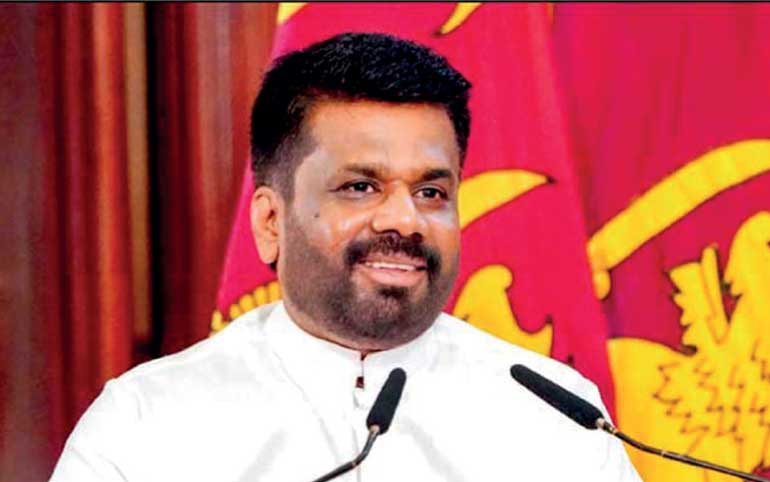
President and Finance Minister 

Anura Kumara Dissanayake

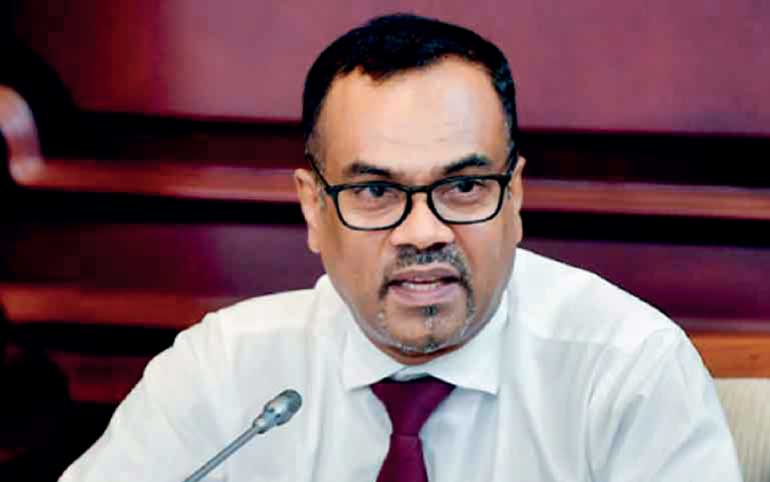
Deputy Finance Minister 

Dr. Anil Jayantha Fernando


The national Budget for 2027 which was announced by President and Finance Minister Anura Kumara Dissanayake in a stoic speech in parliament, was met with contrasting responses. The essence of a national Budget can be distilled by observing the reactions it provokes as much as by the numbers attached to Budget lines and the rhetoric in the Budget speech. 
Economists, business leaders, professional bodies, think tanks and rating agencies were quick to endorse the economic policies crafted by the National People’s Power (NPP). Their commentaries mainly raised concerns about the implementation of the policies and urged the Government to reform the public sector, which they saw as being the main obstacle to progress.

Apart from some reservations voiced about the dependence on a volatile market to deliver on investments and export-oriented growth, the ideological consensus between NPP’s Budget for 2027 and business leaders was apparent. The Opposition parties in parliament were disarmed by the convergence of policy interests across the aisles to effectively challenge its contents.

In contrast, the usual buzz around Budget announcements was largely absent among ordinary Sri Lankans. Households who were hopeful about receiving some relief on taxes of essential items, tariffs on basic utilities and household debt were disappointed.

Sri Lanka is now ranked one of the lowest in terms of minimum wage when adjusted for purchasing power. Year-on-year headline inflation has increased to above 8% pinching on household Budgets that had already suffered due to significant price adjustments and wage repression in the aftermath of the economic crisis, the burden of which is disproportionately borne by women. Addressing the cost-of-living pressures should have been an obvious policy priority in the 2027 Budget. 

Stability and growth? 

The positive report card given by the business community and economic experts is no assurance of sound policies or smooth sails ahead. Recall the responses to former President Gotabaya Rajapaksa’s infamous Budget with generous tax concessions to corporates, not even a tinge of the economic doom that was awaiting the country made it into their glowing post-Budget analyses. It only means that their interests have been safeguarded by the NPP Government.
The Government, along with the business and economic experts, have repeatedly highlighted the 2027 Budget as hailing the transformation from, “economic stability to economic growth.” However, economic stability cannot be judged by fiscal discipline or macro data alone. The Budget does not convey a clear plan for how foreign debt and reserves will be managed in the future. Therefore, it is not possible to assess the soundness of the Government’s promise of macro-economic stability. 

Any mention of achieving economic stability rings hollow in the ears of the working people as their lives have been destabilised by harsh austerity policies continued by the NPP Government, climate disasters and volatility caused by the wars abroad. The recent release of preliminary data from HIES reveal a troubling picture of poverty and households mired in debt. 

Sri Lanka’s debt sustainability agreement negotiated by the previous Ranil Wickremesinghe Government and accepted by the NPP without renegotiations includes macro-linked bonds which is determined by economic growth rates. Higher economic growth in the consequent years will only increase the country’s debt burden rather than result in benefits for the people. Furthermore, economic growth alone will not result in redistribution without economic policies to facilitate it. Budget 2027 does not include a vision for redistribution.

One way in which a policy of redistribution could have been implemented is via the tax policies. However, the ratio of the public revenue composition remains unchanged between direct (24%) and indirect taxes (76%), extracting public revenues excessively from low-income earners while providing little in return to them. Apart from widening the scope of assets for Capital Gains Tax, no effort has been made to tax the super-rich who often hide their wealth in corporate holdings and differed dividends. 

What is in it for the people?

In a preemptive special statement before the Budget announcement, the Deputy Minister of Finance Anil Jayantha Fernando reportedly urged the public to evaluate the Budget on its broader economic direction rather than on welfare benefits or tax concessions. 

The Budget is thin on welfare benefits, with a mere 0.6% of GDP allocation, sufficient to cover only a fraction of the most vulnerable sections of our society – low-income families, disabled, those with chronic illness and the elderly, while leaving many households out. 

Budget 2027 provides no clear vision for how the NPP Government hopes to address poverty or growing inequalities. Although the poverty level has increased to what it was 10 years ago, the Budgetary amounts for low-income families have remained unchanged. 

The Budget fails to adequately provision for extremities caused by the El Nino effect on the country’s fragile food system, livelihoods, health and education, even though the main factor contributing to why half the population are multidimensionally vulnerable is the inability to withstand climate events (UNDP).

Education and health sectors are given priority in the expenditure heads, however, the low GDP allocations of 1.91% and 1.87% respectively, relegates Sri Lanka to one of the lowest spending countries for these sectors.

The Deputy Finance Minister’s assurance that the Budget ensures public funds benefit the citizens, through “quality investments, increasing export-oriented production and employment generation,” holds little truth. Only a dismal amount - 0.7% of GDP - is invested in the agriculture sector, where most Sri Lankans depend on for their livelihoods. 
Apart from continuing housing projects and Rs. 200 allowance which is riddled with implementation challenges, no substantial provisions to address the neglect and exploitation of the plantation workers are included in the Budget.

The percentage (43%) of unemployment among educated youth which is the highest in the region is alarming (IMF Asia Pacific Outlook April 2026). Yet the Budget does not propose a clear plan for job creation, including to absorb the job losses from a flailing IT industry. Meanwhile, in a questionable proposal, 18-year-olds are being lured into investing in risky capital markets by providing share portfolios.

In terms of tax concessions, the relief provided to income (Rs. 16 billion) and import taxes (Rs. 10 billion) is large compared to the relief on Value Added Tax of only Rs. 2.9 billion. A significant portion of the public and private sector workers’ monthly salaries fall below Rs. 100 000. Although gradual Budgetary increases on salaries were granted over three years, discrepancies exist in public sector salary scales.

The longstanding salary issues of the biggest group of the public sector cadre, of 225 000 professionals in teachers’ service, remains unresolved. Teacher unions have now called for a token strike if the Government does not agree to grant the remaining two-thirds of the salary adjustments promised according to the Subodini Report and in the interim a cost-of-living allowance of Rs. 25 000.

The working people of the country who voted in large numbers to bring the NPP to power have been patient for the last two years to find its footing in its first stint in Government. The third consecutive Budget under NPP’s leadership was a massive let down for those who held out hope for some share of the economic gains to be redistributed to them. Their patience is now beginning to falter when Budgetary concessions and investments fail to reach a large section of the voting public. 

Indeed, a Budget that is crafted to win over the IMF, which is due for a visit to the country next week, is unlikely to be popular among the voters. It has demonstrated that a Government shackled by the conditionalities of the IMF cannot truly deliver economic justice. The NPP Government should not shackle the whole country to another IMF agreement.

(The author is a PhD Candidate in Education at the University of Massachusetts Amherst and a member of the Feminist Collective for Economic Justice)


Recent columns