Tuesday Nov 10, 2026
Tuesday Nov 10, 2026
Tuesday, 10 November 2026 00:10 - - {{hitsCtrl.values.hits}}
 A defining economic choice
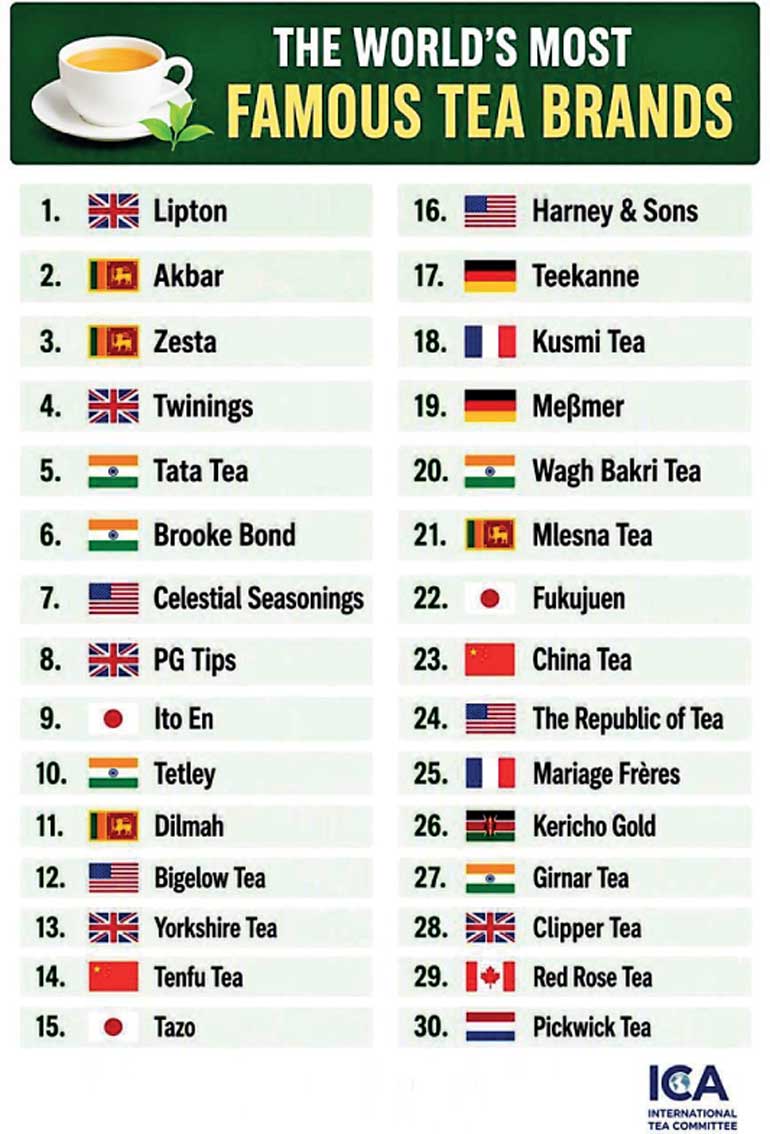
As Sri Lanka prepares for the National Budget on 12 November, the country faces a defining economic question. How do we generate the foreign exchange, investment and jobs needed to accelerate growth in an increasingly competitive global economy? For decades, tea has been one of Sri Lanka’s most celebrated exports. Ceylon Tea remains one of the few truly global brands the country can proudly claim as its own. Yet while we continue to grow and export some of the world’s finest tea, much of the industry’s most profitable activities are happening elsewhere. The issue is no longer about producing better tea. The issue is whether Sri Lanka can capture more revenue share from the global value added tea business itself.
A success story that has reached its limits
The tea industry deserves enormous credit for its contribution to the national economy even though things have been rough due the political turmoil/ war in the Middle East. During the first nine months of 2026, tea exports generated approximately $ 1.083 billion, compared with $ 1.163 billion during the corresponding period in 2025. Export volumes have declined by 4%, falling from 198.3 million kilograms to 189.4 million kilograms.
While export earnings in Sri Lankan Rupees increased slightly from Rs. 347 billion to Rs. 350 billion, this improvement was largely driven by currency depreciation rather than stronger export performance. These figures reveal an important reality. Sri Lanka is earning less in foreign currency while exporting less tea. At a time when the country urgently needs foreign exchange, that trend should concern policymakers. This is not a criticism of the tea industry. Rather, it is recognition that the global tea business has fundamentally changed.
Where the real money is being made
Around the world, the highest profits in most industries are rarely captured by producers of raw materials. The greatest value is created through innovation, branding, packaging, logistics, retailing, customer ownership and global distribution networks. Tea is no exception. A striking statistic is that only 50% of Sri Lanka’s tea exports are currently sold as value-added products such as tea bags, packets and instant tea. While the value addition is commendable progress even though it’s half the total volumes exported, it also highlights how much more value can still be captured through advanced blending, product development, wellness beverages, digital trading and international brand ownership. Globally, the retail value of tea products is many times greater than the export value earned by producing nations. Simply put, producing the tea leaf is no longer where the greatest wealth is created.
The warning signals from global markets
Market dynamics are changing rapidly. Exports to Iraq, traditionally one of Sri Lanka’s largest tea destinations, declined sharply from 30 million kilograms to 18.4 million kilograms, a reduction of almost 39%. Shipments to Libya fell from 15.9 million kilograms to 6.6 million kilograms, representing a decline of nearly 60%. Exports to China, one of the world’s largest consumer markets, declined by 10% to 7.1 million kilograms. Even Chile, a strong growth story in recent years, saw imports of Sri Lankan tea decline from 8.5 million kilograms to 6.3 million kilograms. Although exports to Türkiye increased dramatically by 134%, rising from 15.2 million kilograms to 35.7 million kilograms, much of this reflects changing regional trade routes and geopolitical circumstances rather than long-term structural growth. The lesson is clear. Overdependence on a limited number of markets is becoming increasingly risky.
The Russian lesson Sri Lanka cannot ignore
The Russian market offers an important lesson in strategic value creation. For years, Russia imported tea from producing countries and gradually developed domestic blending, packaging and distribution capabilities. Import policies encouraged local processing while international producers continued supplying bulk tea. The result was predictable. Tea-producing countries continued to export raw material, but much of the value creation, employment generation, branding and profitability migrated to Russia itself. From a Russian perspective, this was sound economic policy. From Sri Lanka’s perspective, it exposed a structural vulnerability. We continue to produce some of the world’s finest tea, but others are becoming increasingly successful at capturing the value created after the tea leaves leave our shores.
The three strategic choices
Sri Lanka effectively has three options. Option One: Defend the Current Model. We can continue investing heavily in promoting Pure Ceylon Tea and strengthening its premium image. This remains essential. The Lion Logo is one of Sri Lanka’s most valuable national assets and must be protected at all costs. However, branding alone is unlikely to transform the sector from its current $ 1 billion export base into the multi-billion-dollar growth engine that the economy requires.
Option Two: Pursue Better Market Access. Sri Lanka can continue negotiating trade agreements and seeking improved access for value-added exports. While worthwhile, many countries are unlikely to dismantle policies that support their own packaging and blending industries. Trade diplomacy should continue, but it is unlikely to become the breakthrough solution.
Option Three: Build a Sri Lankan Tea Hub. This is the boldest option and potentially the most transformative. Under a Tea Hub framework, Sri Lanka would allow the controlled importation of teas from other origins into a highly regulated Free Trade Zone. These teas could then be blended, processed, packaged and re-exported from Sri Lanka. The country would evolve from being primarily a tea producer to becoming a tea business centre. That distinction could redefine the future of the industry. Should this be part of the reform agenda that Budget 2027 should address is the million dollar question. In fact this has been the battle ground at many pre-Budget debates in the tea industry.
The fear that cannot be ignored
The biggest concern surrounding a Tea Hub is obvious. Will it damage the Ceylon Tea brand? The answer depends entirely on how the strategy is designed. These concerns are legitimate and deserve serious consideration. However, protecting Pure Ceylon Tea and developing a Tea Hub need not be mutually exclusive goals. The solution is a clear dual-brand architecture. Tier One: Pure Ceylon Tea-100% Sri Lankan origin, Lion Logo protected, Existing Tea Board standards maintained and Premium positioning preserved.
Tier Two: Sri Lanka Tea Hub Certified- Internationally blended products, Separate certification system, Full digital traceability and Distinct visual identity Consumers would know exactly what they are purchasing. The national brand would remain protected while a second engine of growth is created.
Why Budget 2027 must be the turning point
Budget 2027 presents a rare opportunity to think bigger about tea. Instead of viewing the industry as an agricultural sector requiring periodic support, Sri Lanka should position tea as a national export competitiveness strategy. A dedicated Sri Lanka Tea Hub Authority should be established to coordinate policy, investment promotion and governance.
A Tea Free Trade Zone should be launched under strict customs and regulatory supervision. Investment incentives should attract global tea traders, logistics operators and beverage manufacturers to establish regional operations in Sri Lanka. Simultaneously, a Tea Innovation Centre should focus on future growth categories such as wellness teas, ready-to-drink beverages, nutraceuticals, tea extracts and sustainable packaging solutions. At the same time, smallholders must remain central to the strategy through productivity improvements, replanting support, climate resilience initiatives and access to technology. Transformation will only succeed if growers succeed.
A $ 5 b opportunity
Tea remains one of Sri Lanka’s largest agricultural export industries, yet earnings have largely remained within the $ 1 billion to $ 1.5 billion range for many years. The real opportunity lies beyond production. A carefully designed Tea Hub strategy should target: $ 5 billion tea-sector value by 2035, over $ 500
million in foreign direct investment, around 50,000 new direct and indirect jobs, significant expansion in packaging, logistics and export services and positioning Colombo emerging as South Asia’s leading tea value-addition and trading centre. These are ambitious goals, but economic transformation has never been achieved through modest ambition.
The moment to be bold
The question before Budget 2027 is not whether Sri Lanka should protect Pure Ceylon Tea. That debate has already been settled. The real question is whether Sri Lanka is prepared to do the reforms and capture a larger share of the wealth generated by the global tea industry. A carefully designed Tea Hub can protect Brand Ceylon while attracting investment, creating employment, strengthening exports and generating new foreign exchange earnings. It can transform tea from a traditional export crop into a modern economic ecosystem. History rarely rewards countries that simply preserve yesterday’s successes. It rewards nations that build tomorrow’s opportunities on the foundations of their greatest strengths.
Next step
Sri Lanka has already earned global recognition for producing some of the finest tea in the world. Budget 2027 offers a far bigger possibility: to transform Sri Lanka from a country that exports tea into the country where the world’s tea business gathers, innovates, trades and creates value. If Singapore became the hub of trade, Dubai the hub of logistics and Switzerland the home of premium food brands, there is no reason Sri Lanka cannot become the global capital of tea. The real risk is not testing this vision. The real risk is allowing the opportunity to pass us by.
(The author has been the Chairman Sri Lanka Export Development Board, served the Tea Board (Marketing) and Chairman of the value added Tea Committee at the Industry and Commerce Ministry. The thoughts are strictly his personal views)