Wednesday Sep 30, 2026
Wednesday Sep 30, 2026
Wednesday, 30 September 2026 00:23 - - {{hitsCtrl.values.hits}}
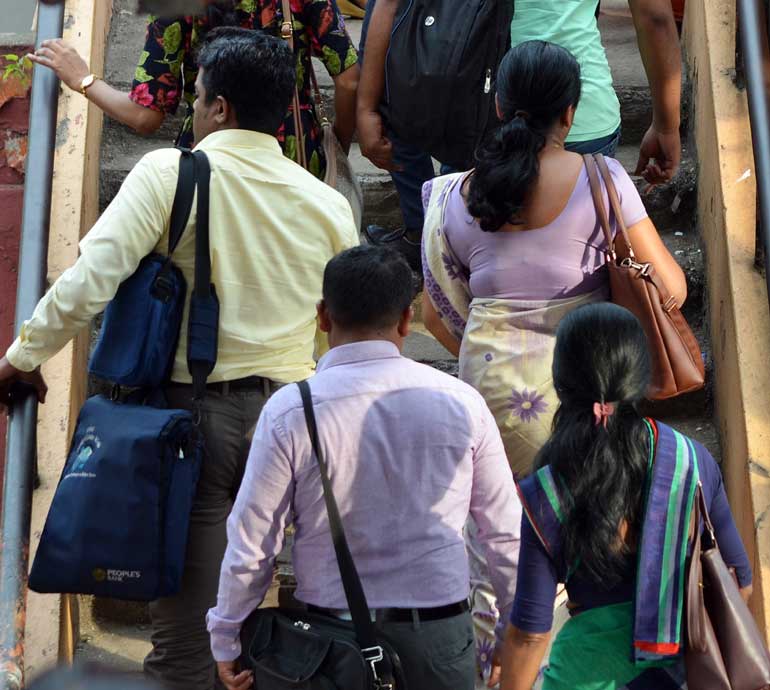
 Every month, thousands of salaried employees experience taxation before they fully experience their salary. The payslip arrives, the gross salary appears at the top, deductions follow, and only then does the employee see what is actually available to take home. There is no separate decision about when to pay and little room to postpone the payment. From an administrative point of view, this is efficient; from the employee’s point of view, the impact is immediate.
Salaried income is one of the most visible forms of income in the tax system. It is regular, documented and comparatively easy to capture through employer-based deductions. This gives tax administration certainty and reduces collection costs, but it also creates an unusual reality: a person may remain fully compliant month after month without ever actively deciding when to pay. The revenue reaches the State efficiently, while the effect is felt immediately at the family kitchen table.
That household reality deserves attention. A monthly salary may look reasonable when viewed only as a figure, but a family experiences it after food, transport, housing, electricity, education, healthcare, loan repayments and other commitments are met. Two employees earning the same salary may carry very different responsibilities. Tax policy therefore operates not simply on numbers in a table, but on people trying to manage everyday life.
Wider economic reason
There is also a wider economic reason to consider salaried taxpayers carefully. They are not merely people receiving monthly pay; many occupy the professional, technical, managerial, administrative and operational positions that keep public institutions, private businesses and essential services functioning every day. Teachers, health professionals, engineers, bankers, public officers, managers and technicians provide the continuity through which economic activity actually takes place. This does not make employees more important than entrepreneurs: entrepreneurs take risks, invest, create businesses and open markets, while employees provide the knowledge, skills and daily execution that allow those opportunities to grow. A healthy economy needs both.
Need to provide greater personal relief
Sri Lanka has already recognised the need to provide greater personal relief. From the year of assessment beginning on 1 April 2025, personal relief increased to Rs. 1.8 million a year, with employment income above Rs. 150,000 a month generally entering the APIT deduction framework. The question for Budget 2027 is therefore not whether salaried employees should contribute to public revenue. They should contribute according to their capacity, but it is reasonable to ask whether the present threshold continues to strike the right balance between national revenue needs and household capacity.
The timing of that question is also relevant. National consumer-price inflation reached 8.1% year-on-year in August 2026. One month of inflation data does not prove that the present threshold has become inadequate, nor should tax thresholds move automatically with every change in prices. But rising living costs strengthen the case for periodically testing whether the level of personal relief still reflects the economic environment in which households actually live.
Fiscally responsible versus fairness
Any review must remain fiscally responsible. Sri Lanka needs sustainable revenue to fund healthcare, education, infrastructure, social protection, public administration and debt obligations, and raising the tax-free threshold would carry a revenue cost. The question should therefore not begin with an arbitrary new figure or an assumption that the threshold must rise. A proper review should consider fiscal space, wage developments, household expenditure, distributional effects and the Government’s medium-term revenue requirements.
Fairness, however, also requires looking beyond the formal payslip. Salaried taxpayers are highly visible because employers report their income and deductions can be made systematically. Frustration can arise when income that is easiest to identify also appears easiest to tax while other taxable activity is more difficult to observe. The answer is not to make salary income less transparent, but to strengthen visibility across the wider economy so that the tax burden reflects genuine capacity to pay rather than simply ease of collection.
Tax-administration reform
This is where tax-administration reform becomes important. Sri Lanka is already moving towards greater digital visibility: IRD’s VAT invoice integration allows invoice information from business ERP systems to flow directly into RAMIS, with the national e-invoicing initiative being implemented in phases. Wider use of third-party information, digital reporting, better taxpayer-register data, risk-based compliance and more intelligent matching of information can gradually make genuinely taxable activity outside the formal payroll easier to identify. IMF-supported reforms also emphasise compliance-risk management, pre-filled returns, stronger administration and broader tax bases.
This point must be handled carefully. Informal economic activity should not automatically be labelled tax evasion; many small businesses and low-income earners may legitimately fall outside the tax net. Nor can policymakers assume that every rupee forgone through a higher APIT threshold will immediately be recovered elsewhere.
Realistic opportunity 
The more realistic opportunity is to broaden the effective tax base over time, reduce under-reporting where taxable capacity genuinely exists and lessen excessive reliance on income that is already fully visible.
There is also an economic case for looking at what happens to money left with households. Salaried employees do not simply receive income; they spend, save, borrow, educate children, purchase services and support businesses. Additional disposable income may flow into supermarkets, transport, healthcare, education, housing, savings and debt repayment. This does not mean that a tax reduction automatically pays for itself through higher growth, but it does mean that the effect of a threshold adjustment should be considered beyond the immediate revenue loss.
If the evidence supports an adjustment, a carefully calibrated increase could give salaried households some breathing space while preserving the principle that those with greater capacity should contribute more. Even a modest additional amount retained each month may help with school expenses, medicine, transport, loan repayments or savings. These amounts can appear small when viewed from a national Budget, but they look very different when viewed from a household budget.
There are also ways to improve the experience of salaried taxpayers without significant revenue loss. Simpler corrections, pre-filled information, clearer annual contribution statements, better digital services, faster refunds, and easier access to guidance can make compliance less frustrating. Good compliance does not always require a financial reward; sometimes recognition simply means reducing unnecessary paperwork, waiting time and uncertainty.
The right balance
Budget 2027 therefore offers an opportunity to ask a balanced question: does the current tax-free threshold still provide the right balance between Sri Lanka’s revenue requirements and the financial capacity of salaried taxpayers? If fiscal conditions and evidence support an adjustment, a carefully costed increase could be considered alongside stronger digital administration, broader income visibility and risk-based compliance across the wider tax base. The objective should not be to transfer the burden from salaried taxpayers to entrepreneurs, informal workers or any other non comply group, but to share it more fairly according to real taxable capacity. A sustainable tax system must collect what the country needs; a trusted one must also keep asking who carries the burden, how widely it is shared, and whether those who comply consistently are given reasonable space to manage the lives behind their payslips.



