Thursday Nov 12, 2026
Thursday Nov 12, 2026
Thursday, 12 November 2026 00:24 - - {{hitsCtrl.values.hits}}
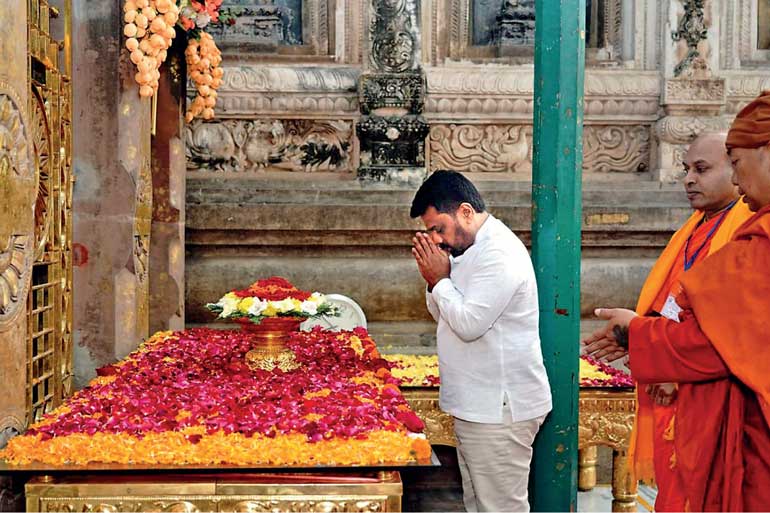
 Beyond economic statistics and promises, the people of Sri Lanka are looking for a realistic Budget that restores hope, creates opportunities and makes everyday life less difficult.
Today, 12 November, 2026, Parliament will witness the presentation of the National Budget for 2027 by President Anura Kumara Dissanayake in his capacity as Minister of Finance. It will be the Government’s third Budget, presented at a time when Sri Lanka is still struggling to translate macroeconomic stabilisation into tangible improvements in the lives of its people.
For millions of Sri Lankans, this is more than another annual exercise in presenting revenue estimates, expenditure allocations and development proposals. It is an occasion that carries a simple but deeply felt expectation: that the coming year will be less difficult than the years they have endured.
Perhaps this is best described as a prayer from the poverty-stricken majority of our population — a prayer for affordable food, decent employment, reasonable household incomes, accessible healthcare and education, and the opportunity to live with dignity rather than merely survive.
Sri Lanka has undoubtedly made progress since the unprecedented economic crisis of 2022. Economic growth has returned, inflation has been brought under control compared with the extraordinary levels experienced during the crisis, debt restructuring has been completed, and the IMF-supported program has helped restore a degree of international confidence.
These achievements should not be underestimated. However, stabilising the economy and restoring the quality of life of its citizens are two different challenges.
Uncomfortable reality
The uncomfortable reality is that many households continue to experience the consequences of the economic crisis. The cost of living remains a serious concern, purchasing power has not recovered adequately, poverty has increased, and the burden of taxation and essential expenditure continues to weigh heavily on working families. Young graduates struggle to find suitable employment, while many skilled and educated young people see migration as their only realistic opportunity for a better future.
Economic growth figures, however encouraging, mean little to a family that cannot comfortably afford three meals a day, a parent unable to meet a child’s educational expenses, or a young graduate unable to secure a meaningful job.
The poverty headcount index, which rose to 16% in the first quarter of 2025 from 14.3% in 2019, illustrates the human cost of the economic crisis. Furthermore, the substantial increase in the official poverty line demonstrates why poverty cannot be measured without taking account of the rising cost of maintaining a basic standard of living.
Growth must become meaningful to ordinary people
The Central Bank’s projection of economic growth within the 4%-5% range for 2026 offers some encouragement. Yet the important question is whether this growth is sustainable and capable of generating productive employment, higher real incomes and improved living standards.
A recovery driven largely by the statistical effects of an earlier contraction cannot, by itself, guarantee long-term prosperity. Sri Lanka needs a different quality of growth — growth supported by private investment, exports, agricultural productivity, technology, innovation and competitive industries.
This brings us to one of the country’s most pressing concerns: investor confidence.
Sri Lanka cannot expect to overcome its foreign exchange constraints and create sufficient employment without attracting substantial foreign and domestic investment. The uncertainty surrounding major investment proposals, including the proposed Sinopec refinery project in Hambantota, illustrates the importance of consistency, institutional coordination and timely decision-making.
An investor must have confidence that agreements reached with the Government will be honoured, policies will not change unpredictably and administrative procedures will not become unnecessary obstacles.
Investment is not simply about bringing foreign currency into the country. It creates employment, transfers technology, develops skills, expands exports and generates tax revenue. A country that wishes to provide better opportunities for its younger generation must become a country in which investors are confident about committing their capital.
A Budget is only as good as its implementation
Another important concern is the effectiveness of public expenditure. Allocating billions of rupees for development and welfare is not sufficient if the money remains unutilised or fails to reach its intended beneficiaries.
The reported slow utilisation of budgetary allocations, including funds intended for people affected by the Ditwah disaster, raises legitimate questions about administrative efficiency and accountability.
The public does not expect merely impressive budgetary announcements. It expects roads to be repaired, schools to be improved, hospitals to receive essential facilities, disaster-affected families to be assisted and development projects to be completed on time.
The Government must therefore recognise that public administration is as important as public finance. Greater coordination between ministries, transparent procurement, digitalisation, clear institutional responsibilities and measurable performance targets are essential.
Equally important is responsible management of State-owned enterprises. Public resources should not be continuously committed to commercially unviable activities at the expense of education, healthcare, social protection and essential infrastructure. Private enterprise should be encouraged to compete and invest wherever appropriate, while the State concentrates on effective regulation, essential public services and protecting vulnerable citizens.
What should the people reasonably expect?
The people are not asking for unrealistic subsidies or benefits that the national economy cannot afford. They understand that Sri Lanka has limited fiscal space, substantial debt obligations and continuing external vulnerabilities.
What they reasonably expect is a Budget that demonstrates fairness, discipline and compassion.
It should prioritise targeted assistance for genuinely vulnerable households, rather than politically attractive but economically unsustainable concessions. It should create an environment for private investment and employment, reduce unnecessary barriers to business, strengthen vocational and technical education, improve agricultural productivity and expand opportunities for small and medium-sized enterprises.
It should also address the heavy burden placed on the formal working population and ensure that taxation is fair, predictable and supportive of productive economic activity.
Above all, the Government should establish a credible framework for translating budgetary promises into measurable results. Citizens deserve to know not only how much money has been allocated, but also what has actually been achieved with it.
Beyond 12 November: Restoring hope
It would be unrealistic to expect a single Budget to resolve all the structural problems that have accumulated over decades. Nor should anyone imagine that the Budget speech delivered today will immediately change the circumstances of millions of struggling families.
Indeed, the Budget has already been prepared. Nevertheless, the first reading of the 2027 Budget provides an appropriate occasion to remind the country’s leadership of the expectations, anxieties and aspirations of the people on whose behalf public finances are managed.
The Government’s vision of creating a prosperous nation and a beautiful life must ultimately be judged by the everyday experiences of its citizens. Prosperity cannot be confined to national accounts, investment announcements or economic growth percentages. It must be reflected in a family’s ability to meet its monthly expenses, a young person’s ability to find employment, a farmer’s ability to earn a reasonable income and an elderly person’s ability to live without financial insecurity.
Sri Lanka has paid an extraordinarily high price for years of economic mismanagement, institutional weaknesses and policy inconsistency. Its people have made painful sacrifices. They deserve an economic future that does not demand endless sacrifice without delivering meaningful rewards.
As the President presents Budget 2027, the hope of the nation is therefore neither extravagant nor unreasonable. It is simply that the coming year will bring fewer hardships, greater opportunities, fairer economic conditions and renewed confidence in tomorrow.
Ultimately, the success of Budget 2027 should not be measured by how impressively it is presented in Parliament, but by how much easier it makes life for the ordinary people of Sri Lanka.
That is the prayer of the people. And that is the responsibility of those entrusted with governing the country.



