Sunday Sep 13, 2026
Sunday Sep 13, 2026
Wednesday, 22 July 2026 04:39 - - {{hitsCtrl.values.hits}}
 Every country that made this work — India, Malaysia, Ireland — did it through one dedicated unit with real authority, not an inter-ministerial memo
 The starting point
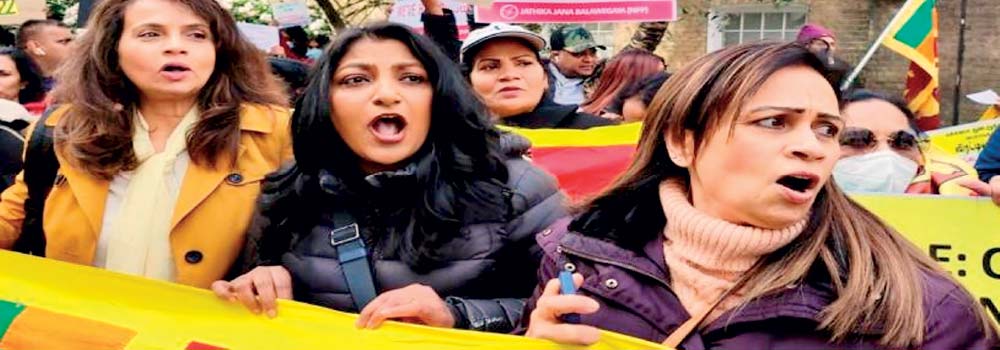
Sri Lanka has an unusually good problem. A fully worked diaspora-engagement plan has sat in a ministry drawer since 2015, alongside 41 self-organised expatriate networks of doctors, scientists, entrepreneurs, and executives — already active and waiting to be used.
For a decade, Sri Lanka has competed for the world's mobile wealth — digital nomad, retiree, and investor visas — while offering its own emigrants no comparable path home. Every country in this brief built its program on a smaller diaspora, or a worse fiscal position, than Sri Lanka has today. The gap isn't ideas. It's execution.
Guiding principles
Four principles should govern how the coordinating unit operates, independent of which instrument it's running.
1. Purpose, not polity. Engagement is a means to remittances, investment, skills, and credibility — not an end in itself. Every instrument below is judged against a concrete outcome, not its existence.
2. Facilitator, not implementer. The State's job is to remove friction and get out of the way of the 41 existing networks that already know how to organise. It should lead only where the market genuinely won't.
3. Open the leadership table. The coordinating unit shouldn't be staffed solely by the officials who let the existing plan sit unused for a decade. Diaspora networks — including younger, less-connected members — need real design seats, not consultation after the fact.
4. Audit, don't compete. Diaspora engagement is non-competitive between countries, so Sri Lanka can borrow freely from India's OCI card, Malaysia's TalentCorp, Israel's Yozma fund, Thailand's tax regime, and Mexico's 3x1 match fund — each sized to its own fiscal reality.
Status: Will I feel welcome?
The Sri Lanka Overseas Citizen (SLOC) Card, modelled on India's OCI scheme, would give lifelong, multiple-entry status — not a renewable favour — to anyone who has held Sri Lankan citizenship, or whose parent or grandparent did, with property rights and investment parity with residents. India signed up over a million cardholders in thirteen years. The card would also double as a census, turning 41 scattered networks into one database.
A lighter Golden Visa tier, sized to Sri Lanka rather than the UAE, would offer 5–10 year renewable residency for $ 100,000–250,000 committed to Port City property, a BOI-approved venture, or the co-investment fund below. The UAE's AED 2 million threshold assumes oil-economy liquidity Sri Lanka doesn't have; a local figure should be aspirational for a mid-career Gulf engineer, not reserved for Colombo's wealthy.
Both tiers should carry UAE-style family provisions — sponsorship of dependent children and a simplified spousal path. A diaspora professional weighing return usually weighs it for a household, not just themselves.
These instruments should also be differentiated by diaspora profile: a first-generation Gulf emigrant, still connected to consular networks, responds to different outreach than a second-generation professional in London who knows Sri Lanka mainly through family visits and social media.
Sri Lanka can borrow freely from India's OCI card, Malaysia's TalentCorp, Israel's Yozma fund, Thailand's tax regime, and Mexico's 3x1 match fund — each sized to its own fiscal reality
Fiscal: Does the math work?
Malaysia's Return Expatriate Program offers the sharpest lever: a flat, reduced tax rate for a fixed window, removing the biggest deterrent — swapping tax-free Gulf income for a normal domestic bracket. Sri Lanka should adopt this directly. The pieces already exist: a concessionary 16% rate on research income, a 10% cap on education income, a VAT exemption for R&D. The task is packaging what exists into an application a diaspora scientist in Melbourne can actually find.
Dual banking rights and genuinely unfrozen foreign-currency accounts need statute, not policy — crisis-era capital controls mean only a legal guarantee will be believed.
Thailand's model goes further, offering full exemption on foreign-sourced income and up to 13 years of corporate tax exemption for diaspora-founded businesses. Sri Lanka could extend that exemption to Port City firms founded by returning entrepreneurs — an incentive currently missing.
Capital: Beyond the remittance pipeline
Three mechanisms, in order of readiness:
A Yozma-style matching fund for Port City start-ups: modest Government capital co-investing alongside diaspora and private money, privatised once the market matures. Israel built an entire venture ecosystem this way from 1993 and now produces more NASDAQ-listed companies per capita than any country on earth — a sharper "invest" pitch than a bond, without asking the diaspora to lend to a Government that has already defaulted on them once.
A Sri Lanka Diaspora Bond, ring-fenced and reported publicly, line by line. India used this model in 1998 and 2000 to raise billions in weeks during a reserves crunch much like Sri Lanka's own; Israel has used it since 1951. This should follow the equity fund, not lead it.
A Diaspora Village Match Fund, modelled on Mexico's 3x1 Program: hometown associations fund a school roof, water system, or clinic, and Government matches it at district, provincial, and central level — the fastest of the three to show results, and one that gives ordinary remittance-sending families, not just wealthy investors, real ownership.
Capital rarely moves at the level of "the diaspora" as a mass — it moves through a small number of well-connected champions. Sri Lanka's own equivalent of Ireland's Craig Barrett or Denmark's Goodwill Ambassadors likely sits inside one of the 41 networks. Engaging a handful of these figures, through a diaspora business network, should be an explicit workstream.
Frictionless return
Fast-track mutual recognition of medical, engineering, and nursing credentials with the UK, Australia, Canada, and the Gulf states — Sri Lanka's largest diaspora concentrations and most short-staffed sectors since the post-2022 emigration wave. This costs almost nothing: a Sri Lankan-trained doctor who qualified abroad currently can't resume practice at home without re-certifying from scratch.
Sri Lanka My Second Home — an existing retiree component — pairs a half-tax holiday and Government land for elder-care housing with foreign-currency accounts for diaspora seniors. Elder care abroad runs $5,700 a month and up; this needs only activation.
The Reverse Brain Drain component — tiered science grants and short lecture visits for overseas academics — deserves China's Thousand Talents treatment, minus the eight-figure bonuses Sri Lanka can't afford. Returnees under such schemes publish 27% more than peers who stayed abroad. Return needn't be full-time to matter.
Institutional spine
Every country that made this work — India, Malaysia, Ireland — did it through one dedicated unit with real authority, not an inter-ministerial memo. Sri Lanka's coordinating unit needs to be:
Local roots
Diaspora affinity is rarely felt toward "Sri Lanka" in the abstract — it's felt toward a specific town, district, or province of origin. The Village Match Fund is, in effect, a local-engagement instrument: provincial and district authorities should co-design which projects get match-funding, and the SLOC card's census should map which regions send diaspora to which countries, so local Governments can approach the relevant networks directly.
Managing domestic friction
A returnee on preferential tax treatment, sitting next to a colleague who stayed and pays full rates, will breed resentment if unaddressed. The fix isn't fewer incentives — it's attached obligations. Mentorship, guest lecturing, or local hiring quotas as conditions of preferential status turn a one-way concession into a visible two-way exchange.
Rollout plan
Trust, not incentive design, is Sri Lanka's binding constraint. Each phase is gated: the next begins only once the current one delivers its proof point.
Phase 1 — Deliver Something (0–6 months). Launch the SLOC card on existing architecture; sign credential-recognition agreements with the UK, Australia, Canada, and the Gulf; stand up the coordinating unit by statute with fixed windows and a diaspora advisory seat.
Exit: SLOC processing on time; one recognition agreement signed.
Phase 2 — Activate What Exists (6–12 months). Package the research, education, and R&D tax concessions into one online application, differentiated by diaspora profile; launch My Second Home; write banking rights into statute; open Reverse Brain Drain.
Exit: measurable uptake plus the statutory banking guarantee in force.
Phase 3 — Ask for Capital, Tangibly (12–24 months). Seed the Yozma fund, anchored by identified diaspora champions; launch the Village Match Fund in pilot districts, co-designed with provincial authorities; extend the corporate exemption to Port City founders.
Exit: one Yozma co-investment closed; one Village Match project completed and audited.
Phase 4 — Earn the Bond (24+ months). Publish a full audit of Phase 3 spending; launch the Diaspora Bond, ring-fenced and publicly reported.
Exit: none — this phase is the destination, contingent on Phase 3's audit passing scrutiny.
The ask
Sri Lanka does not need a new plan. It needs the existing one completed with the missing low-cost pieces — the Yozma fund, the village match, credential recognition — a coordinating unit with statutory teeth, a leadership table staffed by the diaspora it serves, and a signature. Forty-one networks are already organised and waiting. The invitation, not the persuasion, is the only step that remains.




