Friday Oct 02, 2026
Friday Oct 02, 2026
Monday, 8 December 2025 00:33 - - {{hitsCtrl.values.hits}}
 Introduction
The Sri Lankan administrative machinery is highly infected with corruption and mismanagement. Blockchain technology is the ideal application to stop, mitigate or reduce the burden. This application is of good use also to the private sector when considering the examples of applications of the world.
“Blockchain technology” is a system for securely recording information in a way that makes it difficult or impossible to alter, hack, or cheat the system. It’s the foundational technology behind cryptocurrencies like Bitcoin and Ethereum, but it has applications far beyond digital money. Alteration of documents and ledgers, taking decisions without considering the end user requirement in procurement procedures can be stopped or reduced by this important tool.
The biggest frauds are committed through the tender procedures and the procurement process starting from the engineering assessment, therefore, application can give high impact threat to the frauds as well as for mismanagement. According to the social assessments it is believed that 40% of governments’ funds are cheated by the politicians, government officials in different capacities and the contractors. Apart from every other aspect the application can search the sincerity of the contractors too which is a common burden. Therefore, apart from control of robbing, this has the ability to guide the project according to a time plan and deadlines too. It is understood that there can be heavy lobbying against the implementation of the system by mentioned clan due to dissolving of the key interest but this system will respect the hard-earned public funds. Also, this does not need special changes to the existing systems since it is an interface with many renowned ERP softwares like SAP and Oracle which is in use at present.
Key concepts of blockchain
1. Distributed ledger:
This concept controls unofficial alterations of information of a document especially in ledgers and tender documents which was mainly observed in government procurement systems, because alterations are visible to all the levels of the procurement team.
2. Blocks and chains:
All the information of a document is stored in a block and chained with reference and timestamps, therefore changing is a very tedious task; otherwise illegal operators are bound to change all the copies of the documents in the cluster which is impossible and visible to all with the timestamp.
3. Immutability:
Since its cumbersome alteration of the information/data is considered trustworthy. Files and information cannot be hide and destroy as we always heard in news and the newspapers especially in judicial system and office networks.
4. Consensus mechanisms:
“Imagine a notebook that many people around the world own copies of every time something is written in the notebook (like a transaction), everyone’s copy gets updated. Once written, no one can go back and erase anything without everyone noticing.”
Key advantages of the procedure
Procedure gives a collaborative responsibility among all the stakeholders; therefore, one cannot avoid the blame or the responsibility as observed in many court cases in the country.
Following are few of the areas that the country can use of the blockchain:
Using blockchain technology in logistics can bring transparency, security, and efficiency to supply chains by enabling tamper-proof, decentralised, and real-time data sharing among multiple stakeholders. Here’s a practical breakdown of how to use blockchain in logistics, along with use cases, implementation steps, and real-world examples.
The Sri Lankan Government spends around Rs. 6,000 million for an election, which is a huge burden for the country apart from the cost burden by the political parties. Application of IT platform for the voting systems will remarkably reduce the cost and develop trust by implying blockchain technology.
Real estate transactions will be transparent and credible with applications like “Provance by Everledger” software which analyses the history and ownership of the real estate.
Key application of blockchain in logistics
1. End-to-end supply chain visibility
Example:
a.Walmart uses blockchain to trace the source of food in seconds instead of days.
b.Consignments and prices can be controlled through this mechanism, especially vegetable supply chain via economic centres, as well as supermarkets who has higher market share in vegetables.
2. Provenance and anti-counterfeiting
This system can identify all the genuine products of the market, since the market is flooded with substandard and duplicated products and the quality of the contractors who are assigned with various contracts. “Everledger” is a software that identifies the “genuine” aspect of the products and business organisations or even research component.
Example: IBM + Everledger use blockchain to track the provenance of diamonds.

3. Smart contracts for automation
Smart contracts can:
Automation can reduce the human intervention, blockchain can reduce human intervention through a very reliable manner. This method is ideal for the customs clearing which can reduce the uncontrolled corruption and delays. Also, it has the ability to reduce the cost for the staff.
Example: Maersk & IBM’s TradeLens’ automated customs and shipping paperwork.
There are many equal kinds of blockchain software that can help with shipping and customs procedure.
4. Freight and carrier management
Example: ShipChain (discontinued but influential) explored using blockchain for freight tracking and carrier scoring.
5. Inventory and warehouse management
Example: “OriginTrail” helps sync inventory and logistics data across partners using blockchain.
6. Customs and compliance
How to implement blockchain in logistics
Key tools:
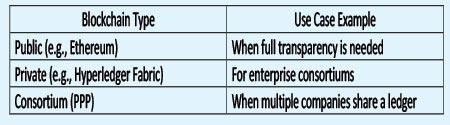 Blockchain types
Most logistics systems use private or consortium blockchains to achieve privacy and speed.
Popular blockchain platforms for logistics:
Build or join a network
Develop and deploy smart contracts
Examples:
Security and privacy considerations
Following are few of the real world current examples to understand the real-world case studies:
IBM + Maersk (TradeLens)
Walmart + IBM (Food Trust)
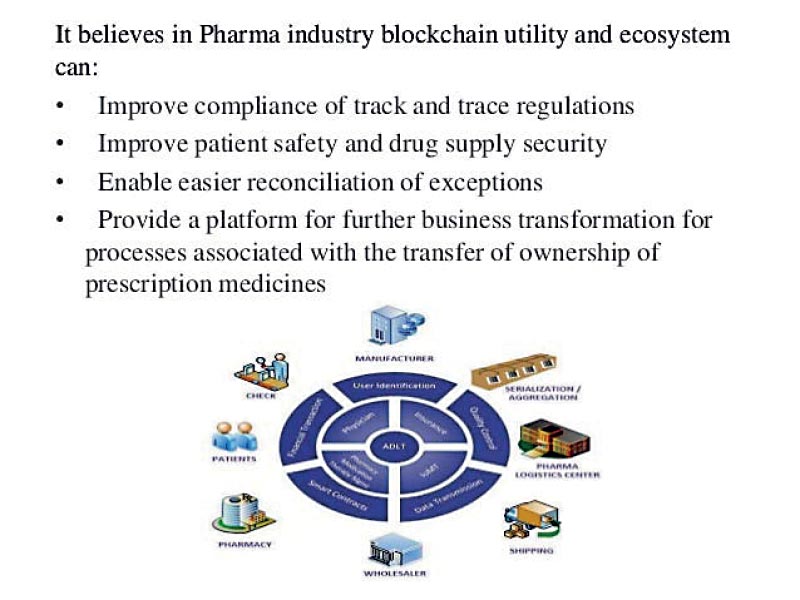
MediLedger (Pharma)
Conclusion
Blockchain has multiple uses. I have elaborated the tools and benefits in terms of logistics/supply chain after analysing the frauds, corruptive areas, mismanagement, carbon emission management and lethargy which the media is elaborating in day-to-day news. Also, it reduces the burden of workload that establishments are undergoing. Further, it looks a system of reducing the human presence and reducing the overheads of the establishments. It provides transparency, document hiding and alteration by “Provence software” on tracking the history and back ground of a product or a service to understand the originality. Further, time stamps to restrict the project to cover/complete on time. Automated authorisations are some of the key benefits that achieve through the implementation which can control the law level bribes.
Though I have elaborated especially on the government sector, there are many benefits that can be reaped by the private sector by considering the key applications. Almost, all the blockchain platforms are compatible with world-renowned software like SAP, Oracle, etc. therefore, the local software engineers can develop the systems to be compatible with local business models. Finally, this blockchain method can resolve much stressed areas in the administration and business of the country and achieve greater efficiency and trust without continuous high-level monitoring.
(The writer is a Chartered Logistician. He can be reached at [email protected].)



