Saturday Oct 24, 2026
Saturday Oct 24, 2026
Saturday, 24 October 2026 00:00 - - {{hitsCtrl.values.hits}}
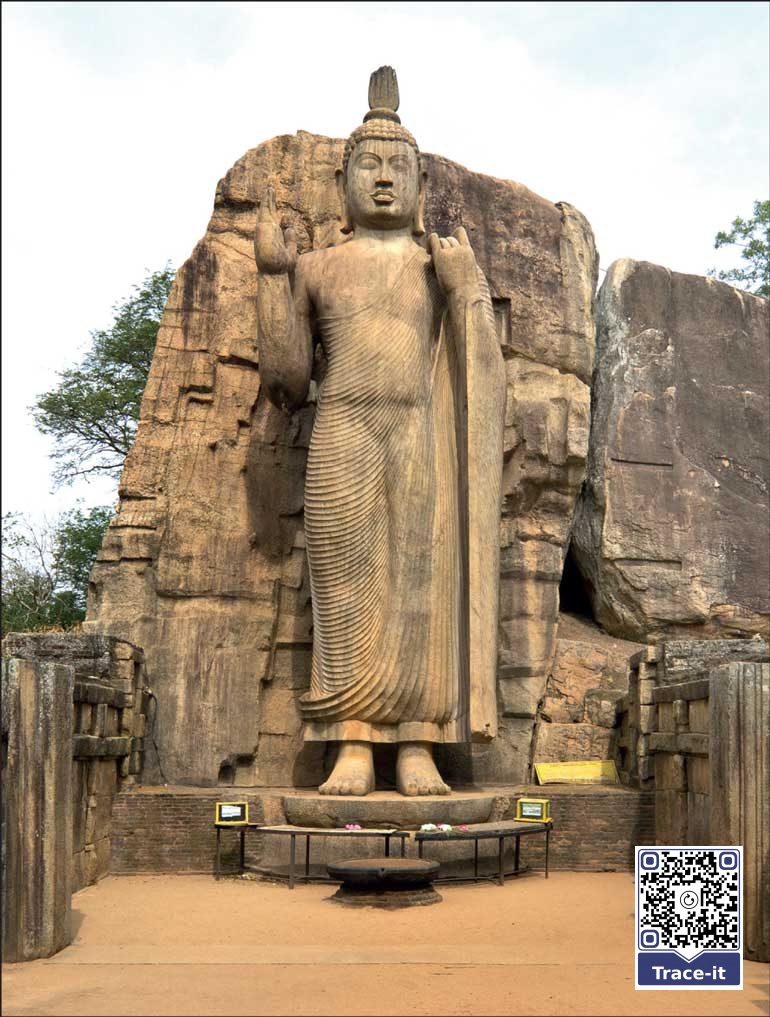
Avukana Buddha statue
In the context of a monastic institution, the answer cannot lie in assuming that religious status places an individual beyond ordinary legal obligations, or in automatically deferring to every decision made by the State
 I have been aghast at the drama that unfolded over the last several days, both in and outside Parliament, in and outside Buddhist temples, on and off the streets, and in and outside parks - otherwise reserved for the less privileged public who have neither large homes and gardens, nor temples or V8 vehicles to exercise or take shelter in.
I was taken aback by the positions taken by representatives of political parties, now in the collective opposition, some sitting in as peoples representatives and others acting outside Parliament, several of who I know and have known, worked and interacted with for decades. The tone and substance of certain statements, letters, articles, speeches, video footage and the publicly aired opinions of some, were I thought, inconsistent and in conflict with the positions they took, or the stance they had adopted years before. Were they politically biased and even intellectually dishonest, I wondered. Representatives of the monkhood in robes, were sadly, disgracefully disruptive, dangerously provocative and inciteful, grossly disrespectful, and in conflict with the teachings of the Buddha whose Dhamma they had chosen to help people learn from, understand, identify with and practice.
Of monks and men
All this of monks and men, women too, can undoubtedly be dangerous, and a shockingly bad example to a wide cross section of society. Over and above all this, the message we have sent to the outside world - of a disruptive society rather than one which is a destination for tourism, foreign direct and portfolio investment and a home to live in, return to and bring up children in - is clearly shortsighted and irresponsible.
The ‘beyond’ series
As I thought deeply about all of the above and wondered why, a Sri Lankan - a fellow Chartered Accountant, who I have known for decades and who considered returning in 2009, after our "war" was over, called me last week from overseas where he chose to remain. In late 2009, 16 years ago, he had told me that he considered returning, having also been encouraged by my articles titled "Beyond the Day to Day Military Conflict"; "Beyond Bullets and Bayonets" "Beyond the IMF Bailout" ( we had bailouts many decades ago too)," "Transitioning from Brain Drain to Brain Gain" (of this he said I was hinting at him, because the version in a Sunday paper had a cartoon with a brain carrying a briefcase and returning home to Sri-Lanka ). There were also my articles titled "Towards National Reconciliation - Towards interreligious, interracial, inter communal harmony" and the more recent "Beyond Judicial Tenure". Referring to all this and more, he asked me why I had not written an article on "Beyond the Robe." I actually had written exactly that, but not edited it for release due to competing demands on my time. So here it is now!
Beyond an individual controversy
The controversy surrounding the wearing of robes by Ven. Galagoda Aththe Gnanasara Thero while serving a prison sentence raises questions extending well beyond one individual or one prison decision. It invites a broader examination of the relationship between the State, the Buddhist Sangha, the Constitution, the administration of justice and the institutions responsible for upholding standards of conduct.
This article is not an argument for or against a presidential pardon, or about eligibility or otherwise for a robe in court or outside in prison or otherwise of one individual. Nor does it seek to revisit a judicial determination through public commentary, prejudge the ethics, the morality, administrative appropriateness or legality of a prison decision or an attempt to determine the Thero's monastic status. Those questions must be addressed by the institutions competent to decide them.
Convicted prisoners and Buddhist monks
The wider issues nevertheless deserve careful consideration. How should the State exercise its authority over a convicted prisoner who is also an ordained Buddhist monk? Who should determine whether a monk has breached the Vinaya or ceased to qualify for monastic status? How can the autonomy of the Sangha be respected while ensuring that public institutions act lawfully and that religious institutions maintain credible standards of discipline and accountability? These are not necessarily competing concerns. A mature constitutional democracy must find ways to uphold them together.
The Robe - A symbol of renunciation, discipline, commitment, not immunity
I am a practising Buddhist. I am in close touch with and have a mutually respectful relationship with three temples in my village of birth and two in the city of Colombo. I subscribe to the Buddhist philosophy, but not necessarily to all of the rituals of many. But for all of us Buddhists, the robe is far more than an item of clothing. It represents renunciation, discipline and commitment to a religious way of life. Its significance extends beyond the individual monk to the Sangha and the Buddha Sasana. That significance warrants sensitivity in the administration of prisons. But sensitivity is not the same as immunity from the law. Equally, imprisonment does not automatically settle every question concerning a prisoner's religious or ecclesiastical status.
Criminal liability, ecclesiastical authority and monastic discipline
Three matters must be distinguished. A criminal court determines criminal liability and imposes a sentence. The State administers that sentence under the applicable law. The relevant ecclesiastical authority addresses questions of monastic discipline and status within its proper jurisdiction. A criminal conviction does not, by itself, establish every consequence that may follow under the Vinaya. Conversely, continued recognition as a monk does not invalidate a conviction or remove the obligation to comply with a lawful sentence. The question is therefore not whether a monk should be exempt from the law. It is whether the State's treatment of a monk in custody is authorised by law, consistent with applicable prison rules and implemented fairly.
The constitutional balance: Religious protection and the rule of law
Sri Lanka's Constitution provides an important framework for considering these questions. Its provisions must be read together rather than selectively invoking one article while overlooking others.
Article 9 gives Buddhism the foremost place and places an obligation on the State to protect and foster the Buddha Sasana, while assuring the rights guaranteed to other religions under Articles 10 and 14(1)(e). Article 10 protects freedom of thought, conscience and religion, while Article 14(1)(e) recognises the freedom to manifest religious belief or practice, subject to applicable constitutional limitations.
The State must act lawfully. Courts must be respected. The Sangha's legitimate religious authority must be recognised. Questions of monastic status must be addressed through appropriate ecclesiastical processes. Public allegations must be assessed fairly, and institutional standards must be capable of sustaining public confidence. Respect for the Sangha and respect for the rule of law are not opposing causes. Properly understood, each can strengthen the other. Only then can both retain their relevance and sustainability
Article 12 establishes equality before the law and equal protection of the law. Article 13 provides safeguards concerning personal liberty, arrest, detention and punishment. Article 11 prohibits torture and cruel, inhuman or degrading treatment or punishment. Article 15(7) permits prescribed legal restrictions on specified fundamental rights for stated purposes, including public order, public health or morality, the rights and freedoms of others, and the just requirements of a democratic society. Its scope must be understood from its actual wording; it is not an unrestricted power to limit every constitutional right. These provisions establish principles relevant to the debate, but they do not, without further legal analysis, settle the particular question of prison attire. Nor does Article 9 automatically determine how a departmental order should be interpreted.
The constitutional balance is neither that religious identity displaces the law nor that religious identity becomes irrelevant whenever the State exercises its powers. The State must act within the law, respect applicable constitutional protections and be able to justify its decisions by reference to the governing legal framework. Public officials, politicians, lawyers and commentators all have a responsibility. The rule of law is strengthened not by the force with which a position is asserted, but by the evidence and reasoning that sustain it.
The Sangha's role and judicial precedent
Senior Buddhist prelates have reportedly maintained that the question of whether a monk should be disrobed or cease to be recognised as a member of the Order is a matter for the relevant ecclesiastical authority. They have also expressed concern about the removal of robes in the course of imprisonment. These views deserve serious consideration.
However, reported statements should not be treated as conclusive determinations of either the applicable prison law or the Thero's monastic status. Sri Lanka has a history of ecclesiastical processes for addressing internal monastic disputes and discipline. In Rev. Keselwatugoda Chandananda Thero v. Rev. Sirimalwatte Ananda Mahanayaka Thero and Others (1996 2 SLR 287), the Court of Appeal considered an ecclesiastical inquiry into alleged indiscipline and recognised the significance of disciplinary processes established within the relevant monastic institution.
The broader lesson is that questions of monastic discipline should be addressed through the appropriate ecclesiastical authority and applicable procedures. The precedent does not, however, establish the current rules of every Nikaya or demonstrate that any particular institution's procedures are either adequate or inadequate today. The authority, rules and procedures of the relevant Nikaya or Sangha body must be established from its own authoritative documents.
Fair inquiry, ethical conduct and public responsibility
Credible concerns arise when there are public allegations about a monk’s conduct, language or behaviour, supported by reliable evidence. The appropriate ecclesiastical authority should consider them through a process consistent with its governing rules. Such a process should provide notice of the allegations, a fair opportunity to respond, and impartial consideration of the evidence and reasoned findings. Consequences should follow from the applicable rules and the findings. This protects both the individual concerned and the institution. It avoids prejudgment without allowing serious allegations to be dismissed merely because they concern a religious figure.
Confrontational public pressure vs. responsible advocacy
Public pressure should not become a means of circumventing judicial proceedings, and confrontational conduct should not substitute for lawful procedure. If senior clergy believe that a judicial or administrative decision warrants reconsideration, formal representations to the competent authority provide a responsible avenue. Religious leaders and public officials alike remain entitled to express reasoned views. The distinction is between responsible advocacy and conduct that disregards due process or seeks to substitute pressure for lawful decision-making.
The Dhammapada's teachings-guarded speech, body and mind.
The Buddhist ethical tradition places importance on restraint in speech and conduct. The Dhammapada's teachings on guarding speech, body and mind offer a relevant ethical reflection. They should not, however, be presented as proof that any individual has committed a specific Vinaya offence. Such a determination belongs to the appropriate ecclesiastical process, applying the relevant standards and evidence. The dignity of the Sangha is best protected through integrity, compassion, restraint and credible self-discipline—not through an assumption that questions of conduct must never be raised.
Lessons from regulation of professions and independent oversight
Many institutions offer useful, though not identical, examples of how autonomy can be combined with accountability. Professional bodies in accounting and law maintain standards of conduct and disciplinary arrangements for their members. In Sri Lanka, the Sri Lanka Accounting and Auditing Standards Monitoring Board provides an example of a statutory oversight mechanism operating alongside the professional framework for accounting and auditing. The Central Bank of Sri Lanka's fitness-and-propriety framework for directors of licensed banks offers another example of institutional standards intended to protect confidence in regulated institutions. These are analogies, not templates to be transplanted mechanically. The Sangha is a religious community governed by its traditions and the Vinaya, not a professional association or a commercial enterprise. Its institutional arrangements must reflect that distinctive character.
Intimidation, interference,
forbearance and conflict of interest
Drawing on my recent writings on possible political interference and influence of private vested interest, which may lead to the risk of regulatory forbearance, I believe a related governance question merits consideration. Where the governing body of a Nikaya is asked by a governmental authority, such as prison authorities, to provide guidance on the attire of a monk belonging to that Nikaya, who is serving a prison term, what safeguards ensure the independence of its deliberations, freedom from intimidation or improper interference, and the appropriate management of any actual or potential conflicts of interest? These are legitimate questions of institutional governance. They do not imply that any particular deficiency or conflict exists; that must be established by evidence. Nevertheless, the clarity and independence of disciplinary arrangements are relevant to the integrity, credibility and public confidence that a religious institution rightly seeks to sustain. Institutional accountability, properly understood, need not diminish the authority of the Sangha. It can help sustain the moral credibility upon which that authority ultimately depends.
Respect, authority and
monastic accountability
The controversy over the robe ultimately raises a question larger than clothing. How can citizens of a country, representatives of a community, members of a professional association, employees of a company, and monks belonging to a monastic institution or Nikaya retain the respect of others and preserve their dignity while remaining accountable for their conduct and the exercise of their authority?
In the context of a monastic institution, the answer cannot lie in assuming that religious status places an individual beyond ordinary legal obligations, or in automatically deferring to every decision made by the State. Institutional reform cannot be achieved by conflating ecclesiastical discipline with criminal punishment, either.
The State must act lawfully. Courts must be respected. The Sangha's legitimate religious authority must be recognised. Questions of monastic status must be addressed through appropriate ecclesiastical processes. Public allegations must be assessed fairly, and institutional standards must be capable of sustaining public confidence. Respect for the Sangha and respect for the rule of law are not opposing causes. Properly understood, each can strengthen the other. Only then can both retain their relevance and sustainability.




