Tuesday Sep 01, 2026
Tuesday Sep 01, 2026
Thursday, 12 March 2026 05:04 - - {{hitsCtrl.values.hits}}
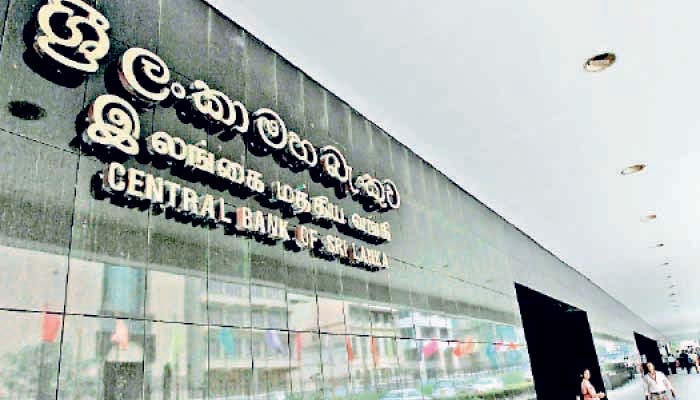
Official reserves—also known as foreign exchange reserves—are external financial assets held by the Central Bank of Sri Lanka in internationally accepted forms such as foreign currencies, gold, foreign Government securities, and Special Drawing Rights (SDRs) issued by the International Monetary Fund
 Recent news that Sri Lanka’s official foreign reserves have increased to around $7 billion has been widely presented as a sign of economic recovery. In many ways, it is. The rebuilding of reserves after the severe depletion experienced during the Sri Lankan Economic Crisis represents an important step toward restoring macroeconomic stability and rebuilding external confidence. Yet when placed in a broader international context, the number itself also reveals the limits of Sri Lanka’s financial buffer.
For comparison, India holds foreign exchange reserves exceeding $600 billion, making it one of the largest reserve holders in the world. Thailand maintains reserves of around $200 billion, while Vietnam holds roughly $100 billion. Even relatively smaller economies such as Bangladesh maintain reserves exceeding $25–30 billion, despite facing their own economic pressures.
Modest cushion
These comparisons do not diminish Sri Lanka’s recent progress. Rather, they highlight a fundamental reality: in the architecture of global finance, $7 billion remains a relatively modest cushion for an economy that depends heavily on imports and external financing.
Official reserves—also known as foreign exchange reserves—are external financial assets held by the Central Bank of Sri Lanka in internationally accepted forms such as foreign currencies, gold, foreign Government securities, and Special Drawing Rights (SDRs) issued by the International Monetary Fund. These reserves function as a country’s financial buffer in the global economy. They enable Governments to pay for essential imports such as fuel, medicine, and food, service foreign debt, and stabilise the domestic currency during periods of exchange-rate volatility. In essence, official reserves represent a country’s immediate capacity to manage external economic pressures and maintain confidence among investors, lenders, and trading partners.
In practical terms, having around $7 billion in official reserves means that Sri Lanka possesses roughly that amount in readily usable foreign assets to support its external sector. While this level signals a degree of recovery and stabilisation, it still represents a limited buffer for an import-dependent economy.
Economists typically assess reserve adequacy using the concept of “import cover.” This measure estimates how many months of imports a country could finance if external inflows suddenly stopped. Sri Lanka’s current reserves correspond to only a few months of import coverage, which is considered relatively thin by international standards. Many emerging economies aim to maintain reserves equivalent to at least six months of imports in order to protect themselves from external shocks such as commodity price spikes, global financial volatility, or sudden capital outflows.
Debt-repayment obligations
The challenge becomes even clearer when Sri Lanka’s debt-repayment obligations are taken into account. The country remains engaged in a complex restructuring process following its sovereign default in 2022. Even after agreements with bilateral creditors, private bondholders, and multilateral institutions, Sri Lanka will continue to face significant annual debt-service commitments in the coming years.
These obligations include repayments on international sovereign bonds (ISBs), which account for roughly $12–13 billion of Sri Lanka’s outstanding external public debt. In addition, the country must continue servicing bilateral loans from major partners such as China and Japan, each of which holds claims of around $4–5 billion within Sri Lanka’s external debt portfolio. Sri Lanka must also meet obligations to multilateral institutions including the International Monetary Fund, the World Bank, and the Asian Development Bank, which together account for more than $10 billion in loans extended to support development projects and balance-of-payments stability.
At the same time, the Government must continue servicing a substantial stock of domestic public debt, which today exceeds roughly Rs. 15–17 trillion (approximately $45–50 billion, depending on exchange rates) and represents the largest share of the country’s total public liabilities. Although domestic debt is denominated in local currency and therefore does not immediately drain foreign reserves, its servicing still places considerable pressure on fiscal resources, interest rates, and financial-sector stability. In effect, Sri Lanka’s reserve position must support not only import requirements but also the broader effort to restore debt sustainability and maintain confidence among international lenders and investors.
For this reason, the current reserve level should be viewed less as a destination than as a milestone in a longer recovery process. The rebuilding of reserves signals that Sri Lanka has regained some stability after an unprecedented economic crisis. But it also highlights the need for deeper structural reforms that can sustain reserve growth over time.
Important lessons
The most important lesson is that genuine economic security cannot be built on reserves alone. Foreign reserves are ultimately a reflection of underlying economic strength rather than its source. Countries accumulate reserves sustainably only when their real economies generate steady foreign exchange through production, trade, and investment. Without those structural foundations, reserves may rise temporarily through borrowing or short-term financial inflows, but they rarely remain stable.
The first pillar of durable stability is a stronger and more diversified production base. Sri Lanka’s economy remains heavily dependent on imports for fuel, machinery, intermediate goods, and many essential inputs used in domestic industries. When production relies so heavily on imported components, economic growth itself increases the demand for foreign exchange. The long-term solution lies in expanding sectors that generate export earnings while strengthening domestic value addition. Advanced manufacturing, logistics services, high-value agriculture, digital services, and knowledge-based industries all offer opportunities to broaden the country’s production structure.
Closely related is the need for more competitive exports. Sri Lanka’s export basket remains concentrated in garments, tea, rubber-based products, and a limited range of industrial goods. While these sectors remain important, long-term resilience requires broader diversification and higher productivity. Countries that maintain strong reserve buffers—particularly in East and Southeast Asia—do so because their export sectors consistently generate large and reliable foreign currency inflows. Expanding export markets, improving logistics infrastructure, investing in technology, and ensuring policy stability are therefore essential components of reserve sustainability.
A third pillar is disciplined fiscal management. Persistent budget deficits eventually translate into rising public debt, which in turn places pressure on foreign reserves through external borrowing and repayment obligations. Sri Lanka’s recent crisis demonstrated how prolonged fiscal imbalances can gradually weaken economic stability until a sudden shock triggers a full-scale financial breakdown. Strengthening tax administration, maintaining prudent public spending, and improving the efficiency of state-owned enterprises are therefore not only fiscal priorities but also essential safeguards for external stability.
Finally, investor confidence plays a decisive role. Foreign direct investment brings long-term capital, technology, and access to international markets. Unlike short-term financial flows, productive investment expands the country’s capacity to generate foreign exchange. Investors, however, respond strongly to the credibility and predictability of economic policy. Transparent institutions, consistent regulations, and reliable governance frameworks are therefore just as important for reserve accumulation as trade or fiscal policy.
Taken together, these structural elements—productive capacity, export competitiveness, fiscal discipline, and investor confidence—form the real foundation of external resilience. Foreign reserves, in this sense, are the visible outcome of deeper economic strength. They reflect how effectively an economy produces, trades, manages public finances, and inspires confidence among global investors.
Window of opportunity
For Sri Lanka, the recent rise in reserves should therefore be seen not as the end of economic adjustment but as a window of opportunity. The buffer now being rebuilt provides breathing space for the deeper reforms needed to strengthen the country’s economic foundations. If those reforms succeed, reserves will grow naturally and sustainably. If they do not, the numbers may rise temporarily but remain vulnerable to the next external shock.
Ultimately, the significance of Sri Lanka’s $7 billion reserve level lies not in the number itself but in what the country chooses to do with the stability it represents. Reserves can buy time, but they cannot substitute for structural strength. The real task ahead is to use this window to rebuild the foundations of the economy—expanding production, strengthening exports, restoring fiscal discipline, and attracting sustained investment. If those deeper reforms take root, today’s reserve recovery may mark the beginning of lasting economic resilience rather than merely a temporary recovery from the crisis.




