Thursday Oct 15, 2026
Thursday Oct 15, 2026
Thursday, 15 October 2026 00:44 - - {{hitsCtrl.values.hits}}
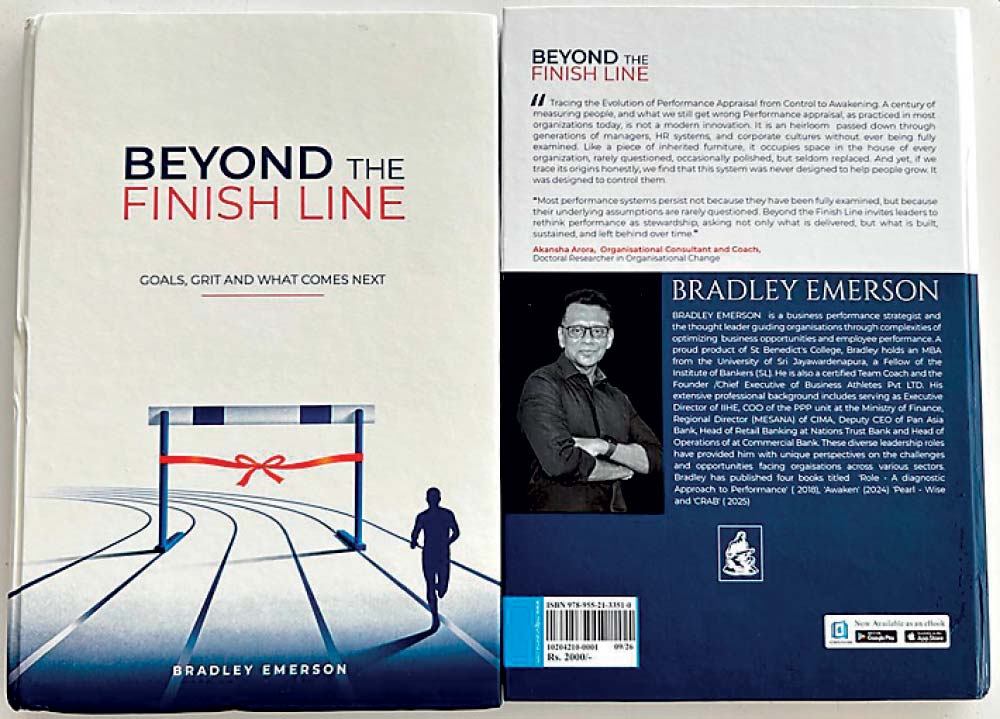
A performance management book that gives a different view of the performance appraisal: A must read for every CEO and Heads of HR
 Most people who have worked in an organisation know the annual review: the manager reads out the targets, the employee explains why some were missed, a rating is agreed, and both leave relieved that it is over. Bradley Emerson’s book begins with a simple observation: this is not merely a repetitive process waiting for the next improved format. It reveals what an organisation truly believes about its people.
That distinction drives the whole book. The early chapters diagnose the problem. The Appraisal Trap and The Busyness Illusion examine how organisations confuse activity with contribution and measurement with meaning. The later chapters build an alternative, which Bradley calls stewardship. In this model, people are treated less as resources to be graded and more as “legacy partners” in an institution meant to outlast them all.
Bradley’s best insight is that HR reform rarely fails in design; it fails in adoption, much like computer systems and digital apps. Drawing on Edgar Schein’s three levels of culture—visible artefacts, espoused values, and the unspoken assumptions beneath them—he argues that most reform remains at the top level. New forms, software, and vocabulary arrive while old beliefs remain in place. He calls the result “motion without movement,” and few phrases sum up a decade of corporate change programs so well.
His explanation of why good tools fail will be familiar to anyone who has watched a promising initiative fade after launch. Managers learn “the mechanics but not the mindset.” Meanwhile, promotions, rewards and leadership behaviour keep signaling the old values, even as the new tools point at different ones. Employees are not fooled. They watch who gets rewarded or promoted, not what the framework says.
Real change, Bradley argues, means going below the surface to the place “where values and competence are tested against lived reality.” He states the central principle in Chapter Four with real clarity: “Ideas do not transform organisations — rituals do.”
Culture, in this view, is not what a company announces; it is what the company repeats, quietly and consistently, every day. The underlying principle resonates strongly with Aristotle. This idea moves the book from process to culture, and it is the line most readers will remember.
Bradley also understands the value of a memorable line. Chapter Four opens with “A philosophy without a practice is a poem,” before moving on to practical tools. The first is the Contribution Conversation, which replaces the usual backward-looking audit with a different opening question: What change did you bring? This is hardly a familiar appraisal question. Most appraisees are accustomed to discussing how they achieved their targets. Yet What change did you bring? is not about what you delivered or whether you met your targets; it asks what exists within the team because you were part of it. Asked sincerely, the question changes the tone of the meeting, and Bradley explains convincingly why.
The institutional chapters are equally practical. A stewardship table converts abstract values into concrete commitments across operational, market, employee, innovation, and environmental areas. It could easily become a working covenant for a Chief HR officer. The audit method that follows is disciplined. Bradley asks leaders to identify the gaps between practice and aspiration, choose two or three areas that are both significant and fixable, and design specific, measurable ninety-day interventions. Twelve months later comes the question at the heart of the book: What is different in this institution because we chose stewardship? The point is not simply what was implemented, but what changed. It seeks to demonstrate a commitment to change rather than merely catalogue what was achieved.
The intellectual foundations are familiar. Schein’s model and Martin Seligman’s positive psychology are well established, and readers who know the management literature will recognise them. Bradley’s originality lies in how he applies these ideas, not in the theory itself. That is a real strength, but it also raises expectations for evidence. The book argues persuasively for why stewardship matters. A valuable sequel would explore what happens to companies that put this model into practice.
Beyond the Finish Line is a thoughtful and useful book for every CEO and HR leaders, executives and any manager who have privately suspected that the annual appraisal measures compliance rather than contribution. It is short enough to read on a flight and sharp enough to provoke a board discussion. Bradley’s main achievement is to make an old complaint actionable. He does not stop at saying that performance management is broken. He shows that the system was working exactly as designed, and he asks leaders to change the design.
Its title says the finish line is not the end. For organisations willing to look beneath the surface, this book is a good place to begin.




