Wednesday Oct 28, 2026
Wednesday Oct 28, 2026
Wednesday, 28 October 2026 00:24 - - {{hitsCtrl.values.hits}}
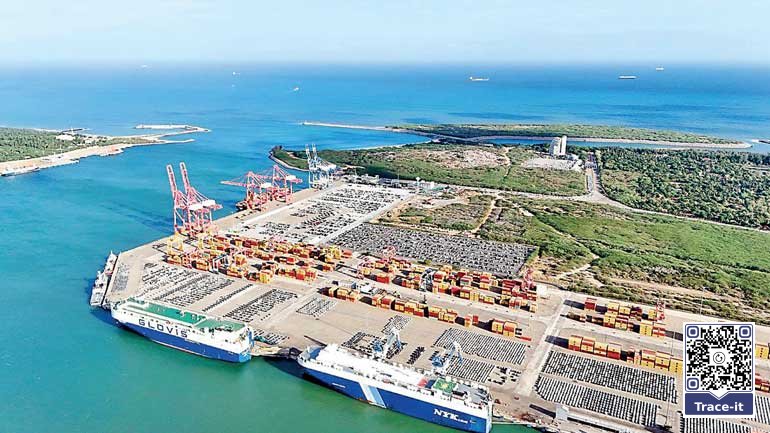
In January 2025, Sri Lanka signed an agreement with Sinopec for a $ 3.7 billion refinery project in Hambantota, which remains on paper
 Several years have passed since Sri Lanka faced the most severe economic crisis in its history. Macroeconomic stability has largely been restored, and the country is now nearing the end of its current IMF program, which has required strict fiscal discipline. Whether Sri Lanka will need to return to the IMF remains an open question. However, the next stage of recovery cannot rely on austerity measures and support from multilateral institutions alone. The key growth reforms include liberalising trade and diversifying the export base, making the tax system more efficient and fair, addressing labour market rigidities, and improving and streamlining FDI regulations. Of these, FDI has become especially pressing in light of recent events.
Much of the policy discussion centres on attracting new investors through roadshows, investment forums and incentive packages. However, less attention is given to an equally important aspect of the FDI story, retaining the investments already secured. Every project that is withdrawn, delayed or stalled sends a powerful signal to the wider market, often speaking far louder than any promotional campaign.
Two recent cases make the point. China Merchants Port Holdings (CMPort) withdrew from its planned $ 392 million logistics hub project at the Port of Colombo in October. Meanwhile, Sinopec’s proposed $ 3.7 billion refinery project in Hambantota, considered the largest FDI commitment in Sri Lanka’s history, remains at a standstill despite the signing of the MoU.
Lost opportunity at Colombo Port
On 15 October CMPort exited the commercial and logistics hub project following a mutually agreed settlement with its Sri Lankan partners, Access Engineering, and the Sri Lanka Ports Authority. Established through a joint venture company, the South Asia Commercial and Logistics Hub was envisaged as South Asia’s largest integrated commercial and logistics hub, aimed at strengthening Sri Lanka’s position as a regional trade and maritime centre.
In 2023, an agreement was signed for the construction and operation of the facility under a 50 year Build-Operate-Transfer (BOT) arrangement. Under the agreement, CMPort held a 70% stake in the project, while the Sri Lanka Ports Authority and Access Engineering each held 15%.
The decision to withdraw from the investment was driven by concerns relating to the project’s implementation environment, timelines and commercial considerations while some local observers attribute the withdrawal to broader geopolitical pressures. Following the project’s termination, the Sri Lanka Ports Authority has announced plans to develop a new logistics hub through a competitive public private partnership (PPP) model.
It is important to emphasise that CMPort is not leaving Sri Lanka. The company continues to operate the container terminal at the Port of Colombo and remains involved in the Hambantota Port. However, that is precisely the point, when an investor that has already established a long term presence in the country decides to withdraw from a new project, potential investors take notice.
Sinopec’s Hambantota refinery: Biggest deal still on paper
In January 2025, Sri Lanka signed an agreement with Sinopec for a $ 3.7 billion refinery project in Hambantota with a planned processing capacity of 200,000 barrels per day, a significant portion of which is intended for export market. The project is set to represent the largest FDI commitment in the country’s history. For context, Sri Lanka’s only existing refinery at Sapugaskanda has a processing capacity of just 50,000 barrels of crude oil per day.
Despite its scale and strategic significance, the project has made little progress amid a series of unresolved concerns. Mainly the disagreement over market access, with Sinopec seeking unrestricted access to sell its refined products in the local market, while the Government has limited domestic sales to 20% of total output. Additional points of contention include requests for more land, the fiscal concessions available to the investor, and concerns regarding long term water availability in the Hambantota region.
On the issue of local market access, in early 2026, Ministry of Energy stated that Sinopec agreed to proceed with the project under the Government’s 20% cap on domestic fuel sales. At the time, authorities expressed confidence that construction would commence sooner, while also indicating willingness to consider Sinopec’s request for more access to the local fuel market.
However, the project remains on paper, with no clear implementation timeline in place. As a result, the economic benefits associated with the investment continue to be delayed.
What these cases tell us
The two projects differ significantly in scale and sector, yet they share a common pattern. Both were announced with headlines on papers, both encountered obstacles, and both have remained stalled long enough to erode investor confidence.
Getting the fundamentals right from the beginning is essential. The disagreements over land allocation, regulatory clearances and market access surfaced only after agreements had been signed. These are issues that should have been resolved during negotiations. Once a project is announced, investors should have confidence that its core terms and conditions are settled and will not be subject to renegotiation.
Delay carries a cost of its own. Projects that spend years waiting for land allocation, regulatory approvals or final agreements risk losing momentum, missing financing opportunities and weakening internal support from investor’s side. More often than not, prolonged delays inflict more damage on a project than any single obstacle. By the time outstanding issues are resolved, the original investment rationale may no longer exist.
Sri Lanka’s investment story is not written on a paper or promotional campaigns. It is written in the fate of the projects already on the table. A completed refinery in Hambantota or a fully operational logistics hub in Colombo would do far more to attract the next wave of investors than any investment forum or overseas roadshows.
The priority now should be not only to attract new investment opportunities but also to strengthen investor aftercare. This requires a robust framework centred on a single point of accountability for approved projects, time bound approval processes, and the early and transparent resolution of land, regulatory and policy related issues. Attracting investment is only half the challenge. Retaining it, implementing it and converting commitments into successful projects are what ultimately build a country’s reputation as a credible investment destination.
(The author is a researcher in a leading private investment research firm in Sri Lanka, whose primary focus is researching broader economic issues, including geopolitical/technological developments, and their implications across various sectors with special focus and interest on related developments in China)




